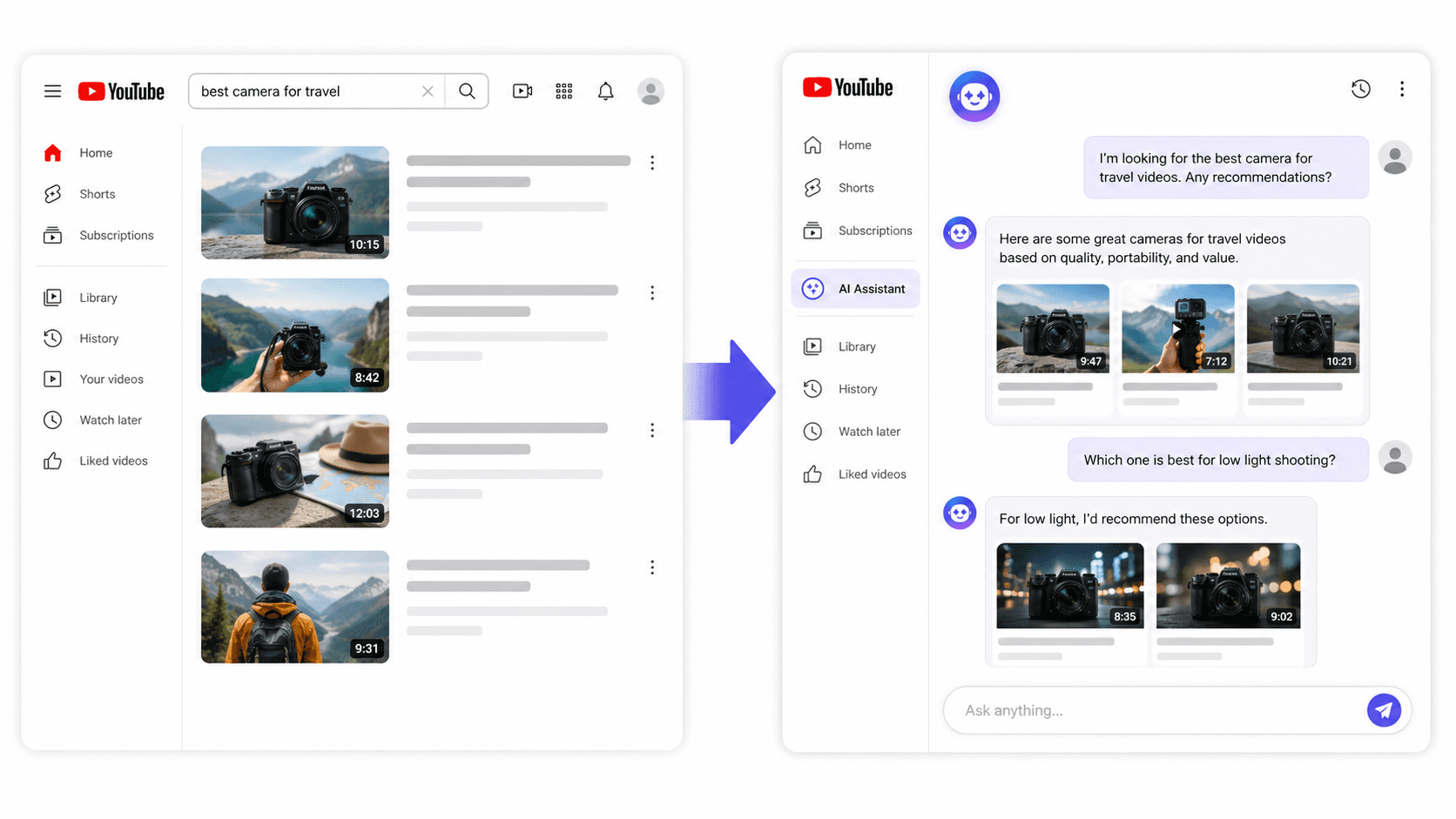
For years, finding a video on YouTube meant typing a few keywords and scrolling through a wall of thumbnails. That model is now being challenged. Google is testing a conversational AI tool called “Ask YouTube,” which lets users ask natural language questions and receive direct, video-backed answers. Instead of matching keywords to titles, the system synthesizes information from across the platform, pulling relevant clips, summaries, and timestamps into a single conversational thread.
This breakdown is built for digital marketers, YouTube creators, and tech-savvy users who need to understand what this shift means in practice. It covers how the Ask YouTube feature works, who can access it today, and what it signals for the future of content discovery. You'll walk away with a clear picture of how this YouTube AI chatbot could reshape video SEO, along with actionable steps to prepare your channel for a conversational search future.
What Exactly Is the ‘Ask YouTube’ Feature?
“Ask YouTube” is a conversational AI tool designed to overhaul how users find information on the platform. Instead of matching keywords to video titles and descriptions, it lets you ask complex, natural language questions. The AI then generates a synthesized response, blending its own summaries with relevant content pulled from long-form videos, Shorts, and specific timestamped clips.
Consider a practical example. Rather than searching “leaky faucet tutorial,” you could ask, “What are the steps to fix a leaky kitchen faucet?”. The AI would provide a summarized, step-by-step guide and pull in video clips that visually demonstrate each part of the process. You can then ask follow-up questions to narrow the results, creating a dialogue that feels more like consulting an expert than querying a database.
Info: Don't confuse this with the ‘Ask’ button that sometimes appears under a single video. That feature only analyzes the content of that one video. The new ‘Ask YouTube’ tool searches the entire platform library to build its answers, making it a fundamentally different experience.
A Breakdown of the User Interface and Experience
For users in the test group, the change is subtle but meaningful. A new “Ask YouTube” button appears next to the familiar search bar. Clicking it launches a full-page, chatbot-style interface complete with a text box and a few suggested prompts (for example, “short history of the Apollo 11 moon landing”) to get you started.
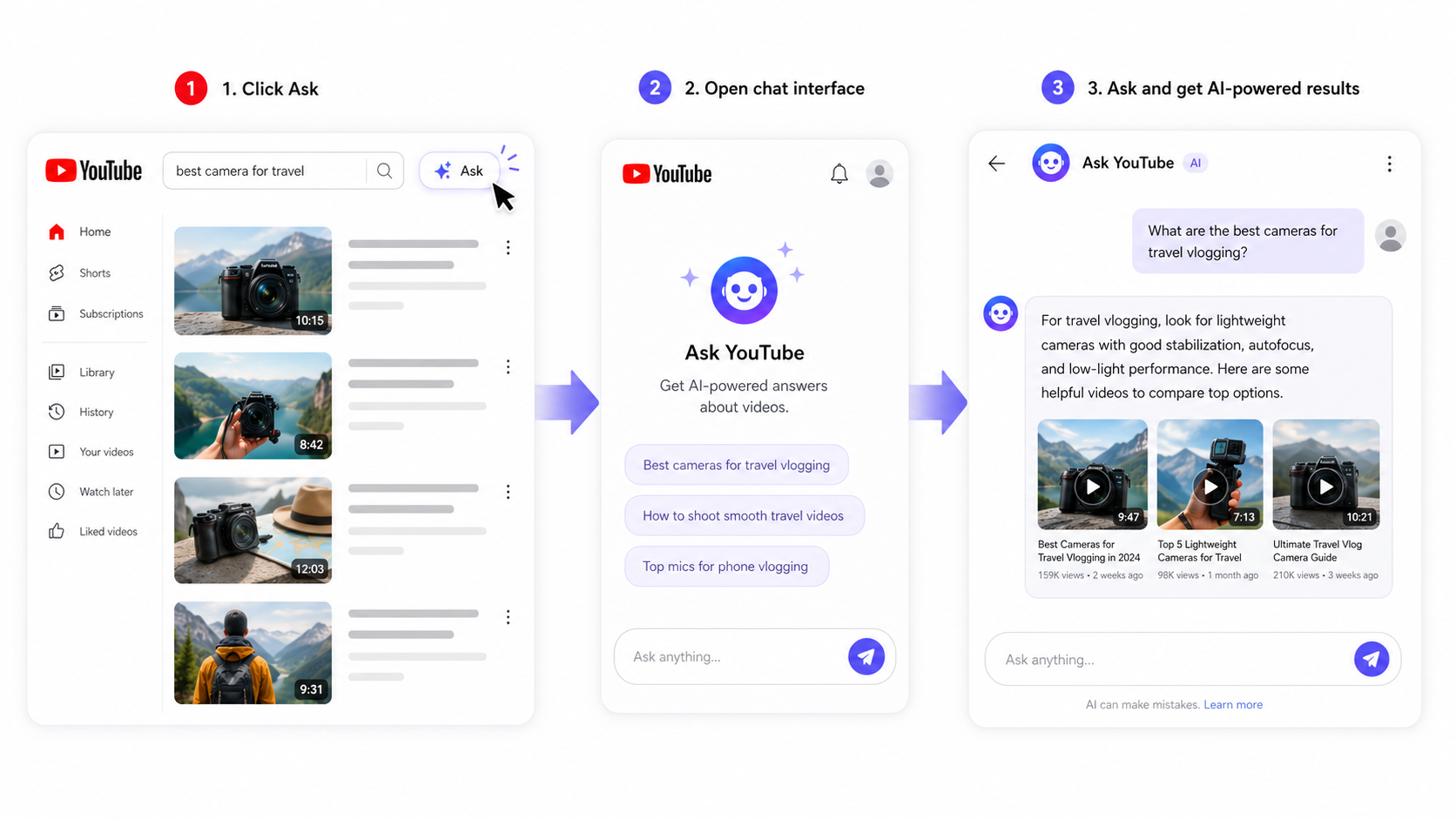
The response page is where the experience diverges sharply from standard search. It is not a list of videos. The AI provides a direct, often bullet-pointed summary that answers your query. This text is interwoven with video recommendations. Hovering over a suggested video can trigger automatic playback from the most relevant timestamp, saving you from scrubbing through content yourself. The design delivers instant value before you even commit to watching a full video.
Experiment Timelines and Eligibility
Access to the “Ask YouTube” experiment is highly limited as Google gathers initial feedback. Here is what we know about eligibility and timing based on Google's official statements:
- Who: The test is open to a select group of YouTube Premium subscribers in the United States. Users must be 18 or older and manually opt in via the youtube.com/new portal.
- Where: The feature is currently available on desktop for users searching in English.
- When: The current experiment is scheduled to run until June 8, 2026. However, like all Google tests, this timeline is flexible and could be extended based on user feedback and performance metrics.
Google acknowledges that the quality and accuracy of AI-generated answers can vary. Early testers have flagged some factual errors, which is expected for any feature in an experimental phase. The company is actively encouraging users to submit feedback to help train and improve the system before any broader rollout.
The Creator's Dilemma: Watch Time vs. Instant Answers
This feature creates a genuine strategic tension for creators. For years, the North Star metric has been watch time. Success meant crafting engaging intros, holding viewer attention, and keeping audiences on the video until the very end. But what happens when an AI can extract the most valuable insight from your video and serve it as a two-sentence summary or a 15-second clip?
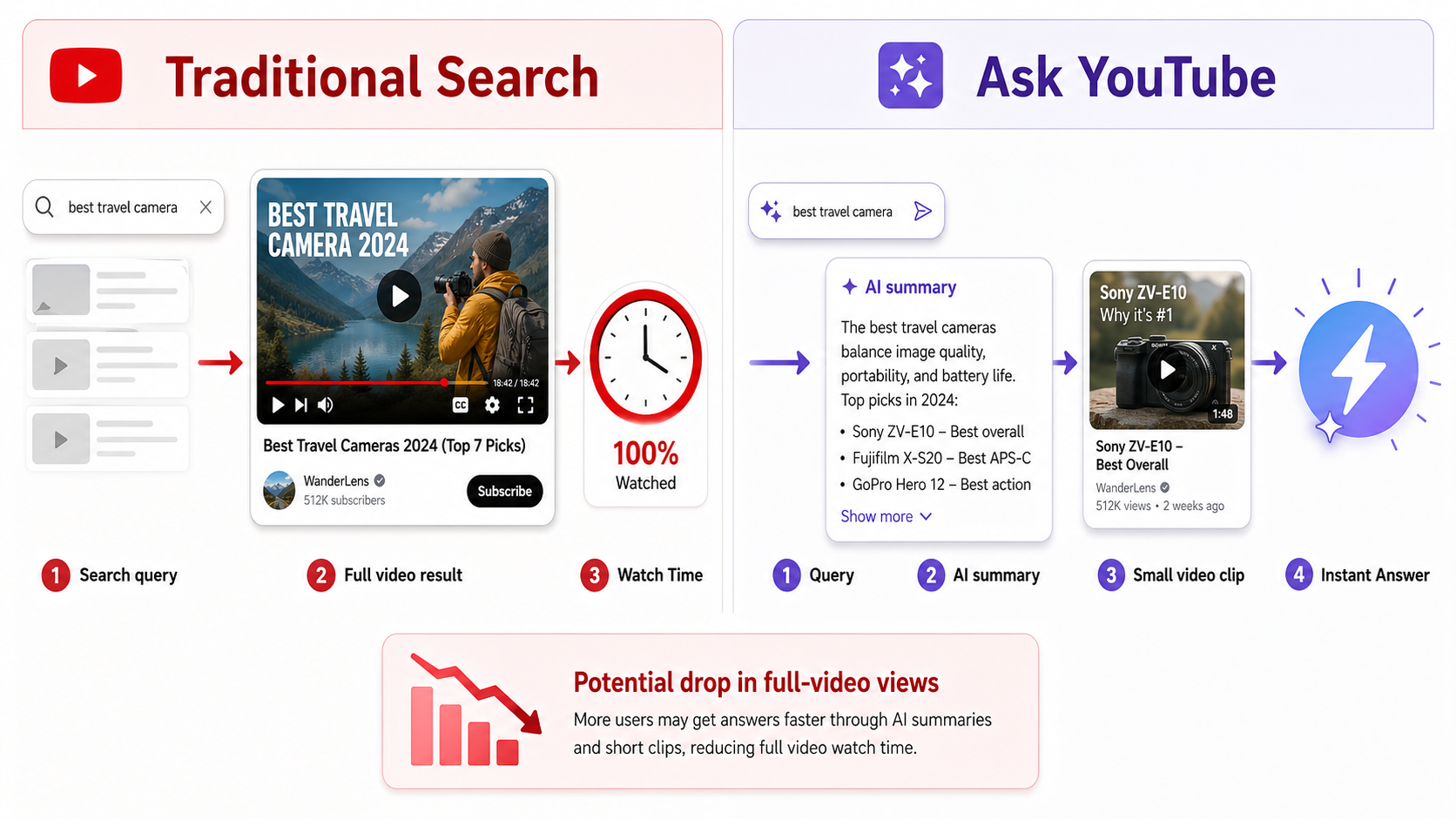
This is the core conflict. Being featured in an AI answer could become a powerful new discovery path, placing your content in front of users at their exact moment of need. At the same time, if the user gets what they need from the AI summary, they have little incentive to click through and watch your entire video. This could cannibalize watch time, ad revenue, and engagement signals like comments and subscriptions. The dynamic mirrors the challenge website publishers face with Google's AI Overviews, where direct answers reduce the need for clicks to the source.
This reality forces a pivot in content strategy. Instead of optimizing solely for clicks and view duration, creators need to focus on becoming the most authoritative and citable source on a topic. Your value may shift from how long you can hold an audience to how often the AI selects your content to provide a definitive answer.
Adapting Your Content for the Conversational AI Era
While the Ask YouTube experiment is still in its early stages, the trend toward conversational search is accelerating. Creators and marketers who adapt now will be better positioned when these features reach a wider audience. The goal is no longer just gaming keyword algorithms; it is creating content that provides clear, structured, and authoritative answers.
Here are actionable ways to start preparing your channel:
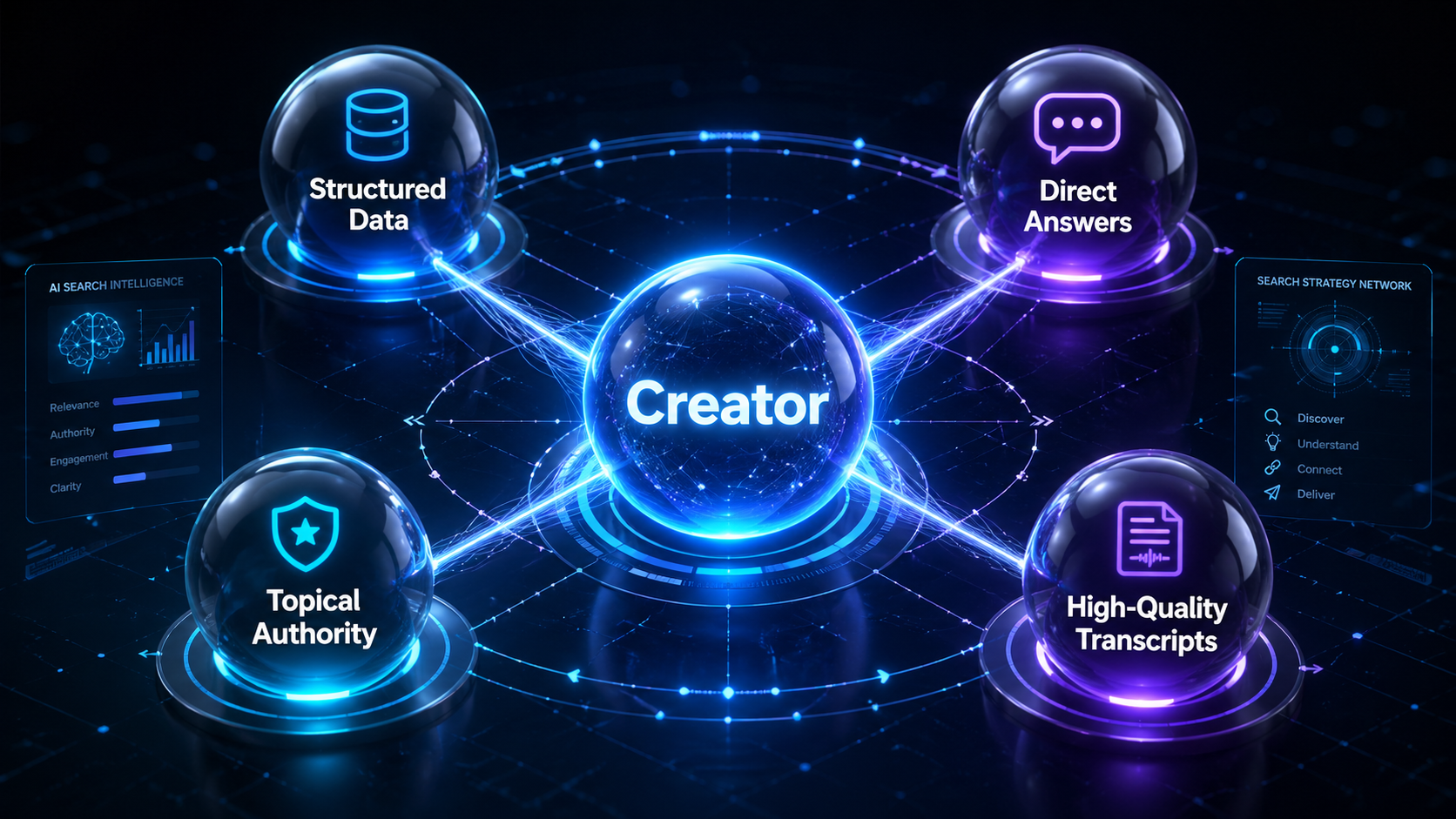
- Structure for Clarity: Organize videos with clear, logical sections. Use timestamped chapters to break down long videos into distinct topics, making it easy for AI to pull specific segments as standalone answers.
- Answer Questions Directly: Frame parts of your video by stating a common question and then providing a concise answer before elaborating. A YouTube script generator can help you structure your content this way.
- Prioritize High-Quality Transcripts: AI models depend heavily on video transcripts to understand content. Make sure your captions are accurate by manually reviewing and editing auto-generated captions to fix errors in jargon, proper nouns, and grammar.
- Build Topical Authority: Instead of one-off viral attempts, build topic clusters. A series of related videos on a subject signals to the AI that your channel is a credible, go-to source. You can find ideas for these clusters in our AI prompt library.
- Focus on Unique Value: AI excels at summarizing widely available facts. Differentiate your content with unique perspectives, original data, and compelling stories that an AI summary cannot replicate, giving viewers a reason to watch the full video.
The Bigger Picture: ‘Ask YouTube’ and the Future of Search
The Ask YouTube experiment is not happening in isolation. It is part of a massive, industry-wide pivot to conversational AI across every major search platform. From Google's main search engine to niche discovery tools, companies are betting that users prefer asking questions to typing keywords. This shift, which mirrors the changes discussed in our guide to AI search optimization, suggests the future of finding information will feel more like a conversation than a catalog search.
For digital marketers and SEO professionals, this expands the definition of “optimization.” It is no longer just about ranking a link on a results page; it is about becoming the source an AI selects for its generated answer. This demands a deeper understanding of user intent and a content strategy that prioritizes clarity, structure, and authority. As these tools become more common, monitoring your brand's presence in answer engines will be as vital as tracking keyword rankings.
Info: Action step: Start auditing your top-performing videos now. Add timestamped chapters, review transcript accuracy, and restructure descriptions to answer specific questions. These changes position your content for both traditional search and AI-driven discovery.
Frequently Asked Questions
Is the ‘Ask YouTube’ experiment available to all users?
No. It is currently a limited test available only to some YouTube Premium subscribers in the United States who are 18 or older and have opted in through the youtube.com/new portal.
How is ‘Ask YouTube’ different from the ‘Ask’ button under a video?
The ‘Ask’ button under a video analyzes the content of that specific video only. ‘Ask YouTube’ is a platform-wide search tool that pulls information from the entire YouTube library to answer questions, making it a fundamentally broader experience.
Will ‘Ask YouTube’ hurt my channel's watch time?
It is a real possibility. By providing direct summaries and short clips, the feature could reduce the need for users to watch full videos, which may impact watch time and ad revenue. However, it also creates a new discovery path that surfaces your content to users who might never have found it through traditional search.
What is the best way to optimize my videos for this YouTube AI chatbot?
Focus on creating clearly structured content that directly answers specific questions. Use timestamped chapters, ensure your transcripts are accurate, and build topical authority with series of related videos on your subject area.
Is this the end of traditional keyword research for YouTube?
Not entirely, but its role is changing. Keywords will still signal a video's topic to the algorithm. The focus, however, is shifting toward optimizing for conversational queries and providing the most authoritative answer, not just ranking for a single term.
Does ‘Ask YouTube’ work on mobile devices?
Currently, the experiment is available on desktop. There is no confirmed availability for iOS or Android at this stage of testing for the platform-wide search tool.
How does ‘Ask YouTube’ decide which videos to feature in its answers?
While Google has not disclosed the exact ranking signals, the AI appears to prioritize videos with clear structure, accurate transcripts, and strong topical relevance. Building authority on a specific subject through a cluster of related videos is likely a strong signal.
Key Takeaways
Google's Ask YouTube experiment is more than a new feature. It is a preview of how content discovery will work across platforms in the coming years. By turning search into a conversation, it challenges the long-standing dominance of keyword optimization and introduces a model where authority, clarity, and structure determine visibility. The potential impact on creator metrics like watch time is a valid concern, but the feature also opens new avenues for discovery based on how well your content answers real questions.
Creators and marketers should not wait for a global rollout to take action. Start structuring content for clarity, answering questions directly in your videos, and building topical authority across your channel. These steps do not just prepare you for Ask YouTube; they strengthen your content strategy for every AI-driven search platform emerging right now. The fundamental principles of creating high-value, trustworthy content have never carried more weight.
