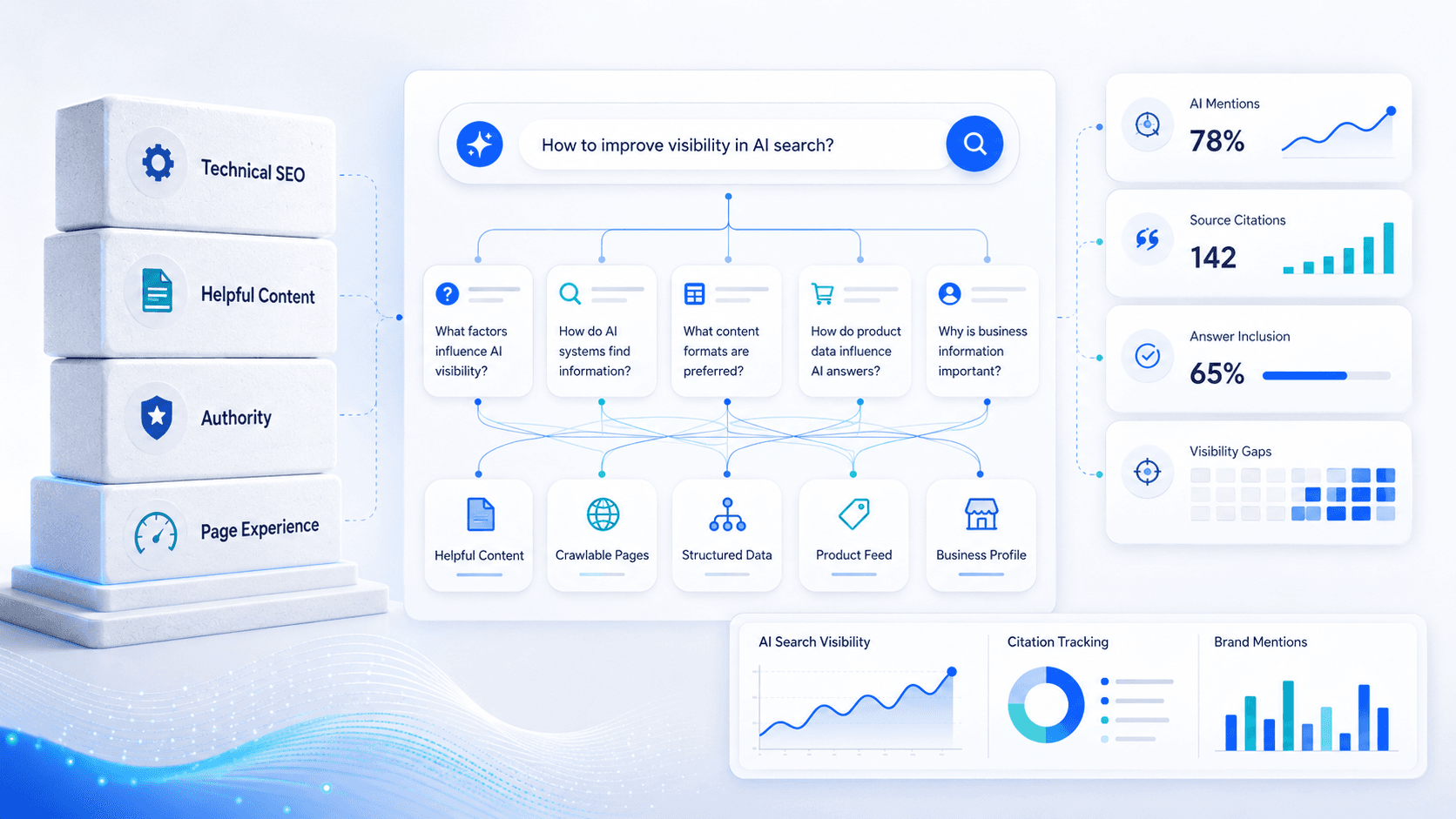
For the past couple of years, the SEO world has been buzzing with new acronyms. AEO (Answer Engine Optimization). GEO (Generative Engine Optimization). A whole cottage industry has sprung up selling a new playbook for a new era of search. The pitch is seductive: the old rules are dead, and you need a special strategy for AI. It turns out that pitch was mostly wrong.
Google has finally published its official Google AI search optimization guide, and the core message is refreshingly simple: AEO and GEO, at least from Google's perspective, are not separate disciplines. . They are still SEO. This isn't a call to ignore how search is changing. It's a call to double down on the fundamentals that have always mattered.
What Google’s AI Search Guide Actually Says
The guide's main point is that Google’s generative AI features, like AI Overviews and the more conversational AI Mode, are not running in a vacuum. They are deeply “rooted in our core Search ranking and quality systems.” This means the same signals Google has used for years to determine content quality, relevance, and trustworthiness are the foundation for what appears in AI-powered answers. .
There’s no secret handshake or special “AI schema” to get your content featured. Your pages simply need to be indexed and eligible for snippets, just like in traditional search. The systems rely on crawling publicly accessible content to build their responses. If Googlebot can’t see your content, neither can the AI. This is a direct refutation of the idea that we need a whole new set of tricks. .
Why AEO and GEO Are Still SEO
I've seen so many teams get paralyzed, wondering if they need to throw out their entire SEO strategy. Google’s guidance is a clear signal to stop worrying and focus on what works. The core principles of a successful organic strategy haven't been replaced; they've been reinforced. When you compare AEO vs SEO or GEO vs SEO, you're not comparing different sports. You're comparing the whole game to a specific play.
The fundamentals that drive both traditional and AI search visibility are the same:
- Helpful, people-first content: The system is designed to reward unique, valuable content that provides real insight, not just rehashes common knowledge. This has been the mantra for years, and it matters more now than ever.
- Technical accessibility: Clean, crawlable sites with good internal linking allow search systems to find and understand your content. This is non-negotiable.
- Good page experience: Fast-loading pages that are easy to use on mobile are still critical. AI or not, users hate slow websites.
- Trustworthy information: Demonstrating expertise and authority remains crucial. This is less about a specific score and more about creating content that is credible and reliable.
The bottom line is that Google isn't recommending a separate playbook for generative AI search optimization. It’s saying that a strong SEO program is the playbook.
What Has Changed in AI Search
Saying AEO is still SEO doesn't mean nothing has changed. The way search happens is evolving. The mechanics are different, and understanding them helps you see why the fundamentals are so important.
| Concept | What It Means | Why It Matters for SEO |
|---|---|---|
| Query Fan-Out | A single user question is broken down into multiple, simultaneous sub-queries to gather information from a wider range of sources. | Because query fan-out can retrieve results from related sub-queries, content may gain visibility by answering specific parts of a broader user need. |
| Synthesized Answers | Instead of a list of blue links, users get a single, consolidated answer stitched together from multiple sources. | The goal shifts from getting a click to getting a citation within the AI Overview. Your content becomes part of the answer. |
| Source Citations | AI Overviews include links back to the web pages used to generate the answer. | Citations and source links are becoming important visibility signals to monitor, but they should not be treated as a direct authority score. |
| Multimodal & Conversational Journeys | Users can search with images, voice, and text, and have longer, more iterative conversations with the search engine. | Content needs to be structured to answer questions clearly and cover topics comprehensively, not just match keywords. |
What Google Says You Should Keep Doing
Google’s advice on what works is a greatest hits album of classic SEO. There are no surprises here, which should be reassuring. The path to AI search visibility is paved with solid, user-focused practices.
- Create non-commodity content. Google makes a distinction between generic advice and content with unique insight. Instead of “7 Tips for X,” they prefer something that shares firsthand experience or original data. This is a direct call to elevate your content game.
- Use clear page structure. Semantic HTML, proper headings (H1, H2, etc.), and scannable layouts help both users and machines understand your content's hierarchy.
- Ensure content is crawlable and indexable. This is basic, but it’s amazing how often it’s overlooked. Check your robots.txt and make sure there are no technical barriers.
- Use structured data where it’s relevant. While there’s no special AI schema, you should use structured data where it accurately represents the page, especially for eligible rich result types such as Product, Article, Organization, LocalBusiness, or Breadcrumb. Don't force it, but use it where it fits.
- Keep pages fast. Page experience is still a factor. A slow site is a bad experience, period.
- Provide original value. This is the thread that ties everything together. The more your content offers something that can't be found everywhere else, the more valuable it is as a source for AI. This is the heart of SEO for AI search.
Specific Advice for Ecommerce and Local Businesses
The guide also gives specific recommendations for businesses with physical locations or online stores. Google explicitly states that providing structured, up-to-date business information is crucial for visibility in AI responses. This means that platforms you already use are now even more important.
- Google Business Profile (GBP): Keeping your hours, address, services, and photos current in your GBP is essential for local AI queries.
- Google Merchant Center: For ecommerce, detailed and accurate product feeds in Merchant Center are a primary source for AI to pull product information, pricing, and availability.
- Business Agent: Google also mentions this conversational experience, which lets customers chat directly with your brand through Google Search, further highlighting the need for well-structured business data.
What Google Says You Should Stop Doing
The most valuable part of the new guide might be the mythbusting section. Google explicitly tells us which popular “GEO hacks” are a waste of time for its platform. If you've been pitched services based on these tactics, you now have an official source to cite when you say no.
Here’s what to stop doing:
- Creating thin content for AI tools: Mass-producing low-quality, repetitive pages to match every possible query variation is now explicitly flagged as a spam tactic.
- Chasing inauthentic brand mentions: Trying to spam your brand name across forums and low-quality sites won’t work. Google says its systems are built to ignore it.
- Forced content chunking: You don’t need to break your articles into tiny, unnatural paragraphs. Google's systems are smart enough to parse well-structured, long-form content.
- Over-relying on
llms.txt: Google states you don't need special machine-readable files to appear in its generative experiences. While other crawlers might use it, it's not a lever for Google AI Overviews optimization. - Over-focusing on structured data as a magic bullet: Adding schema won't automatically get you into an AI Overview.
What About Agentic Search Experiences?
A forward-looking part of the guide covers “agentic experiences.” Google describes AI agents as autonomous systems that can perform tasks for people, like booking a flight or comparing product specs. These agents might interact with your site by analyzing its visual layout, reading the Document Object Model (DOM), or interpreting its accessibility tree.
For now, Google frames this as something to explore if you have extra time. However, it signals a future where having a clean, well-structured, and accessible website is not just for human users or crawlers, but for AI agents performing tasks. They even point to emerging standards like the Universal Commerce Protocol (UCP) that will allow agents to do more.
What This Means for SEO Teams
The job of an SEO is changing, but it isn't going away. The focus is simply shifting from a narrow obsession with ranking #1 to a broader strategy of being the most cited, most visible authority in your space. Your metrics need to evolve, too.
Tracking blue link rankings is no longer enough. SEO teams now need a measurement stack that can answer new questions:
- Citation Tracking: How often is our brand cited in AI Overviews for our target topics?
- Mention Analysis: When our brand is mentioned, what is the context? Is it positive?
- Source Inclusion: Are we one of the sources powering the answers, or are our competitors?
- Visibility Gaps: Where are AI models citing other sources (like forums or review sites) that we could also be present on?
This is a move from page-level analytics to answer-level analytics. It requires a new set of tools and a new mindset for what defines success in organic marketing.
How Vizup Helps Track AI Search Visibility
This new landscape is exactly why we built Vizup. Traditional rank trackers were built mainly for blue-link rankings, so they may not fully capture AI mentions, citations, and answer inclusion. They can't tell you if you're being cited, mentioned, or ignored in the AI answers that users see first.
Vizup is designed for this new reality. Our platform continuously tracks how your brand shows up across search engines and answer engines. We don't just count links; we analyze your presence. Our Watcher Agent monitors your visibility, our Strategist Agent turns that data into prioritized opportunities, and our Operator Agent helps you execute. This allows you to:
- Monitor brand mentions and citations across Google AI Overviews, Gemini, and other platforms.
- Benchmark your AI visibility against competitors to see who is winning the citation battle.
- Identify citation gaps where AI is referencing sources you could be featured in.
- Understand your AI readiness with a comprehensive visibility score that goes beyond old-school domain authority.
Instead of guessing, you get a clear, data-driven picture of your AI search visibility and a prioritized plan to improve it.
Conclusion: Stronger SEO Is the Best AEO
Google's official guidance on AI search optimization is a welcome dose of clarity. It confirms that the frantic chase for AEO and GEO hacks was a distraction. AI search doesn't replace SEO; it makes strong, fundamental SEO more important than ever. The evolution of search from a list of links to a synthesized answer engine means brands must now track more than just rankings. Visibility is now measured in mentions, citations, and inclusion in the answers themselves.
Understanding where your brand is being cited, where it's being missed, and how it's being portrayed within these AI-led journeys is the new frontier of organic marketing. Platforms like Vizup are built to navigate this landscape, providing the tools to monitor your Google AI Mode SEO performance and improve your visibility across all the surfaces where your customers are looking for answers. If you're ready to move beyond outdated metrics and start measuring what truly matters in AI search, let's talk. You can book a demo with Vizup to see how we can help you win in the new era of search.
Frequently Asked Questions
Is SEO still relevant with Google's AI search features?
Yes, absolutely. Google's own guidance states that its generative AI features are built on its core search ranking and quality systems. This means fundamentals like technical SEO, helpful content, and authority are still the foundation for visibility.
What is the difference between AEO and GEO?
AEO (Answer Engine Optimization) typically focuses on optimizing for direct answers on platforms like voice assistants and search snippets. GEO (Generative Engine Optimization) is a broader term for optimizing content to be found, understood, and cited by generative AI models like Gemini or ChatGPT. Google considers both to be part of SEO.
Do I need special schema markup for Google AI Overviews?
No. Google's guide explicitly says that no special structured data or schema is required to appear in AI Overviews. You should continue to use relevant schema for rich results and general site clarity, but it's not a secret key to AI visibility.
Will using AI to write content get me penalized?
Using AI to assist in content creation is not against Google's guidelines. However, using AI to generate low-quality, unoriginal, or manipulative content at scale is a violation of spam policies. The focus should be on creating helpful, reliable content, regardless of the tools used.
How do I track my visibility in AI answers?
Traditional rank trackers are insufficient. You need tools that can monitor AI platforms directly to track metrics like brand mentions, source citations, and share of voice within generated answers. This is a core function of platforms like Vizup.
