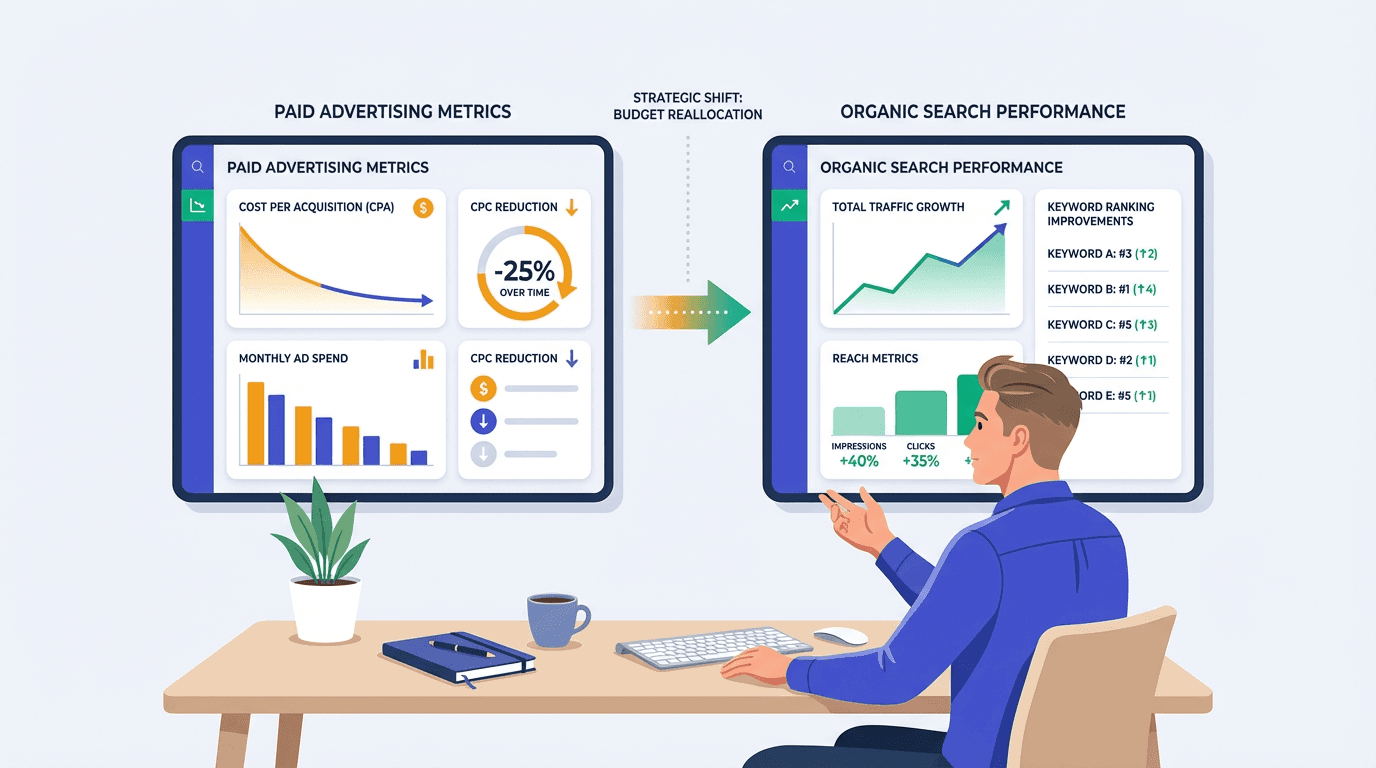
You know that sinking feeling when you open the ad dashboard and realize your cost-per-click jumped again, even though nothing "broke"? I've watched teams tweak bids, rotate creatives, and still end up paying more each quarter just to hold the same lead volume. That isn't a skills issue. It's the auction doing what auctions do.
SEO campaign management is the planning, execution, and ongoing refinement of your organic search program, tied to business outcomes rather than vanity rankings. Run it well and it becomes a pressure valve for paid spend: you use PPC data to pick the right organic targets, build pages that actually satisfy intent, then shift budget only when the organic results are stable enough to carry the load. If you've tried "doing SEO" before and it felt like a pile of random tasks, this is the missing piece, a managed campaign with clear handoffs and measurable impact.
Why Strong Organic Rankings Lower Your Ad Costs
Paid channels are auction-based. More competitors bidding on the same keywords means your costs rise, and it can happen fast. I've seen B2B SaaS brands go from $4 CPCs to $12 in under 18 months on core terms, with no meaningful change in the product or the market. The math just gets uglier.
Organic flips the economics. Once you rank, each additional click is essentially free, and the compounding effect is the whole point. There's also a direct paid benefit most people miss: strong organic relevance and landing page quality tend to support better Quality Scores on related ad terms. That means your on-page SEO and technical SEO work can show up as a CPC improvement even before you fully reduce spend.
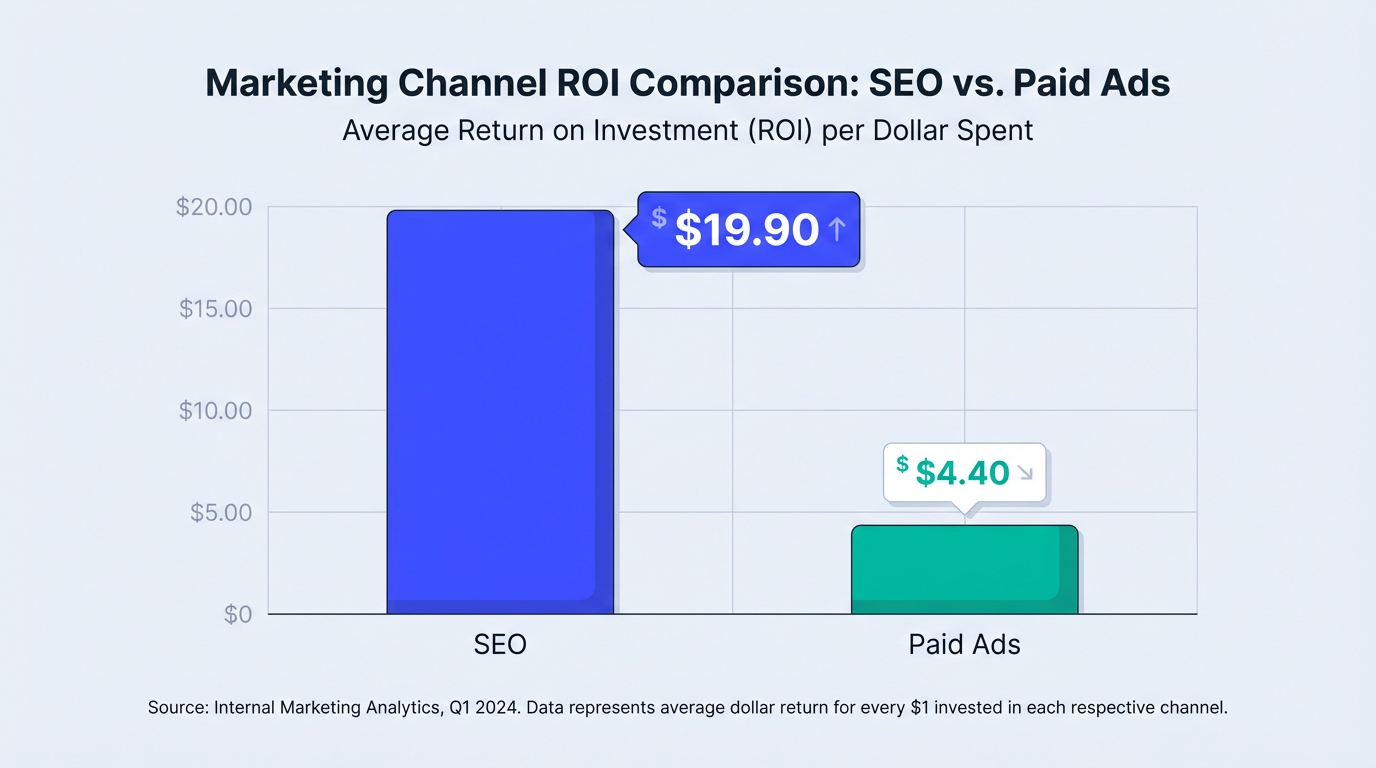
One more effect people underestimate is SERP overlap. If a searcher sees you twice (paid and organic), the paid click often gets easier to win, and your blended cost-per-acquisition drops because organic is doing part of the persuasion work. On average, every dollar spent on SEO returns around $19.90, compared to roughly $4.40 for paid ads. That's not a case for killing your ad budget. It's a case for running search engine marketing with a plan, where organic search takes more of the load over time.
Build Your SEO Campaign Around PPC Keyword Data
Most keyword research advice starts with third-party tools. Fine. But if you're already running Google Ads, you have something better than a keyword database. You have proof, real search terms tied to conversions, cost, and actual landing page behavior.
Pull your Google Ads search term report for the last 90 days and sort by conversions and cost. Two lists matter right away:
- "Profitable converters" you want to own organically so you can stop paying the toll forever.
- "Budget leaks" with high spend and weak conversion, which often signal intent mismatch or a landing page problem that SEO work will force you to fix anyway.
The fastest wins usually come from terms where you're already close organically. If you're sitting in positions 11 to 30 and paying a lot for the same query, that's low-hanging fruit. You don't need a miracle. You need a better page, cleaner internal linking, and a technical check to make sure the page is actually indexable and fast enough to compete.
Three Keyword Buckets with the Biggest Cost-Reduction Payoff
High-volume, high-CPC terms where you have no organic presence yet offer the biggest upside but require a longer runway. Long-tail queries with strong conversion rates but low search volume are often easier to rank for, and they stack up fast once you have a dozen or more pulling in traffic. Then there are brand-plus-modifier queries ("best [your category] for [use case]") where a well-built page can rank and convert without ongoing ad spend. Prioritize across all three rather than betting everything on one bucket. Most guides over-index on head terms because they look impressive in a report, but long-tail coverage is usually where the first real budget relief shows up.
The On-Page and Technical Work That Actually Moves Rankings
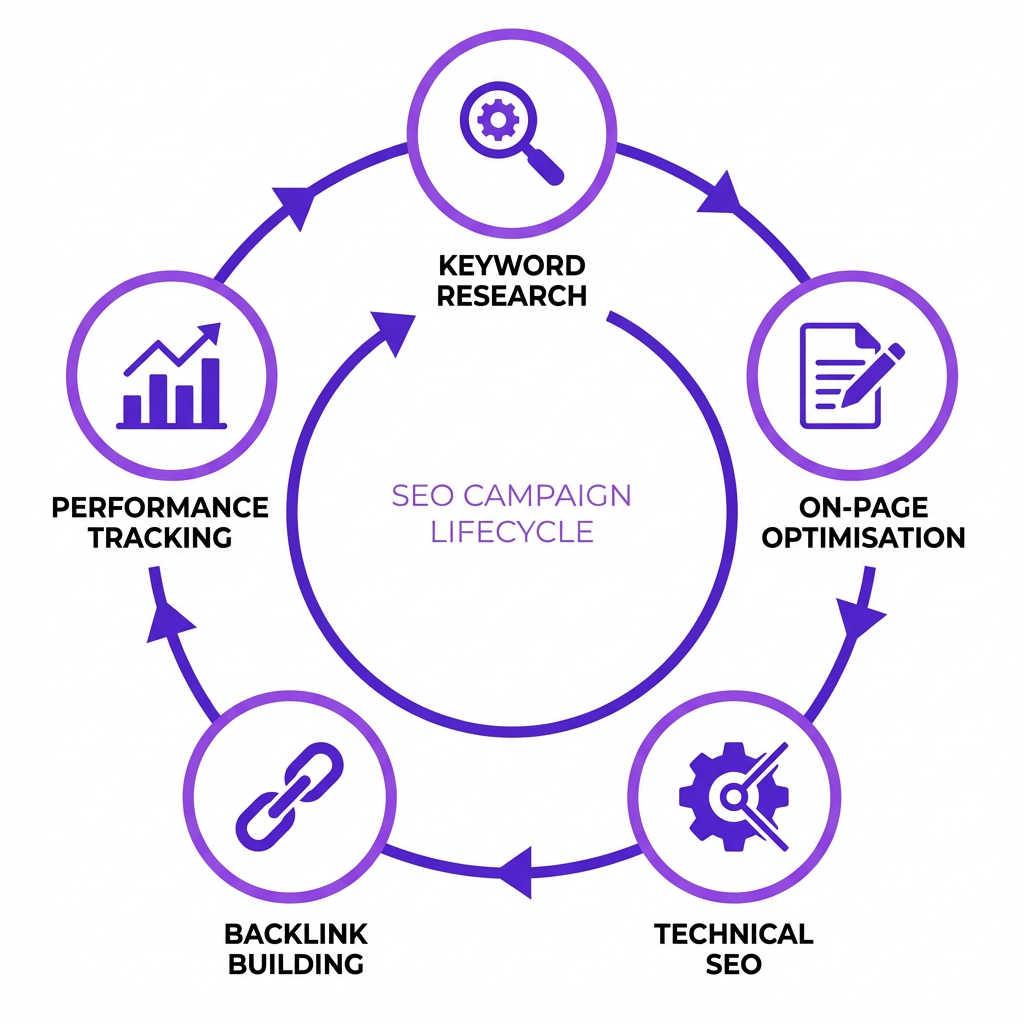
Keyword research without execution is just a spreadsheet. The part most teams underinvest in is the work that makes a page deserve to rank: titles that match intent, content structure that answers the question quickly then goes deep, and internal links that make the site legible to both users and crawlers.
This is the part most people get wrong: "just publish more." Volume without a map is how you end up with 200 posts and no pipeline. If your ads are running on "best project management software for agencies," a generic trends post won't replace that spend. A comparison page that actually answers the buying question might.
How Each SEO Component Impacts Ad Costs
| Component | What It Involves | Ad Cost Impact |
|---|---|---|
| Keyword targeting | Mapping PPC converters to organic content gaps | Reduces spend on terms you can rank for organically |
| On-page optimization | Title tags, headers, content depth, internal links | Improves Quality Score, lowering CPC on related paid terms |
| Technical SEO | Crawlability, page speed, Core Web Vitals | Better landing page experience scores reduce paid ad costs |
| Backlink building | Earning links from authoritative domains | Higher domain authority lifts rankings, reducing paid dependency |
| Performance tracking | Monitoring rankings, CTR, conversions by channel | Identifies which paid terms are ready to hand off to organic |
| Each SEO component creates a direct or indirect reduction in paid advertising costs over time. |
Tracking the Right KPIs (Not Just Rankings)
Rankings are a vanity metric if they don't connect to business outcomes. The number that matters most? Organic-assisted conversions. A user who finds you through a blog post and later converts via a retargeting ad still represents a cost reduction, because paid didn't have to do all the heavy lifting. Google Analytics 4 can surface this via attribution models, but you have to go looking for it.
A common thing I hear is, "Our SEO is up, but spend isn't down." Usually the tracking is the problem, not the channel. Connect every organic metric to a paid-side outcome, and the story becomes much easier to tell to leadership.
The KPIs worth monitoring in any serious SEO campaign:
- Organic traffic segmented by intent category (informational vs. commercial vs. transactional)
- Keyword ranking velocity for your target terms
- Conversion rate from organic landing pages
- Click-through rate from search (a proxy for title and meta quality)
- Overlap between your top organic pages and your current paid keyword list
That last metric is the one most teams skip. If you can't quickly see which paid keywords already have organic coverage, you're almost certainly overspending somewhere. And if GA4 attribution is messy, start simple: export paid keywords, export top organic queries, then match them in a sheet once a month. It's not glamorous, but it works.
Where AI-Powered SEO Tools Change the Equation
The strategy is usually fine. Follow-through is where things die. Someone forgets to update internal links. A content brief sits in a Google Doc for three weeks. Nobody checks rankings after publishing. I've seen teams spend weeks on planning, then lose the entire quarter to execution drift.
AI SEO tools don't fix bad strategy, but they do fix the boring parts that quietly wreck campaign execution. Prioritization, content gap identification, and performance tracking are the usual culprits.
Vizup is worth looking at if you're managing SEO campaigns alongside paid programs. It's an AI-powered organic marketing platform designed to surface the keyword and content opportunities most likely to reduce paid dependency, without requiring a dedicated SEO analyst. The practical value is in connecting organic performance to paid campaign decisions, so you can spot which terms are ready for a controlled pullback and which ones still need budget.
A common mistake is treating SEO software as a reporting layer rather than a decision-making layer. The tools that move the needle tell you what to do next, not just what happened last month. If your workflow requires exporting three CSVs before you can pick next week's priorities, it won't survive contact with a busy team.
The Transition Plan: Moving Budget from Paid to Organic
Don't cut paid spend the moment a keyword hits page one organically. Seriously. Rankings fluctuate, especially in the first 60 to 90 days after a page starts climbing.
The safer approach is to reduce paid bids incrementally as organic positions stabilize, pausing paid spend entirely only after you've held a top-three position for at least 30 days. Rushing this step is one of the most expensive mistakes in SEO campaign management.
Managing the Handoff at the Keyword Level
Track the handoff at the keyword level, not the campaign level. Some terms transition cleanly. Others won't, and a few (competitor-branded queries where you'll never rank) often stay paid forever. The goal isn't eliminating ads. It's eliminating waste.
Run both channels in parallel during the transition and watch your blended cost-per-acquisition. If it drops while total conversions hold steady, you're on the right track. If conversions dip, ease off the paid reduction until the organic page converts at a comparable rate. Often the culprit is the landing page, not the ranking. Fix the page before you blame the channel.
Frequently Asked Questions
What is SEO campaign management and how does it differ from general SEO?
SEO campaign management is the structured process of planning, executing, and refining your organic search strategy around specific business goals, usually tied to traffic, rankings, or revenue targets. General SEO tends to be reactive: fixing issues as they surface. Campaign management is proactive: you set objectives, build a roadmap, and track progress against defined KPIs. The difference in outcomes is significant.
How long does it take for SEO to actually reduce paid ad costs?
Realistically, 4 to 6 months for competitive terms, sometimes faster for long-tail keywords in less saturated niches. The timeline depends on your domain authority, content quality, and how aggressively you're building backlinks. Expecting paid cost reductions in the first 60 days is the most common planning mistake. SEO compounds over time; the biggest returns typically show up between months 6 and 18.
Which KPIs should I track to measure SEO campaign success?
The most useful KPIs for connecting SEO to ad cost reduction are: organic-assisted conversions, keyword ranking positions for your target paid terms, organic click-through rate, blended cost-per-acquisition across both channels, and the percentage of your paid keyword list now covered by organic rankings. Bounce rate and time-on-page matter too, but primarily as diagnostic signals when conversions underperform.
Can small teams run effective SEO campaign management without a dedicated SEO specialist?
Yes, especially with the right tools. Platforms like Vizup are built to make organic marketing manageable without a full-time SEO hire. The core workflow (keyword prioritization, content gap identification, performance tracking) can be handled by a generalist marketer if the tooling surfaces the right priorities. Technical SEO is the one area that sometimes genuinely requires specialist input.
Is it better to focus on SEO or PPC when budget is limited?
Neither in isolation. The most cost-efficient approach uses PPC data to inform SEO priorities, then gradually shifts budget as organic rankings mature. If forced to choose: PPC delivers faster results but stops the moment you stop paying. SEO takes longer but builds an asset that keeps generating traffic. For most teams with limited budgets, starting with a focused SEO campaign on 10 to 15 high-value keywords while running minimal paid spend on the same terms is the most defensible strategy.
How do I use PPC data for SEO keyword research?
Start with your Google Ads search term report (last 90 days), identify the top spenders and top converters, then map each term to an existing page or a new page type (comparison, category, use case, or integration). From there, improve on-page SEO, add internal links from relevant high-authority pages, and monitor organic-assisted conversions in GA4 while you taper bids only after rankings stabilize.
What are the biggest SEO campaign management mistakes that keep ad costs high?
The most common mistakes are cutting paid too early, tracking rankings without tying them to conversions, publishing content that doesn't match commercial intent, and ignoring technical SEO issues like crawlability and page speed that hurt both organic rankings and landing page experience for ads.
The teams consistently reducing their ad costs aren't doing anything exotic. They're running disciplined SEO campaign management: using paid data to pick organic targets, building pages that match intent, fixing the technical stuff that quietly kills performance, and tracking metrics that tie organic visibility to budget decisions. It takes time. But unlike paid spend, the results don't disappear when you stop writing checks.
