
It's 11 PM. A campaign just torched its daily budget, and you're adjusting bids on your phone while half-watching a movie. If you've run Facebook ads for any stretch of time, you've been there. The good news: facebook ad automation has matured enough to make that late-night scramble entirely optional. Even better, transitioning away from manual bidding doesn't mean flipping one switch and crossing your fingers.
What follows is a four-phase roadmap. Each phase builds on the previous one, so you hand off control gradually while keeping enough visibility to course-correct. Whether you're spending $50/day or $5,000, the sequence holds. Meta's own Advantage+ automation suite has improved dramatically, and at this point, resisting it usually costs more than adopting it.
Why Manual Bidding Worked (Until It Didn't)
Manual bidding earned its place. Setting CPC caps taught you how the auction works, what a reasonable cost-per-result actually looks like, and how to squeeze value from a tight budget. For years, hands-on control was the most reliable way to avoid waste.
Then the ground shifted. iOS 14.5+ gutted targeting signals. Audience fragmentation exploded. The sheer volume of micro-decisions needed to keep a campaign healthy at scale now outpaces what any person can handle in real time. Advertisers using Meta's AI-driven targeting have seen up to 22% higher ROAS compared to manual setups, according to a 2024 Meta for Business report. So the question isn't whether to automate. It's how aggressively, and in what order.
What Facebook Ad Automation Actually Controls
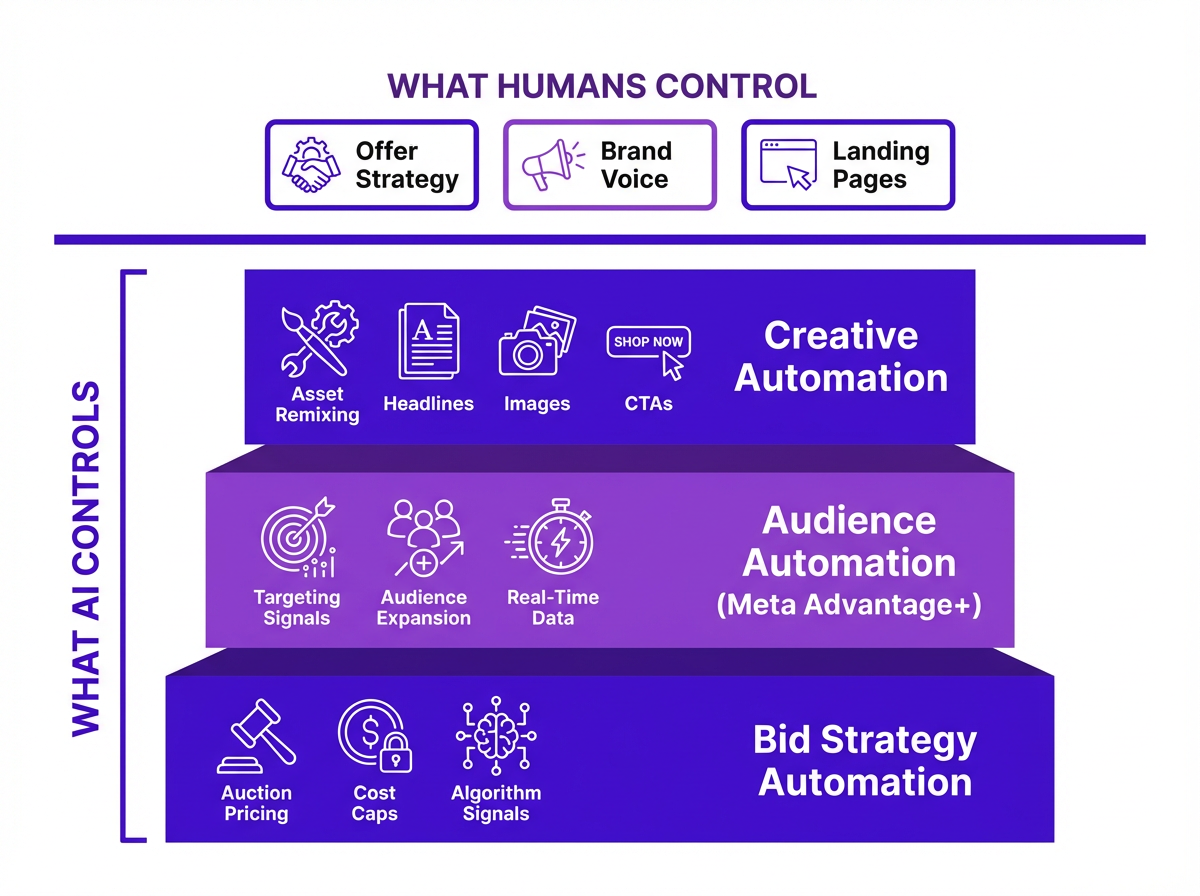
Three distinct layers of automation live on Meta's platform. Bid strategy automation (Lowest Cost, Cost Cap, Bid Cap) hands auction pricing to the algorithm. Audience automation, powered by Meta Advantage+ Audience, expands or narrows who sees your ads using real-time signals. Creative automation, or Advantage+ Creative, remixes your assets (headlines, images, CTAs) to surface winning combinations without you manually A/B testing every permutation.
Humans still own offer strategy, brand voice, landing page quality, and interpreting results against actual business goals. Automation, as IBM defines it, reduces human intervention in processes, but judgment stays with you. Third-party ad automation tools pick up where Meta leaves off: cross-channel pacing, organic-to-paid feedback loops, and the connective tissue between platforms.
Your 4-Phase Facebook Ad Automation Roadmap
This roadmap guides you through four phases of automation. Each phase hands off a layer of control to Meta while you maintain clear guardrails. Do not skip steps; the sequence is designed to keep performance readable and easy to troubleshoot.
Phase 1: Let Go of Bid Caps First
Begin with a campaign that already performs reliably. Switch its bidding from a manual option like Bid Cap to an automated one, such as Lowest Cost (where Meta spends to get the most results) or Cost Per Result Goal (where Meta aims for an average cost you define). To get a clean comparison, run the manual and automated versions side-by-side for 7 to 14 days. Afterward, compare the cost per acquisition (CPA), spend pacing, and total conversion volume between the two.
The most difficult part of this transition is often psychological, not technical. It is normal to see Meta spend faster in the first 48 hours as its algorithm probes the auction. Treat this initial period as learning behavior, not a sign of a broken setup. Use the bid strategy screen shown in the image above to confirm you are using Lowest Cost or Cost Per Result Goal, then judge the final results after the learning phase stabilizes.
Phase 2: Open Up Audiences with Meta Advantage Plus
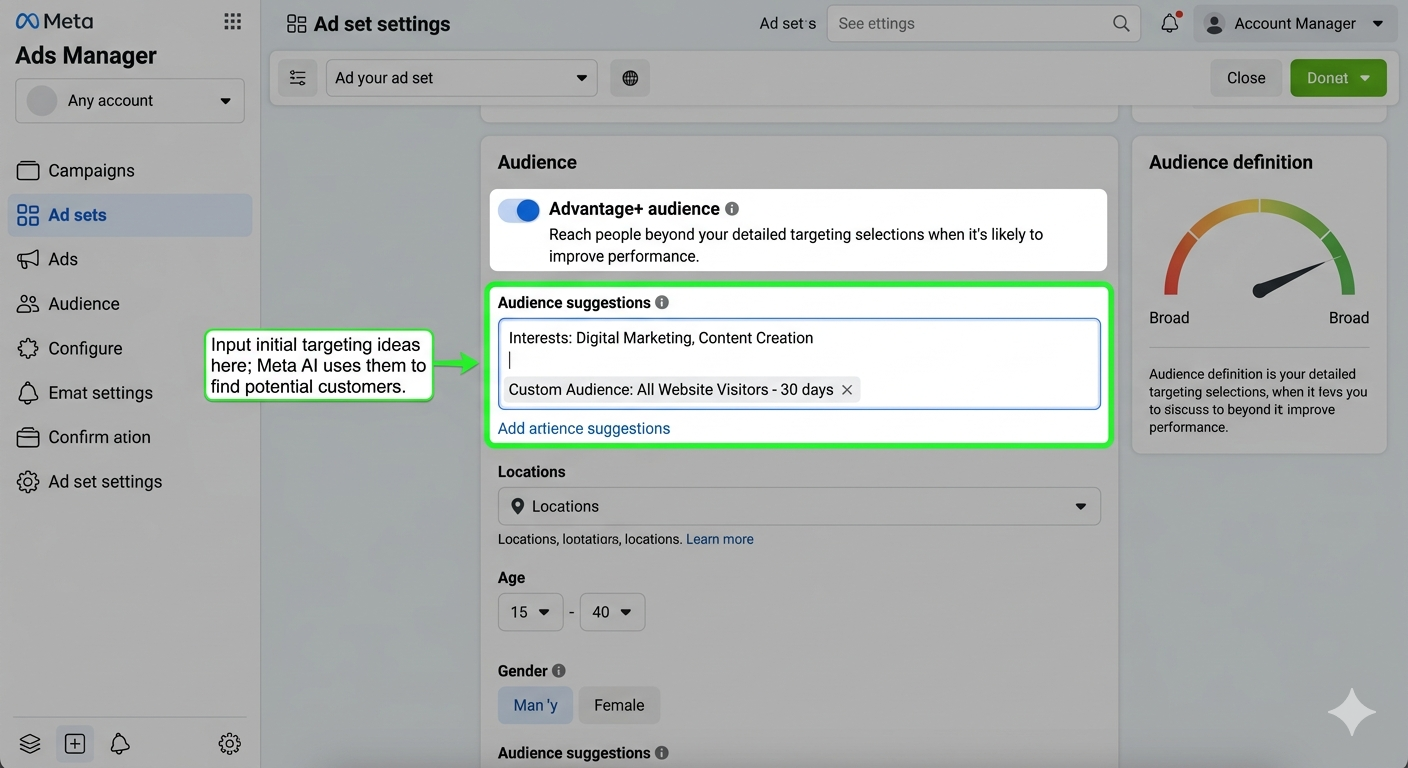
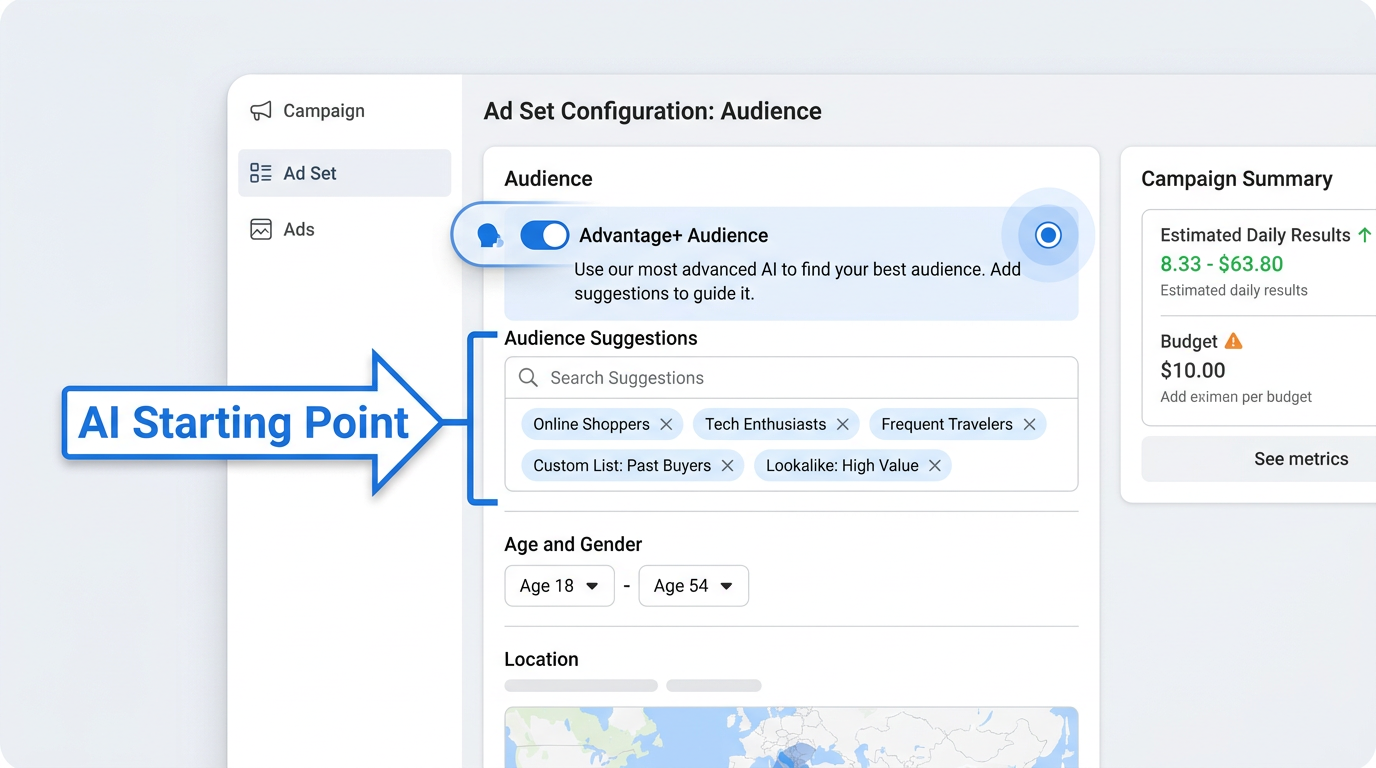
Once your bidding automation is stable, it's time to loosen targeting. Move from narrowly defined, stacked interests to Advantage+ audience. This allows your inputs to act as suggestions rather than hard constraints. Meta can then expand your reach using signals like purchase behavior and real-time performance patterns that you cannot fully replicate with manual audience building.
Phase 3: Automate Creative Testing and Budget Allocation
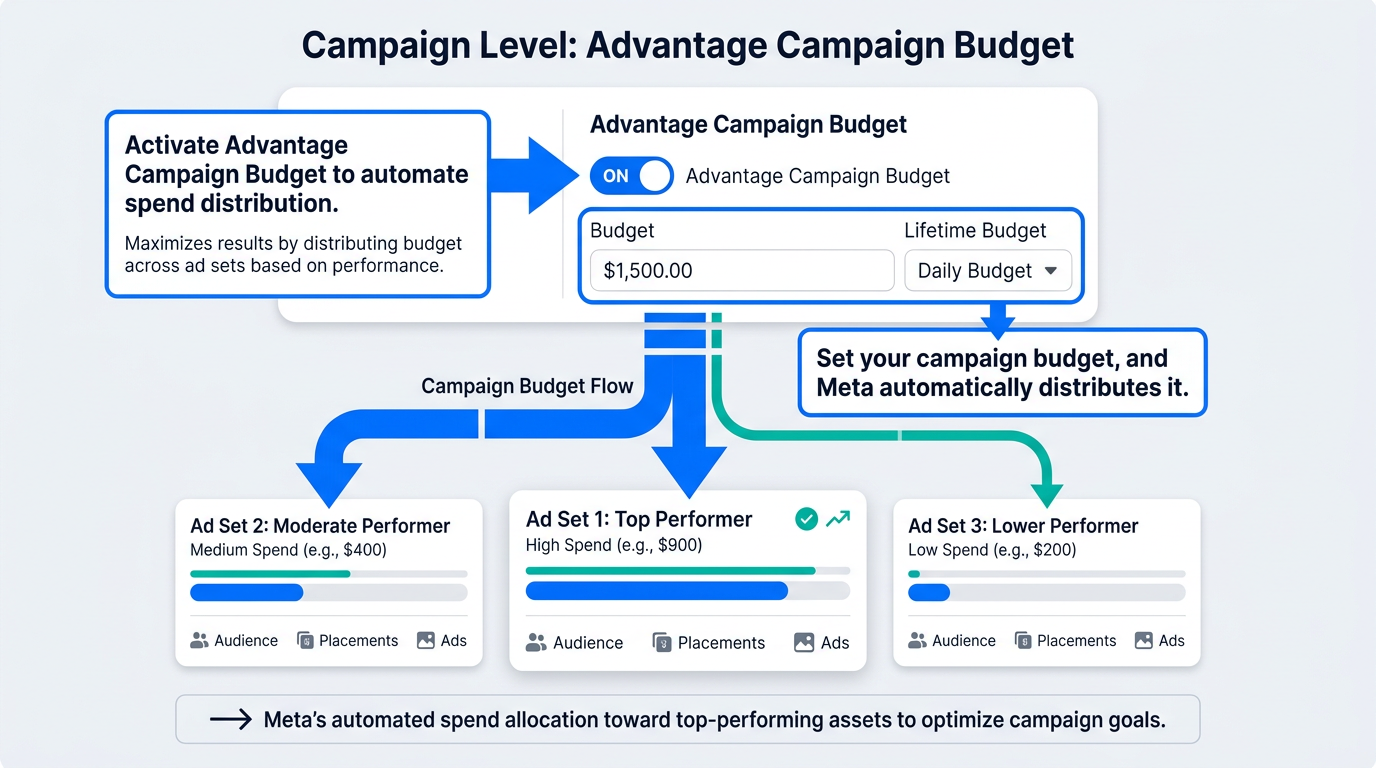
Advantage+ Creative can dynamically remix headlines, images, and calls to action, but its performance depends on the quality of the assets you provide. Bring strong raw materials and clear angles, as the system optimizes delivery and combinations, not the underlying quality of weak creative. Pair this with Advantage Campaign Budget (formerly CBO) so Meta can automatically shift spend toward the ad sets earning the best results. The campaign-level toggle shown in the screenshot is what makes this process feel hands-off, turning daily manual budget allocation into an automated part of your Facebook ads setup.
Phase 4: Layer in Rules and External Ad Automation Tools
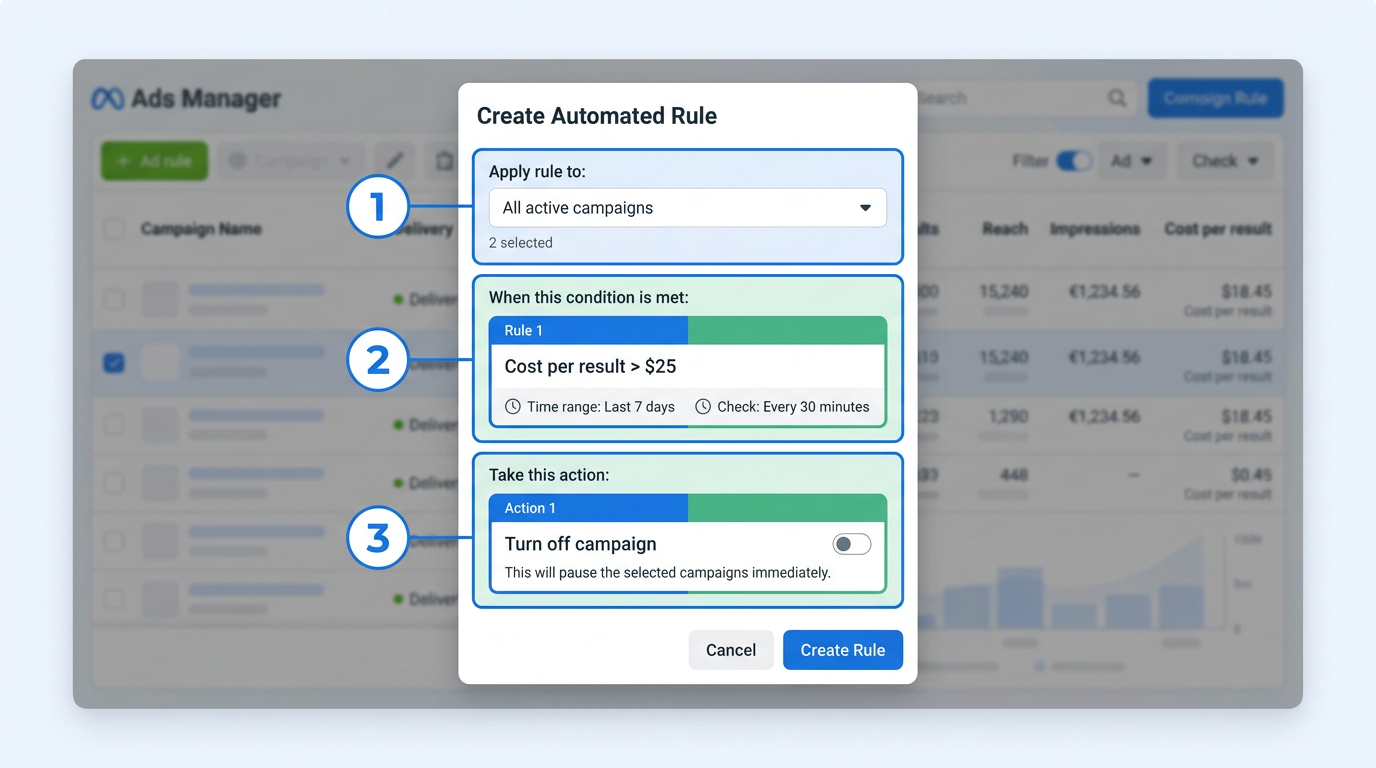
Finally, add safety nets using Meta’s native automated rules. Common guardrails include pausing ads that exceed a CPA threshold or increasing the budget when ROAS clears a specific target. Keep your first rules simple enough to explain to a stakeholder, and review the rule history weekly to catch any false positives before they restrict your ad spend. If you require capabilities that Meta does not offer natively, such as scheduled rule chains or Slack alerts, only bring in third-party automation after your in-platform rules are stable. This sequence keeps your automation stack easy to debug and reduces the odds of two systems pushing budgets in opposite directions. For reliable implementation details, follow Meta’s own guidance on creating and managing automated rules in the Meta Business Help Center (Meta, 2026).
Organic performance data is especially useful at this stage because it gives your automation a better starting point. Platforms like Vizup can surface which hooks and creative angles are already resonating with your audience organically. This allows your automated Facebook campaigns to start with stronger hypotheses instead of pure guesswork.
Manual vs. Automated Facebook Ads: What Changes at Each Phase
| Phase | What's Automated | What's Still Manual | Weekly Time Savings | Risk Level |
|---|---|---|---|---|
| Phase 1: Bid Strategy | Auction bidding, spend pacing | Audiences, creatives, budgets, rules | 2-3 hours | Low |
| Phase 2: Audience Expansion | Bidding + audience targeting via Meta Advantage Plus | Creatives, budget allocation, rules | 4-5 hours | Medium |
| Phase 3: Creative + CBO | Bidding, audiences, creative rotation, budget distribution | Offer strategy, landing pages, safety rules | 6-8 hours | Medium |
| Phase 4: Full Automation + Rules | All of the above + automated rules and external tool integrations | Strategy, brand decisions, performance interpretation | 8-10 hours | Low (with guardrails) |
| Each phase reduces hands-on time while maintaining control through guardrails and human oversight. |
Three Mistakes That Derail Facebook Ad Automation
Automating too many variables at once is the fastest way to lose diagnostic clarity. If you change the bid strategy, audience targeting, and creative optimization simultaneously and performance tanks, it becomes nearly impossible to figure out which lever broke. Phase your changes so each one can be evaluated on its own before you move to the next.
The second mistake is starving the algorithm. Budgets that are too low or conversion windows that are too narrow prevent Meta from collecting enough signal data to learn effectively. Meta's Adaptive Ranking Model, which rolled out on Instagram in late 2025, applies large-language-model-scale intelligence to better understand user intent. Since its launch, the model produced a 5% lift in ad click-through rates and a 3% increase in conversions, according to a Meta Engineering post from March 2026. Those gains require sufficient signal volume to materialize, and underfunded campaigns cannot provide it.
The third mistake is treating automation as a "set-and-forget" solution. Automation reduces repetitive work; it does not eliminate the need for oversight. Check performance weekly, review automated rule triggers, and refresh creative assets at least monthly. The algorithm optimizes within the boundaries you define, and those boundaries need regular updating as your business evolves. A practical next step is learning how to systematically test ad variations so your creative pipeline stays ahead of fatigue.
How long does it take for Meta's automated bidding to outperform manual bids?
Most campaigns exit the learning phase within 7 days, assuming at least 50 optimization events per week. Meaningful performance comparisons typically need at least 14 days of parallel testing. Patience during the initial spend ramp is critical.
Is Meta Advantage Plus worth using for small ad budgets under $50/day?
It can work, but conversion volume is the deciding factor. If your pixel records fewer than 50 weekly conversions, Advantage+ may struggle to optimize effectively. With low daily budgets, the system often prioritizes prospecting over retargeting, which is not ideal for every strategy. Start with bid automation and only expand to audience automation after your data foundation is solid.
Can I use Facebook automated ads and still control which audiences see my ads?
Yes. With Advantage+ audience, your original targeting inputs become suggestions that guide the algorithm rather than strict rules. You can still set firm audience exclusions (like existing customers) and apply controls for location and minimum age to maintain meaningful oversight over who sees your ads.
What are the best ad automation tools to use alongside Meta's native features?
Popular third-party options include rule-based tools like Revealbot for Slack alerts and cross-platform budget management. For organic-to-paid intelligence, an AI-powered platform like Vizup surfaces content performance signals that strengthen your paid creative strategy.
Will switching to automation ads reset my campaign's learning phase?
Yes, changing the bid strategy on an existing ad set triggers a new learning phase. To minimize disruption, duplicate the ad set with the new strategy and run both in parallel rather than editing the original.
Where Organic Intelligence Fits Into Your Automation Stack
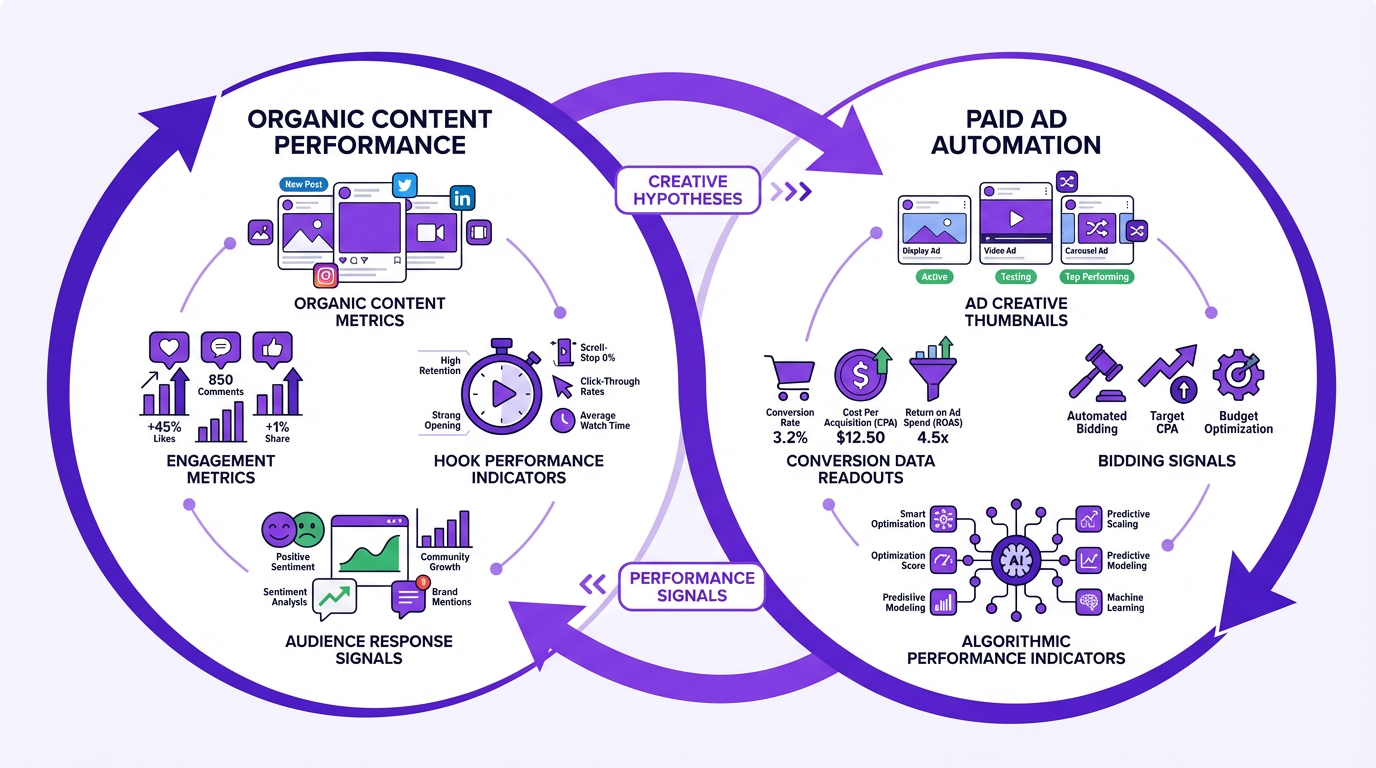
The strongest automated campaigns don't start from zero. They pull from organic content performance: which hooks drive engagement, which audiences respond without a paid push, which creative angles flop before you spend a dollar amplifying them. An AI-powered organic marketing platform like Vizup surfaces these signals systematically, so your automated facebook ads launch with sharper creative hypotheses instead of relying on the algorithm alone to find winners. For more on this, see our post on reducing ad costs with smarter SEO.
Full facebook ad automation isn't the finish line. Intelligent automation, where organic and paid data feed each other continuously, is. The four-phase roadmap gets you from manual to automated. Closing the organic-to-paid loop is what turns automated into genuinely smart.
