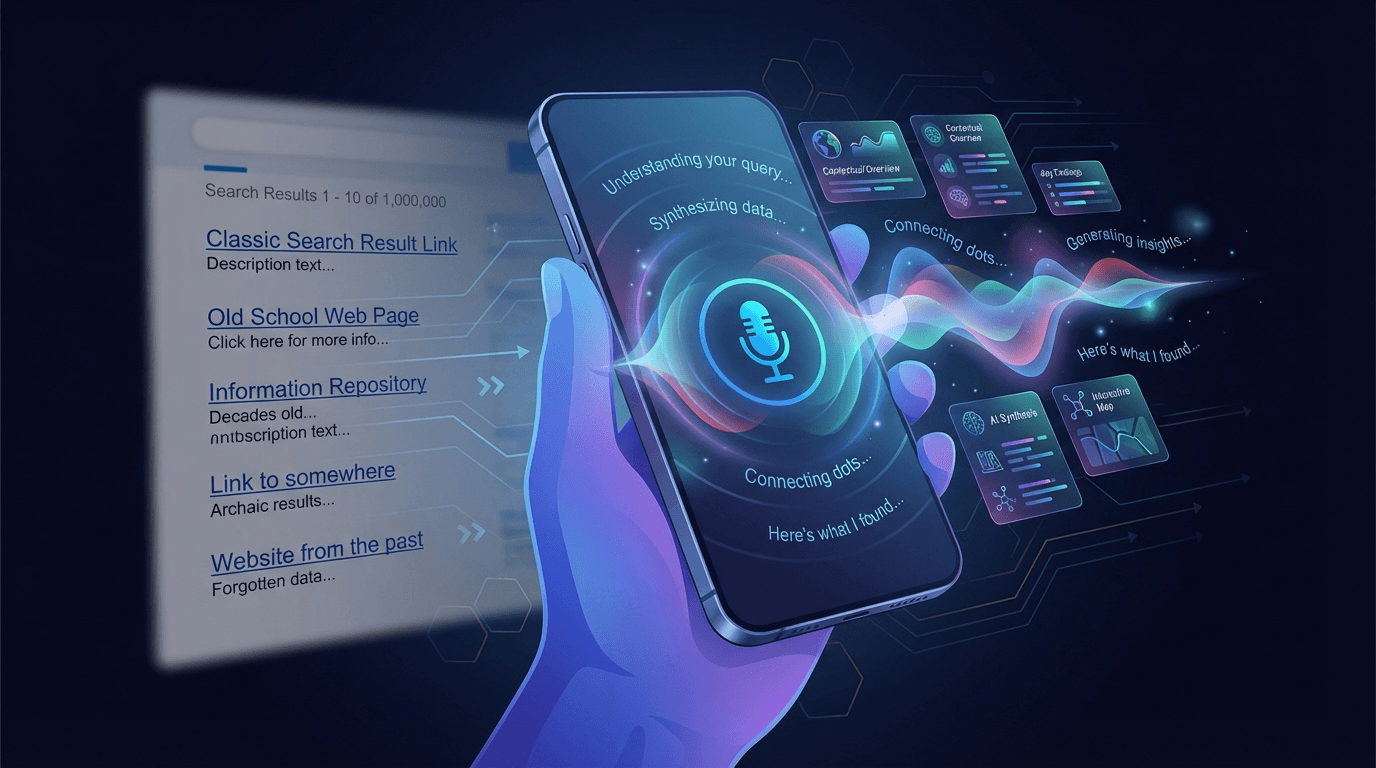
Google Search Live for AI Mode is a feature that transforms the standard search bar into a real-time, conversational interface, allowing you to interact with Google using voice and your phone's camera. Instead of just typing keywords and getting a list of links, you can have a back-and-forth conversation, ask follow-up questions, and get AI-generated answers synthesized from across the web, often without ever needing to click a link.
If that sounds like a seismic shift, it is. We've spent two decades optimizing for keywords and clicks. Now, we're facing a future where the search engine itself becomes the primary destination, the answerer of questions. For anyone whose business relies on organic traffic, this isn't just another algorithm update. It’s a fundamental change in the user-search engine relationship, and understanding it is the first step to surviving it.
Why This Matters More Than Any 'Helpful Content Update'
Let's be blunt. For years, SEOs have obsessed over algorithm updates with dramatic names. We panicked over Panda, Penguin, and every flavor of Core Update. Most of those were tweaks to the existing game: how to rank a list of blue links. Google Search Live isn't a tweak. It's a new game entirely.
The core threat is the rise of the zero-click search. When a user can ask Google a complex question and get a comprehensive, synthesized answer directly in the AI overview, their incentive to click through to your website plummets. One study has already predicted a potential organic traffic drop of 18-64% for some sites due to AI answers. But recent data from ALM Corp, as cited by SEOmator in 2026, paints an even starker picture: in Google's AI Mode, the rate of zero-click searches is as high as 93%. That number should stop you in your tracks.
This isn't about losing a few percentage points of traffic. It's about a potential collapse of the primary acquisition channel for millions of businesses. The entire model of creating content to attract visitors who then convert is at risk. Your website might go from being the destination to being just another data source for Google's AI to scrape, summarize, and present as its own. This is a complete rethinking of what it means to be 'visible' online, shifting the focus from ranking to being the indispensable source material for the AI.
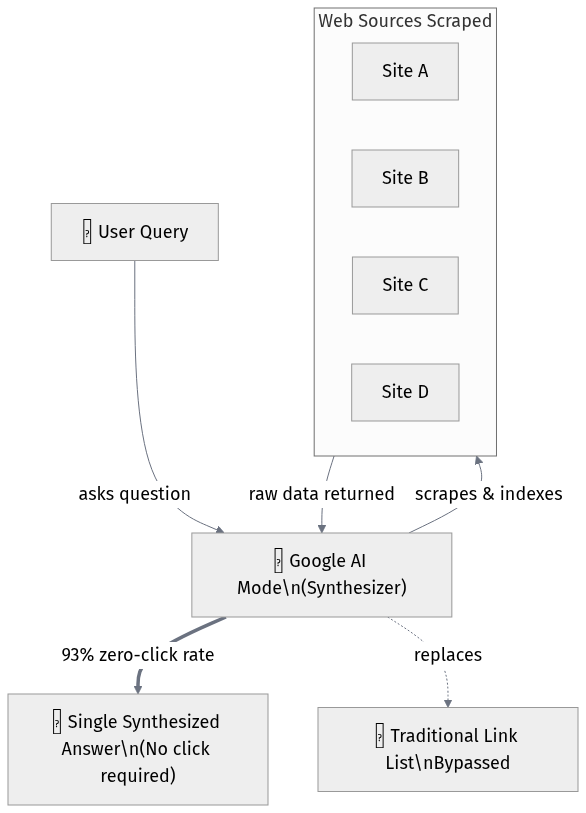
How Does Google Search Live Actually Work?
The technology behind this feels like science fiction, but the mechanics are grounded in a few key advancements. It’s not just a voice assistant like Siri or Alexa bolted onto a search engine. It’s a fundamentally different way of processing an inquiry.
The Engine: Gemini 3.1 Flash Live
At the heart of Search Live is a new, specialized AI model. According to a recent Forbes report, the global expansion is powered by Google's Gemini 3.1 Flash Live. This model is built specifically for low-latency, audio-first interactions. The ‘Live’ part of the name is key. It’s designed to process information and respond in real-time, making the conversation feel natural rather than the ask-wait-receive pattern of older assistants. It's also inherently multilingual, which is why Google was able to roll this out to over 200 countries and territories so quickly.
The Inputs: Voice and Vision
This is the biggest departure from traditional SEO. We're used to optimizing for text. Search Live is built for multimodal input. As noted by Search Engine Journal in 2026, the feature allows for both voice and camera conversations. This means a user can:
- Ask a question verbally: “What are the best dog-friendly hiking trails near me that are less than three miles and have a water source?”
- Show Google something: Point their camera at a plant and ask, “Why are the leaves on my fiddle-leaf fig turning yellow and what do I do about it?”
- Have a follow-up conversation: After getting an answer, they can ask, “Okay, which of those trails has the least elevation gain?” without restating the original context.
The AI model has to understand spoken language, identify objects in an image, comprehend the user's intent, search its index for relevant information, synthesize a unique answer, and deliver it back in a conversational tone. It's a massive computational lift that was unthinkable at this scale just a few years ago.
What This Means for Your SEO Strategy: The Hard Truths
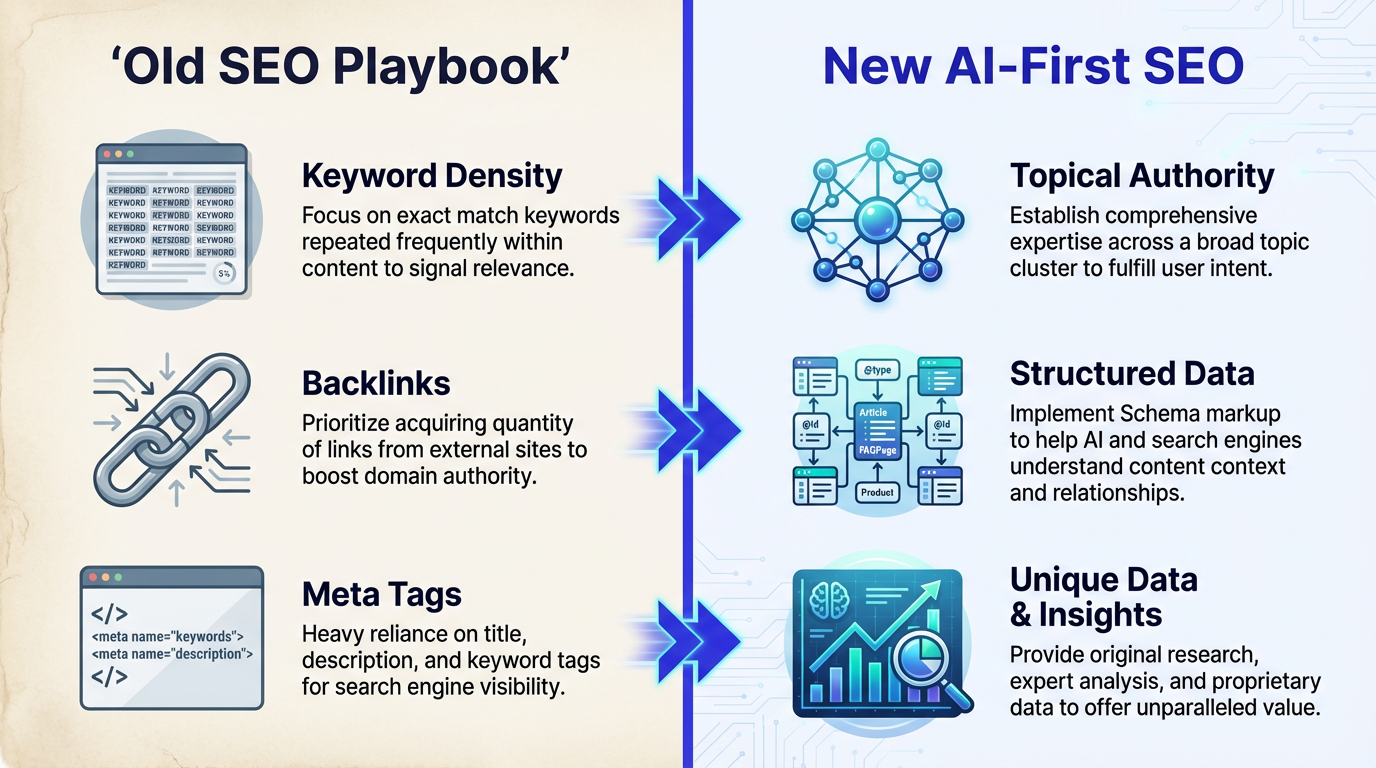
So, what do we actually do? The old playbook of keyword stuffing and backlink building feels woefully inadequate. The focus has to shift from winning the click to becoming the undeniable source of truth that the AI is forced to cite. Here’s what that looks like in practice.
1. Topical Authority Over Keyword Targeting
This is no longer a buzzword. It's the entire game. An AI tasked with providing a comprehensive answer will pull from sources that demonstrate deep, interconnected expertise on a subject. It won't just look for one page that matches a keyword. It will look for a domain that has covered a topic from every conceivable angle. If you sell project management software, you can't just have a page for “Gantt chart software.” You need articles on Gantt chart history, tutorials on advanced techniques, templates, comparisons of methodologies, and case studies. You need to own the entire conversation. This is the core of improving your search ranking in an AI-driven world.
2. Structured Data is Now Non-Negotiable
If you've been putting off implementing schema markup, your grace period is over. Structured data is the language that explicitly tells search engines what your content is about. It turns your unstructured text into a machine-readable format. For an AI trying to quickly find a product price, a recipe's cooking time, or a business's opening hours, schema is a direct, unambiguous signal. Websites with robust, detailed structured data are essentially spoon-feeding the AI, making their content easier to parse and more likely to be used in a synthesized answer.
3. Unique Data and First-Party Research are Your Moat
If ten websites all say the same thing, the AI has no reason to prefer one over the other. It can just synthesize the consensus. But if your website has proprietary data, original research, exclusive interviews, or a truly novel perspective, you provide something the AI can't get anywhere else. This is your defense against being commoditized. Conduct surveys, analyze your own user data (anonymously, of course), and publish findings that can't be replicated. This makes you a primary source, not just another aggregator of information. You become the citation.
Common Misconceptions I'm Already Hearing
Whenever a big shift like this happens, the industry fills with bad takes and panicked advice. I've seen it a dozen times. Here are a few myths about Google Search Live that need to be cleared up right away.
Info: The biggest misconception? That this is just 'voice search 2.0'. It's not. Voice search was about optimizing for question-based keywords. This is about your entire site being ingested and repurposed by a reasoning engine.
Myth 1: “SEO is dead.” This is the most tired and least helpful reaction. SEO isn't dead; it's transforming. The goal is no longer just to rank #1. The new goal is to become the foundational source material for the AI's answers. The tactics change, but the discipline of optimizing your digital presence for a search engine remains. It's just that the ‘search engine’ is now an AI.
Myth 2: “I just need to create content that answers questions.” This is partially true but dangerously simplistic. Yes, your content needs to answer questions. But it can't be thin, FAQ-style content. The AI can generate that on its own. Your content needs to provide depth, context, and a perspective that isn't easily summarized. It needs to demonstrate true expertise, not just provide a surface-level answer. It's about the ‘why’ and ‘how’ behind the ‘what’.
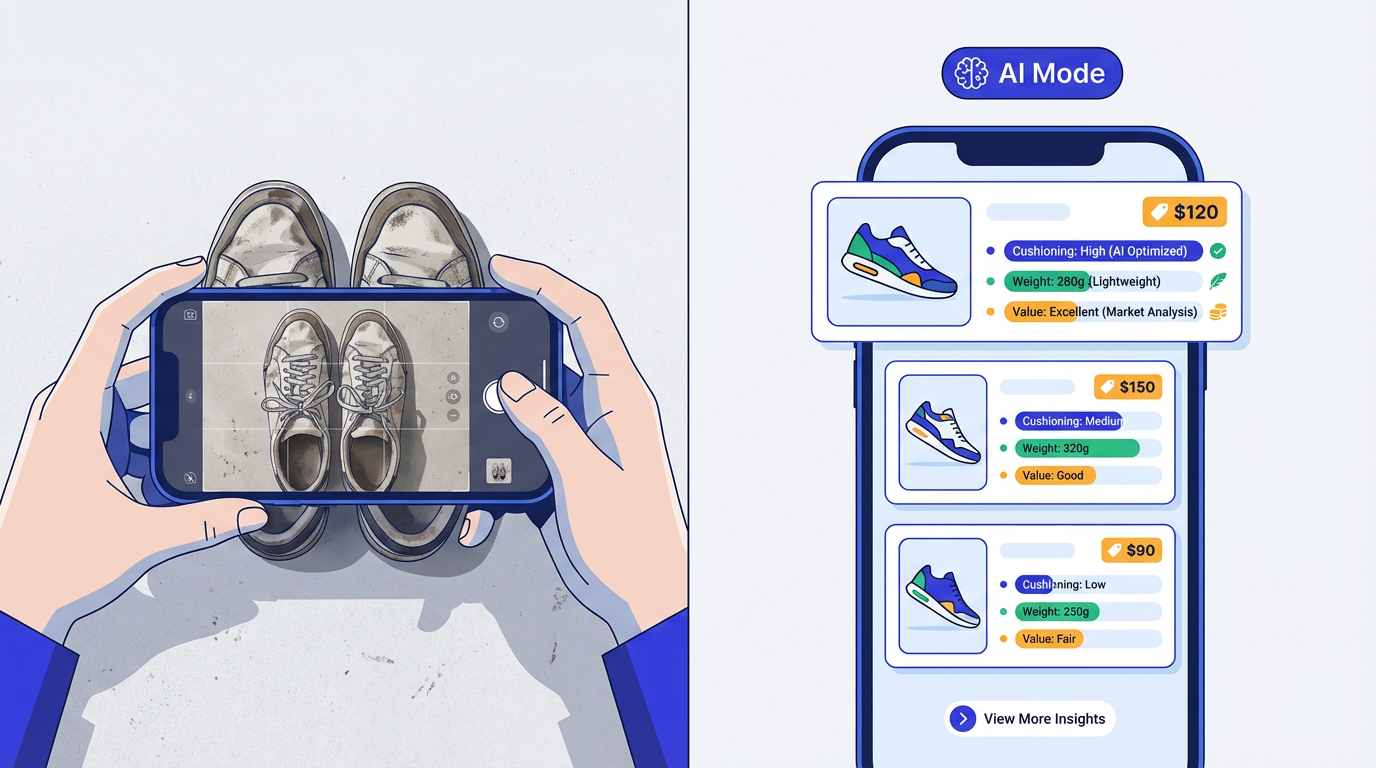
Myth 3: “This only affects informational queries.” Wrong. With multimodal search, transactional and commercial queries are very much in play. A user can point their camera at their running shoes and say, “Find me a newer model of these with more cushioning for under $150.” The AI will then synthesize product information, reviews, and pricing to present a direct recommendation. E-commerce, local services, and B2B are all on the front line. The way users find and evaluate products is changing, which is part of a larger trend of how content discovery is changing across the board.
Key Takeaways: Your Survival Guide
This is a lot to take in. If you're feeling a bit of whiplash, that's normal. The ground is shifting beneath our feet. To keep it simple, here are the most important things to focus on right now.
- Accept the Zero-Click Future: Stop assuming a high ranking will equal high traffic. The new KPI is influence: being cited, referenced, and used as a source by the AI.
- Go Deep, Not Wide: Prioritize building comprehensive topical authority in your core area of expertise over chasing dozens of unrelated keywords.
- Structure Everything: Implement detailed schema markup across your entire site. Make it painfully easy for machines to understand your content.
- Create Unique Knowledge: Invest in original research, proprietary data, and expert-driven insights that cannot be found anywhere else. This is your only real competitive advantage.
- Think Multimodal: Consider how your content and images can answer questions that a user might ask with their camera, not just their keyboard.
- Build Your Brand: In a world where Google is the front door, having a brand that users seek out directly is the ultimate insurance policy. Your direct traffic and brand recognition are more valuable than ever.
The introduction of Google Search Live for AI Mode isn't an endpoint. It's the beginning of a new paradigm for digital information. The businesses that will thrive are the ones that stop thinking about gaming an algorithm and start focusing on becoming the most authoritative, trustworthy, and indispensable source of information in their field. The AI is coming for your traffic. The only defense is to give it something so good it has no choice but to quote you.
Frequently Asked Questions
Is Google Search Live for AI Mode replacing traditional search?
Not immediately, but it represents a major shift. For now, it's an optional mode, but its features and AI-generated answers are being integrated more deeply into the main search results. Think of it as the direction Google is heading, not an overnight replacement.
Will backlinks still be important for SEO?
Yes, but their role is evolving. They will likely be seen less as a direct ranking factor and more as a signal of authority and trust. An AI will likely use links from reputable sources to help verify the credibility of information, making them a foundational signal of expertise.
How can I track my performance in AI Mode?
This is the big challenge. Traditional rank tracking is becoming less relevant. The new metrics will likely revolve around brand mentions, citations in AI answers, and direct traffic. Tools are still catching up, but the focus will shift from keyword position to source attribution.
Does this mean I should stop writing blog posts?
No, you should stop writing low-value, repetitive blog posts. You should double down on creating in-depth, expert-driven content that provides unique insights. Your blog is your primary tool for building topical authority. For more ideas, check out Vizup's marketing blog.
What is the single most important action I can take today?
Conduct a brutal content audit. Identify every piece of content on your site that is generic, thin, or easily replicated. Make a plan to either remove it, consolidate it, or radically improve it with unique data and expertise. Stop feeding the AI generic content and start building your authority.
