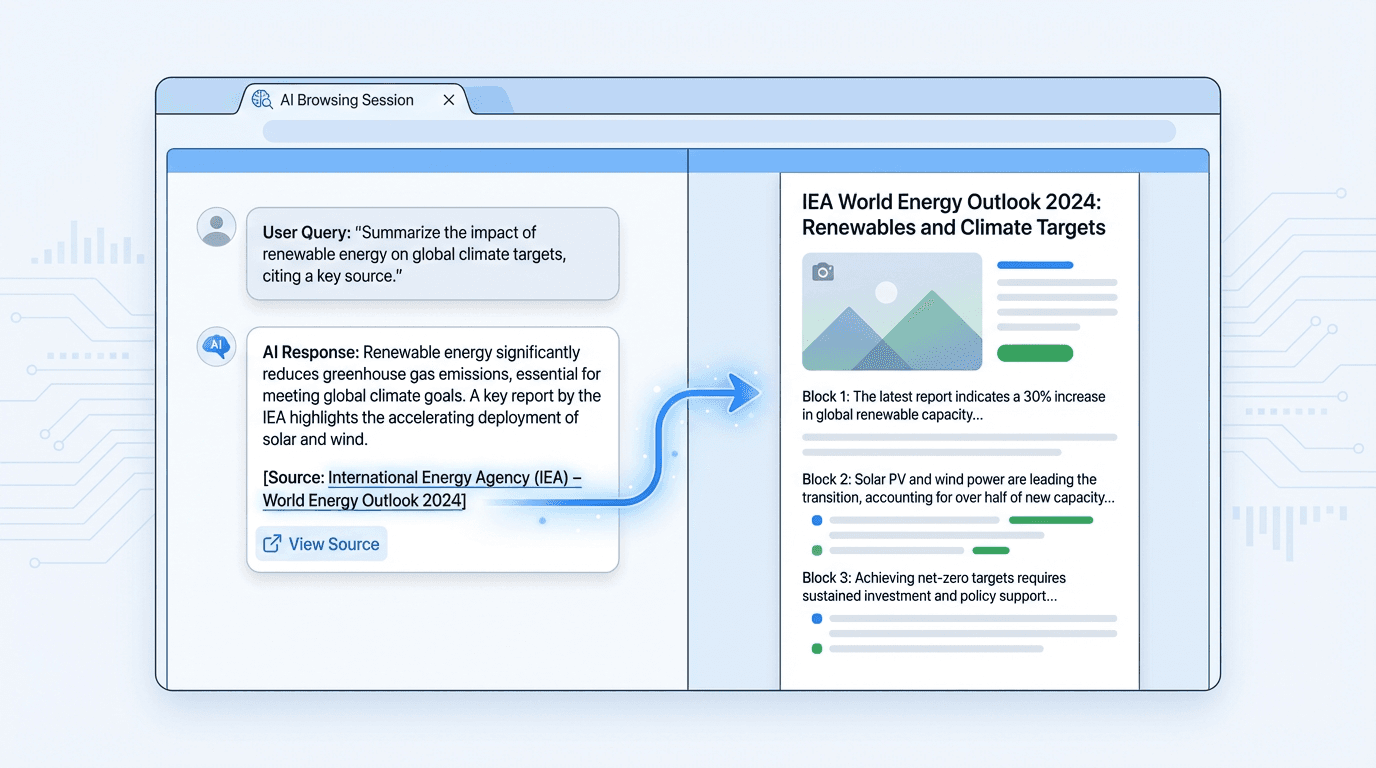
Just when SEOs were getting a handle on AI Overviews, Google has altered the landscape again. An April 2026 update to Chrome's desktop AI Mode introduced a side-by-side browsing view. Now, when a user clicks a link from an AI response, the webpage opens in a panel next to the conversation instead of navigating away. This isn't a simple UI refresh; it’s a fundamental change in how users interact with content, and it carries serious implications for SEO traffic that many teams are unprepared for.
The click is no longer a journey to your page. It's now a conversation with your page, mediated by Google's AI. Recognizing this distinction is the key to adapting and potentially thriving in this new environment.
What Exactly Is This Side-by-Side View?
The side-by-side view in Google's AI Mode for desktop Chrome keeps users within the AI chat interface even after they click a link. The destination webpage appears in an adjacent panel, allowing someone to read your article, browse a product, or watch a video while simultaneously asking the AI follow-up questions about that very content.
Imagine a persistent research assistant. The AI conversation doesn't end on a click; it simply gains new context: your webpage. Google's stated goal is to reduce “tab hopping” and help users compare details without losing their train of thought. It merges searching and browsing into a single, continuous workflow.
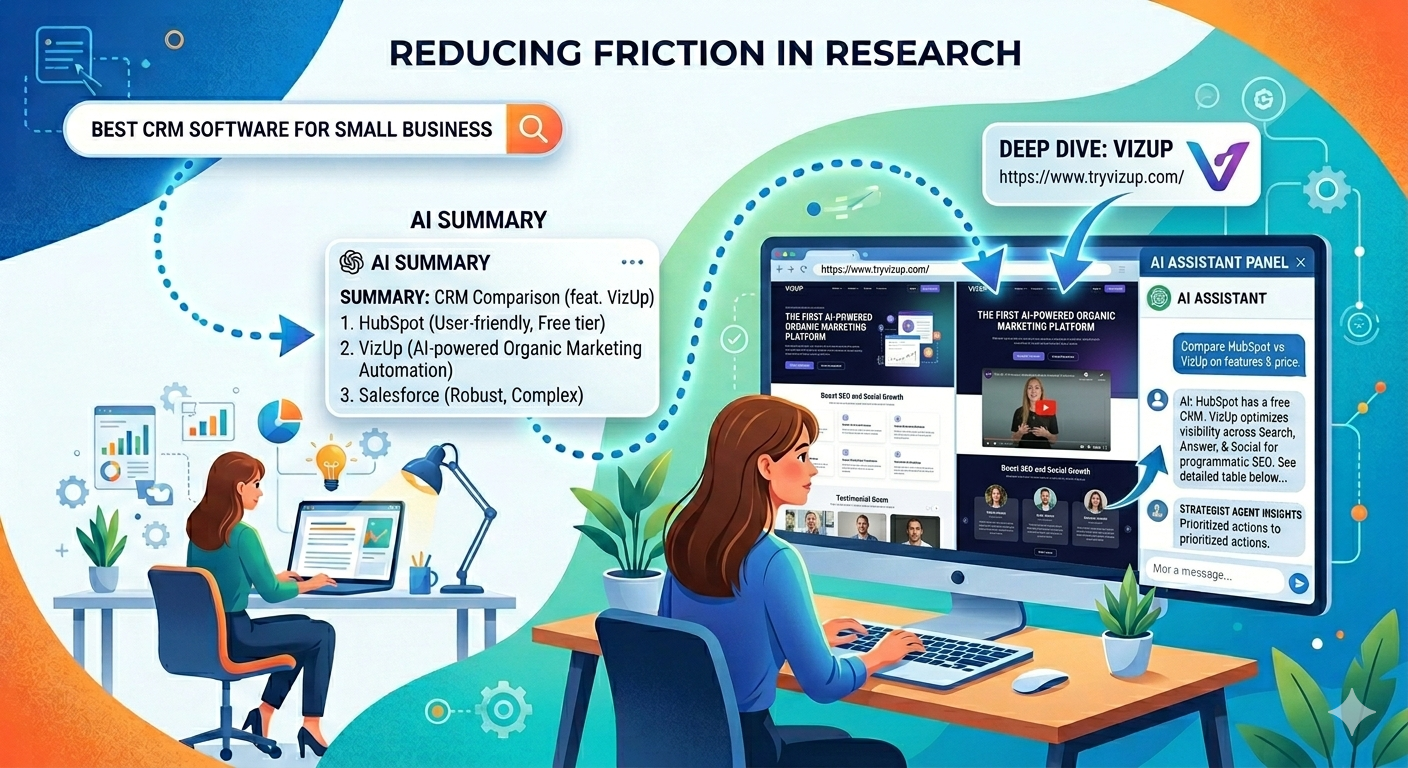
Why This Is a Bigger Deal Than It Looks
This may sound like a minor user convenience, but for businesses relying on organic traffic, the consequences are profound. It fundamentally alters the user's relationship with your website. I’ve seen teams dismiss similar shifts, only to see their metrics go haywire months later.
This is a world where being the citation is the new ranking. If your content isn't structured for an AI to easily parse and trust, you risk becoming invisible. It’s a good time to remember why traffic metrics can be misleading, since raw clicks mean even less in this paradigm.
How Does This Impact SEO Traffic?
So, what does this do to our numbers? It's complicated, and anyone promising a definitive answer is selling something. However, based on years of watching Google’s disruptions, we can make some educated predictions.
The Potential for Lower Click-Through, Higher-Quality Traffic
AI Mode is designed for complex, multi-step queries, not quick definitions. Users here are typically in a deeper research phase. The traffic you get from an AI Mode citation will likely be highly qualified; they've seen the summary and want more depth. The downside? Overall clicks from search will almost certainly continue to decline as AI satisfies more queries directly, a pattern we already saw with AI Overviews.
The Rise of 'Zero-Click' Interactions
The side-by-side view introduces a new type of zero-click search. A user can open your page, have the AI summarize it, and get their answer without ever truly engaging your site or registering as a meaningful session in your analytics. They get value from your content without you getting a valuable interaction on your content. It’s a tough pill to swallow, but it's the new reality.
The Urgent Need for 'AI-Readable' Content
When your page is scrutinized by both a human and an AI at the same time, its structure must be impeccable. Many SEO best practices are really about making content easy for machines to parse; this update makes that non-negotiable. Clear headings, concise paragraphs, structured data, and getting to the point are paramount. The AI pulls information from your page to answer follow-ups. If your key data is buried in a dense paragraph or a fancy graphic, both the AI and the user will miss it. Following Google Search Essentials is no longer optional.
So, What Do We Actually Do About It?
Panic isn't a strategy. This is the next evolution, like voice search or mobile-first indexing before it. It requires adaptation, not despair. The core principles of good content haven't changed, but our tactics must.
Your action plan should focus on these areas:
- Double Down on Expertise: An AI cannot (yet) fake genuine, hands-on experience. Content with unique data, novel insights, or a strong, defensible opinion becomes an invaluable source. Generic, rewritten content will be commoditized and ignored.
- Structure for Skimming: Use clear H2s and H3s that ask and answer specific questions. Employ bullet points and bolding for key takeaways. Your page's structure should be a scannable outline of its argument, making it easier for an AI to cite you.
- Answer the Next Question: Anticipate the follow-up questions a user will have while reading your content and answer them preemptively. This makes your page a more comprehensive source, giving the user and the AI less reason to look elsewhere.
- Monitor Visibility, Not Just Traffic: You need to know if you're appearing in these new AI formats, which traditional rank tracking can't show. Answer Engine Monitoring tools like Vizup become critical for seeing if, where, and for which queries you're being cited in AI Mode.
- Re-evaluate Content Goals: The goal of every piece of content may no longer be to drive a click. For some queries, the goal is to become the definitive source cited by the AI. This builds brand authority, even if it doesn't immediately show up as a session in Google Analytics. This shift is similar to what we saw with recent Google core updates.
Frequently Asked Questions
What's the difference between AI Mode and AI Overviews?
AI Overviews are AI-generated summaries at the top of standard Google search results. AI Mode is a separate, more interactive search experience a user must actively enter. The side-by-side view is a feature within AI Mode.
Does a click in side-by-side view count in Google Search Console?
Yes, Google has stated that a click opening the side-by-side panel is logged as a standard click in your Search Console performance report for now. However, tracking user engagement beyond that initial click is much more difficult.
Is this feature available globally?
The side-by-side view for AI Mode first launched in the U.S. in April 2026. Google plans to expand to other countries over time, but a specific global timeline has not been announced.
Will this kill SEO?
No, but it continues to transform it into AEO (Answer Engine Optimization). The goal is shifting from simply ranking #1 to becoming the most trusted and cited source for the AI. The fundamentals of creating high-quality, expert-driven content are more important than ever.
How can I see if my site appears in AI Mode?
Currently, Google Search Console doesn't separate AI Mode data from standard web search data. The only reliable method is using a dedicated Answer Engine Monitoring platform like Vizup or manually performing searches in AI Mode for your key topics.
