
For two decades, we've designed websites for human eyes and fingers. We obsessed over visual hierarchy, intuitive navigation, and beautiful aesthetics. But a new visitor is here, and it doesn't care about your hero image or clever micro-interactions. It doesn't have eyes.
These newcomers are AI agents, autonomous programs that browse the web to complete tasks for their users. While still a small fraction of your audience, they are growing rapidly and interact with your site in a fundamentally different way. If your digital presence isn't built to communicate with them, you risk becoming invisible. A website for AI agents is no longer a futuristic concept; it's a strategic necessity for today.
What Are AI Agents, Really?
An AI agent is a software system that uses artificial intelligence to perceive its digital environment, make decisions, and take autonomous actions toward a goal. This is a leap beyond a simple chatbot that only reacts to prompts. An agent can create and execute a multi-step plan. For example, it can be tasked to not only find the best flight options but also book the ticket, reserve a rental car, and update your calendar, all without constant supervision.
Powered by large language models (LLMs), these agents can understand complex requests, reason about the best course of action, and use tools like a web browser to get things done. Their defining traits are autonomy, goal-oriented behavior, and the ability to learn from their interactions. They are, in effect, autonomous agent interfaces to the web.
Why You Can't Afford to Ignore This
This isn't a niche trend; it's a seismic shift in web traffic. A 2026 report from HUMAN Security revealed that automated internet traffic grew eight times faster than human traffic in 2025. Traffic specifically from AI agents exploded, growing by a staggering 7,851% year-over-year.
What are they doing? More than just reading. The same report found 2.3% of all AI agent activity now occurs on checkout pages, a clear signal of autonomous purchasing. When a user asks an agent to “find the best deal on a new camera,” the software might visit thousands of pages to compare specs and prices, a task no human would ever perform. Your website must be one of the pages it can understand, or you won't even make the shortlist.
How to Make Your Website AI-Agent Friendly
The good news is that you don't have to rebuild your site from the ground up. Many of the principles for making a website for AI agents overlap with what you should already be doing for SEO and accessibility. As Google's guidance notes, “Everything we suggest to make a site 'agent-ready' also makes sites better for humans.” The core focus is on clarity, structure, and machine-readability.
1. Embrace Semantic HTML
This is the absolute foundation. AI agents, much like screen readers, depend on your code's underlying structure to understand your content. A page built with generic <div> tags is a confusing jumble to a machine. Using semantic HTML elements like <header>, <nav>, <article>, and <main> provides a clear, logical map of your page. It tells an agent, “This is the main content,” or “This is the navigation.” It is the single most important step you can take.
2. Deploy Structured Data (Schema Markup)
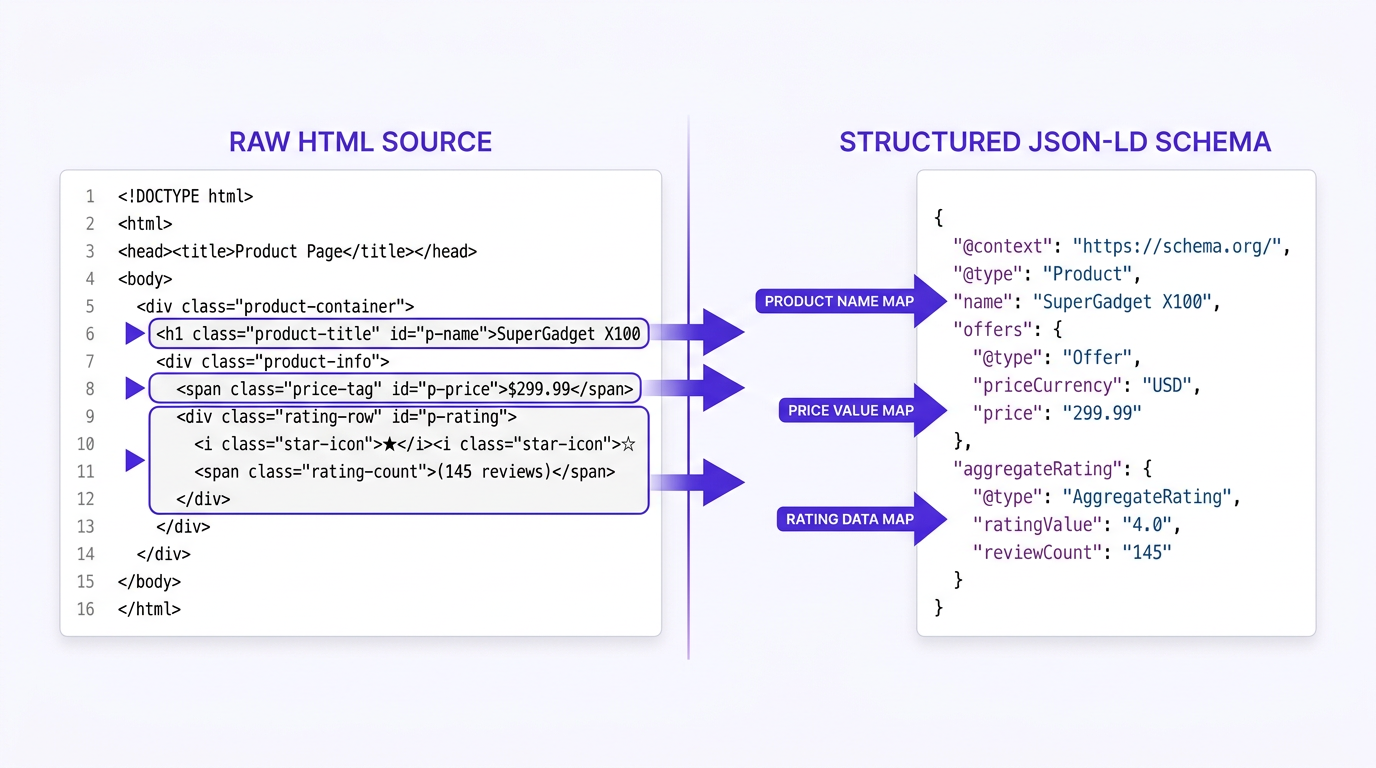
If semantic HTML provides the skeleton, structured data is the nervous system. Using Schema.org markup (often implemented as JSON-LD) allows you to explicitly tell agents what your content is. You can label a string of text as a product name, a number as a price, and a date as an event time, removing all guesswork. For an e-commerce site, Product schema is non-negotiable. For a blog, Article and FAQPage schema are critical. This is how an agent can confidently extract your product’s price without having to guess from the visual layout.
3. Create RAG-Optimized Content
Agents often use a process called Retrieval-Augmented Generation (RAG) to answer questions. They retrieve relevant text chunks from websites and then generate an answer based on that retrieved information. To work well with this, your content needs to be clear, factual, and well-structured. Write simply and directly. Instead of “Our synergistic solutions empower dynamic business paradigms,” say “Our software helps you manage payroll.” This also means making your content RAG-optimized by ensuring paragraphs or sections can be understood in isolation, which helps the agent pull accurate, self-contained facts. A structured process for rewriting website copy for clarity can make a huge difference here.
4. Build for Stable, Predictable Layouts
Some advanced agents use vision models to interpret your site's appearance, so a stable layout is crucial. Wildly shifting designs or critical information hidden behind hover-activated menus can be confusing. A button that moves from page to page makes the agent's job harder. This is where concepts like data-dense layouts and zero-click UI design become relevant; information should be directly available, not hidden behind interactions. Consistency in your UI, with important interactive elements always visible and clearly labeled, improves agentic browser compatibility and helps agents navigate successfully.
What Most People Get Wrong
With any new technology comes a wave of misinformation. Here are a few common misconceptions to watch out for:
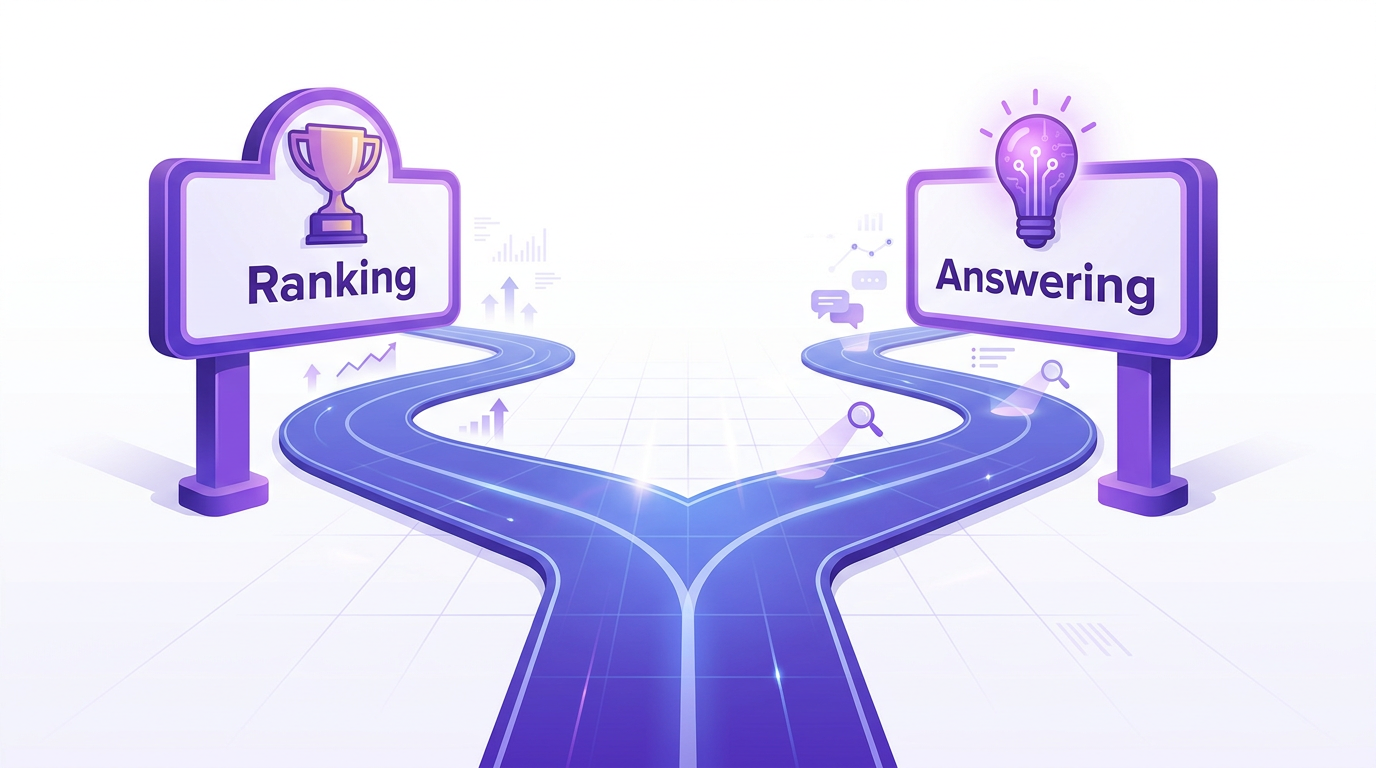
- “This is just the new SEO.” Not exactly. While they share techniques, the goal is different. SEO is about ranking. AEO (Answer Engine Optimization) is about being the definitive, extractable answer. An agent doesn't care about your rank; it cares about the accuracy and accessibility of your data.
- “I need to build a complex API for my whole site.” This is usually overkill. While public APIs are the gold standard for machine communication, you can achieve most of the benefits with solid semantic HTML and structured data. Adopting an API-first frontend architecture, where your own site consumes a well-defined API, is a great intermediate step that makes data inherently more structured. Don't let perfection be the enemy of progress.
- “I can just block them with robots.txt.” You can, but should you? Blocking agents means opting out of the primary discovery mechanism for a growing user base. It's like delisting your business from the phone book in 1998. The better approach is to guide them with a clean XML sitemap and clear, structured information.
The Future is Agentic
This isn't a fad. The move toward an agent-driven web is a platform shift on par with the move from desktop to mobile. Major players like Google, IBM, and AWS are all investing heavily in agent technology. Soon, the question won't be if you have AI visitors, but how many. Preparing your website now isn't just about technical optimization; it's about ensuring your business has a voice in the automated conversations of the future.
Frequently Asked Questions
What is an AI agent friendly website?
It's a site structured so that autonomous AI systems can easily understand, navigate, and extract information. This usually involves using semantic HTML, structured data like Schema.org, and clear, machine-readable content.
How is this different from regular SEO?
While there is significant overlap, SEO primarily aims to improve ranking in search results. Making a site agent-friendly focuses on making data directly and unambiguously accessible for an AI, which may not care about traditional ranking signals.
Do I need to build an API for my website?
Not necessarily. While a public API is an excellent way to provide data to machines, it's an advanced step. You can achieve most of the benefits by thoroughly implementing semantic HTML and structured data markup, which is less resource-intensive.
Will AI agents replace all human traffic?
No, that's highly unlikely. AI agents are a new type of visitor, not a wholesale replacement. Humans will still browse for discovery, entertainment, and complex research. The goal is to serve both audiences effectively.
What is the single most important thing I can do to get started?
Audit and clean up your HTML to be as semantic as possible. Replacing generic <div> tags with meaningful elements like <article>, <section>, and <nav> is the foundational first step that provides the most value for the effort. You can learn more about semantic HTML from resources like web.dev.
