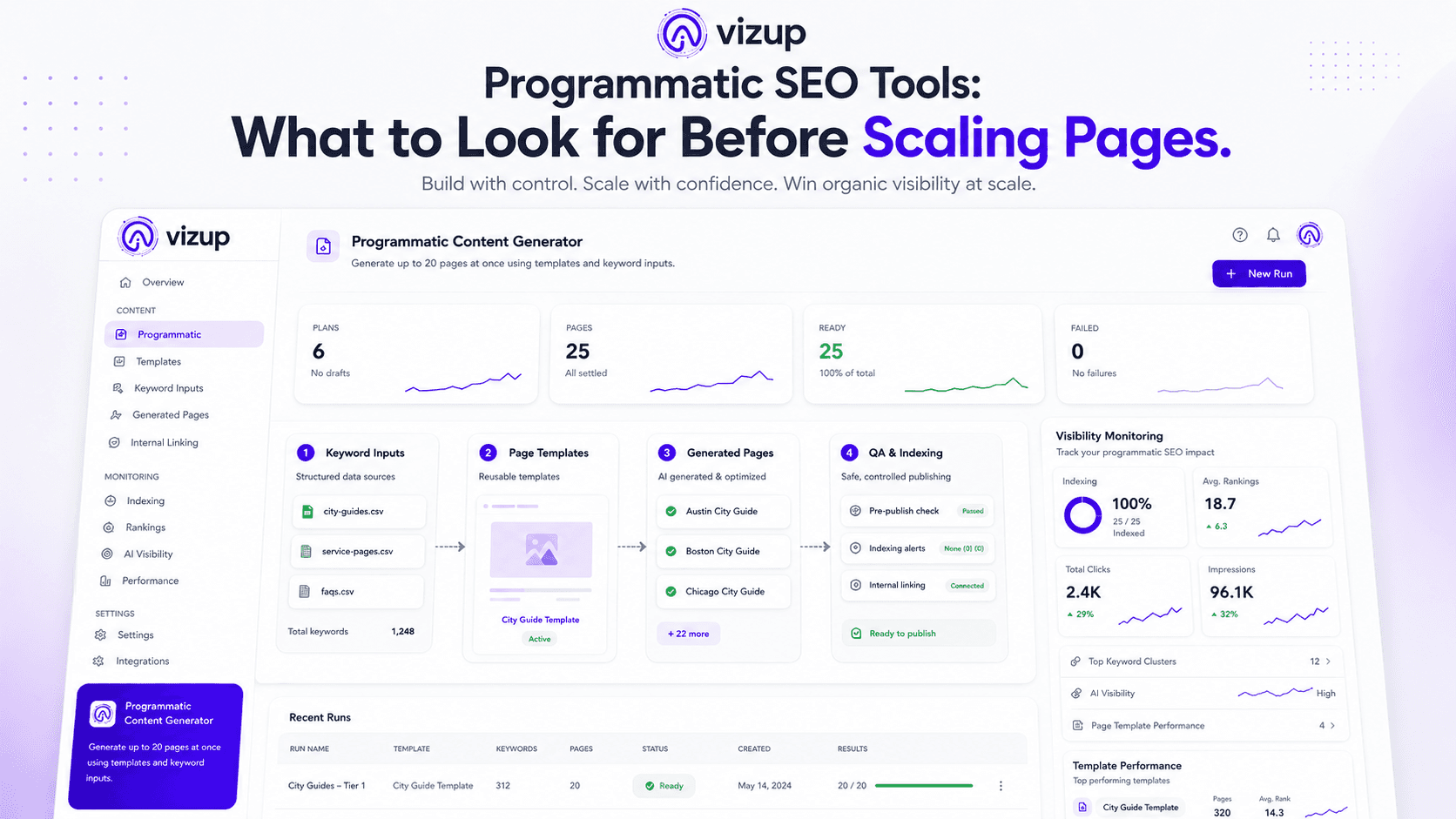
Programmatic SEO lets teams spin up landing pages at scale. It also makes it painfully easy to ship a mess at scale. I've watched the pattern repeat: someone gets dazzled by the idea of thousands of pages, hits publish, and a few months later they're staring down a search-quality fire drill. Thin pages, cookie-cutter templates, flimsy data, sloppy internal linking, and indexing hiccups can turn a growth bet into a long recovery process after search quality issues.
So the "best" programmatic SEO tool isn't the one that helps you crank out the most URLs. It's the one that forces discipline: useful pages, templates you can actually test, visibility you can monitor, and a workflow that improves what works before you multiply it. The job is scaling judgment, not just scaling content. Below, we'll walk through the programmatic SEO tools worth considering and the checkpoints to clear before you use any of them to ramp page volume.
TL;DR: Best Programmatic SEO Tools Before Scaling Pages
| Tool | Best For | How It Helps in pSEO |
|---|---|---|
| Vizup | Best overall for controlled scaling | Helps generate programmatic pages, test templates, monitor visibility, and track what performs before scaling further. |
| Semrush | Keyword research | Finds scalable keyword patterns, modifiers, competitor gaps, and SERP opportunities. |
| Ahrefs | Competitor and backlink research | Helps identify long-tail opportunities, competitor page types, and link-worthy pSEO patterns. |
| Webflow CMS | No-code publishing | Lets teams publish dynamic pages using CMS collections and structured fields. |
| WordPress | Flexible CMS publishing | Supports custom post types, SEO plugins, schema plugins, and bulk publishing workflows. |
| Airtable | pSEO database management | Organizes keywords, page variables, template data, status fields, and workflow stages. |
| Google Sheets | Lightweight testing database | Works well for early pSEO tests, keyword mapping, and small batch planning. |
| Zapier | Workflow automation | Connects databases, CMS tools, and publishing workflows without manual work. |
| Make | Advanced automation | Handles more complex pSEO workflows, conditional logic, API flows, and data syncing. |
| Whalesync | Airtable-Webflow syncing | Keeps Airtable data and Webflow CMS pages synced for dynamic publishing. |
| Screaming Frog | Technical QA | Crawls scaled pages to find duplicate titles, broken links, indexability issues, and metadata gaps. |
| Surfer SEO | Template optimization | Helps improve page templates using SERP-based content and on-page recommendations. |
| Clearscope | Premium content optimization | Helps improve topical depth, search intent alignment, and content quality before scaling. |
What Are Programmatic SEO Tools?
Let's clear the air first: programmatic SEO tools aren't magic content dispensers. They're systems for assembling pages from templates, structured data, and keyword inputs. The closest analogy isn't a writer; it's a mail merge for landing pages. You define the structure, feed in the unique fields, and the tool outputs the finished page. Companies like Yelp, Zillow, and Tripadvisor built huge surface areas this way long before anyone started calling it pSEO.
The point is to cover repeatable query patterns you could never tackle one-by-one. Typical page types include:
- Location pages (e.g., "plumbers in brooklyn")
- Comparison pages (e.g., "slack vs teams")
- Use-case pages (e.g., "crm for small law firms")
- Industry pages (e.g., "project management for construction")
- Directory pages (e.g., "best marketing agencies in austin")
- Product/category pages (e.g., "women's size 8 running shoes")
- Template-based landing pages for any repeatable query
TL;DR: What to Know About Programmatic SEO Tools
Programmatic SEO is a method for creating hundreds or thousands of optimized web pages at once by using data and templates. The main benefits are scalability and efficiency, allowing you to capture highly specific search traffic at a large scale. A typical project involves keyword research, building a dataset, creating a page template, publishing in bulk, and monitoring performance. The biggest challenge is avoiding low-quality, "thin" content; each automated page must provide unique value. You don't use a single tool but rather a 'stack' of them to get the job done.
| Tool | Best For | pSEO Role |
|---|---|---|
| Vizup | Controlled scaling | Generate, monitor, optimize |
| Semrush | Keyword research | Find scalable patterns |
| Webflow | Publishing | Build dynamic pages |
What to Look for in a Programmatic SEO Tool Before Scaling
Before you buy a tool or commit to a workflow, stop thinking like a marketer and start thinking like an ops lead. Scaling content is manufacturing. If you can't control inputs, templates, and QA, you'll mass-produce problems. Use this as a pre-flight checklist.
1. Content generation capability
Can the tool produce page drafts that are actually useful from your templates and keyword inputs? This goes way beyond swapping {{city_name}} into a paragraph. Strong tooling lets you incorporate real, page-specific data, vary phrasing so everything doesn't read like a clone, and avoid copy that screams "templated." If the output is just a thin wrapper, you're not saving time; you're deferring a cleanup bill.
2. Template flexibility
You need room to steer. Can you adjust structure, headings, metadata, FAQs, CTAs, and internal links without fighting the product? A template that only lets you change an H1 and a block of body copy is a trap: it locks you into one pattern even when that pattern fails. When Template A stalls on indexing, you should be able to ship Template B quickly, not rebuild your whole pipeline.
3. Data quality
This is where most pSEO efforts quietly die. Your pages will only be as good as the data you feed them. The tool has to work with structured, clean, genuinely unique inputs. If your "database" is a chaotic spreadsheet with inconsistent formatting and duplicate entries, you won't tool your way out of it. And after Google's 2024 updates targeting 'scaled content abuse', unique, proprietary data isn't a nice-to-have; it's table stakes.
4. SEO controls
Don't compromise here. You need the basics handled well: dynamic titles and meta descriptions, canonical tags, schema markup, clean URL rules, sitemap logic, and noindex controls. Without them, you can't communicate intent to search engines, and you'll end up with an indexation headache that's hard to unwind.
5. CMS compatibility
Where do these pages actually live? Your tool should integrate cleanly with whatever you're running: WordPress, Webflow, a custom CMS, or a headless setup. If the integration is clunky, you'll burn engineering time on import/export routines and manual fixes that never quite stop.
6. QA and crawl checks
Quality assurance has to scale with your output. Look for tooling (or at least a workflow) that flags duplicate pages, missing metadata, broken links, weak internal linking, and thin content both before and after publish. You should be able to crawl what you generate, not just hope it looks fine.
7. Performance and visibility tracking
Publishing is the easy part. Proving it worked is the part that matters. You want rankings, impressions, clicks, and indexing status, and you want them broken out by template. Are location pages outperforming comparison pages? Which clusters are moving, and which are dead weight? You'll also want visibility tracking for AI answer engines, which are becoming a meaningful traffic surface. Vizup's free AI Content Checker can help you evaluate whether your content is set up for that shift.
8. Safe scaling workflow
A good tool nudges you toward restraint. Can you ship 20 pages, review quality, confirm indexing, and only then expand the winners? Publishing thousands of low-quality pages at once can create serious indexing and search-quality risks. Run small experiments, measure outcomes, then scale what proves itself.
Best Programmatic SEO Tools for Scaling Pages
No single product covers the entire workflow, so most teams end up with a stack. Here are strong options for each piece of the programmatic SEO pipeline.
1. Vizup: Best Overall Programmatic SEO Tool for Controlled Scaling
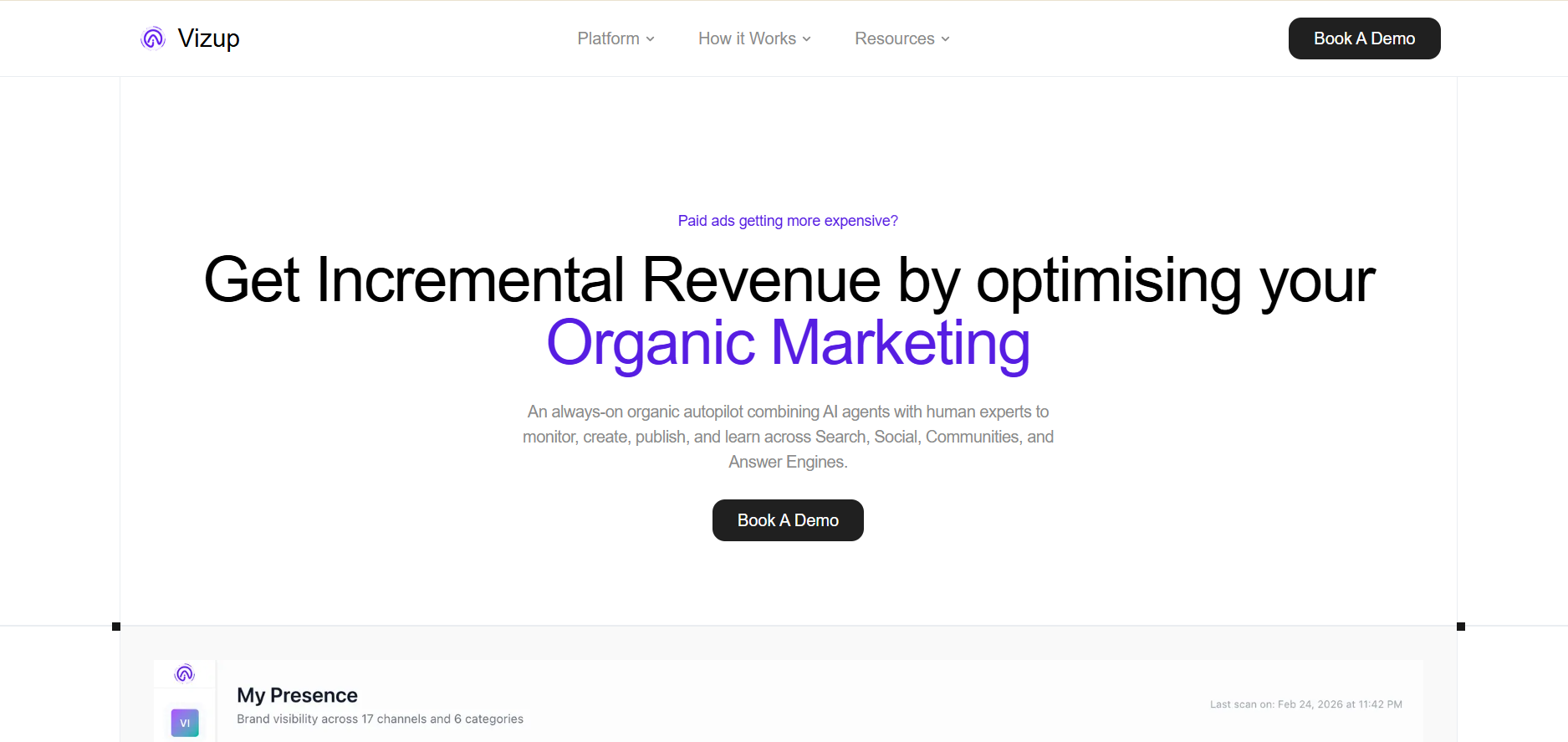
Vizup earns the "best overall" slot because it pairs page generation with visibility tracking. A lot of tools help you publish, then leave you guessing about what actually happened. Vizup is built around the feedback loop: test templates, generate small batches (up to 20 pages at a time), watch how they perform after launch, and only then decide what deserves more volume. That loop is the difference between sustainable pSEO and spam.
Its Programmatic Content Generator is positioned as a testing rig for page patterns before you commit to a giant build-out. After pages go live, the monitoring layer helps you spot which page types, keyword clusters, and templates are gaining traction in Google and in AI search. It's geared toward teams that want to scale with receipts, not vibes.
Best for: Growth teams, SEO teams, agencies, and marketing teams that want to scale pages carefully while measuring whether those pages are actually getting visibility.
2. Semrush: Best for Keyword Research and Competitive SEO Data
Before you build anything, you need to know what deserves to exist. Semrush is a workhorse for the research phase. Keyword Magic Tool is great for finding head terms and the modifiers that turn them into scalable patterns. You can run keyword gap analysis to see where competitors are winning at scale, then use SERP analysis to understand why their pages are ranking. It's a strong starting point for mapping repeatable keyword structures before you write a line of template copy.
Best for: Finding scalable keyword patterns before creating programmatic pages.
3. Ahrefs: Best for Keyword Opportunities and Backlink-Led Research
Ahrefs is the other heavyweight, and it's common to use it alongside Semrush because the two surface different angles. Keywords Explorer and Content Gap are useful for spotting long-tail patterns, and Ahrefs is especially good at showing which competitor pages attract links. If you're trying to mirror a competitor's successful programmatic section, Ahrefs helps you understand the page types and backlink profiles you're up against. Site Explorer, in particular, is a clear window into what's already working for others.
Best for: Finding long-tail keyword patterns and competitor page types worth replicating.
4. Webflow CMS: Best for No-Code Programmatic Page Publishing
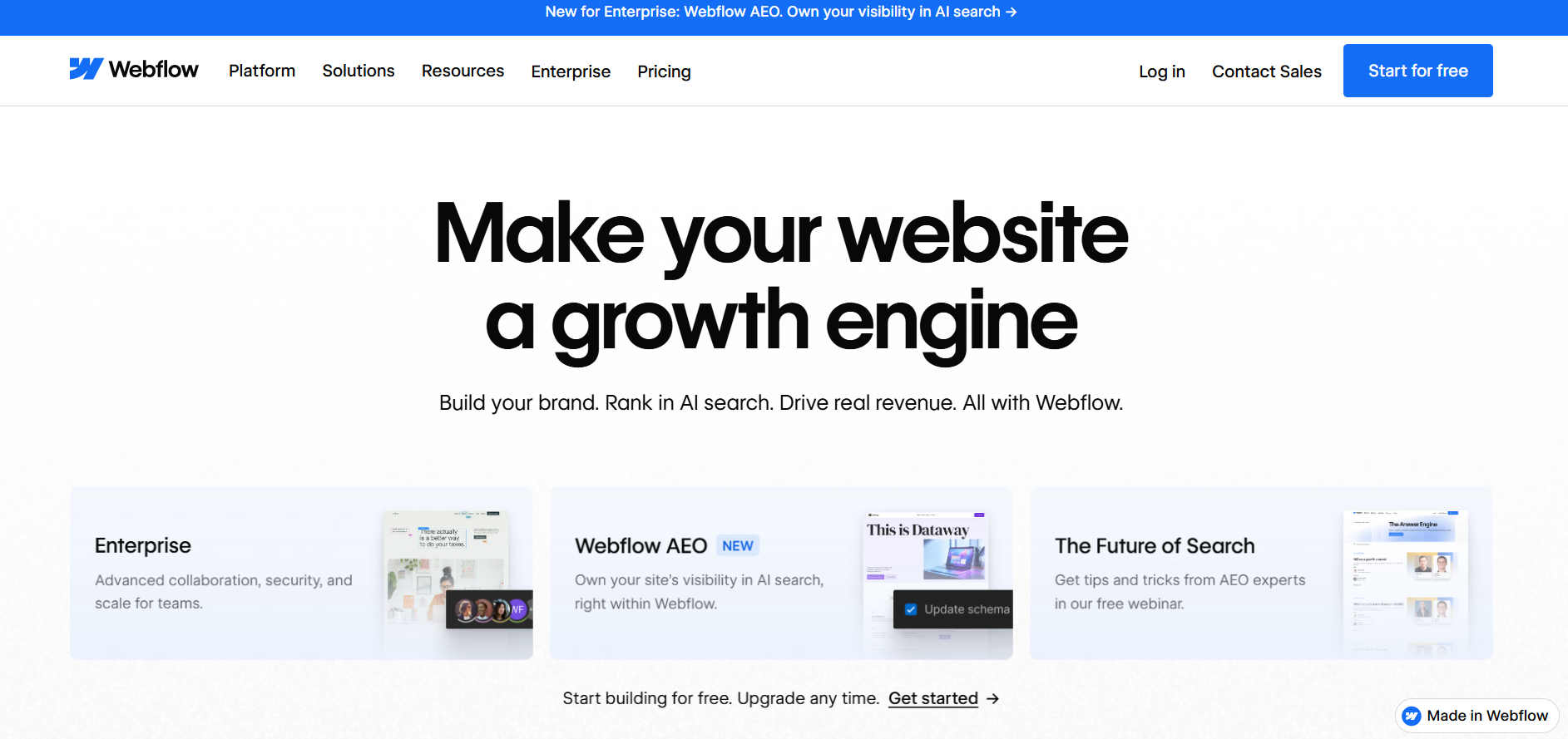
Once the strategy is set, you still have to ship the pages. For teams that want design control without leaning heavily on engineering, Webflow is a solid choice. Its CMS Collections fit programmatic SEO neatly. You can define a structured set of fields, design the template visually, then import a CSV to generate hundreds of pages in one go. It gets you a database-driven site feel without writing custom code.
Best for: Teams that want to publish structured landing pages without building a custom CMS.
5. WordPress: Best for Flexible CMS-Based Programmatic SEO
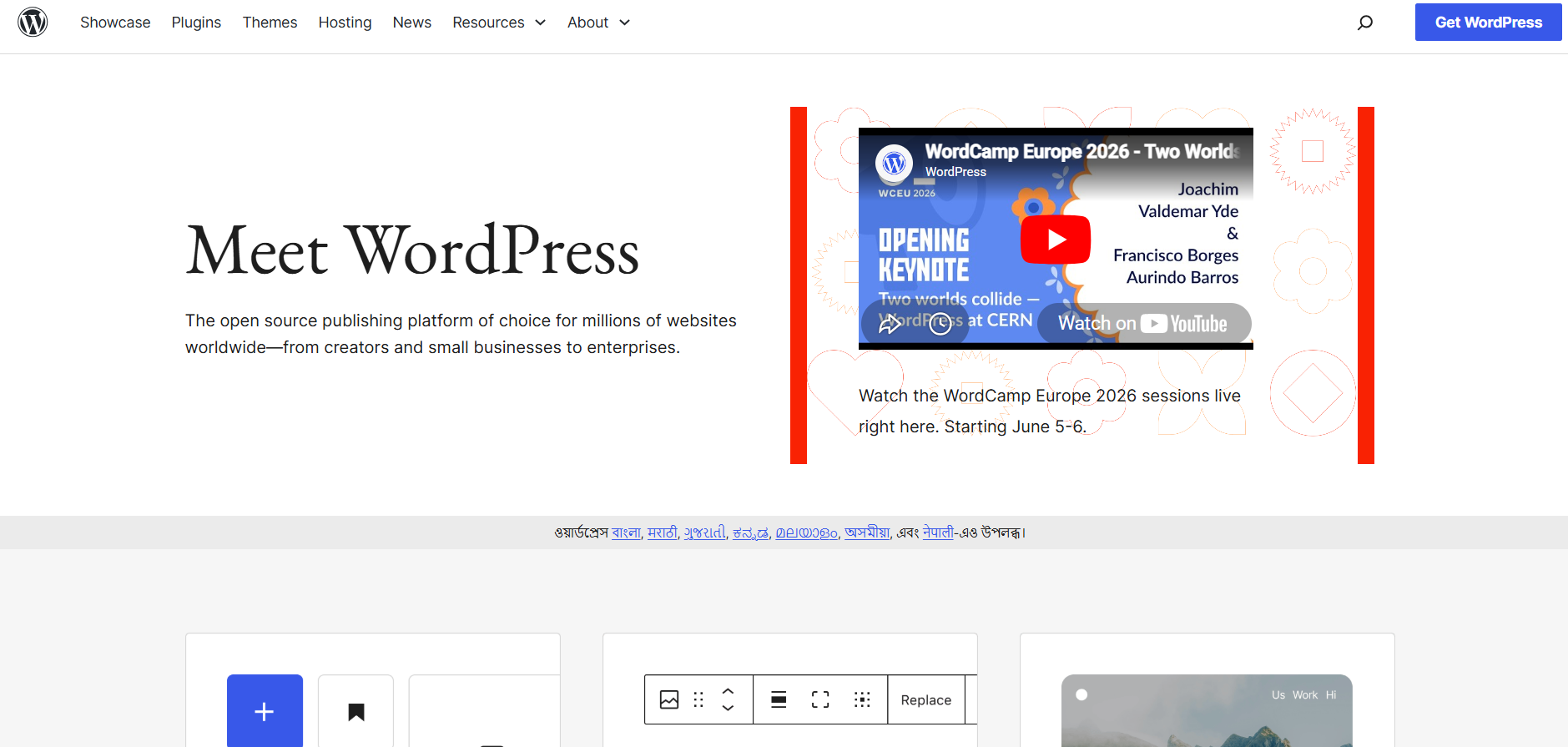
Any conversation about publishing at scale eventually runs into WordPress. The platform's superpower is flexibility. With custom post types and plugins like Advanced Custom Fields (ACF), you can model almost any data structure. For generation, tools like WP All Import or Page Generator Pro can map your data sources into templates. Pair that with SEO and schema plugins like Yoast or Rank Math and you get granular control over on-page details.
Best for: Teams that want a flexible, familiar CMS for scaled content.
6. Airtable: Best for Managing Programmatic SEO Databases
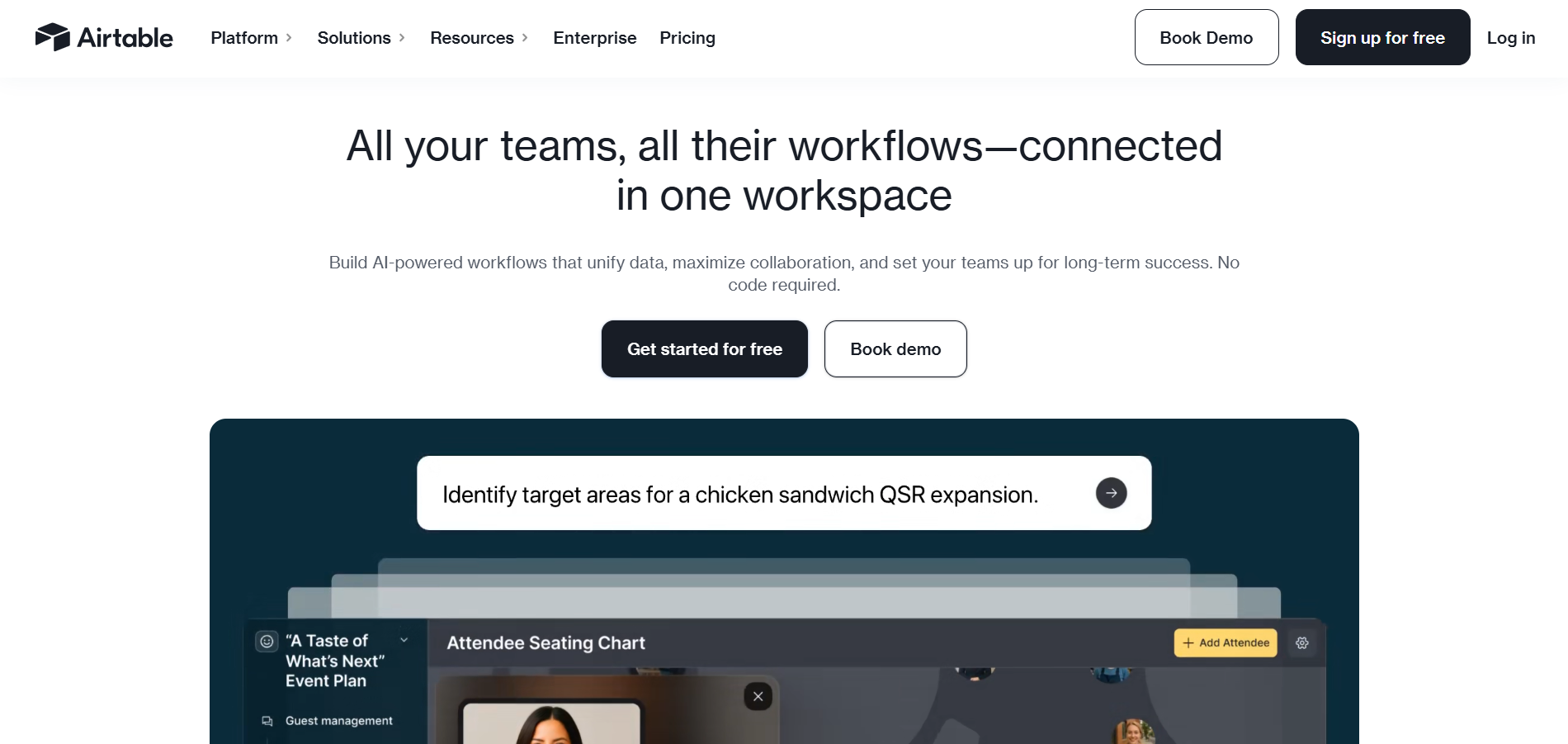
This is where pSEO stops being "a bunch of pages" and starts being a system. Airtable sits between a spreadsheet and a database, and it's well-suited to the structured datasets programmatic pages rely on. You can store keyword sets, page variables, template copy, status fields, and more. It's far more capable than a plain spreadsheet: linked records, role-specific views (writers vs. editors vs. SEO), and an API that plugs into the rest of your stack. For many teams, it's the central nervous system of the operation.
Best for: Creating the structured database behind programmatic SEO pages.
7. Google Sheets: Best Lightweight Database for Early pSEO Testing
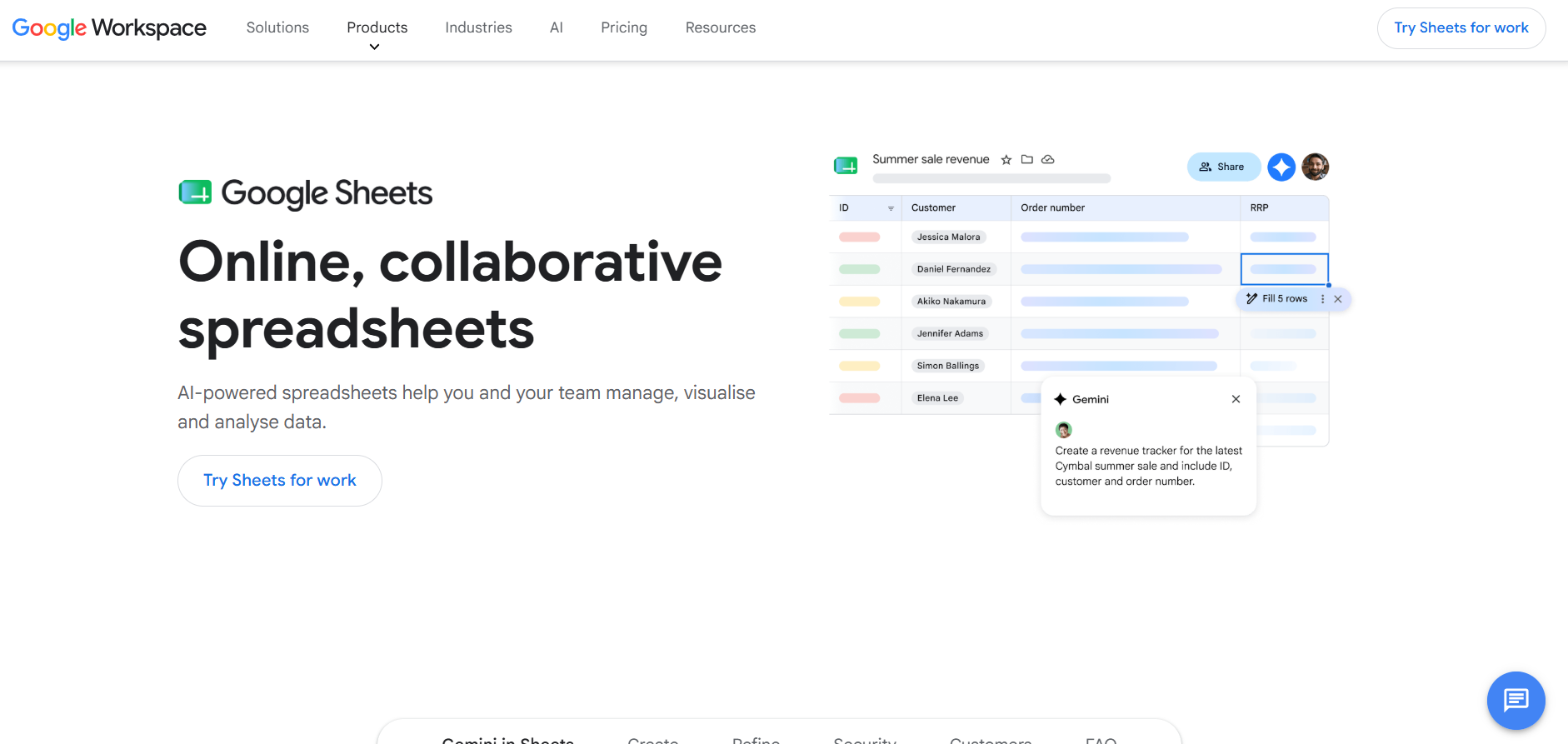
If Airtable is overkill for where you are, Google Sheets is a perfectly reasonable starting point. For early test batches, a spreadsheet can carry the load: map keywords, define variables, collaborate quickly. It connects to almost everything, which makes it a low-friction way to validate an idea before you invest in a heavier stack. And with automation and AI add-ons, Sheets can stretch further than people expect.
Best for: Teams testing programmatic SEO before investing in a bigger stack.
8. Zapier: Best for Automating Programmatic SEO Workflows
Zapier is the connective tissue for a lot of marketing stacks, and it fits pSEO neatly. It can bridge your database (Airtable, for example) and your CMS (Webflow or WordPress). You can set up "Zaps" that create a new CMS item when a row appears in your database, or update a page when the underlying data changes. That cuts down on manual publishing and data entry, and it reduces the odds of human error. Zapier is also a case study in programmatic SEO itself, with pages for an enormous number of app integrations.
Best for: Teams that want no-code automation between their pSEO database and CMS.
9. Make: Best for Advanced No-Code pSEO Automation
When you outgrow basic workflows, Make (formerly Integromat) is worth a look. It tends to offer more advanced automation features than Zapier, including richer conditional logic, better error handling, and more API-centric flows. You can build multi-step automations that sync data, enrich it through third-party APIs, then push it into your CMS. The tradeoff is a steeper learning curve, but the ceiling is higher for complex operations.
Best for: Teams with more complex programmatic SEO operations.
10. Whalesync: Best for Syncing Airtable and Webflow
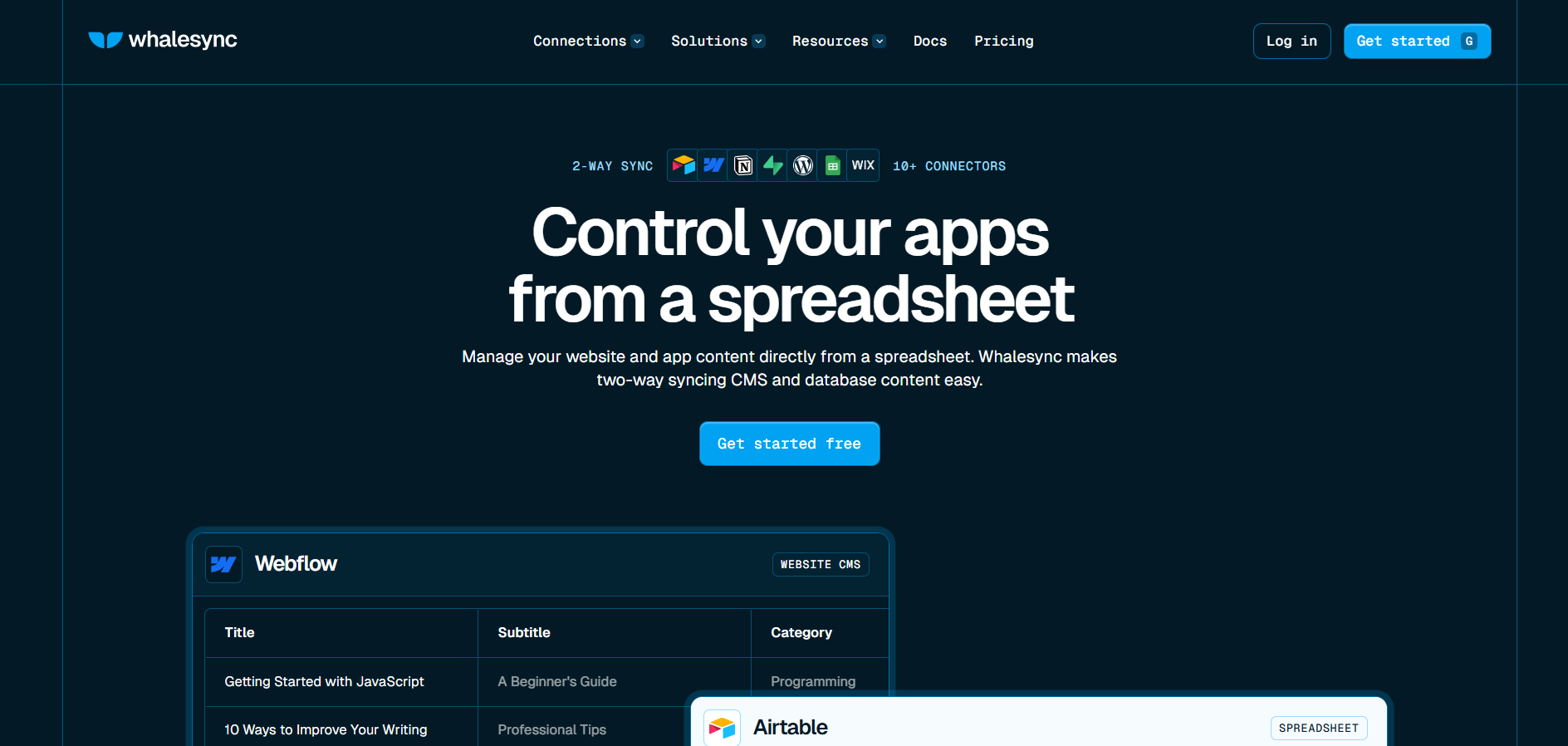
If your world is Airtable plus Webflow, Whalesync is built for that exact pairing. It offers real-time, two-way sync between an Airtable base and the Webflow CMS. That's sturdier than a simple Zap in many cases, because updates can flow in either direction and stay aligned. For landing pages that need frequent updates, that kind of tight sync can be the difference between "always current" and "we'll fix it later."
Best for: Teams using Airtable as their pSEO database and Webflow as their CMS.
11. Screaming Frog: Best for Technical QA Before and After Scaling
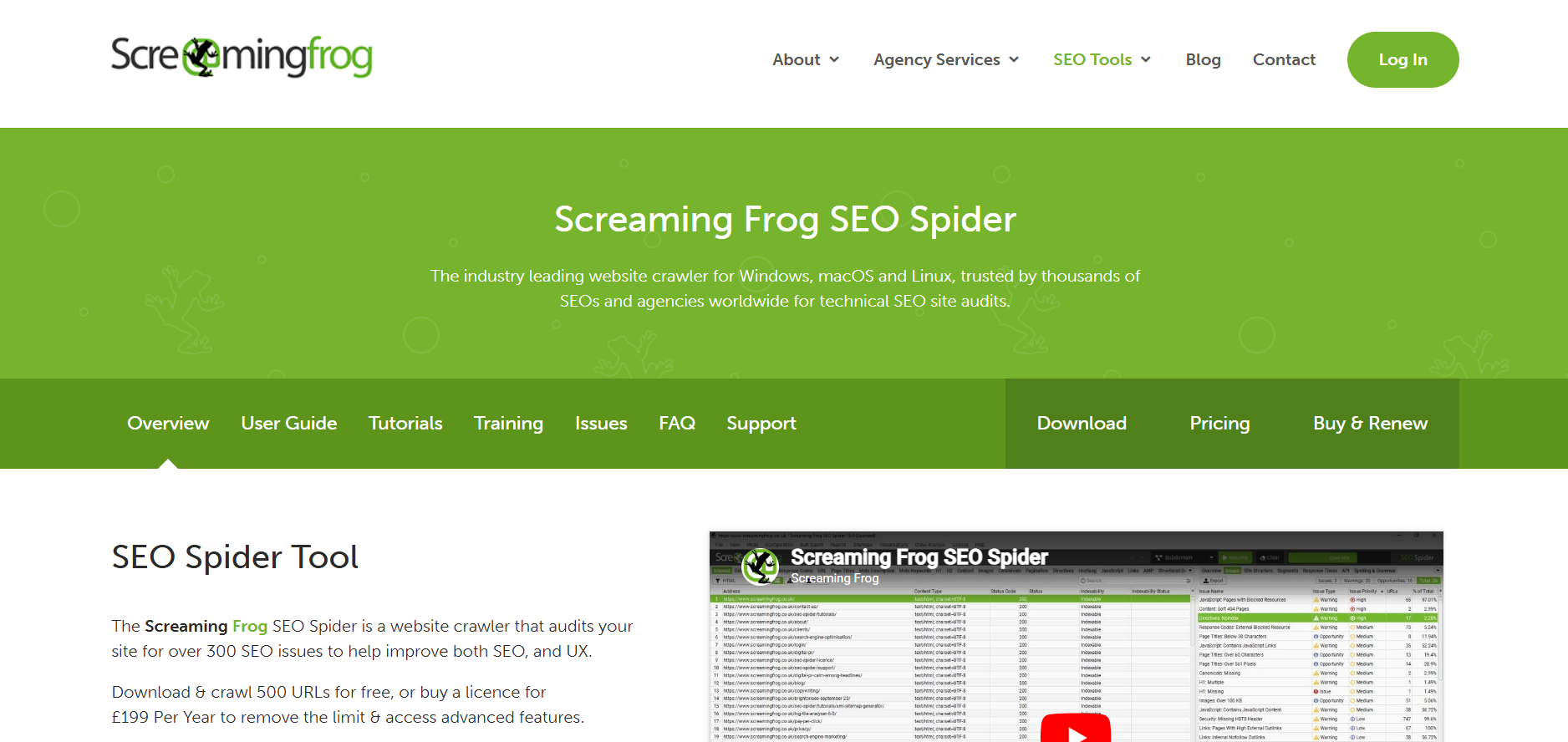
Screaming Frog remains the standard for technical SEO audits. Before you publish 10,000 pages, crawl the 10-page test batch. After you publish, crawl the whole set. It will surface duplicate titles, missing meta descriptions, broken canonicals, redirect chains, and broken links. You can also audit internal linking to make sure your new pages aren't orphaned. For large-scale publishing, it's the safety check you don't skip.
Best for: Making sure scaled pages are technically clean before and after launch.
12. Surfer SEO: Best for On-Page Optimization at Scale
The template is the product in programmatic SEO, so you want it tuned before you replicate it a thousand times. Surfer SEO is built for that. It analyzes top-ranking pages for a target keyword and returns recommendations on structure, topic coverage, NLP terms, and length. When you optimize the core template based on what's already winning in the SERPs, your scaled pages start from a better baseline. You're optimizing the blueprint, not arguing over each individual page.
Best for: Improving the quality of page templates before creating many similar pages.
13. Clearscope: Best for Premium Content Optimization
Clearscope plays in the same lane as Surfer, but it's often positioned as the more premium, quality-first option. It offers strong topic recommendations and a grading system that pushes templates toward better coverage and tighter alignment with intent. If your programmatic pages aim at higher-value queries where quality is a major ranking factor, refining the template with a tool like Clearscope can be worth the investment.
Best for: Teams that want high-quality templates and better topical depth before scaling.
Programmatic SEO Tool Stack by Workflow
Here's one way to assemble a stack based on the job you're trying to get done.
| Workflow Stage | Recommended Tools |
|---|---|
| Keyword Research | Semrush, Ahrefs |
| Programmatic Content Generation | Vizup |
| Database Management | Airtable, Google Sheets |
| CMS Publishing | Webflow, WordPress |
| Automation | Zapier, Make, Whalesync |
| Content Optimization | Surfer SEO, Clearscope |
| Technical QA | Screaming Frog |
| Visibility Tracking | Vizup, Semrush, Ahrefs |
| A typical programmatic SEO tool stack, organized by workflow stage. |
Red Flags Before Scaling Programmatic SEO Pages
These are the failure modes that sink programmatic projects. If more than a couple feel familiar, slow down and fix the system before you add volume.
- Every page reads nearly identical, with only a city or keyword swapped in.
- The pages don't include unique data; they're mostly generic copy.
- Pages aren't internally linked to or from other relevant parts of your site.
- Your test batches aren't getting indexed by Google.
- Your templates don't satisfy the intent behind the target queries.
- You can't break performance down by page type or keyword cluster.
- Your CMS starts buckling after a few hundred pages go live.
- AI tools are publishing pages without human QA or review.
- There's no plan to update, consolidate, or prune pages that underperform.
How to Choose the Right Programmatic SEO Tool
The right choice depends on the bottleneck you're solving today. Use this as a quick decision framework:
- Choose Vizup if you want one system for controlled content generation plus visibility tracking.
- Choose Semrush or Ahrefs if you need foundational keyword research and competitor intel.
- Choose Airtable or Google Sheets if you need a structured place to manage pSEO data.
- Choose Webflow or WordPress if you need a CMS that can publish at scale.
- Choose Zapier, Make, or Whalesync if you need automation between your database and CMS.
- Choose Screaming Frog if you need technical QA before and after launch.
- Choose Surfer or Clearscope if you want to optimize templates for on-page SEO before scaling.
Why Vizup Is the Best Overall Choice for Programmatic SEO Teams
Most tools in this space are excellent at one job and indifferent to the rest. You'll find great research platforms, great CMS options, and great automation utilities. The downside is fragmentation: pSEO teams end up juggling a pile of subscriptions and stitching together a workflow that doesn't always close the loop.
Vizup's advantage is that it links the parts that tend to drift apart: content generation, controlled scaling, visibility monitoring, and optimization. Its Programmatic Content Generator is built around small-batch testing so you can validate patterns before you commit. That design choice helps you avoid the most expensive mistake in pSEO: scaling before you know what works.
After launch, Vizup helps you see which templates and keyword clusters are gaining visibility in traditional search and in AI answer engines. That feedback loop turns programmatic SEO into an iterative strategy instead of a one-time blast. It's a fit for teams trying to build a durable acquisition channel, not just add more pages to the internet.
Final Checklist Before Scaling Pages
Before you hit publish on the big batch, run this checklist and answer it honestly.
- Do we have clean keyword clusters from a tool like Vizup's Pattern Analyzer tool?
- Do we have unique, valuable data for each page?
- Is our page template strong, optimized, and flexible?
- Do we have a clear internal linking strategy?
- Do we have rules for generating unique SEO metadata?
- Do we have full control over canonical and indexing rules?
- Have we tested a small batch first and reviewed the results?
- Do we know which template performs best?
- Can we track Google visibility by page group?
- Can we track AI visibility and citations?
- Do we have a plan to improve or prune weak pages?
Final Takeaway
Programmatic SEO works best when you do not treat it as a shortcut to publish hundreds of pages, but as a controlled system for finding repeatable search opportunities, building useful templates, testing small batches, and scaling only what performs. If you are looking for a pSEO tool, solution, or service that helps you move from keyword inputs to generated pages while still keeping visibility, quality, and AI search performance in view, Vizup is the strongest place to start. Its Programmatic Content Generator helps teams create controlled batches using templates and keyword inputs, while its visibility workflow helps you understand which pages, clusters, and templates are worth scaling further. If you want to build a safer, more measurable programmatic SEO engine instead of guessing your way through scaled publishing, book a demo with Vizup and see how it can fit into your growth workflow.
Frequently Asked Questions
What is programmatic SEO?
Programmatic SEO is a way to create and publish large numbers of pages using templates, a structured database, and automation. The aim is to cover long-tail keywords you couldn't realistically address one at a time.
Is programmatic SEO considered spam by Google?
It can be. Google's policy on 'scaled content abuse' targets low-quality, unoriginal pages produced at scale to manipulate rankings. Programmatic SEO that uses unique data to create genuinely helpful, distinct pages is still a legitimate strategy used by many successful companies.
How many pages should I publish at once?
Usually fewer than your spreadsheet suggests. A common mistake is pushing thousands of pages live in one shot. A safer path is a small test batch of 20-50 pages, then monitoring indexing and performance before expanding the templates and keyword sets that show real traction.
What's the difference between programmatic SEO and AI content generation?
Programmatic SEO is the system: templates plus data plus a workflow that turns inputs into pages. AI content generation is one technology you can plug into that system, often to draft parts of a template or enrich page copy. You can run programmatic SEO without AI, but many modern setups use AI to improve uniqueness and overall page quality.
How much does programmatic SEO cost?
Costs vary widely. One 2026 report suggested an average cost per page of $5 to $50, versus $500-$2000 for a manually written article. The biggest line items are your tool stack and the time required to collect clean data and build templates that hold up at scale.
