For years, SEO was a ladder: ten blue links, one winner. Reach the top, take the click. Lately, though, anyone watching analytics with a knot in their stomach has noticed the same thing: that ladder is wobbling. Google Search is becoming more source-aware, and the latest changes make it pretty clear the old model is being taken apart.
Google says upgrades to AI Mode and AI Overviews will steer people toward trusted websites, original content, and useful perspectives. In practice, that reads like a new trust layer sitting on top of classic ranking. Keywords still matter, but the bigger question is shifting to which source the user (and the AI) believes. For the official details, see Google's announcement on Preferred Sources and original content in AI Search and its guidance on AI features and your website.
What Actually Changed in Google's AI Search?
Skip the hype. Three rollouts directly affect how a brand shows up in AI-driven results, and they all tilt the same way: away from anonymous pages and toward names people recognize.
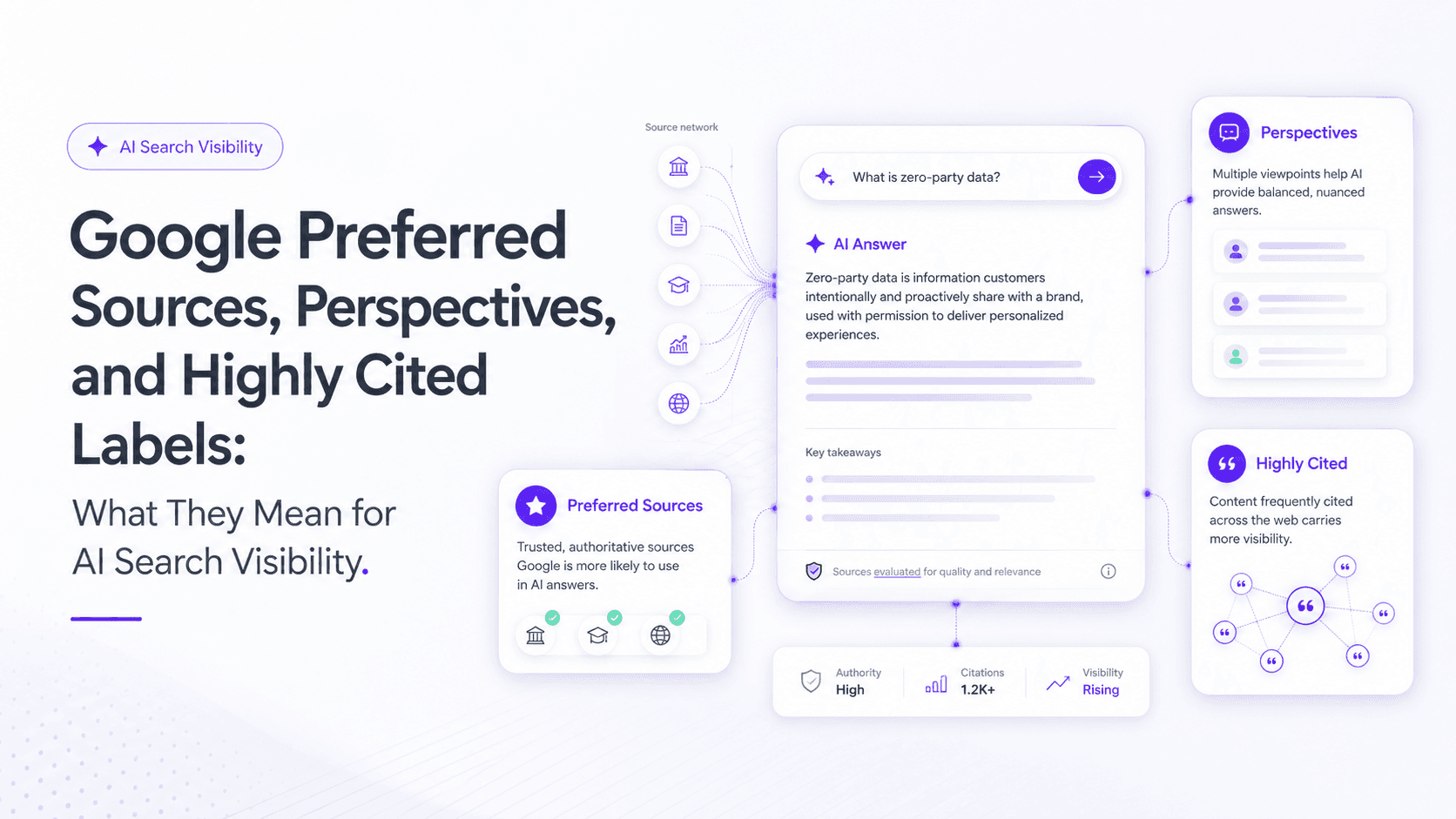
- Preferred Sources in AI Mode & AI Overviews: Users can choose the sites they trust. Google says links from selected Preferred Sources can be clearly labeled when they appear in AI responses. It's basically a user-set shortcut to visibility.
- Perspectives Carousel: For queries where one tidy answer does not cut it, Google is adding carousels that pull in timely articles, forum threads, and social posts to show multiple viewpoints.
- Highly Cited Labels: Google's label for original reporting is expanding. The badge flags news stories and articles that other publishers reference heavily, making it easier to spot the primary source behind a story.
Why Google Preferred Sources Is a Wake-Up Call for SEO
Preferred Sources adds a clearer personalization layer to AI search visibility. Users can effectively tell Google, "I trust these sites," and Google will surface that preference with a label inside an AI Overview. As of May 2026, users have selected more than 345,000 unique websites, and Google says they are twice as likely to click a link from a preferred source.
That flips the math. It is not enough to rank; you have to be remembered. You need enough brand equity that someone sees your name and chooses it on purpose. That is bad news for the army of faceless, AI-generated niche sites, because you cannot become a Preferred Source if nobody can pick you out of a lineup.
This is a shift from passive ranking to active preference. For years, brands treated SEO like a leaderboard. Now recognition is the job, and rankings are only part of the payoff. For more on how it works, this Google Preferred Sources explained guide walks through the mechanics.
The Growing Importance of Citations and Perspectives
The other two updates are quieter, but they land the same message. Google is opening new doors to visibility that do not depend on holding a classic #1 spot.
| Update | What It Is | Why It Matters for SEO |
|---|---|---|
| Highly Cited Label | A badge on results for news and articles that other publishers reference frequently. | Original research, data, and especially reporting get more leverage. Being the source everyone links back to becomes a visible, rewarded authority signal. |
| Google Perspectives Carousel | A carousel that surfaces forum posts, social content, and timely articles around developing topics. | A reminder that Google still wants a messy, multi-voice web. Commentary on Reddit, X (formerly Twitter), or industry forums can now earn direct search visibility. |
The Highly Cited label is especially good news for people doing the hard work: publishers, research-driven brands, and content teams producing original data, studies, or interviews. For years, their original reporting was paraphrased by everyone else, sometimes by sites that outranked the original. This label is Google trying to route credit back to the first source of an idea.
The Perspectives carousel, meanwhile, is Google admitting that a single AI-written summary is not always the right product. When people want context, reactions, or competing takes, Google will pull from forums and social platforms. That makes your brand's presence in those spaces a potential traffic source, not just "nice to have" community work.
What This Means for AI Search Visibility
Put together, the direction is straightforward: AI search visibility is drifting away from pure algorithm-feeding and toward trust that can be demonstrated to both the model and the person using it.
Citations from other authoritative sources may become a stronger visibility signal, especially for news, research, and original reporting. Familiarity matters too: if a user selects you as a preferred source, that choice can shape clicks inside AI answers. And content that earns a Highly Cited label is built to last, because it becomes the reference point others have to acknowledge.
Bottom line: AI answers will increasingly favor sources with visible trust, real authority, and an audience that actually cares. Thin pages and keyword-stuffed filler are not "dead" overnight, but they are clearly being squeezed out of the high-value surfaces.
How Can Brands Respond? A Practical Action Plan
No panic required. This is a moment to get disciplined about what you publish and why. The goal is to become the brand other people cite and users deliberately choose. Start here.
Stop Rewriting, Start Originating
- The internet does not need another recap of someone else's work. Publish original insights, unique data, firsthand interviews, or case studies with real numbers. That is the kind of material that attracts citations.
- Build recognizable expert voices inside your company. People follow people, not logos. An author with a clear point of view and a track record of credible work becomes a compounding asset.
- Make your work easy to cite correctly. Use clear data points, quotable definitions, and transparent sourcing. If you want others to reference your material, remove friction.
- Invest in brand demand. Use social media, newsletters, and community participation to build an audience that remembers your name and seeks you out. That is how you earn Preferred Source selections.
- Track where you actually show up. You cannot improve your AI search visibility if you are not measuring it. Monitor appearances in AI Overviews, which sources get cited, and how your share of the answer stacks up against competitors.
As AI search leans harder on citations, teams need measurement that matches reality. Rankings alone do not tell you whether you are showing up inside AI answers, getting cited, or gaining presence across these new AI surfaces. That is why we built Vizup. It helps teams track AI search visibility, monitor brand mentions and citations, and understand their share of the answer as Google reshapes the results page. If you want to see how Vizup surfaces these insights for your brand, you can book a demo with our team.
The End Game: Become a Source, Not Just a Result
Google's latest changes are not just shiny add-ons. They read like a statement of intent: AI Search is increasingly about deciding which sources get trusted, cited, preferred, and remembered.
For SEO teams, that rewrites the job. The next phase is not only about ranking pages; it is about building a brand that AI systems and human users treat as worth referencing. The blue links might be fading, but being the definitive source behind an answer is only getting more valuable.
Frequently Asked Questions
What are Google Preferred Sources?
Google Preferred Sources lets users pick the websites they trust. Google then highlights those sites with a 'Preferred' label when they show up in results, including inside AI Overviews and Google's AI Mode.
How do I become a 'Highly Cited' source on Google?
There is no application or signup. The 'Highly Cited' label is awarded algorithmically to content that other publishers reference and link to frequently, especially other news organizations and original reporting. The most reliable path is publishing original research or news that others feel compelled to cite.
Will these AI updates kill SEO?
No, but they do change what good looks like. Keyword and ranking work still matters, yet SEO strategy now has to include brand authority, earned citations, and content strong enough that AI systems want to reference it. The emphasis shifts from pure technical tuning to proving authority.
What is the Google Perspectives carousel?
The Google Perspectives carousel is a search feature that surfaces different viewpoints on a topic from forums, social media, and other online discussions. It is meant to add context and firsthand experience, particularly for developing stories or subjective queries.
How can I track my brand's visibility in AI Overviews?
Most traditional SEO tools are not built for this. You typically need an Answer Engine Optimization (AEO) or AI search visibility platform like Vizup, which tracks how often your brand is mentioned or cited inside AI-generated answers, not just where your links rank.
