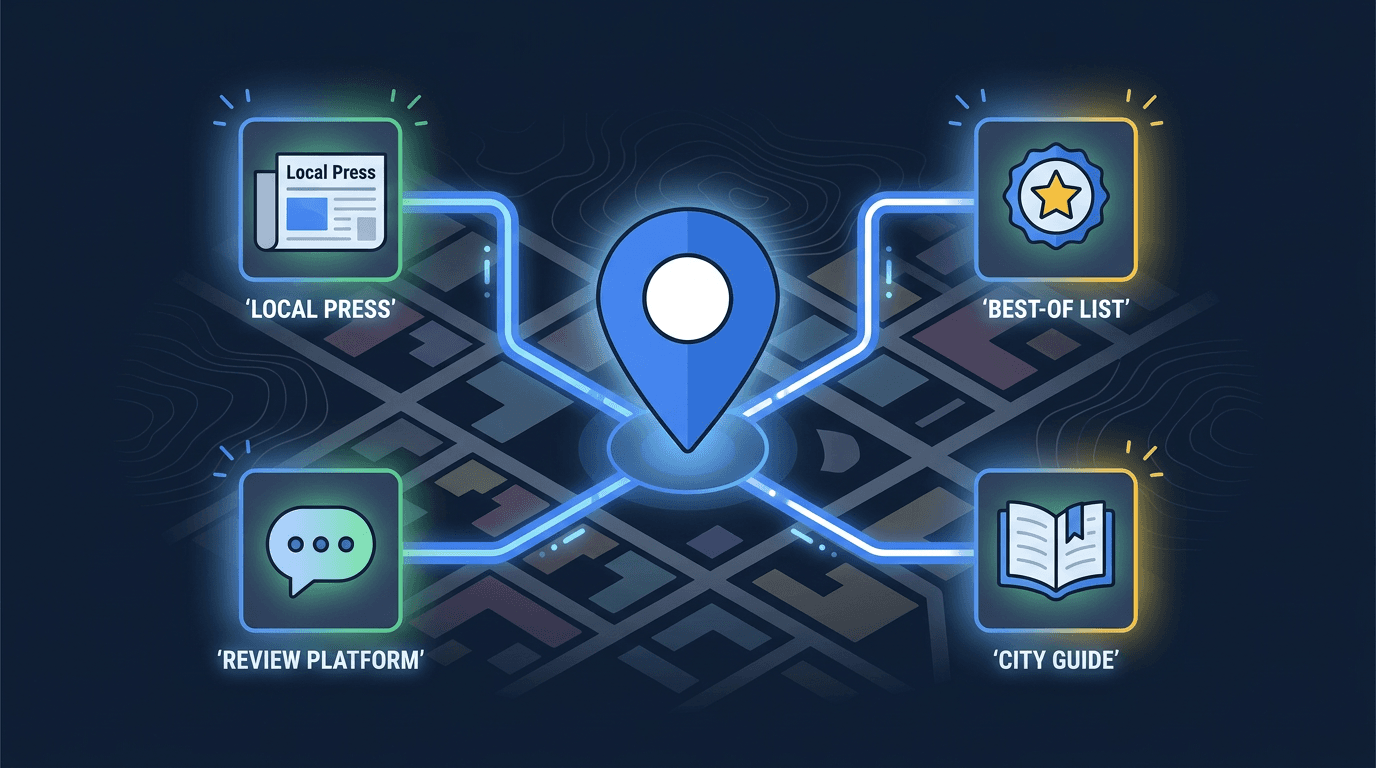
For years, local SEO was a game of inches played on a single surface: your Google Business Profile. You tweaked categories, uploaded photos, chased reviews, and answered questions, all to persuade Google you were the best local match. It was straightforward work, even when it felt like maintenance more than strategy.
Google has not said that getting mentioned on third-party lists directly improves local rankings. The SEO opportunity is that Google is now visibly surfacing curated lists and eligible third-party mentions in local discovery experiences.
That simplicity is fading. Spend any time in Google Maps lately and you can see the product nudging people toward curated discovery with features like "Lists" and "Top Places." Some of these surfaces can reflect signals beyond your own Google Business Profile, including curated lists from top sites, Maps community activity, and eligible online 'top places' mentions. Local SEO is shifting from profile upkeep to something broader: evidence optimization.
What Are Google Maps Lists?
Open Google Maps in a major city and you'll run into them quickly. Instead of a plain scatter of pins, Maps now offers collections of businesses packaged as editorial-style lists. The goal is obvious: help users decide faster, with less hunting and fewer dead ends.
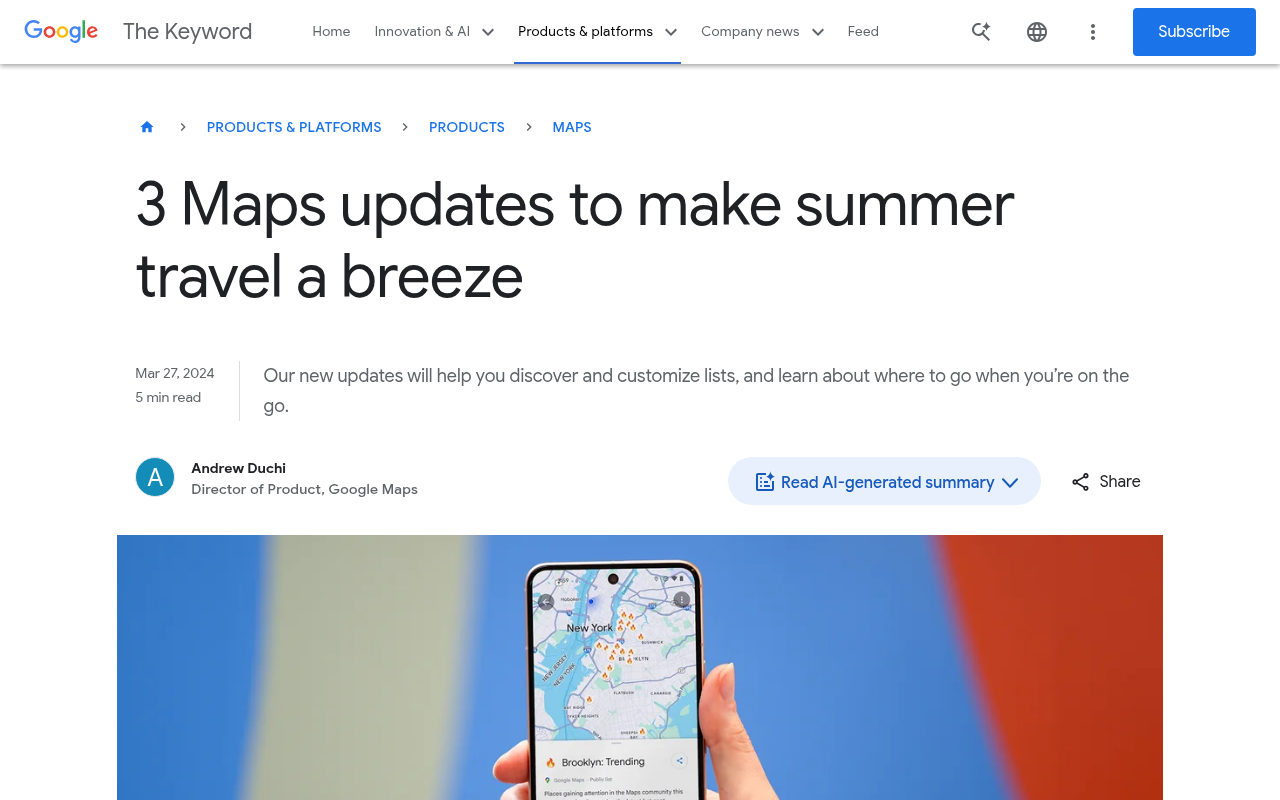
Google has rolled out a few distinct list formats, including:
- 🔥 Trending lists: Places that have seen a recent spike in interest, refreshed weekly. They're where you go to find the "hot new spot."
- 🏆 Top lists: The steady winners: businesses the Maps community has consistently rated and saved over time. These read like the established local favorites.
- 💎 Gems lists: The under-the-radar picks. Less mainstream attention, strong word-of-mouth, and the kind of places locals argue about in group chats.
The important detail is how Google says these lists get made. Community signals (reviews, ratings, saves) are part of it, but Google also calls out publishers and its automated systems. In other words: mentions in qualified curated lists may help Google surface those lists alongside your business in Search, and may also reveal which third-party sources Google is using in local discovery experiences.
What Google Officially Says About Top Places Lists
Maps isn't the only place this idea shows up. Google also has Top Places Lists in Search, and it's a useful clue for anyone doing local SEO. Google Search Central says that when your business is mentioned in online "top places" articles, Google may surface those articles inside your business's search result panel.
Picture someone searching for your restaurant. Alongside your photos and reviews, the knowledge panel might include a module that reads, "Featured in: 'Top 10 Chinese restaurants in NYC'" with a link to the article. That's third-party validation, packaged and delivered by Google right where the decision gets made.
There is a filter, though, and Google is blunt about it. For a list to qualify, it has to come from a qualified website and it must be:
- Independent and curated: A real editorial list, not a sponsored slot or paid ad dressed up as one.
- Genuinely selective: Not a templated page that dumps entries from a database. It should reflect actual curation and opinion.
- Free of offensive language: Content still has to meet baseline quality guidelines.
So this isn't a call to stuff your name into every directory you can find. It's a push to earn placement in trusted, editorial content that Google is willing to stand behind.
Why This Matters for Local SEO
For the last decade, the local playbook was simple: optimize your Google Business Profile (GBP). That still matters. GBP remains the foundation of local visibility, and skipping the basics (accurate info, strong photos, steady review management) is an easy way to disappear. What's changed is the ceiling. It's not enough to claim you're great; Google can surface credible third-party sources alongside local business results, which makes those mentions more important to track.
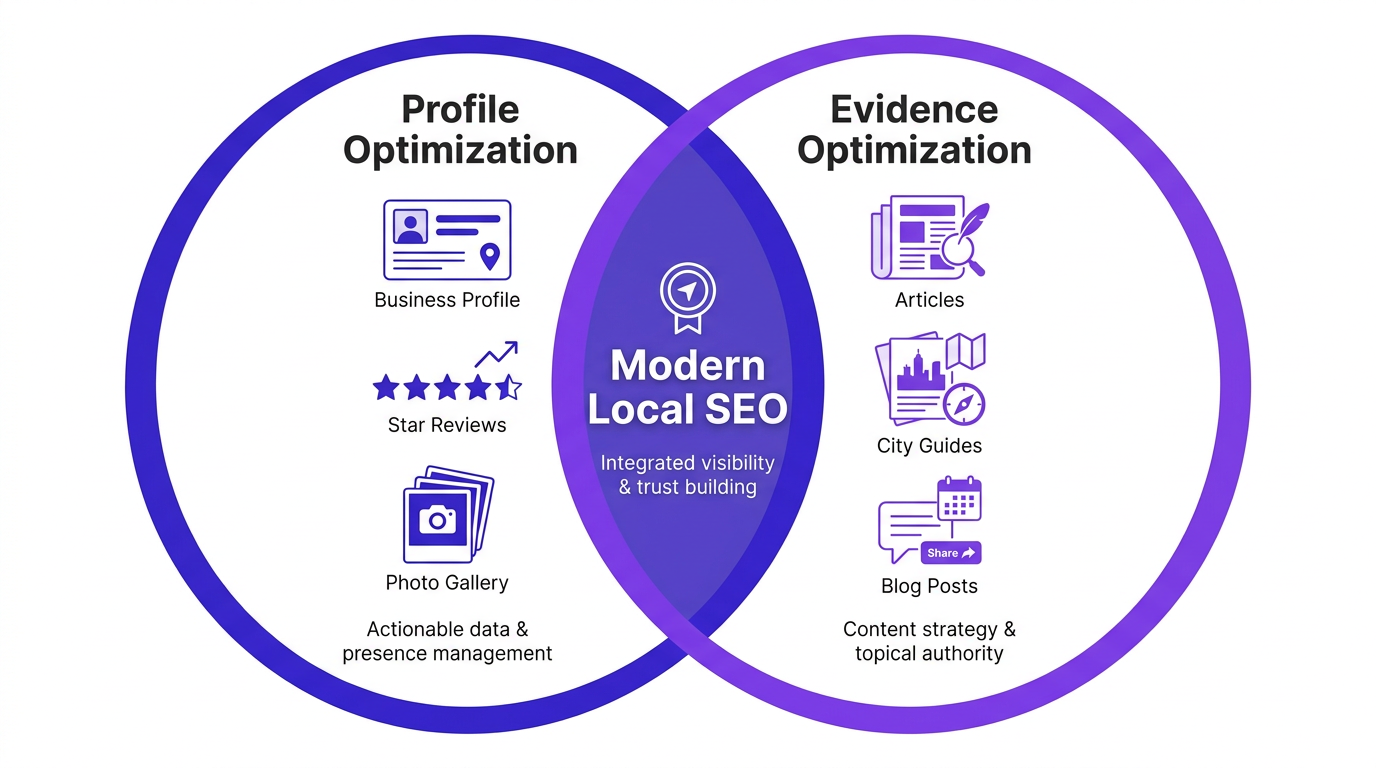
From Google's side, the incentive is obvious: recommendations have to be reliable. A perfectly maintained profile is one signal. A well-maintained profile plus credible "best of" mentions can create stronger public evidence of real-world prominence. That's why local SEO now needs an off-profile visibility strategy, not just profile polish.
The Shift From Profile Optimization to Evidence Optimization
Some people in the industry have started calling this "evidence optimization," and the phrase sticks because it describes the job plainly. You're no longer optimizing a single page inside Google. You're building a body of proof around your business that Google's systems can find, cross-check, and trust. The work is less about clever tweaks and more about making sure the internet agrees with what your profile says.
In practice, that "evidence" comes in a lot of forms, including:
- Features in local news articles or online magazines.
- Inclusion in food, travel, or lifestyle guides.
- Mentions in curated "best-of" lists for your city or neighborhood.
- Listings in reputable, industry-specific directories (not just generic citation sites).
- Positive roundups from bloggers or influencers in your niche.
- Event pages that list your business as a participant or venue.
Each credible mention can become another public reference point around your business. It's also part of the shift toward what some call Answer Engine Optimization, where visibility increasingly depends on being recognized as a trusted entity, not merely matching a keyword.
What Types of Websites Can Influence Local Visibility?
Not every mention carries the same weight. What you want are placements on sites Google already treats as authoritative for your location and category. Looking at what Google tends to surface in these list experiences, the most influential sources usually fall into a few buckets:
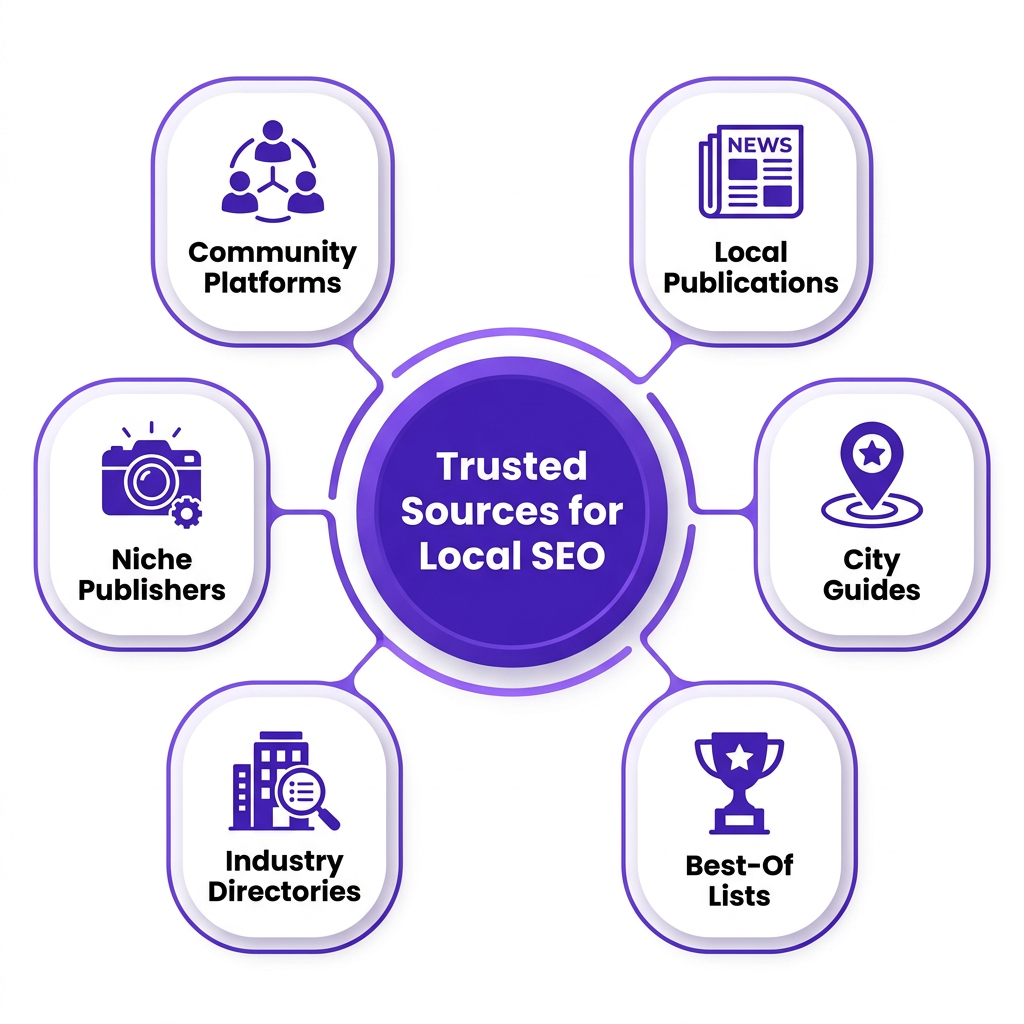
- Local Publications: Your city's newspaper, alternative weekly, or neighborhood news blog. These are often the highest-signal mentions you can earn.
- Trusted City Guides: Established sites focused on your city's food, culture, and events (think Time Out, Thrillist, or local equivalents).
- Best-of List Websites: Sites built around curated rankings, sometimes driven by reader polls and sometimes by editorial reviews.
- Industry-Specific Directories: Not low-value citation farms. Think TripAdvisor for travel, Healthgrades for doctors, or Avvo for lawyers. These tend to matter in their categories.
- Niche Publishers: Creators with a real audience around a specific topic like vegan food, craft beer, family-friendly activities, or luxury travel.
- Community-Driven Platforms: Google and Yelp reviews still loom large, but mentions on Reddit, local Facebook groups, and other community forums can function as additional signals.
How Businesses Can Use Google Maps Lists for SEO Research
The upside of all this is that Google is making the pattern visible. You don't have to guess which publications matter in your market. Google Maps can double as a competitive research tool for building an evidence optimization plan.
A simple process works well:
- 1. Explore the Lists: Open Google Maps and browse the Trending, Top, and Gems lists for your city and category. Note what Google is choosing to highlight.
- 2. Note the Sources: When Google builds from third-party lists, it often cites where the idea came from. Look for language like "From a list by [Publication Name]." Capture each source in a spreadsheet.
- 3. Analyze Your Competitors: Watch which competitors show up repeatedly across different lists and sources. Recurrence is a clue that their off-profile visibility is working.
- 4. Build a Target List: That spreadsheet becomes your outreach short list: the publications and sites most likely to influence local discovery in your niche.
- 5. Pitch Genuinely Useful Ideas: Don't email asking to be "added." Do the homework, find the right editor or journalist, and pitch a story or angle that fits their audience. The point is to earn editorial coverage, not purchase links.
What Not to Do
Any time Google rewards a new signal, someone tries to counterfeit it. Resist the temptation. Google has been clear that it wants independent, curated lists, and the shortcuts tend to be the easiest for algorithms (and humans) to spot.
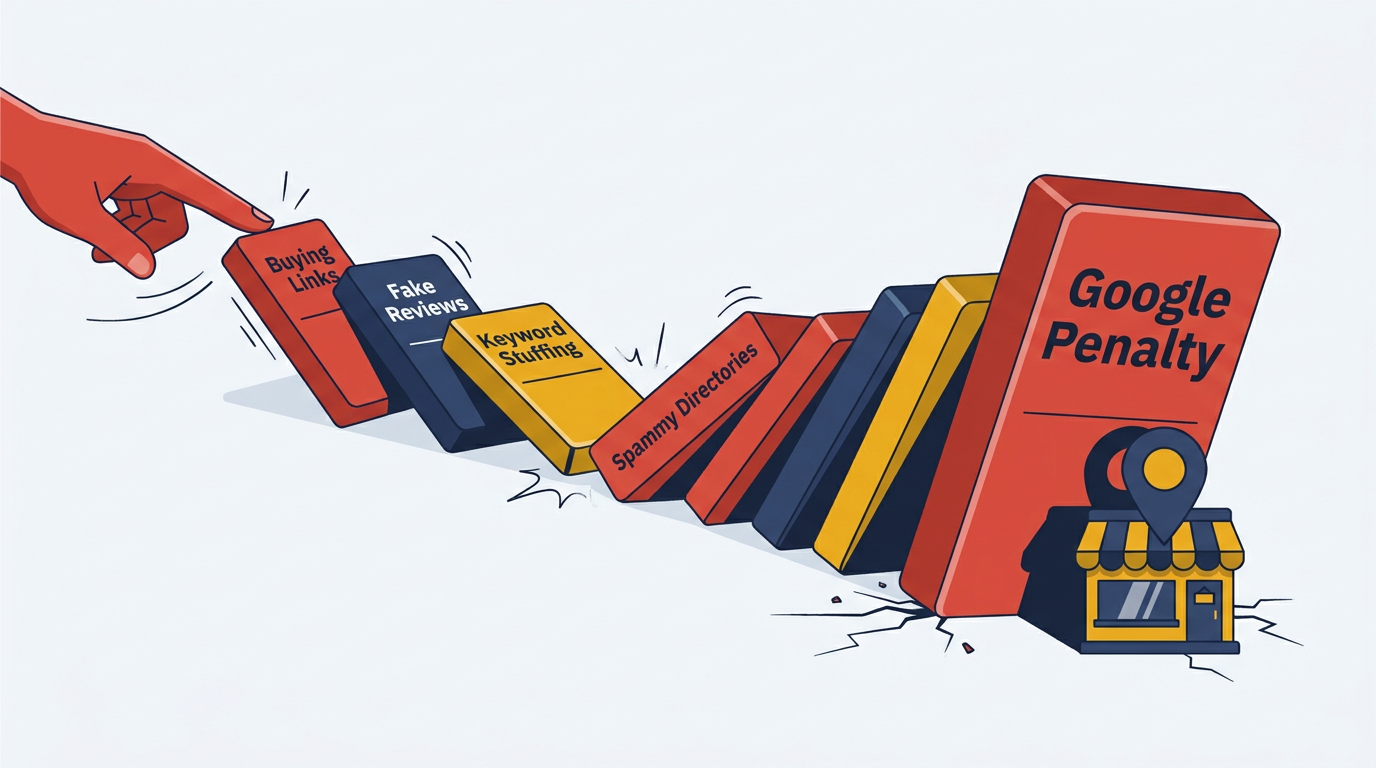
Here's what to avoid:
- Don't buy placements on low-quality lists. If a site offers to add you to its "best of" list for a fee, treat it as a warning sign. Those sites are often link farms that get ignored or, worse, penalized.
- Don't rely only on basic citations. Consistent NAP (Name, Address, Phone) across directories is still foundational, but it's not the same as an editorial mention. Citations verify you exist; editorial mentions suggest authority.
- Don't create your own fake "best of" blogs. Spinning up a network of thin sites to link back to your business is an old tactic, and Google's systems are built to catch it.
- Don't ignore the basics. Evidence optimization adds to GBP optimization; it doesn't replace it. Keep your profile clean, respond to reviews, and use the features Google provides.
A Simple Local Evidence Optimization Framework
Trying to do all of this at once can get messy fast. One way to keep it manageable is to sort "evidence" into four categories. A durable local presence tends to have proof in each bucket.
| Proof Type | Definition | Examples |
|---|---|---|
| Owned Proof | Assets you control directly. | Website location pages, service pages, case studies, blog posts. |
| Profile Proof | Your presence on the major platforms. | Google Business Profile, Bing Places, Apple Maps, reviews, photos, Q&A. |
| Third-Party Proof | Mentions earned from other entities. | Publisher articles, curated lists, local media, niche directories, event sponsorships. |
| Community Proof | What actual customers and users say in public. | Reviews across platforms, user-generated content (UGC), social media mentions, forum recommendations. |
| A balanced strategy addresses all four pillars of local evidence. |
Most businesses put nearly all their energy into owned and profile proof. The growth lever is usually the third and fourth pillars: systematic third-party coverage and a real community reputation. That matters even more as AI-powered and local discovery experiences increasingly surface information from reviews, photos, community input, and web content, so broader brand evidence is becoming more useful to track.
How Vizup Can Help Brands Track This
Keeping tabs on all of this manually is brutal, especially for multi-location brands. Tools start to matter because visibility is hard to improve if you can't see where you're being mentioned, and where you're being ignored.
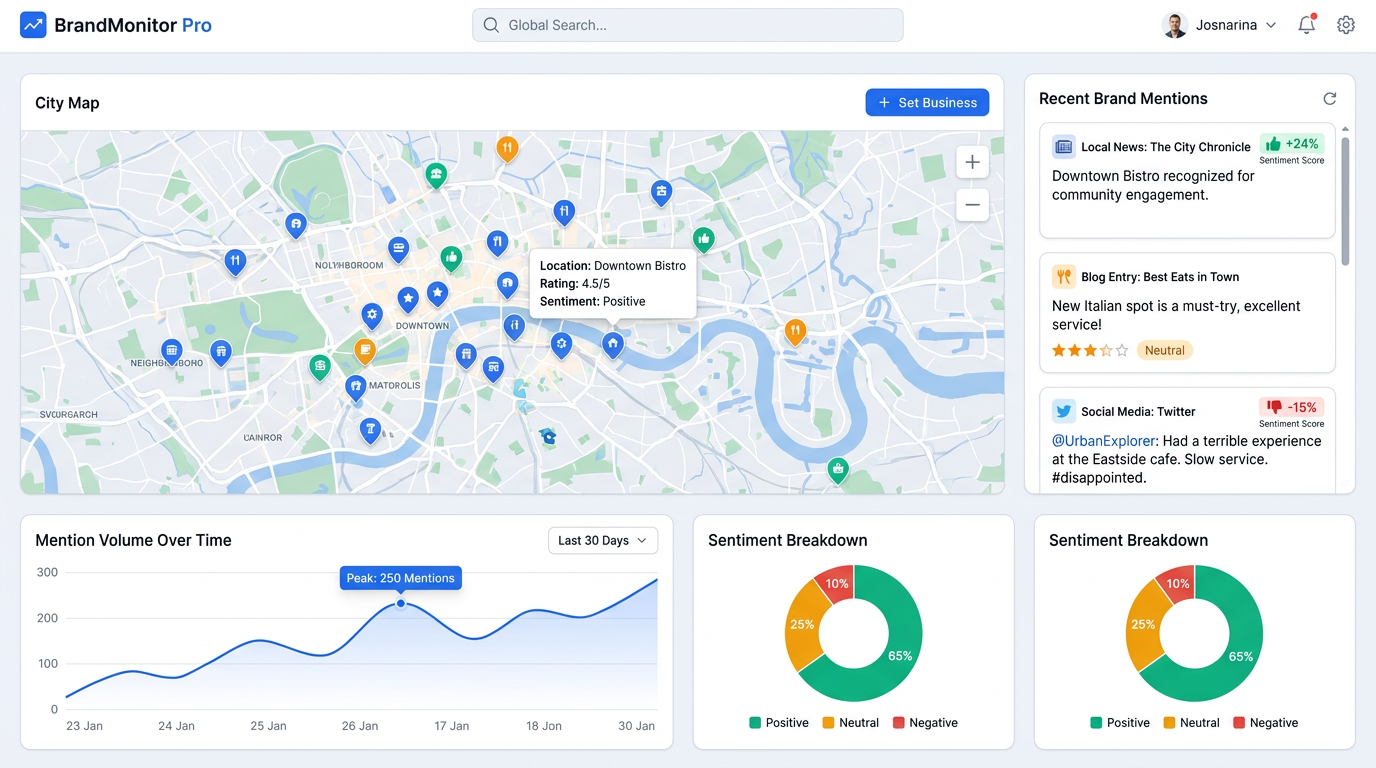
Vizup aims to give brands a clearer picture of their digital presence, including the off-profile signals that increasingly shape local discovery. With monitoring across the web, you can:
- Track where competitors are mentioned: See which publications, blogs, and lists feature your rivals, then turn that into a practical target list.
- Identify influential local publishers: Spot the sources in each market that drive conversation and show up in Google's list experiences.
- Build city-level visibility campaigns: Replace one-size-fits-all outreach with market-by-market campaigns based on the sources that actually matter there.
- Connect local SEO with brand intelligence: Look at sentiment and context, not just whether a mention exists. That context matters for reputation, and reputation feeds into what Google's AI search treats as trustworthy.
When you track mentions systematically, you can build an evidence optimization program that scales instead of chasing random links. Getting clear on Google's preferred sources is a practical first step toward earning the kind of coverage Google is already surfacing.
Conclusion
Google Maps Lists and Top Places features aren't a cosmetic tweak. They're a signal about where local discovery is headed. Google is making more local discovery sources visible, especially through curated lists and Top Places features. Local SEO used to feel like a black box built around relevance, distance, and prominence. Now Google is making some local discovery sources more visible, especially through curated lists and Top Places features.
The message for brands is straightforward: stop treating your own profile as the whole battlefield. Start building the ecosystem of proof around your business. The winners will be the ones that earn authentic mentions from trusted local sources, cultivate a strong community reputation, and manage their presence across the wider web. It's more work than swapping categories in GBP, but it's also a sturdier path to long-term local visibility.
Frequently Asked Questions
Is Google Business Profile optimization still important?
Yes. GBP is still the base layer for local SEO. Evidence optimization sits on top of a well-maintained profile, not instead of it. Accurate details, regular updates, strong photos, and consistent review management remain table stakes.
What's the difference between a citation and an editorial mention?
A citation is usually a structured listing of your Name, Address, and Phone number (NAP) on a directory like Yelp or Yellow Pages, mainly used for verification. An editorial mention is an unstructured reference in an article, blog post, or guide. Editorial mentions are more likely to appear in curated list-style experiences than basic directory citations.
How do I get my business featured in local publications?
Treat it like PR, not link building. Build real relationships and bring something worth covering. Pitch ideas that fit the outlet's audience, like a community event you're hosting, a unique local dataset you've compiled, or a human-interest story connected to your business.
Can I pay to be included in Google Maps Lists?
No. You can't pay Google to appear in the organic Trending, Top, or Gems lists, since they're generated algorithmically. Google also says Top Places lists in search must be independent and not sponsored. Paying for placement on low-quality third-party lists is a risky move that can damage your SEO.
How does this relate to Google's E-E-A-T guidelines?
Evidence optimization is one practical way local businesses can support trust and authority signals across the web. Mentions from reputable third parties act as external validation of your authoritativeness and trustworthiness, backing up what you claim on your site and in GBP.
