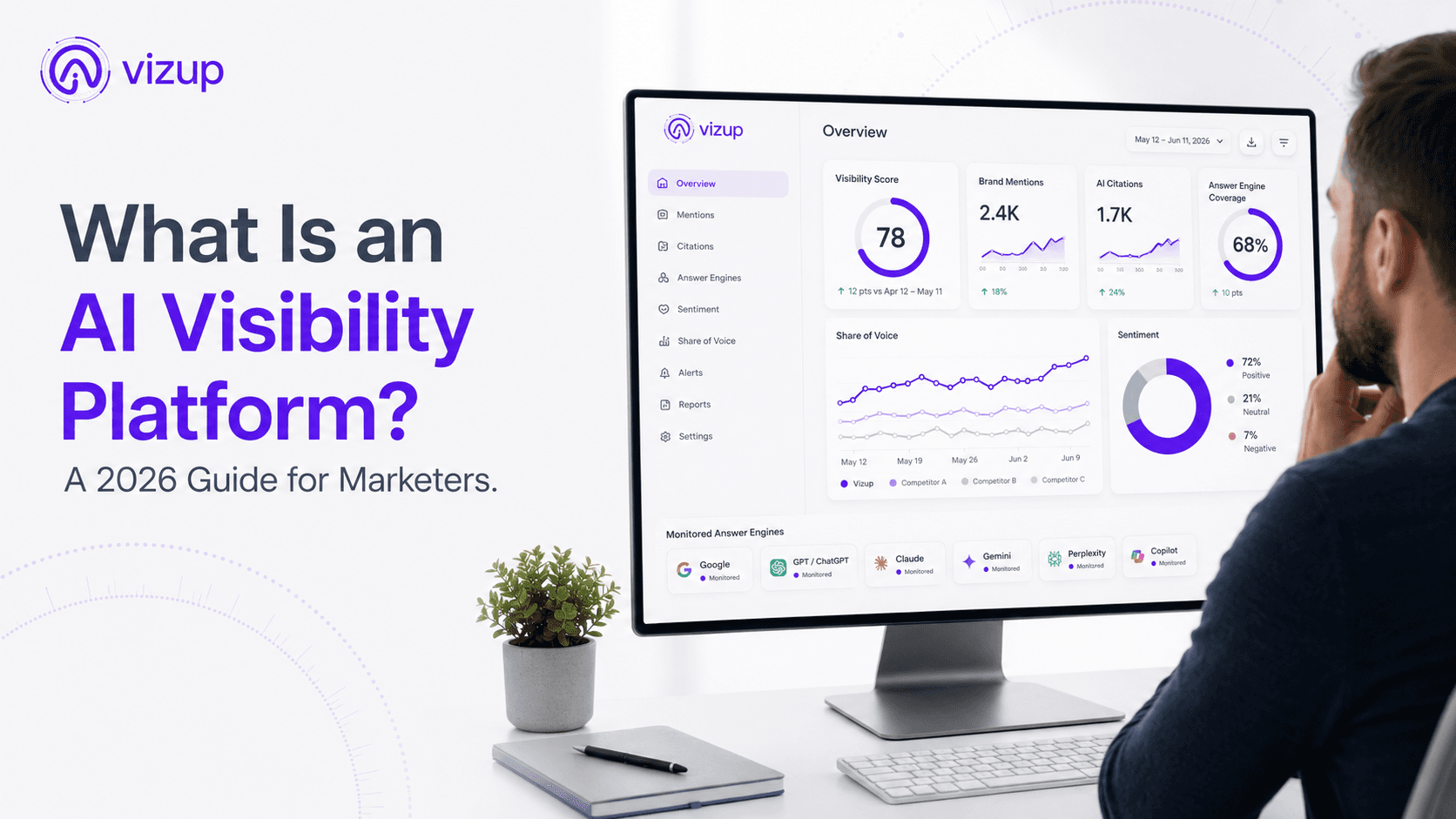
An AI visibility platform is software that tracks, measures, and helps improve how your brand shows up inside AI-generated answers from systems like ChatGPT, Google AI Overviews, Perplexity, and Copilot. Traditional SEO tools tell you where a page ranks on a results page; AI visibility platforms tell you whether the model actually cites, recommends, or even mentions you when it responds to a real query.
That difference is quickly turning into the difference between being discovered and being invisible. A 2026 study found that nearly 90% of brands had zero mentions in AI search results, even when they had strong traditional web presences (Victorious, 2026). A Bain and Dynata survey (2025) also reported that 80% of users rely on AI summaries at least 40% of the time, contributing to an estimated 15–25% decrease in organic traffic. If your strategy still treats page-one rankings as the whole scoreboard, you are tracking a shrinking slice of demand. Understanding how organic marketing is evolving beyond SEO is a practical way to start closing that gap.
Why Does AI Visibility Matter for Marketers Right Now?
This isn’t a "maybe someday" shift; it’s already reshaping how buyers gather information. Gartner (2026) projects that AI will handle 36% of all marketing work by 2028, up from 16% in 2026. Forrester reports that B2B buyers are adopting AI-powered search at three times the rate of consumers, with many organizations now using generative AI in some part of the purchasing process.
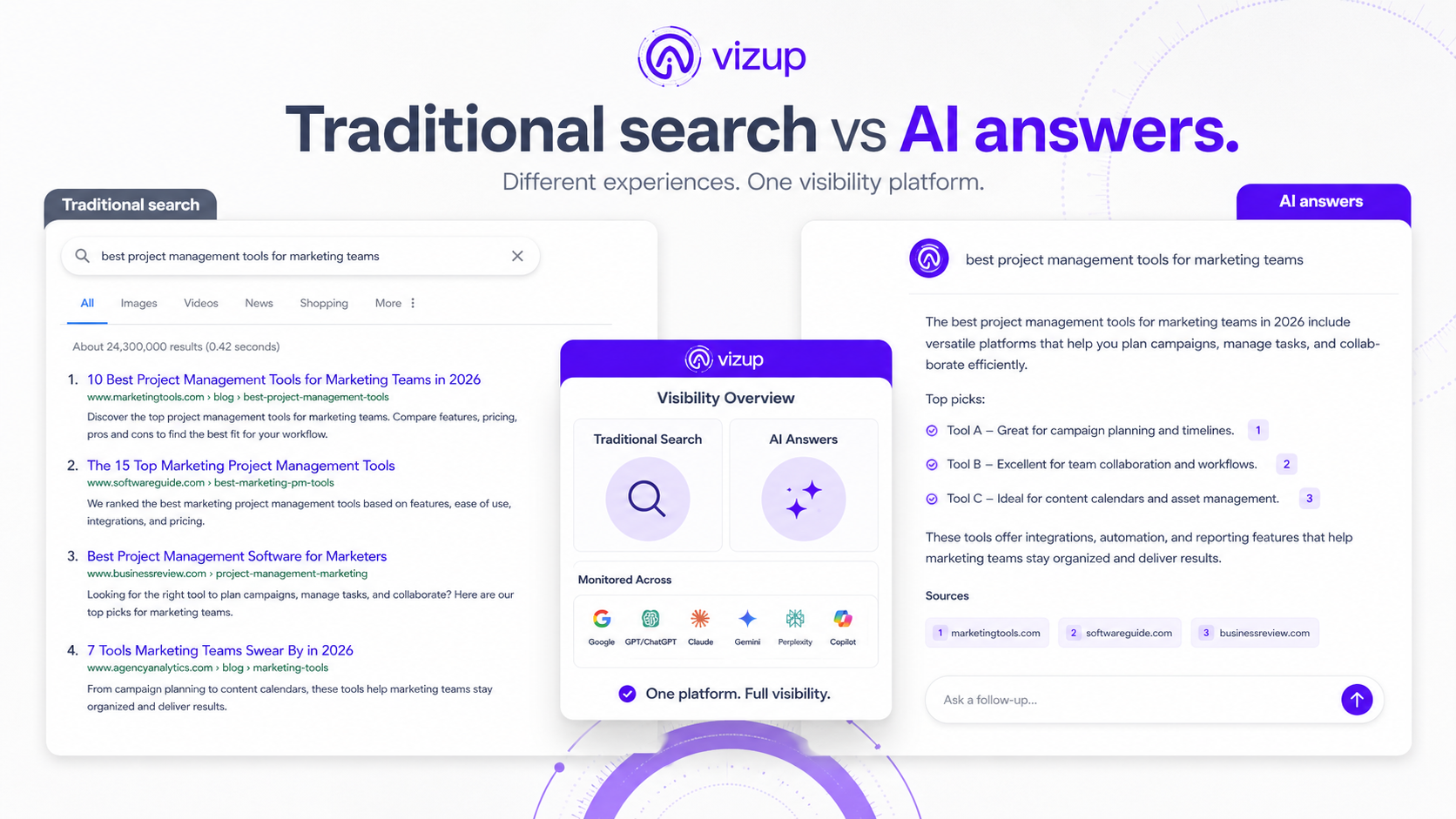
Classic search visibility tools still earn their keep for keyword positions and click-through rates, but they were built for a world of ten blue links. They won’t tell you whether GPT-4o brought up your product when someone asks for the "best project management tools," or whether Perplexity is leaning on your competitor’s case study instead of yours. That blind spot is exactly what an AI visibility platform is meant to cover. For more on how the measurement model changes, see why visibility metrics are crucial compared to legacy traffic numbers.
How Does an AI Visibility Platform Work?
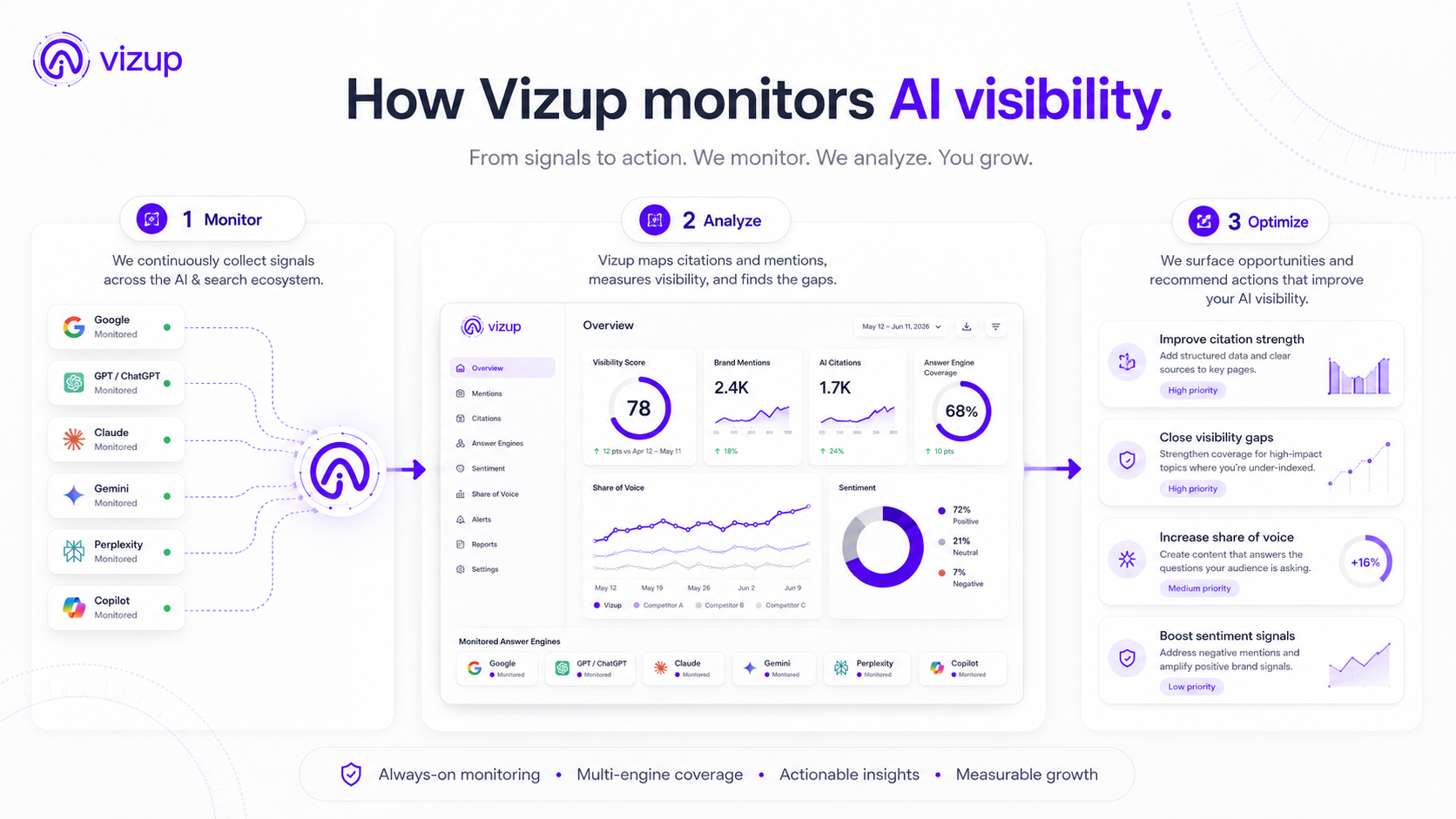
Most platforms run the same loop: monitor, analyze, then optimize. Vendors differ in how they package it, but the plumbing is broadly the same.
Monitoring means firing thousands of prompts at major AI systems (ChatGPT, Gemini, Perplexity, Copilot, and others) that match the kinds of questions people actually ask in your category. The platform logs what comes back: whether your brand is mentioned, whether competitors are recommended, and which third-party sources the model points to. You’ll often hear this called answer engine monitoring, and it’s the baseline requirement for any credible AEO platform.
Analysis is where mention counts turn into something you can act on. Which prompts pull your brand into the response, and which ones hand the stage to competitors? When the AI recommends alternatives, what sources is it citing to justify that recommendation? Platforms like Vizup surface citation sentiment, share-of-voice across AI engines, and the specific third-party pages that appear to be influencing your presence. That matters because third-party content is cited by AI search systems three times more often than company websites, and brands are 6.5 times more likely to be cited via a third-party source (Calla Creative, University of Toronto, 2026).
Optimization is the work that follows the diagnosis. Sometimes that’s tightening on-site content so it’s easier for AI systems to crawl and reuse, or improving structured data so key details are unambiguous. Often, it’s building off-site authority signals (reviews, expert mentions, knowledge-base entries) that LLMs lean on when they decide what to cite. Some platforms generate direct recommendations; others plug into the SEO and content tools you already run.
What Should You Look for in an AI Visibility Platform?
Plenty of products now call themselves "AI search visibility" tools, but the feature depth varies a lot. These are the capabilities that separate real platforms from lightweight dashboards.
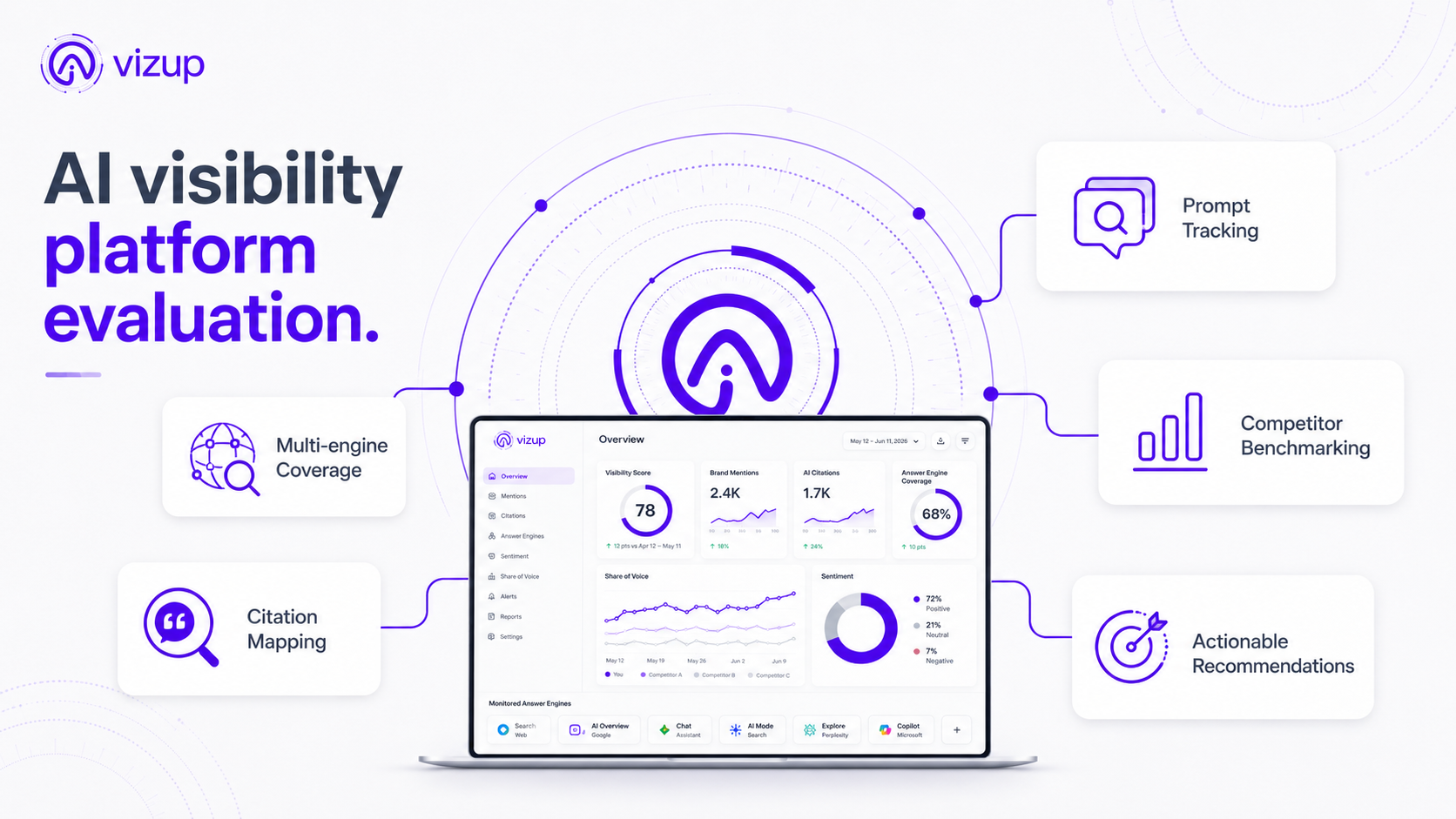
| Capability | Why It Matters | Questions to Ask |
|---|---|---|
| Multi-engine coverage | Answers vary across ChatGPT, Gemini, Perplexity, and Copilot | Which AI engines does the platform query, and how often? |
| Prompt-level tracking | High-level averages can hide the prompts where you win, or quietly lose | Can I review outcomes for individual prompts, not only rollups? |
| Competitor benchmarking | Your own mention count is only meaningful next to the market | Does it track competitor visibility in AI search alongside mine? |
| Citation source mapping | LLMs pull from specific pages; you need to know which pages those are | Does it surface the exact URLs cited in AI responses? |
| Actionable recommendations | Raw data without next steps turns into dashboard fatigue | Does it recommend content changes or authority-building actions? |
| Use these criteria when evaluating any AI visibility platform in 2026. |
Tools in this category don’t all aim at the same problem. Vizup centers on digital presence monitoring and answer engine monitoring, with a workflow built for AEO and AI SEO. Some tools focus more on generative engine optimization (GEO) tracking, while others put more weight on AI-assisted content production that supports visibility efforts or package AI visibility features inside a broader SEO suite. If you want a side-by-side view, this comparison of AEO and LLM visibility tools breaks down the tradeoffs.
What Is an AI Visibility Platform NOT?
Because the category is new, the terminology gets messy fast. Three misconceptions come up again and again.
It is not a traditional rank tracker with an AI label. Some legacy SEO tools have bolted on an "AI" tab that shows whether your URL appears in Google AI Overviews. That’s a single signal, not a platform. A real AI visibility platform queries multiple LLM-powered engines, tracks prompt-level citations, and ties those citations back to the third-party sources that appear to shape them.
It is not an AI content generator. Tools like Jasper or Writer help you produce content. An AI visibility platform answers a different question: is that content (or any other source) actually getting surfaced and cited by AI systems? Content production and visibility measurement work together, but they are not the same job.
It does not replace SEO. Technical SEO, quality backlinks, and clean content structure still influence what LLMs train on and retrieve from. An AI visibility platform sits alongside your AI search visibility optimization playbook, not instead of it. Answer Engine Optimization (AEO) is the practice of optimizing content so AI systems cite it as a source, and it’s built on the same fundamentals SEO teams already know.
How Are Brands Using AI Visibility Platforms Today?
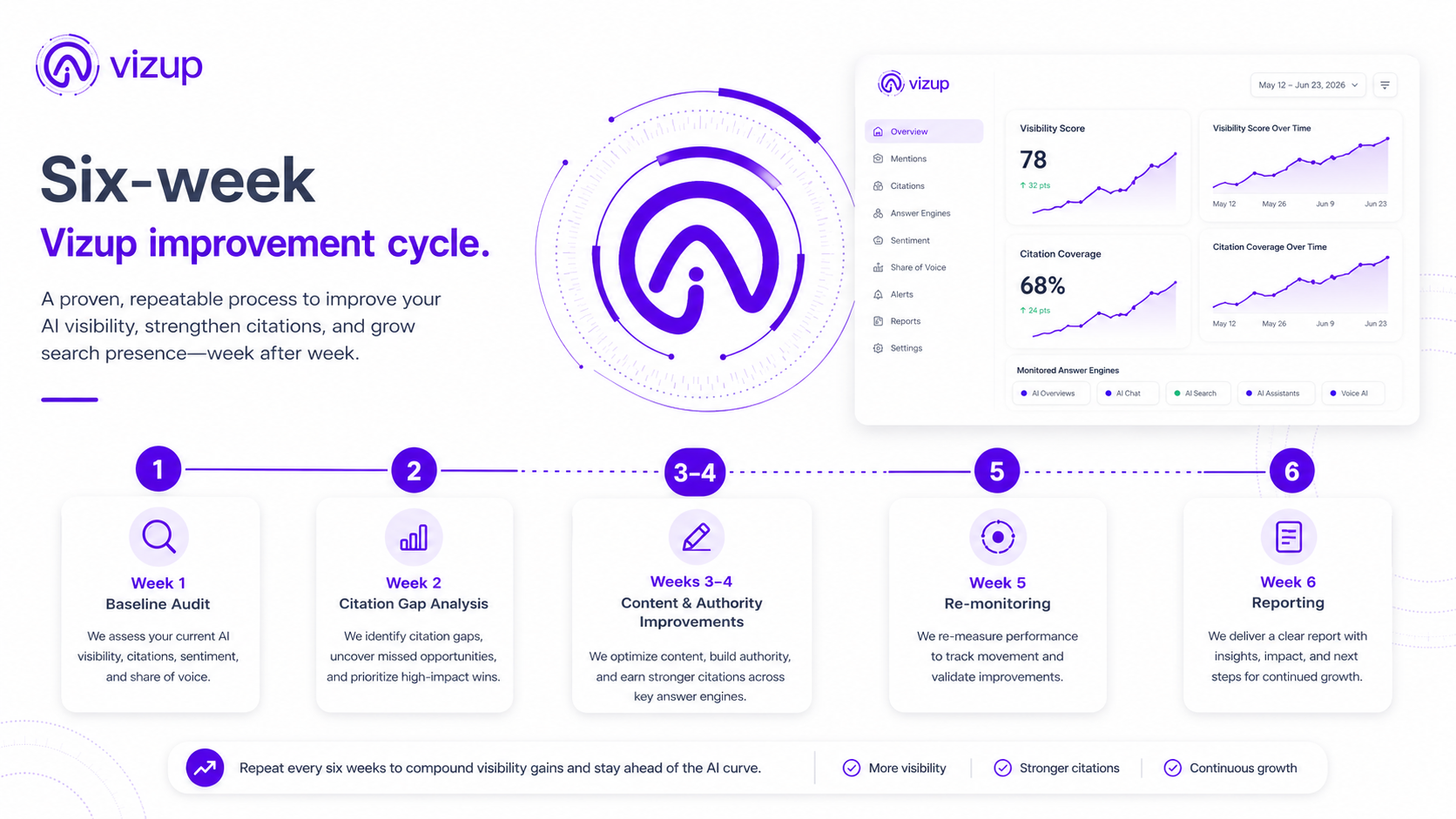
One mid-market SaaS company used prompt-level monitoring and noticed a pattern: Perplexity kept recommending a competitor when users asked about "affordable CRM for startups." The platform traced that recommendation back to a single G2 comparison page where the competitor had newer reviews. The company refreshed its G2 profile and focused on earning recent reviews, and the AI recommendation shifted within six weeks. That kind of third-party influence mapping is one of the most valuable reasons to use an AI visibility platform.
Enterprise teams tend to run a more operational cadence. They audit hundreds of category prompts weekly, pipe the results into executive dashboards, and coordinate content, PR, and product marketing around specific citation gaps. It looks less like old-school SEO reporting and more like reputation management, except the data is prompt-by-prompt and measurable. Vizup’s approach to improving brand visibility in AI search lays out that workflow in detail.
Key Takeaways
- An AI visibility platform monitors, analyzes, and helps improve how your brand appears in AI-generated answers across ChatGPT, Gemini, Perplexity, and other engines.
- Nearly 90% of brands have zero mentions in AI search results, which leaves most marketing teams with a major blind spot (Victorious, 2026).
- Unlike traditional search visibility tools, these platforms track prompt-level citations rather than only keyword rankings.
- Third-party sources dominate AI citations (6.5x more likely than brand-owned pages), which makes off-site authority a priority.
- When you’re evaluating platforms, prioritize multi-engine coverage, prompt-level reporting, competitor benchmarking, and recommendations you can act on.
- AI visibility platforms add to your SEO and AEO program; they don’t replace it.
Frequently Asked Questions
Is an AI visibility platform the same thing as an SEO tool?
No. SEO tools focus on keyword rankings and organic traffic from traditional search engines. An AI visibility platform measures whether your brand is cited or recommended inside AI-generated answers. They complement each other: strong SEO influences what LLMs can find and trust, but you still need dedicated tracking to see how often you show up in AI outputs.
How much does an AI visibility platform cost?
Pricing is all over the map. Some vendors offer free tiers with limited prompt tracking, while enterprise plans can reach thousands per month depending on how many prompts, engines, and competitors you monitor. For one example of how tiers are structured, see Vizup pricing plans.
What is an AEO platform, and how does it relate to AI visibility?
An AEO (Answer Engine Optimization) platform is geared toward getting your content cited as a source by AI systems. AI visibility platforms are broader: they monitor brand presence across AI engines and often include AEO-style recommendations as part of the workflow. AEO is one slice of the overall AI visibility motion.
Can I track my competitors’ brand visibility in AI search too?
Yes. Most AI visibility platforms include competitor benchmarking, so you can see which brands appear for the same prompts, which sources are driving those mentions, and how your share of voice compares to the rest of the market.
How often should I check AI visibility data?
AI outputs can shift quickly as models update and new content gets indexed. Weekly monitoring is a solid baseline for active campaigns. For ongoing brand tracking, biweekly or monthly reviews are usually enough. The goal is consistency, so you can spot trends instead of chasing one-off changes.
See where your brand shows up in AI search. Start monitoring with Vizup.
