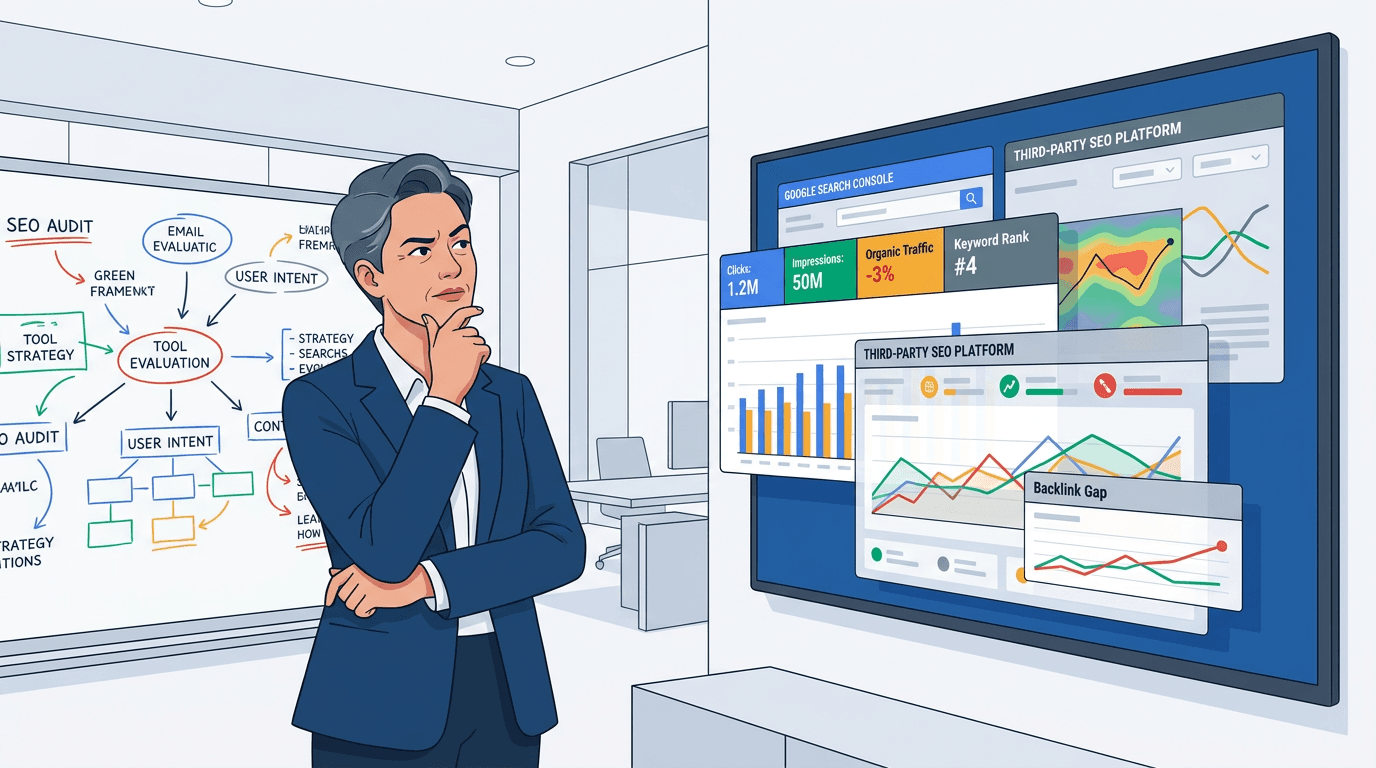
Google's guidance on third-party SEO tools, published in June 2026 via Google Search Central, is not an attack on the SEO industry. It's a long-overdue correction for a very specific failure mode: teams treating proprietary tool metrics like they're stand-ins for Google's ranking signals. Google doesn't mince words here. Third-party tools cannot see Google's internal ranking data. They cannot guarantee outcomes. Any forecasts are just that: forecasts. If your team is still buying software based on who promises the cleanest score, this doc should change that conversation fast.
Industry reactions, though, have landed in the usual two buckets. One side heard, "Google says SEO tools are useless." The other waved it off as corporate PR. Neither holds up. The actual message is more practical: Google is drawing a boundary between what its systems can verify and what outside vendors can only estimate. For SEO teams, marketing leaders, and agencies investing in AEO and GEO platforms, this is the moment to separate tools that improve real organic visibility from tools that mostly produce reassuring dashboards.
The 'Trust, but Verify' Mandate: Deconstructing Google's Core Message
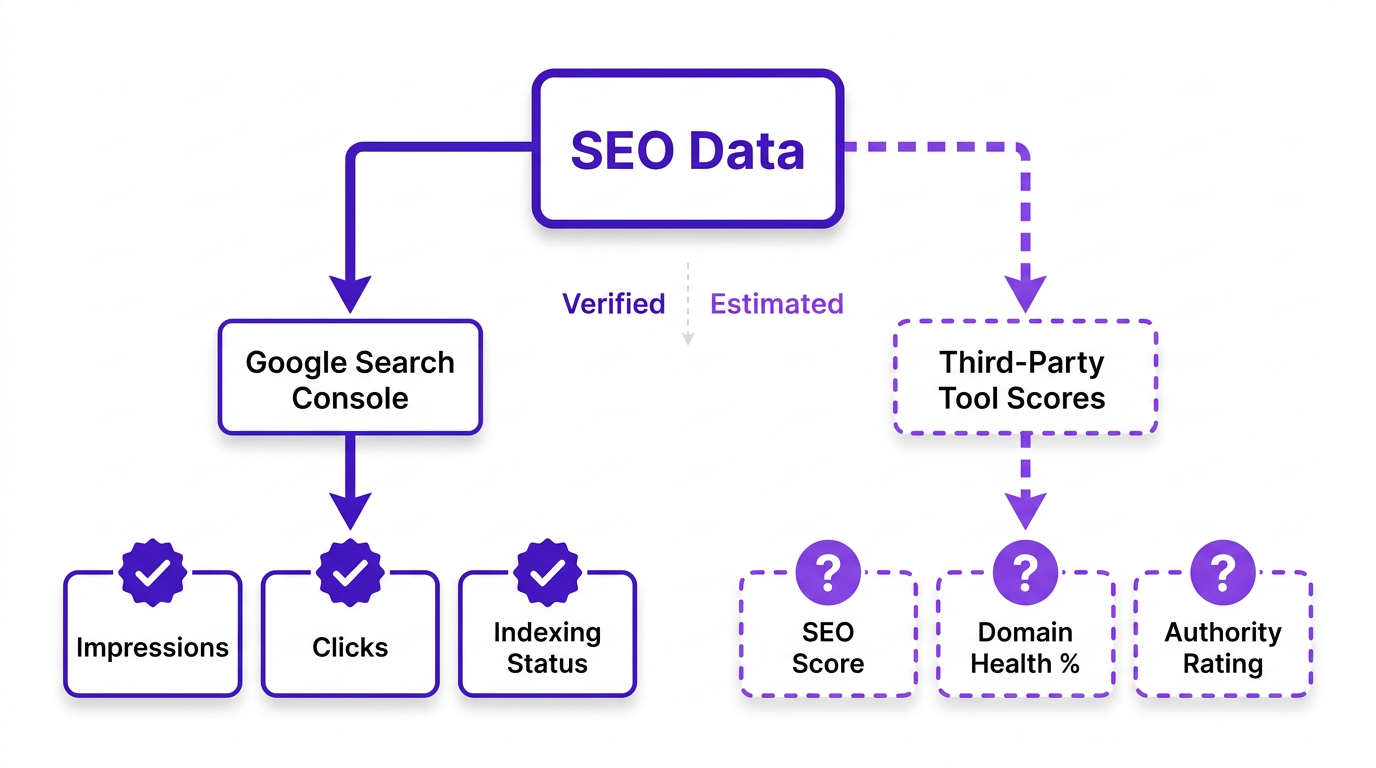
Google's main warning is aimed at proprietary metrics with no provable tie to search performance. You know the type: "SEO scores," "domain health" percentages, "authority" ratings. They look scientific, they move when you ship fixes, and they make progress feel measurable. The catch is straightforward: Google doesn't use them. John Mueller has said publicly that Google does not use scores from third-party SEO tools for ranking. That was already true, and the 2026 documentation removes any remaining ambiguity.
Google also makes its hierarchy of data sources explicit: Search Console comes first. The official recommendation is to use Search Console because it provides key information and data directly from Google Search. Read that less as a friendly tip and more as a baseline requirement. Search Console reflects what Google crawls, indexes, and surfaces. No third-party platform can recreate that view with the same fidelity.
Note: Note: Google is not saying all third-party SEO tools are useless. The guidance explicitly acknowledges that tools can help with research, content workflows, monitoring, indexing checks, prioritization, and reporting. The warning is against treating proprietary metrics as if they reflect Google's internal systems.
Where this guidance gets pointed is in how it calls out the black-box economics of some SEO tooling and services. If a vendor can't explain how a "health score" is calculated, what data it relies on, or why a recommendation matters in real search terms, treat that as a buying-signal in the wrong direction. Google is effectively telling procurement teams to demand receipts. Otherwise you're paying for performance theater.
Where Most SEO Tools Fall Short (And Why It Frustrates Google)
The gap isn't philosophical; it's architectural. Third-party crawlers can't reproduce Googlebot's rendering pipeline, its quality evaluation systems, or the way Google interprets intent at scale. A tool might label a page "poorly optimized" because of keyword density, heading patterns, or an internal-link count. Google can still rank that page first if it answers the query better than the alternatives. That mismatch is baked in, and no amount of engineering fully closes it.
The second issue is volume: recommendation overload. Plenty of tools happily generate hundreds (or thousands) of "issues" on a site. Missing alt text on decorative images. Title tags that run a little long. Internal links with generic anchors. Each ticket sounds defensible on its own. Together they create a treadmill where teams chase a perfect score and neglect the work that actually changes outcomes: content strategy, UX improvements, or indexing problems that keep pages from showing up at all. The tool becomes the strategy instead of supporting one.
Static Reports vs. Active Visibility Platforms
A passive SEO tool mostly hands you snapshots. A keyword was #7 on Tuesday. A crawl found 342 errors. A "site health" score reads 78%. Useful data, sure, but it's inert. It sits in a dashboard until someone translates it into priorities and work. Most teams don't have the time to do that rigorously every week, which means the insights age out before they turn into results.
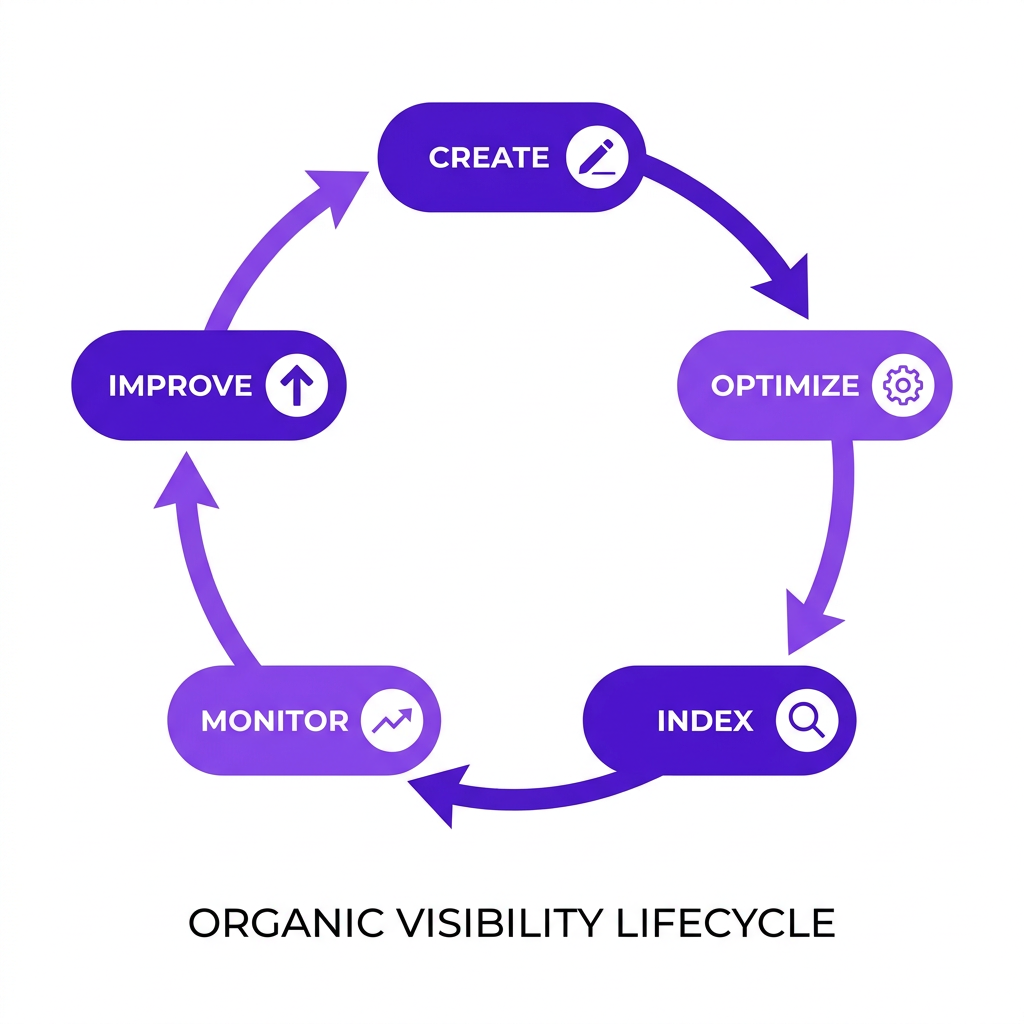
An organic visibility platform is built around execution, not just reporting. Instead of simply noting a ranking drop, it helps you narrow down why it happened, identifies which pages need updates, supports sitemap generation and indexing checks, and tracks whether recovery is actually happening. That's the difference between a diagnostic readout and an operating system. Vizup helps teams create, optimize, index, monitor, and improve organic visibility across Google and AI answer engines. That full-cycle model lines up with what Google's guidance treats as legitimate: research, workflows, monitoring, and reporting that map to real work.
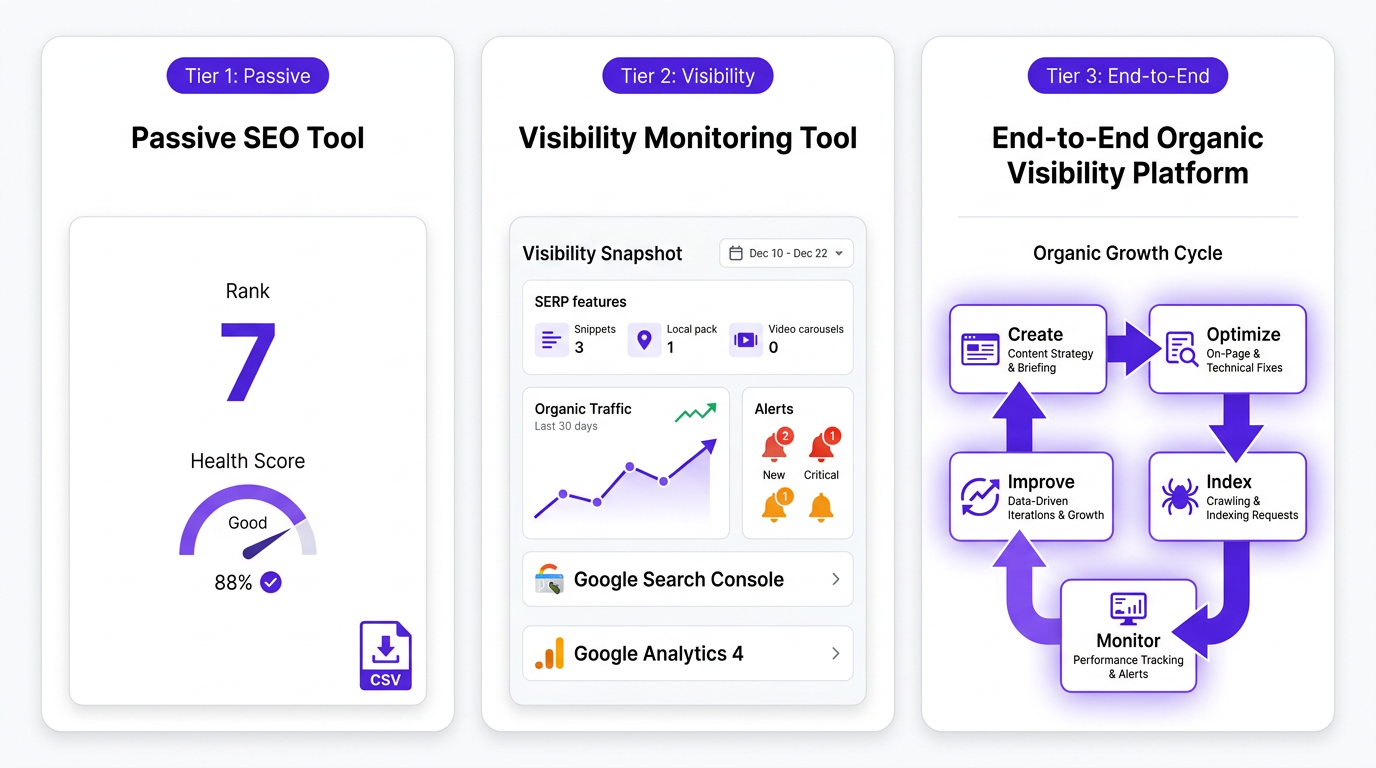
| Capability | Passive SEO Tool | Visibility Monitoring Tool | End-to-End Organic Visibility Platform |
|---|---|---|---|
| Data Source | In-house crawlers and estimated metrics | SERP scraping plus Search Console integration | Search Console plus proprietary monitoring plus AI answer engine tracking |
| Primary Function | Snapshot reporting (ranks, errors) | Tracking SERP features and visibility trends | Create, optimize, index, monitor, and improve content |
| Workflow Integration | None (export CSV, interpret manually) | Limited (alerts and dashboards) | Built-in content briefs, indexing workflows, and task management |
| Handles AI/Generative Search | No | Partial (some track AI Overviews) | Yes (AEO and GEO monitoring, AI crawler detection) |
| Actionability | Low (data without direction) | Medium (trends without execution) | High (insights tied to concrete next steps) |
| Example | Basic rank tracker | SERP feature tracker | Vizup |
| How different tool categories compare on the capabilities that matter after Google's 2026 guidance. |
AEO, GEO, and the AI Visibility Gap
Google's 2026 guidance explicitly calls out tools that promise improvements for "AEO" (answer engine optimization) or "GEO" (generative engine optimization), and tells users to sanity-check those claims against Google's own documentation. That's a useful distinction. Google isn't declaring AEO or GEO tooling illegitimate. It's pushing back on vendors who market certainty where the underlying data can't support it.
There's a real paradox here: Search Console now provides dedicated generative AI visibility reporting, but teams still need cross-platform monitoring and execution workflows. So third-party answer engine optimization tools aren't just a nice-to-have; they're how teams fill the measurement gap. The deciding factor is transparency: what exactly is being tracked, how it's collected, and where the blind spots are. Teams evaluating AI search visibility management tools should bring the same skepticism Google recommends for traditional SEO platforms, without writing off the entire category.
Warning: Warning: Be skeptical of tools that imply Google approval or guaranteed rankings. Google's documentation is explicit: no third-party tool has access to internal ranking data, and any performance guarantees are predictions, not promises.
The Counterargument: 'My SEO Score Went Up and So Did My Traffic'
This comes up all the time. A team moves a site health score from 72 to 91 and sees organic traffic rise 15% in the same window. It's tempting to treat that as proof the score drove the outcome. The problem is that the story usually collapses once you separate correlation from causation.
The work that pushes scores up (fixing broken links, tightening title tags, adding structured data, compressing images) is often just solid SEO hygiene. Those improvements can pay off regardless of whether a tool is keeping score. The tool didn't uncover a secret; it packaged known practices inside a gamified metric. The bigger risk isn't that the recommendations are always wrong. It's that the prioritization can be wildly off. A platform might applaud fixing 200 missing alt tags on thumbnail images while your team misses a crawl budget issue or a content gap that's worth thousands of monthly visits.
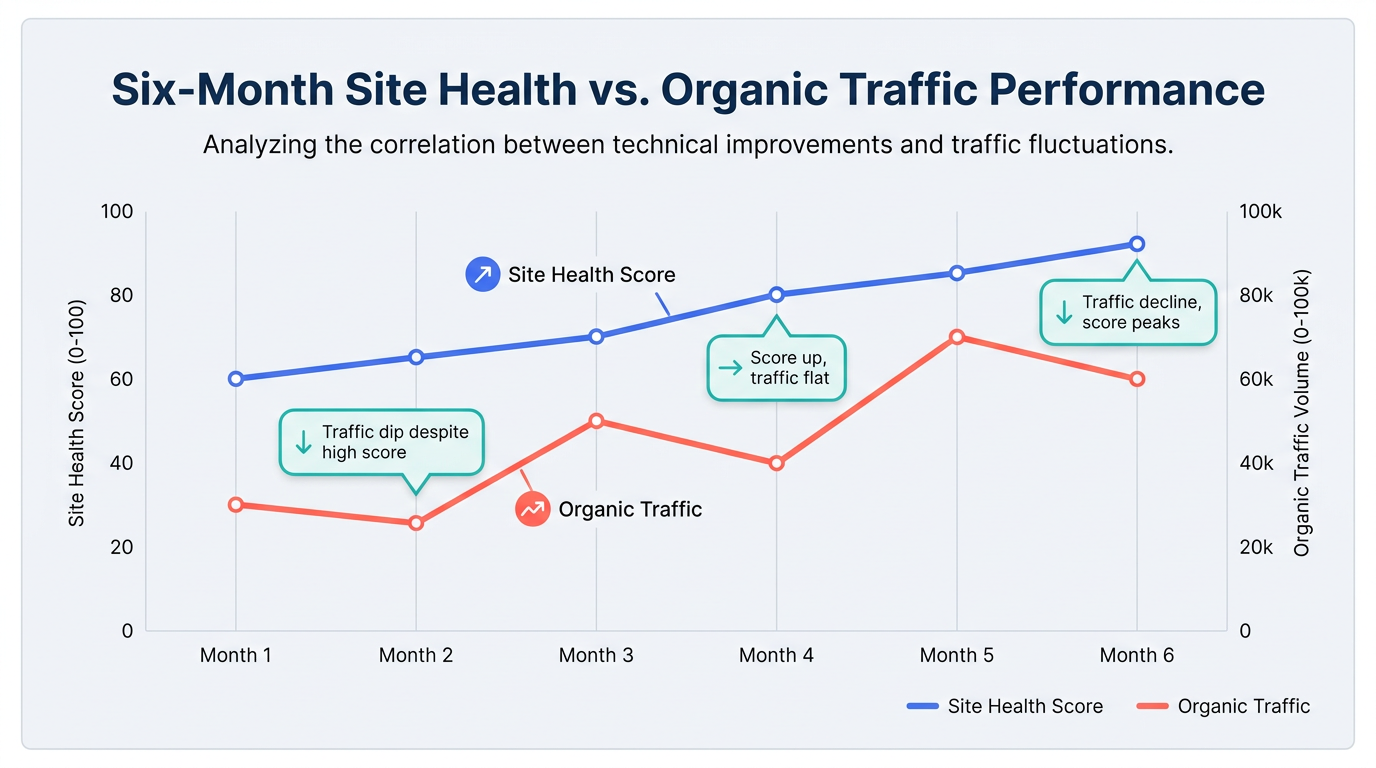
A more accurate way to use these products: treat them like structured checklists for technical SEO services and ongoing maintenance. Just don't promote the score to KPI status. KPIs should come from Search Console, revenue attribution, and real user behavior, not a vendor's proprietary grading system.
How to Evaluate SEO, AEO, and AI Visibility Tools the Right Way
Google's guidance doesn't hand you a neat scoring rubric, but the evaluation criteria are all there if you read it like a buyer. Here's how to operationalize it when you're looking at anything from a rank tracker to a full organic visibility platform.
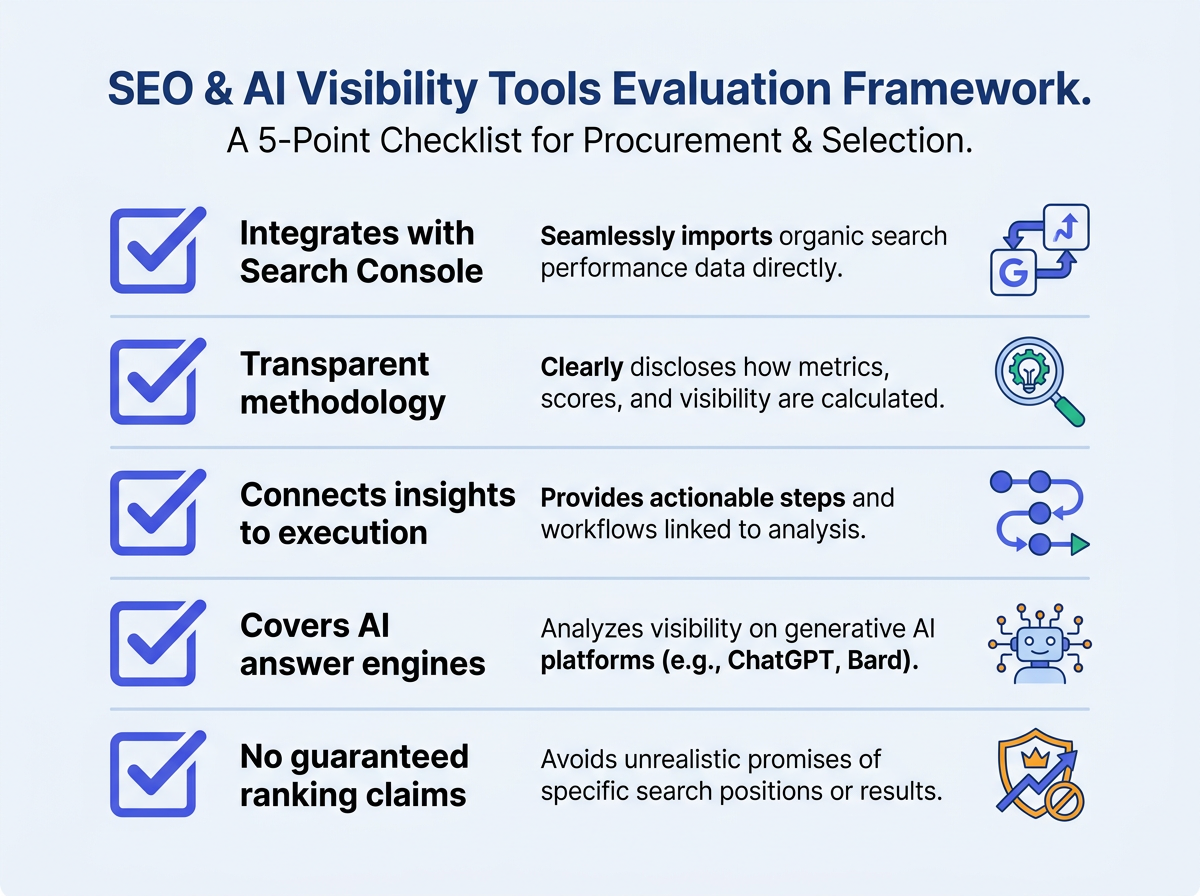
Does it integrate with Search Console, or replace it? Strong tools build on Google's first-party data instead of trying to compete with it. They add context like competitor benchmarks, content gaps, or AI visibility tracking on top of what Search Console already verifies. If a vendor downplays Search Console or positions its own metrics as a superior substitute, that's directly at odds with Google's recommendation.
Does it connect insights to execution? Data that doesn't translate into work is noise. Press vendors on whether the product helps you ship: content briefs, update management, indexing checks using an AI crawler checker tool, and ongoing monitoring. Tools that stop at "here's a list of problems" leave your team rebuilding the execution layer from scratch every cycle.
Is the methodology transparent? If a vendor won't explain how a metric is calculated or where the inputs come from, treat it as a non-starter. Google's guidance is a direct critique of opacity. Hold your tools to the same standard you'd expect from an agency pitching SEO services: clear methodology, clear data sources, clear limitations.
Does it cover AI and generative search? Search in 2026 is bigger than ten blue links. AI Overviews, conversational interfaces, and LLM-driven answer engines are changing how visibility works and how users get information. A tool that only reports classic rankings is missing part of the market. Teams need AI visibility tooling that tracks presence across Google and AI answer engines, not just traditional SERPs. Knowing how to pick AI brand visibility tools now sits squarely in the marketing leader skill set.
Tip: Tip: Prefer tools that turn visibility insights into workflows and execution. The gap between "knowing what is wrong" and "fixing it systematically" is where most teams lose momentum.
Does it make claims Google would contradict? This is the fastest filter you have. If a tool promises guaranteed rankings, claims it can "see" Google's algorithm, or implies any kind of Google endorsement, move on. Google's 2026 documentation is unambiguous. Even before this update, Google's Search Off the Record podcast in January 2026 featured John Mueller and Danny Sullivan stressing that users have to make their own judgments and use official guidance as the baseline.

Move Beyond Tools, Build an Organic Visibility Engine
Google's guidance on third-party SEO tools is useful precisely because it removes a comfortable illusion: that a high score inside a vendor dashboard automatically maps to strong search performance. It forces a better question for any SEO leader: are we building systems that produce measurable organic visibility, or are we optimizing for the optics of progress?
What's next isn't a hunt for the "best" third-party SEO tool. It's building a workflow that supports the full cycle: create content based on real demand, optimize it around what Google actually rewards, get it indexed, monitor performance across traditional and generative surfaces, and keep improving. That's the operating model that wins, and it's the model platforms like Vizup are designed to support.
The teams that win the next era of organic visibility won't be the ones bragging about tool scores. They'll be the ones using technology to execute a visibility strategy across classic search and AI answer engines, grounded in Google's own data, extended with transparent third-party intelligence, and sustained through disciplined execution. Google's 2026 guidance on third-party SEO tools isn't the end of the tool ecosystem. It's a push toward a more honest one, and a more effective one.
Frequently Asked Questions
Is Google saying all third-party SEO tools are inaccurate?
No. Google explicitly says third-party tools can be useful for research, content workflows, monitoring, indexing checks, prioritization, and reporting. The specific warning is about treating proprietary metrics (like "SEO scores" or "domain health" ratings) as if they mirror Google's internal ranking data. Google's position is simple: these tools cannot access its ranking systems, so any performance predictions are vendor estimates, not guarantees.
How can I check the accuracy of my SEO tool's data?
Start by validating against Google Search Console, which reports verified impressions, clicks, indexing status, and crawl data directly from Google. If your tool reports keyword rankings, spot-check a sample with manual searches (incognito plus location-neutral settings). If a vendor makes AI visibility claims, confirm by running queries in the relevant AI platforms. When a tool's numbers repeatedly diverge from Search Console or observable results, treat its other metrics with the same level of skepticism.
What's the difference between an SEO tool and an AEO (Answer Engine Optimization) tool?
Traditional SEO tools focus on visibility in standard Google results: keyword positions, backlinks, technical audits, and on-page recommendations. An AEO tool focuses on visibility in AI-powered answer experiences, including Google's AI Overviews, ChatGPT, Perplexity, and similar platforms. Although Search Console now provides dedicated generative AI reporting, AEO and GEO tools help teams monitor visibility across non-Google AI answer engines and turn insights into workflows. Vizup spans both traditional search and AI answer engines as an end-to-end organic visibility platform.
Should I stop using tools that provide an 'SEO score' or 'domain health' metric?
You don't have to delete them from your stack, but you should stop treating those scores as KPIs. Google has said it does not use third-party scores for ranking. Use them as rough checklists for technical hygiene when the underlying recommendations are solid, and keep performance measurement anchored in Search Console data, organic traffic trends, conversions, and revenue attribution.
If I can't trust tool scores, what KPIs should my SEO team track?
Track metrics tied to outcomes and verified data: organic clicks and impressions in Search Console, click-through rates by query cluster, pages indexed versus submitted, Core Web Vitals pass rates, organic revenue or lead attribution, and (increasingly) citation frequency in AI answer engines. Those KPIs reflect what Google can validate and what users experience, not what a vendor's scoring model rewards.
