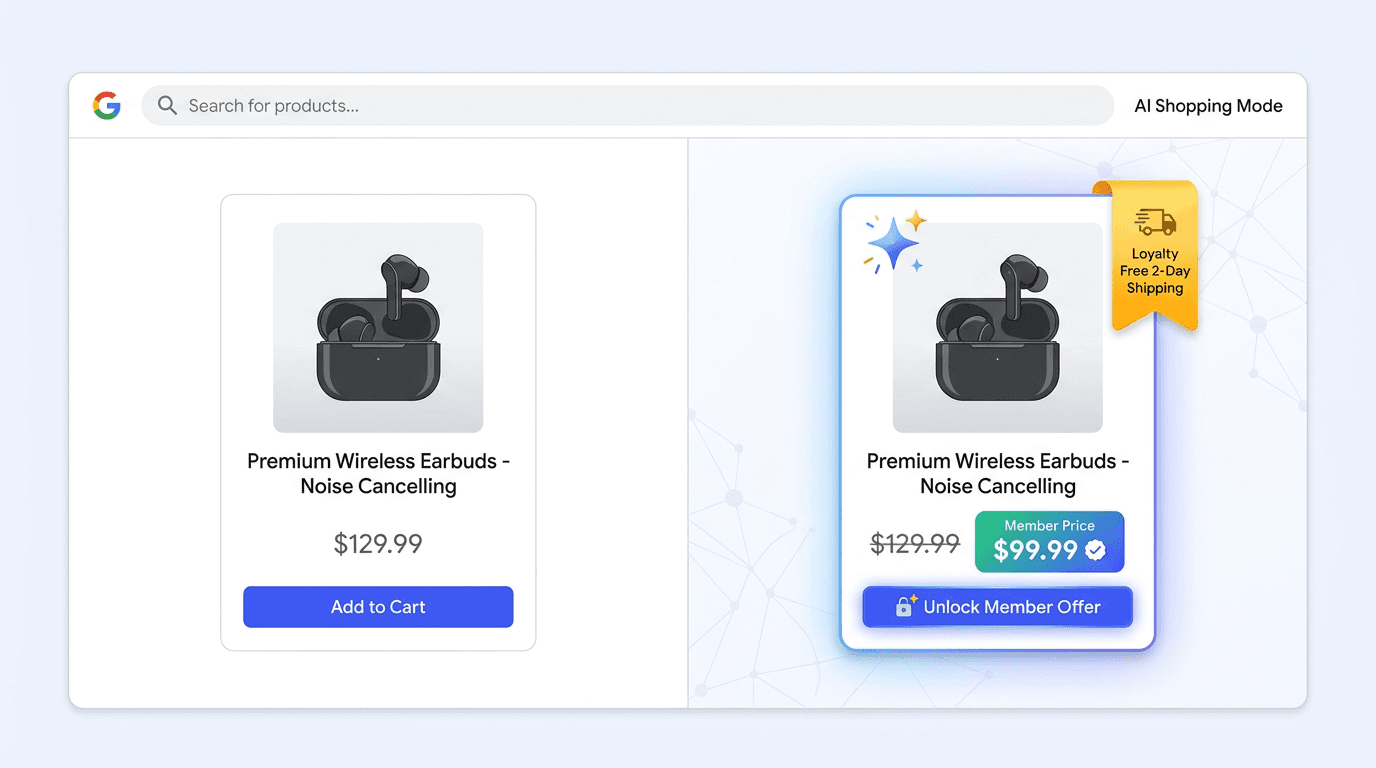
Your loyalty program may be your most underused acquisition channel, not just a retention tool. More than 93% of companies worldwide run some form of loyalty program according to SellersCommerce. Yet many retailers still treat loyalty mainly as a retention channel rather than a discovery opportunity. Most retailers still confine those programs to CRM dashboards, far from the discovery surfaces where prospective customers look for deals.
That separation has consequences. Google's AI Mode, Gemini, and AI Overviews increasingly act as personalized deal-finders, pulling signals such as member pricing and loyalty shipping perks into results. Go into peak season with an incomplete merchant loyalty AI Mode setup and a competitor's "Join for this price" offer may occupy the space your offer should hold. The work spans Ecommerce Marketing, CRM and Loyalty, and Product Feed teams: connect the program to Google's shopping surfaces, assign ownership, then measure what appears.
Why Loyalty Belongs in Discovery, Not Just Retention
Loyalty has traditionally been treated as post-purchase work: reward existing customers, reduce churn, raise lifetime value. That model fit the era of ten blue links. AI shopping results now distinguish merchants by the benefits they offer. Google can surface member strikethrough prices, loyalty points, and free-shipping badges in search, the Shopping tab, and AI Mode (Google Merchant Center Help, 2026). A shopper who has never purchased from you may see a member price and a "Join to unlock this deal" prompt.
That moves ecommerce loyalty visibility from a back-office retention metric to a front-of-funnel advantage. Retailers that understand how AI search engines retrieve and cite content know structured product data, including loyalty attributes, is the kind of signal these systems can use. Benefits that live only in a CRM spreadsheet cannot reach shoppers asking Gemini where the best deal is.
The 3-Phase Setup: Connecting Your Loyalty Program to Google's AI Surfaces
The harder problem is usually ownership, not implementation. CRM, Paid Media, and Merchandising each control part of the setup across Merchant Center, Google Ads, and the product feed. Assigning one owner to each phase prevents handoffs from becoming delays.
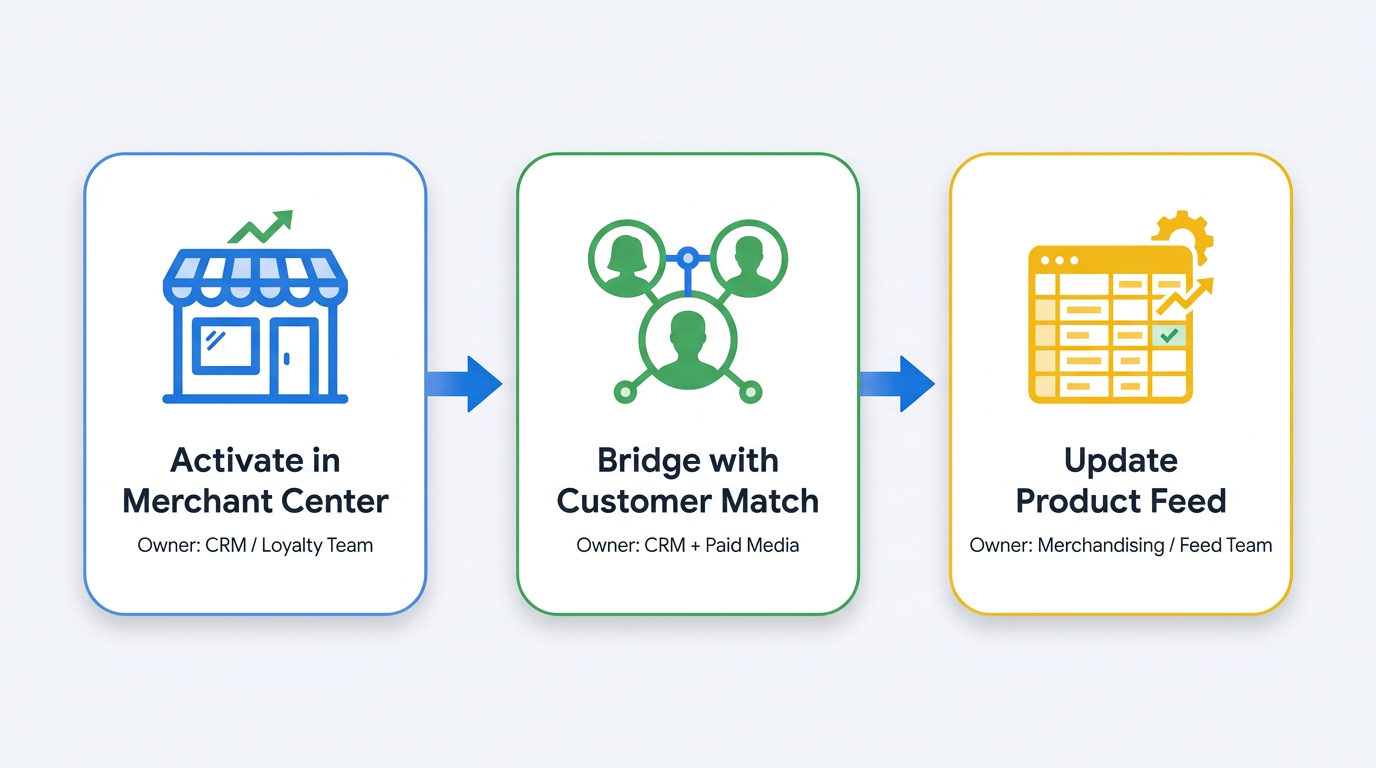
Phase 1: Activate the Merchant Center Loyalty Program
Owner: CRM / Loyalty Team. In Merchant Center's Growth section, enable the loyalty add-on. Set the program name, tiers (Silver, Gold, Platinum, or your own structure), and the benefits attached to each tier: member pricing, loyalty points membership Google rewards, or free shipping. Google supports loyalty tiers based on criteria such as accumulated loyalty points or a specified number of completed orders within a defined period.
Warning: Country availability is not uniform. Loyalty program features can appear in AI Mode and Gemini Apps in the US (Google Merchant Center Help, 2026), while availability on other display surfaces varies by country. Check Merchant Center documentation for each region before allocating resources.
Phase 2: Connect Loyalty Member Identity
**Owner: **CRM or Loyalty Team with support from Paid Media when required. Retailers can connect loyalty-member identity through Merchant API for eligible organic experiences or use Google Ads Customer Match when paid Shopping personalization and amplification are part of the strategy. Choose the route that matches your organic and paid discovery goals.
This handoff is where implementations often stop. Merchandising owns the feed while audience lists sit in Ads. Use a plain internal request: "hashed email audience lists of loyalty members, segmented by tier, linked to Merchant Center account [ID]."Customer Match supports SHA-256 hashing of eligible customer fields. Merchants can pre-hash supported data or use supported. Google upload workflows while following Google's privacy consent and Customer Match requirements.
Phase 3: Update Your Product Feed
Owner: Merchandising / Feed Team. Two attributes carry most of the work: loyalty_program, which connects a product to a program and tier, and loyalty_points, which states points earned per purchase. For member-price strikethroughs, keep the standard rate in price and use member-pricing fields for the lower rate. Shoppers then see the original price crossed out beside the member price.
Large catalogs may benefit from Merchant API support where the account is eligible. Merchant API loyalty-program functionality can require eligibility or allowlisting so confirm account access before choosing this implementation route. Smaller retailers can upload supplemental feeds in Merchant Center. In either case, use Diagnostics before peak season to catch attribute errors. What retailers must know about checkout in search places this feed work in the broader purchase journey Google is building.
Loyalty Benefits You Can Surface: A Comparison
| Benefit Type | What It Looks Like in Search | Required Feed Attribute(s) | Best For |
|---|---|---|---|
| Member Pricing | Original price struck through beside a lower member price; a "Join" prompt for non-members | loyalty_program with its member price sub-attribute | Immediate conversions and new-member sign-ups |
| Loyalty Points | A points-per-purchase badge beside the product listing | loyalty_points, loyalty_program | Long-term value and repeat-purchase incentives |
| Shipping Perks | A free or discounted shipping badge in member-pricing listings | loyalty_program with shipping benefit declared in Merchant Center | Reducing cart abandonment and competing on total cost |
| Each benefit type needs distinct feed attributes and serves a different moment in the customer journey. |
What Most Retailers Get Wrong About Merchant Loyalty in AI Mode
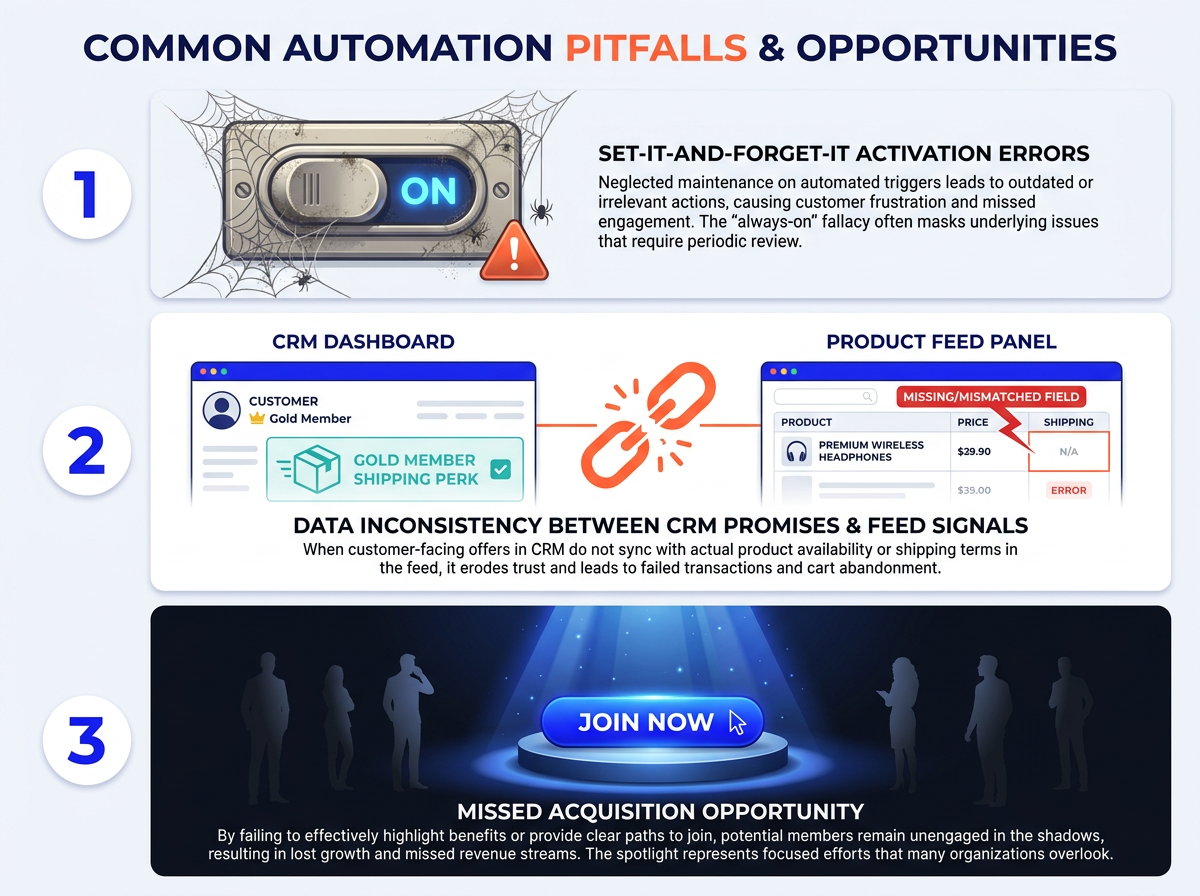
Assuming activation equals visibility. Enabling the Merchant Center add-on is the starting point. Feed errors, expired Customer Match lists, and undefined tiers can all keep a loyalty display from rendering. Maintain it as an operating process, not a completed project.
Offering perks in your CRM but not in your feed. A Gold-member promise of free two-day shipping means nothing to Google if the feed omits that shipping benefit. The result is a broken customer experience and a lost competitive signal.
Forgetting non-members entirely. Showing existing members their price matters, but the acquisition opportunity sits with everyone else. The "Join for this price" prompt in member-pricing listings gives non-members a reason to enroll. Optimizing only for current members leaves that top-of-funnel opportunity untouched.
Measuring Success: Is Your Loyalty Program Actually Showing Up?
Google now provides AI Performance Insights and separate loyalty-program reporting. However retailers still do not get a simple benefit-level view showing exactly how often a specific member price or loyalty perk appeared inside each AI experience. Combine Google reporting with broader discovery monitoring to understand performance more clearly.
- **Answer Engine Monitoring: **Use Vizup's Answer Engine Monitoring to extend beyond Google-only reporting and monitor how your brand and products appear across AI answer engines and broader discovery surfaces.
- Merchant Center Loyalty Program Report: Track loyalty impressions clicks CTR and engagement across eligible products brands and categories.
- New Member Attribution: Use a unique source code or UTM for Google visitors who join the program. Compare sign-up spikes with the feed activation timeline.
Vizup helps retailers connect these signals to a broader organic discovery workflow. As an Organic Autopilot for modern discovery, Vizup helps brands monitor create optimise publish and learn across Search Social Communities AI Answer Engines and Local Discovery using AI agents human experts and live SEO pSEO AEO and GEO tools.
FAQ: Merchant Loyalty in Google AI Search
Do I need to run Google Ads to show member pricing in search?
Not necessarily. For organic loyalty experiences, merchants can use Loyalty Customer Match through Merchant API without running Google Ads. For loyalty personalization in paid Shopping experiences, Google Ads Customer Match remains relevant.
How do loyalty points differ from member pricing in the feed?
Member pricing uses loyalty_program to show a discounted price, often against a struck-through original. loyalty_points displays points earned per purchase. Both can appear on the same product.
How does Google identify one of my loyalty members?
Customer Match matches hashed loyalty-member email lists uploaded through Google Ads with signed-in Google users. A match allows Google to show that shopper personalized member prices and perks.
Can I set different benefits for Gold and Silver tiers?
Yes. Define each tier and its benefits in Merchant Center, then segment Customer Match lists by tier. Google can then show the pricing and perks assigned to each level.
When will loyalty benefits appear after setup is complete?
Google does not guarantee a publication timeline. Complete setup early enough to allow for account review feed validation list processing and troubleshooting before peak-season demand increases.
Your Peak Season Checklist
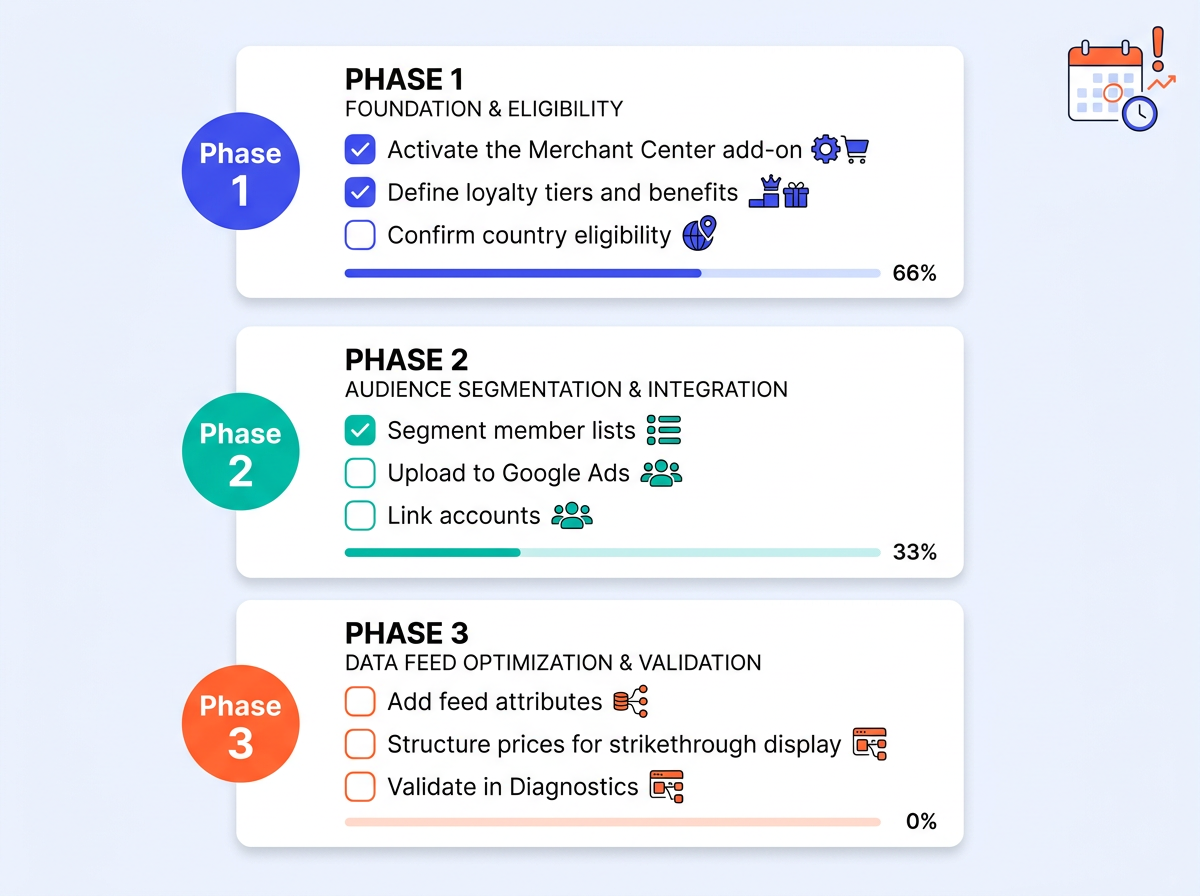
- Phase 1: Activate the Merchant Center loyalty add-on. Define tiers, member pricing, points, and shipping perks. Confirm country eligibility for each benefit.
- Phase 2: Have Paid Media upload tier-segmented Customer Match lists. Link Google Ads and Merchant Center, then verify list processing.
- Phase 3: Add
loyalty_programandloyalty_pointsto the feed. Structure prices for strikethrough display and validate in Merchant Center Diagnostics. - Ongoing: Monitor AI shopping loyalty display with Vizup's Answer Engine Monitoring. Track Google-attributed member sign-ups and refresh Customer Match lists monthly.
Peak-season readiness is not only campaigns and inventory. It is also visibility where shoppers make decisions. Retailers that connect loyalty programs to AI search now gain an advantage when traffic rises. For help improving brand visibility in AI search across discovery channels, Vizup's agentic AI platform monitors, optimizes, and reports where loyalty benefits do and do not appear, replacing guesswork with a clearer path to conversion.
