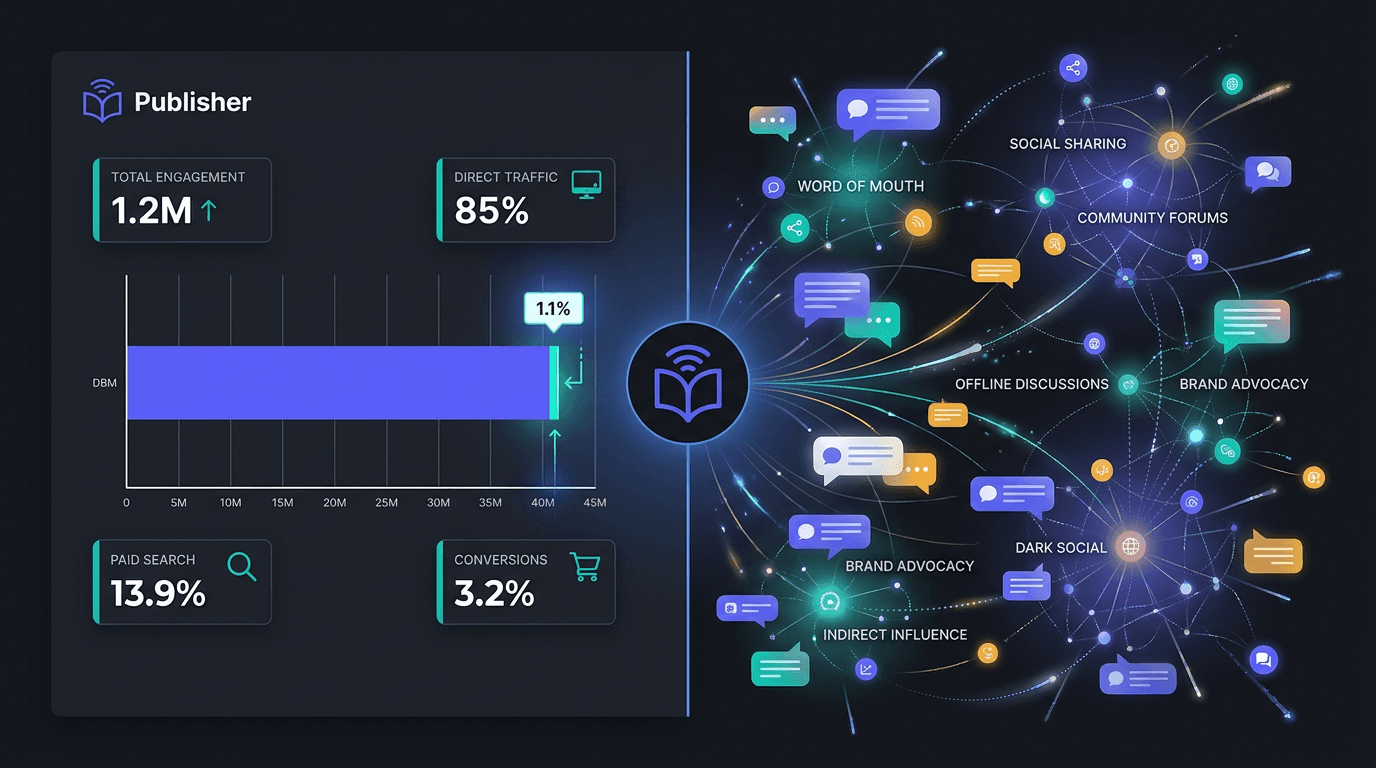
One statistic has been bouncing around media strategy meetings for weeks: AI search publisher traffic accounts for just 1.1% of visits following an AI search interaction with a direct AI referrer. A recent publisher-traffic study found that most visits following an AI conversation appeared as direct navigation or conventional search rather than as a clean AI referral. Some executives saw reassurance. Others saw an untraceable catastrophe.
Neither reading holds up. The 1.1% figure is neither comfort nor obituary; it is what happens when old analytics meet a new behavior. Calling AI an immediate traffic apocalypse misreads the data. So does dismissing it. AI's larger effect on publishers will show up in how people discover, evaluate, and select brands, much of it outside the referral report.
AI Search Publisher Traffic: Why the 1.1% Referral Figure Is Misleading
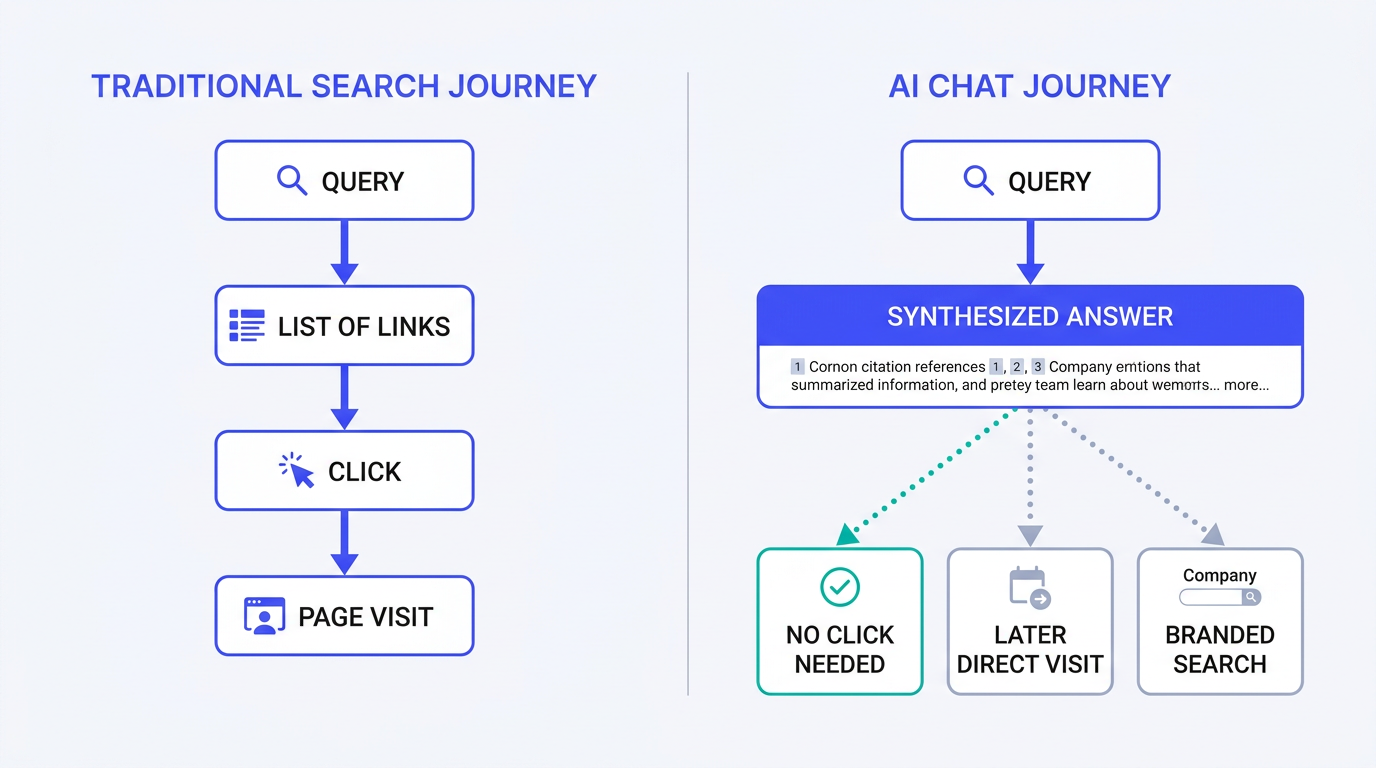
The category error is treating AI chat as another search engine. Traditional search presents links and invites a click. AI chat tries to finish the job in the interface, with citations serving as references rather than doors. Ask ChatGPT about climate-policy developments and it may synthesize Reuters, The Atlantic, and specialist outlets. For many users, that resolves the question. No click follows.
Call this "Answer Fulfillment." A 1.1% referral rate does not necessarily mean AI failed to send traffic; it can mean the product did what it was designed to do and answered the query. Judging AI by Google-style organic clicks is like judging a billboard by the number of drivers who stop to copy its URL. The impression can still shape the next action, even if the dashboard never records it.
The study offers a useful data point, not a complete map. Referral logs reveal what happened at the moment of navigation. They cannot tell us what a reader remembered, searched for, or visited after the conversation ended. That missing interval is the story.
The Invisible Traffic: Where AI's Influence Is Actually Hiding
If the meaningful effects are absent from referral analytics, where do they sit? In behavior that a UTM parameter cannot capture. Two mechanisms matter most: the visits that follow an AI mention, and the way early citations steer the rest of a conversation.
Follow-Through Visits and the Direct Traffic Puzzle
A user asks an assistant for the best reporting on semiconductor supply chains. It names your publication, quotes it, and supplies a small citation. The user skips the link, opens a tab ten minutes later, and types your URL - or searches your brand on Google. Your analytics calls that direct traffic or branded organic search. AI gets no credit.
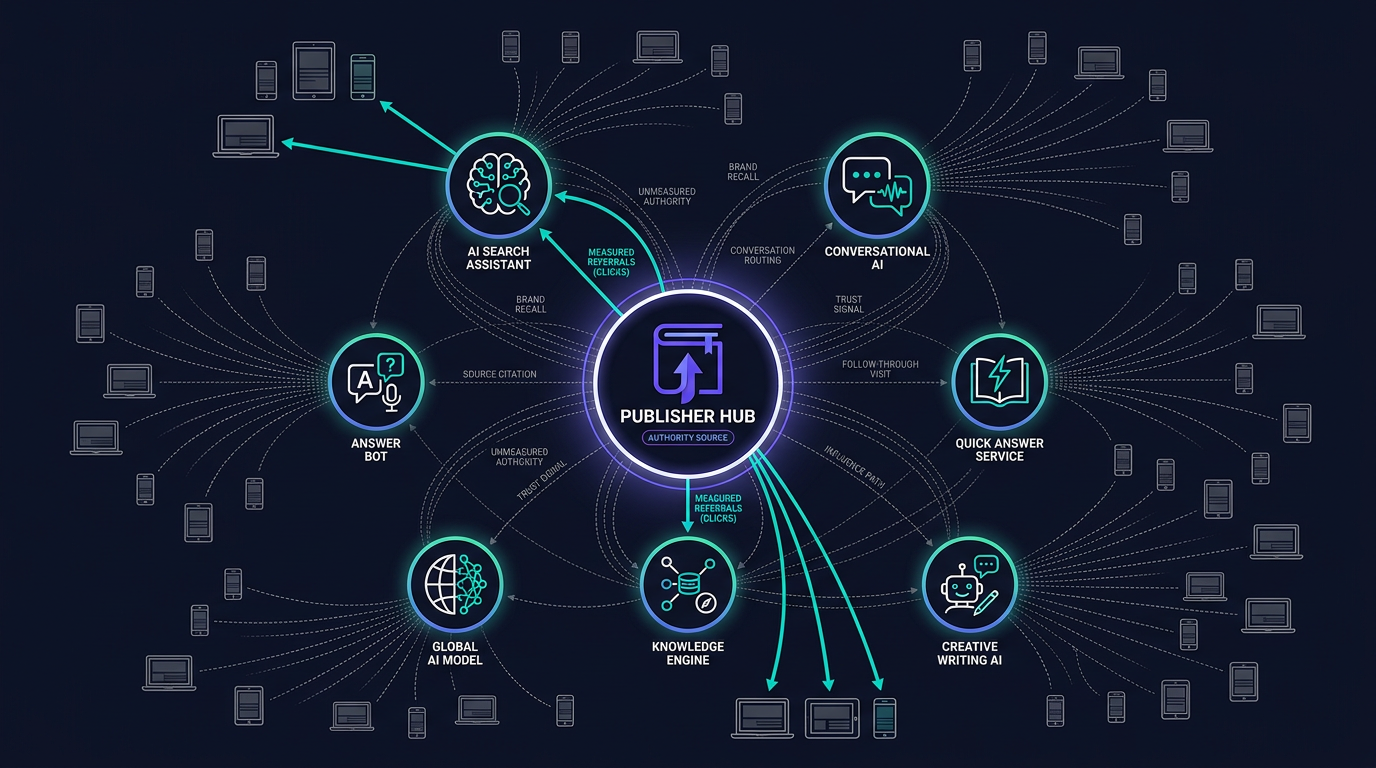
That is the follow-through visit: the new dark-social problem for publishers. Current tools struggle to separate direct traffic from AI search-influenced traffic. Someone primed by a ChatGPT publisher referral looks exactly like a longtime bookmark user. Understanding why traffic metrics can be misleading is the necessary starting point for a less naive account of audience growth.
Tip: When branded search rises while AI referral traffic stays flat, AI mentions may already be generating discovery without attribution. Compare branded-search trends with citation frequency in AI answers.
Conversation Routing and the Compounding Brand Effect
A citation can also shape what comes next. Once a brand appears in an AI conversation, the model has associated it with the topic for subsequent turns. This AI conversation routing signal compounds brand authority inside the exchange.
Take project-management software. An assistant mentions Asana and two rivals; the user then asks, "Which one is best for creative teams?" Asana is already in the context window, so the model has a ready-made candidate to revisit, explain through creative-workflow features, and recommend. This is navigational value generated inside the chat, not a visit to a site. Asana may get no click, yet it has won an unusually durable brand impression.
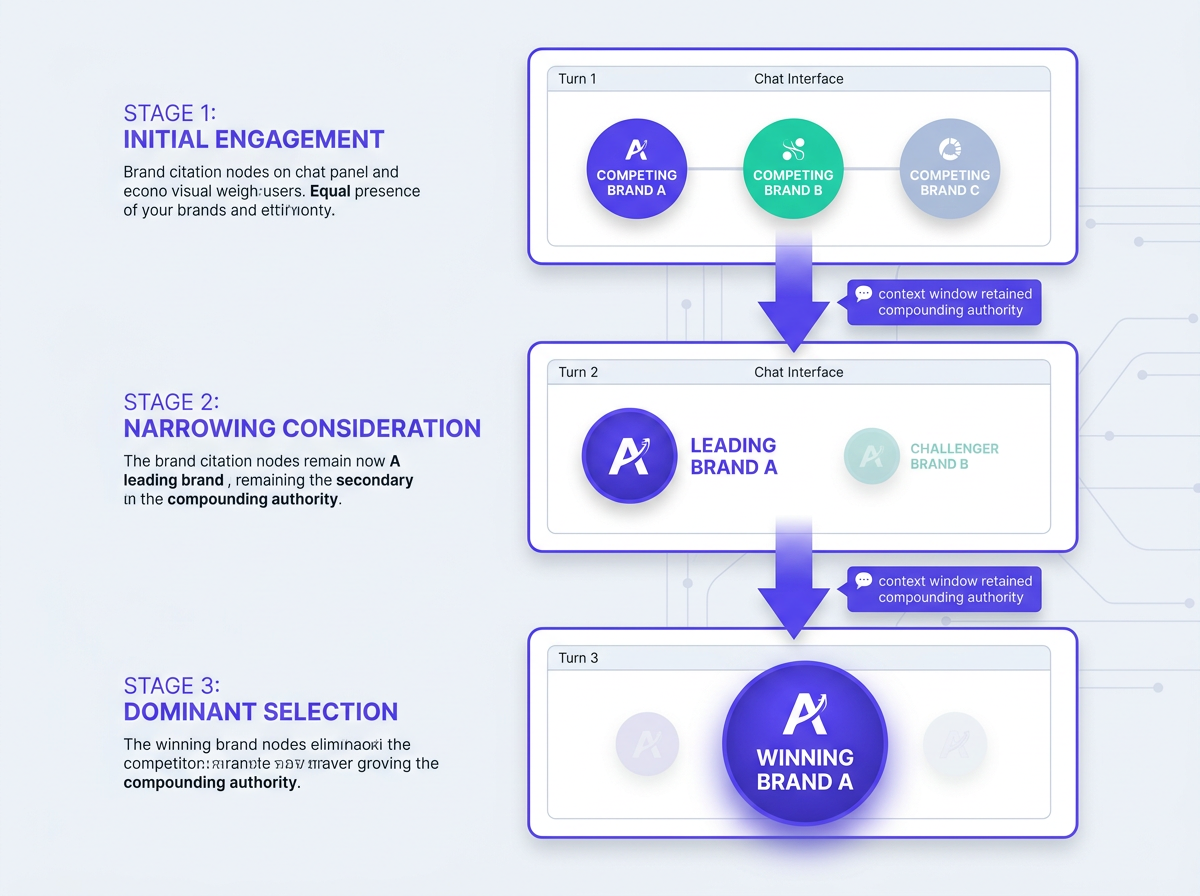
For publishers, appearing among the major publishers AI citations reference on a topic matters beyond the first prompt. It keeps the publication available as the conversation narrows and returns to sources. That value can be substantial while direct click-through remains near zero - the paradox that makes the 1.1% figure so easy to misuse.
The Counterargument: Any Traffic Loss Is Still a Disaster
The opposing case deserves no sugarcoating. Publishers funded by ad impressions from high-volume informational queries face a genuine, immediate publisher traffic decline AI is causing. If readers no longer need a site visit to find France's GDP or a movie release date, those pageviews disappear. Invisible brand influence does not replace the CPM.
The numbers justify the concern. Digital Content Next reported a median 10% year-over-year decline in Google Search referral traffic among member publishers in the two months after AI Overviews launched (Digital Content Next, 2025). Chartbeat's picture for smaller outlets is harsher: publishers with 1,000 to 10,000 daily pageviews experienced a 60% loss in search referral traffic over two years (Chartbeat, 2026). Reuters Institute respondents expect referrals from search engines to drop 43% over the next three years because of AI (Reuters Institute, 2026).
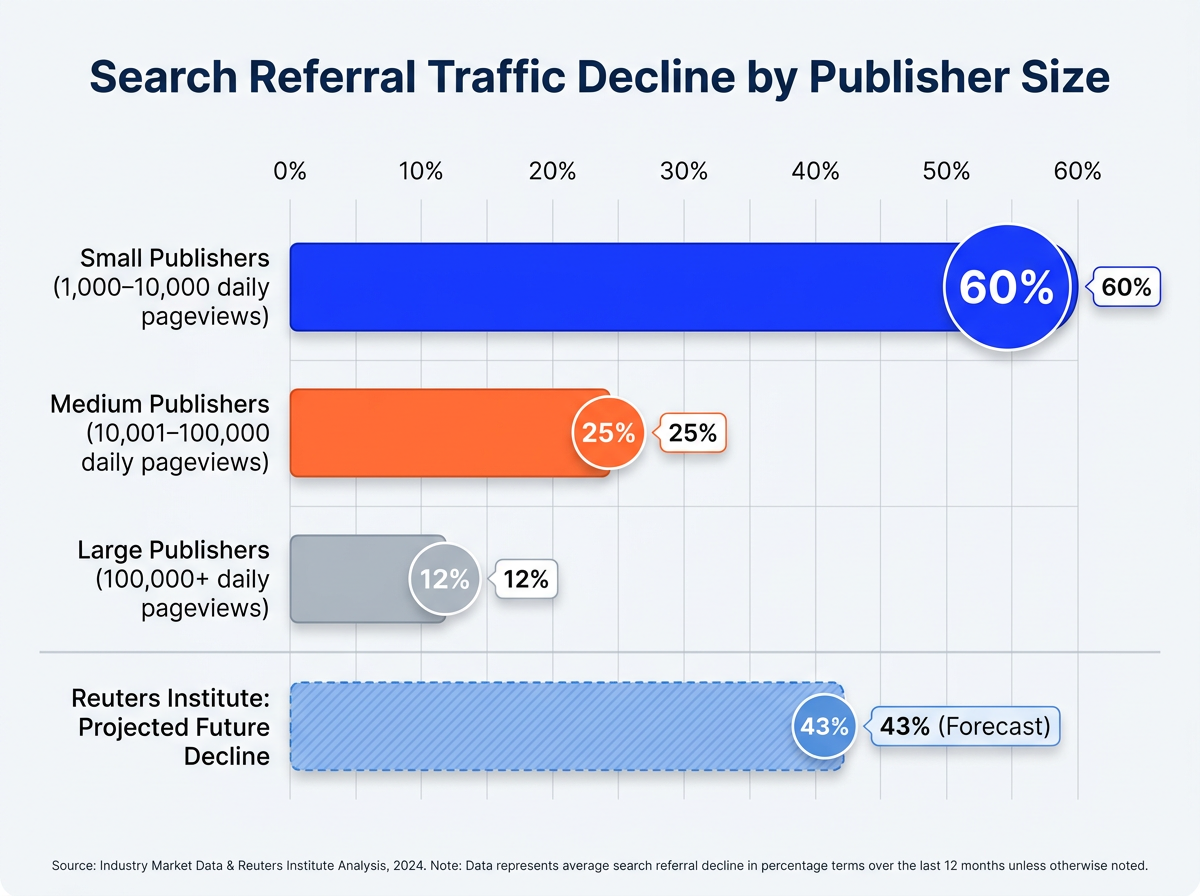
None of that is trivial. But this is an acceleration, not an alien threat. Featured snippets have been draining informational-query traffic since 2015; Google has spent a decade retaining users on its own surfaces. AI Overviews are the more aggressive version. Survival depends less on defending every answer page than on becoming a destination for original analysis, proprietary data, and reporting that an AI cannot cheaply synthesize. How Google's AI Overviews impact publishers provides useful context for that shift.
What Should We Measure? A New Framework for AI Visibility
If dashboard referral traffic is a poor proxy for AI influence, the measurement model has to change: from "Share of Click" to "Share of Answer." The useful question is no longer just "How many visitors did AI send?" It is: "How often does AI cite us on our topics, and what changes in our brand metrics afterward?"
That is the AI visibility measurement publishers need. Track citation frequency across platforms, the sentiment and context of those mentions, then compare them with branded search, direct traffic, and newsletter signups. Legacy metrics still matter; they simply no longer describe the entire funnel. The framework changes as follows:
| Metric Category | The Old Way (SEO) | The New Way (AEO) |
|---|---|---|
| Primary Traffic Signal | Direct search referral clicks | Citation frequency and Share of Answer across AI platforms |
| Key KPI | Keyword ranking position | Topical authority score and mention consistency |
| Strategic Goal | Rank #1 for target queries | Become the default cited source for target topics |
| Attribution Model | Last-click or UTM-based | Correlate AI mentions with branded-search lift and follow-through visits |
| Competitive Benchmark | SERP share of voice | Share of AI citations versus competitors on key topics |
| Content Success Metric | Pageviews and time on page | AI citation rate, conversation routing frequency, and downstream engagement |
| The transition from click-based SEO metrics to citation-based AEO metrics reflects how AI is changing publisher discovery. |
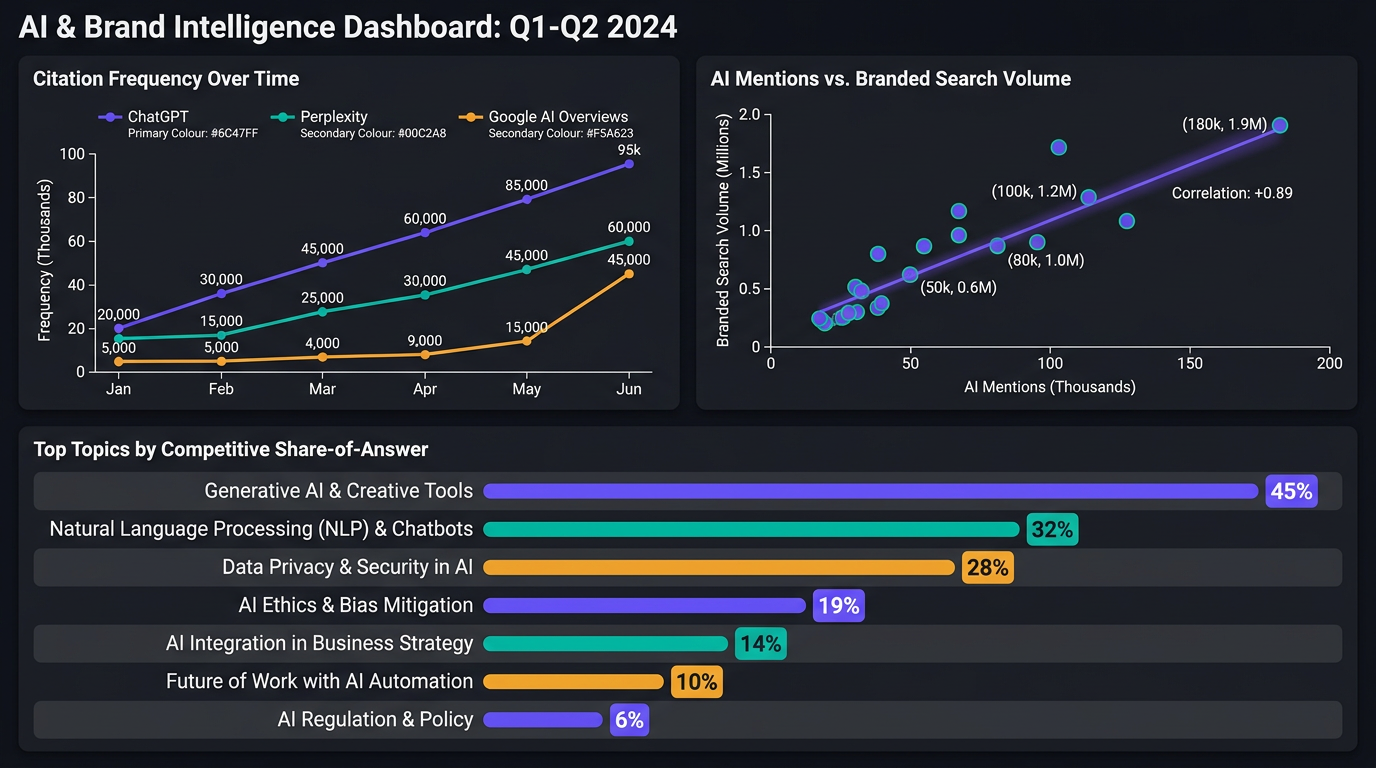
What goes unmonitored cannot be managed. Start with your own citations and those of competitors across the AI platforms your audience uses. AI search performance analytics turns that work into structured data rather than guesswork. Publishers also need to understand how AI search engines cite content before they can identify what makes an asset citeable.
This is where Vizup's Organic Autopilot fits in. Vizup helps brands monitor, create, optimise, publish, and learn across Search, Social, Communities, AI Answer Engines, and Local Discovery using AI agents, human experts, and live SEO, pSEO, AEO, and GEO tools. Instead of treating AI citations as an isolated dashboard metric, it connects visibility intelligence with the actions needed to improve organic discovery. Paid ads are available as an optional amplification layer.
The Growth Signal Hiding Inside the Noise
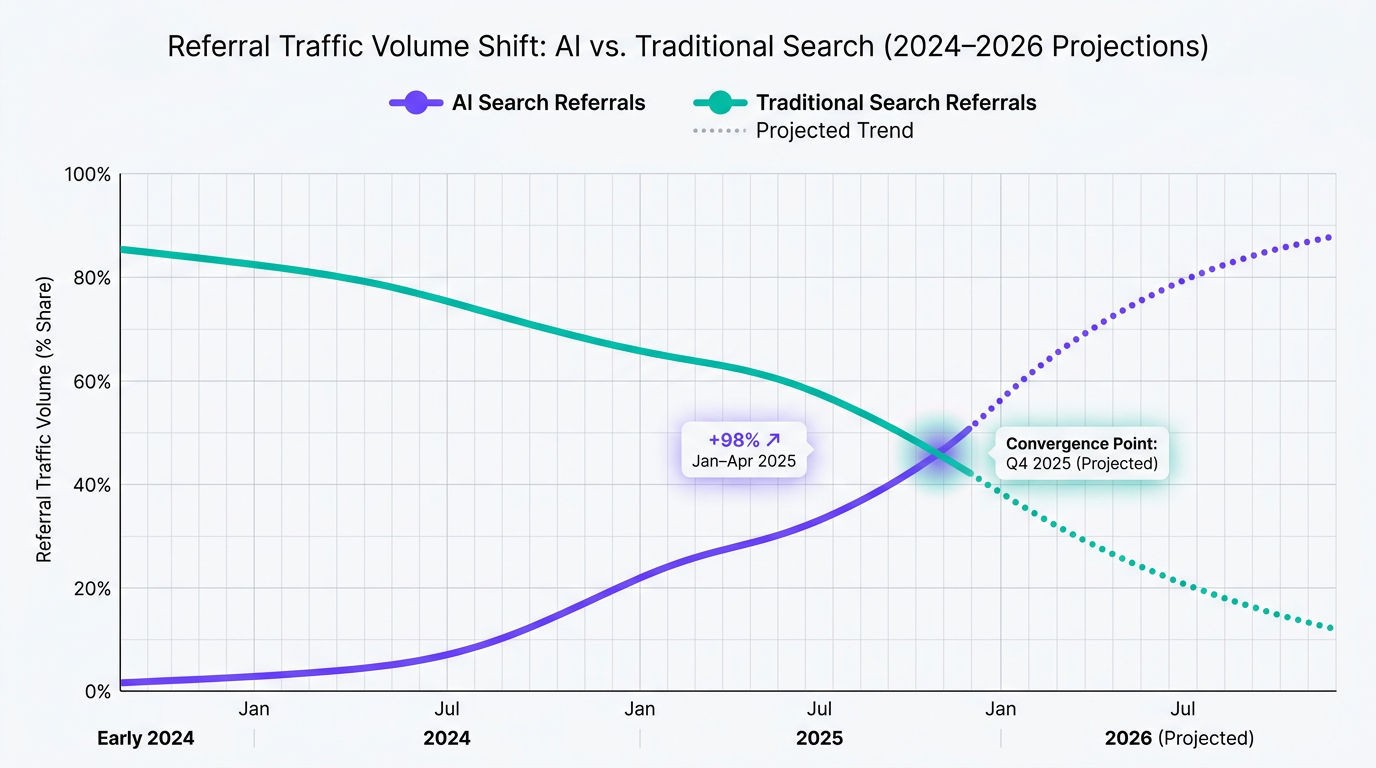
It would be premature to dismiss AI referrals altogether. Their absolute volume remains small, but their growth is notable. Similarweb found that referral traffic from ChatGPT to 250 news and media websites increased by 98% from January to April 2025 (Similarweb, 2025). Google AI Overviews publisher traffic is growing too as AI Mode reaches more queries and geographies.
A 98% gain from a tiny base remains tiny. Still, the direction matters: AI referral traffic is growing, not contracting. Publishers investing in improving brand visibility in AI search are preparing for a channel doubling every few months. Treating 1.1% as irrelevant risks repeating media's 2012 dismissal of social referrals.
Stop Counting Clicks and Start Winning Conversations
The 1.1% statistic is neither relief nor death knell. It distracts from the contest now underway in poorly measured territory: mentions that alter later behavior, conversation routing that reinforces authority, and follow-through visits misfiled as direct traffic.
The winners will not merely monitor referral logs. They will build the kind of authority models must cite: original research, exclusive data, and expert analysis beyond commodity synthesis. They will track their position across answer engines as rigorously as they once tracked Google rankings. And they will recognize that some of AI's most valuable effects never arrive with a referrer attached.
Organic discovery is becoming less about extracting a click from an AI and more about becoming the source that both the model and the user keep returning to.
Frequently Asked Questions
How does AI referral traffic differ from traditional search traffic?
Traditional search traffic follows a click from a results page, with the referrer usually visible in analytics. AI referrals come from citation links inside synthesized answers. Because chat products try to resolve the query before a reader leaves, citations earn fewer clicks. Reported AI referral traffic therefore represents only part of AI's effect on audience behavior.
Why might a ChatGPT citation not appear in Google Analytics?
AI platforms can open citations in ways that obscure referrer data. More often, users skip the citation, then visit the publisher directly or run a branded search later. Redirects and intermediary pages can also break standard UTM attribution. Many AI-influenced visits are consequently classified as direct or branded organic traffic.
What is a 'follow-through visit,' and how can I measure it?
A follow-through visit happens when someone sees your brand in an AI answer, skips the citation, and later arrives directly or through branded search. No single tool can measure it. Use citation-monitoring data alongside branded-search volume and direct-traffic changes over the same period. A rising correlation is a useful proxy for discovery that attribution misses.
Is AI visibility (AEO) worth investing in when direct click-through is low?
Yes, but it demands a different ROI model than SEO. The return is citation frequency, authority within AI models, conversation-routing advantages, and downstream branded search and direct traffic - not simply direct clicks. Building topical authority now can establish a publisher as the default cited source as usage scales. Similarweb's 98% growth in ChatGPT referrals (2025) also indicates that the direct channel is expanding quickly.
Should publishers worry about Google AI Overviews taking traffic?
Yes, especially publishers dependent on high-volume informational queries. Digital Content Next reported a median 10% year-over-year decline in Google Search referrals after AI Overviews launched (DCN, 2025). AI Overviews also create citation opportunities. Original analysis, proprietary data, and expert commentary are more likely to earn citations and follow-through visits. The strategic response is to prioritize material AI cannot readily replace.
