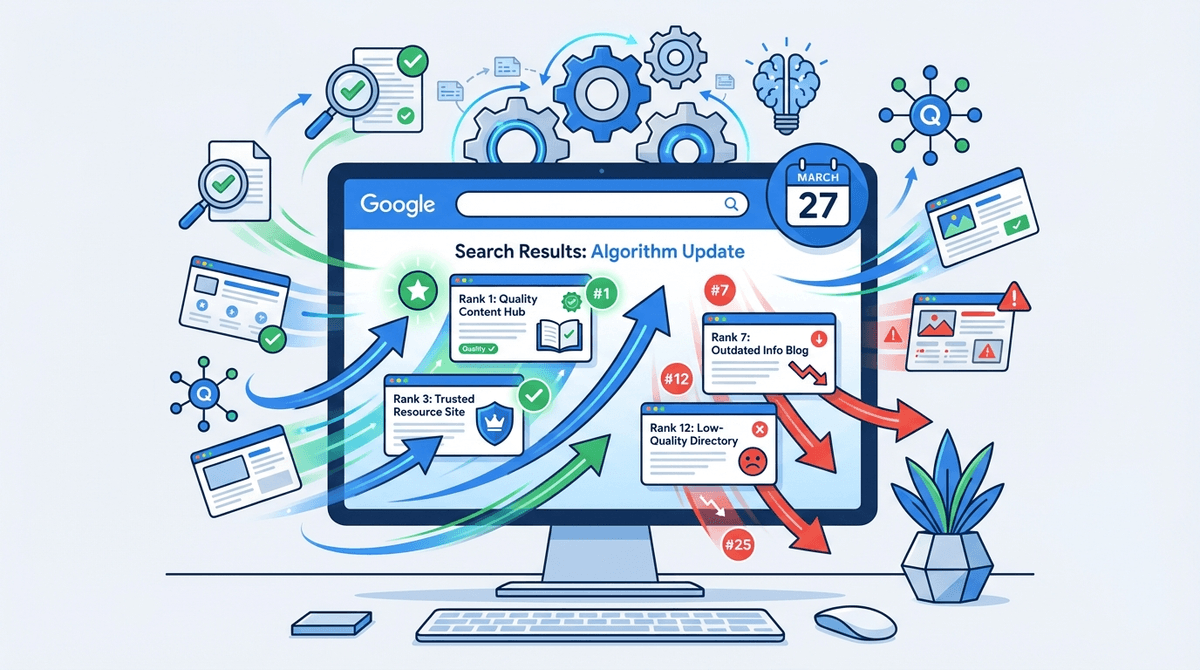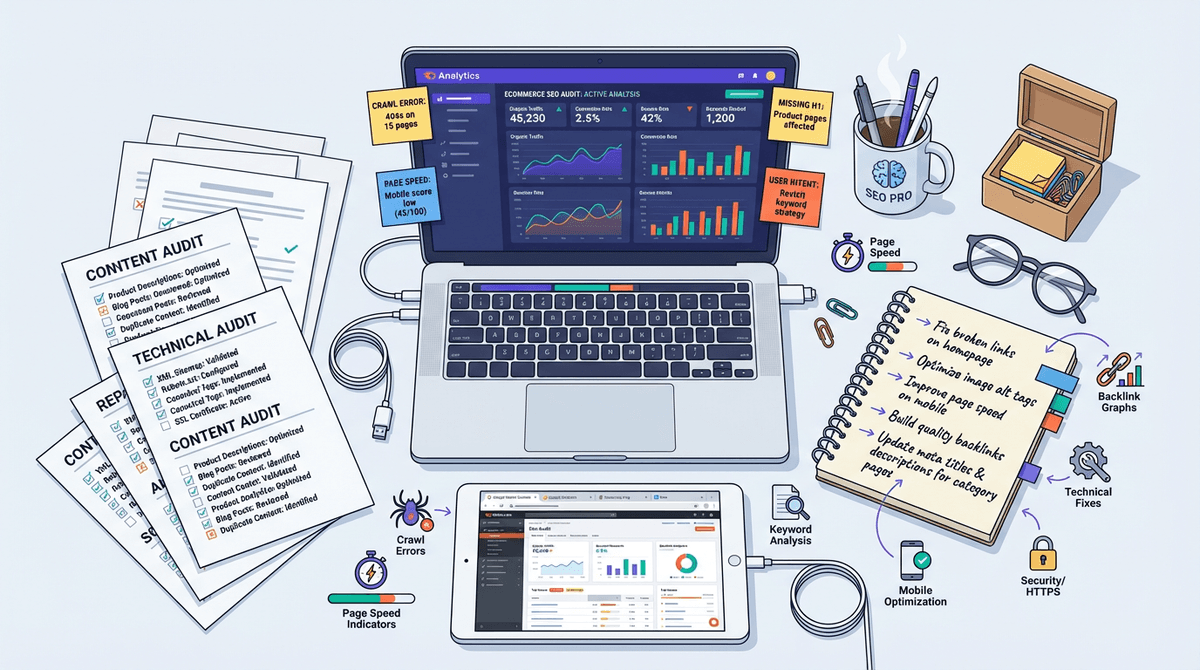
If you've been staring at your Google Analytics dashboard wondering why traffic is down even though your rankings look fine, you're not imagining things. AI-powered search experiences like ChatGPT, Perplexity, and Google Gemini are answering questions directly, and your brand either gets cited or it doesn't. Traditional rank trackers won't tell you which. That's the gap these tools are built to fill.
According to Semrush (2026), AI-generated results are projected to overtake organic search traffic by 2028. Over a billion users now use AI chatbots for product research (Knowatoa, 2026). The brands that figure out why visibility metrics are crucial right now will have a serious head start. This list covers 15 tools that help you track and improve AI search presence, with honest assessments of where each one actually delivers.
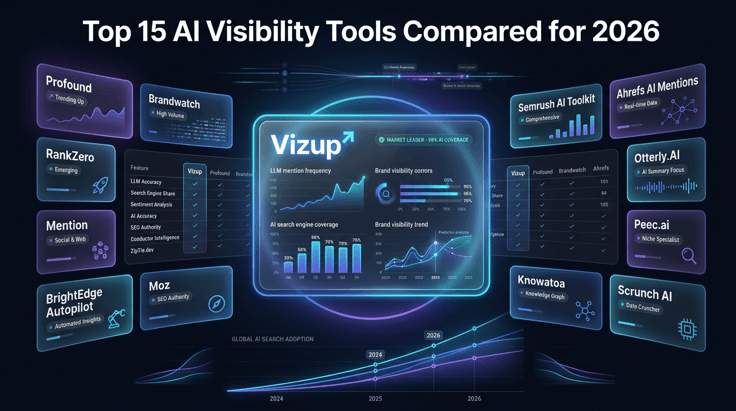
All 15 AI Visibility Tools at a Glance
Here are all 15 tools covered in this comparison:
- Vizup
- Profound
- Brandwatch
- Semrush AI Toolkit
- Ahrefs AI Mentions
- RankZero
- Otterly.AI
- Peec.ai
- Knowatoa
- Scrunch AI
- Mention
- Moz (AI Search Features)
- BrightEdge Autopilot
- Conductor Intelligence
- ZipTie.dev
| Tool | AI Platforms Tracked | Best For | Pricing Tier | Standout Feature |
|---|---|---|---|---|
| Vizup | ChatGPT, Gemini, Perplexity, Bing AI | SMBs & growing brands | Mid-range | AI citation tracking + organic content optimization |
| Profound | All major LLMs (via API) | Fortune 500, agencies | Enterprise | Unlinked & implied brand mention intelligence |
| Brandwatch | Multiple AI + social | Large enterprises | Enterprise | Cross-channel brand intelligence |
| Semrush AI Toolkit | Google AI Overviews, Perplexity | Existing Semrush users | Add-on | Integrated with existing SEO workflow |
| Ahrefs AI Mentions | Limited AI platforms | SEO-first teams | Subscription | Backlink-to-citation correlation |
| RankZero | ChatGPT, Perplexity, Gemini | Agencies | Mid-range | Citation ratio and competitive share metrics |
| Otterly.AI | ChatGPT, Perplexity | Small teams | Low-cost | Simple prompt-based brand monitoring |
| Peec.ai | ChatGPT, Gemini, Perplexity | Mid-market brands | Mid-range | Automated prompt testing at scale |
| Knowatoa | ChatGPT, Bing AI | E-commerce brands | Mid-range | Product mention tracking in AI answers |
| Scrunch AI | Multiple LLMs | Content teams | Mid-range | Content gap analysis for AI citations |
| Mention | Social + some AI | PR and comms teams | Low-to-mid | Real-time brand alert system |
| Moz (AI Search Features) | Google AI Overviews | Traditional SEO teams | Subscription | Domain authority correlation with AI visibility |
| BrightEdge Autopilot | Google AI Overviews, Bing AI | Enterprise content teams | Enterprise | AI-driven content recommendations |
| Conductor Intelligence | Google AI Overviews | Enterprise marketing | Enterprise | Content performance tied to AI appearance |
| ZipTie.dev | ChatGPT, Perplexity, Claude | Technical teams / developers | Low-cost | API access for custom AI visibility tracking |
| Pricing tiers are approximate. Enterprise tools typically require custom quotes. Data current as of Q1 2026. |
1. Vizup
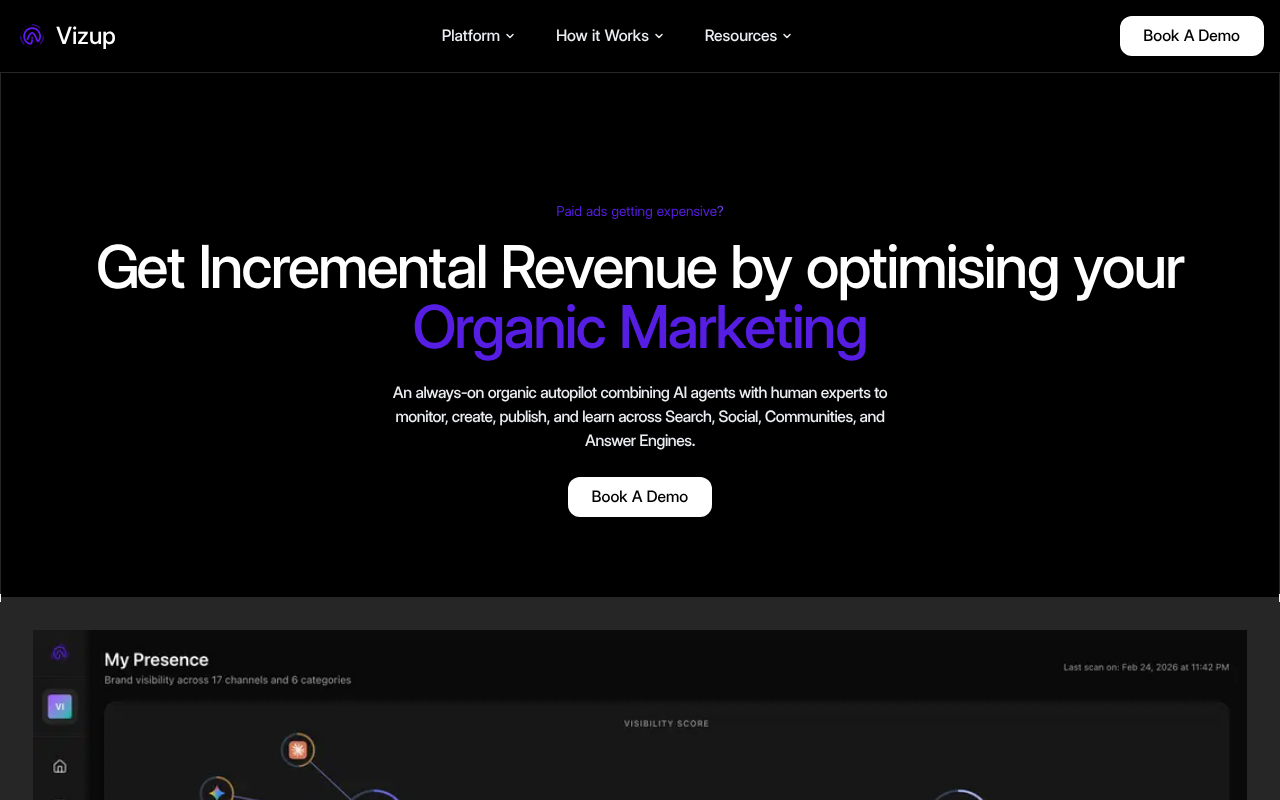
Vizup sits in an interesting spot on this list because it doesn't just track AI visibility, it's built to help you improve it. Most tools in this category are pure monitoring plays. Vizup connects the dots between what AI systems are citing and what content changes will actually move the needle. For teams that are tired of dashboards that show problems without suggesting solutions, that distinction matters.
The platform tracks brand mentions across ChatGPT, Google Gemini, Perplexity, and Bing AI, measuring citation frequency, competitive share, and which content assets are getting pulled into AI-generated answers. But the more useful layer is the content optimization side. It surfaces which topics and formats are currently earning AI citations in your category, so your team can prioritize accordingly rather than guessing.
Pricing sits in the mid-range, making it accessible for growing brands and agencies without the enterprise budget that tools like Profound or BrightEdge require. Check out Vizup's features for a full breakdown, or head to pricing information if you want to compare tiers. For teams thinking seriously about organic marketing in 2026, this is one of the few tools built for the current reality rather than retrofitted from traditional SEO.
Best for: SMBs, growing e-commerce brands, and agencies that want a single platform for both tracking and improving AI search presence.
See how Vizup tracks and improves your brand's AI search presence. Start your free trial today.
2. Profound
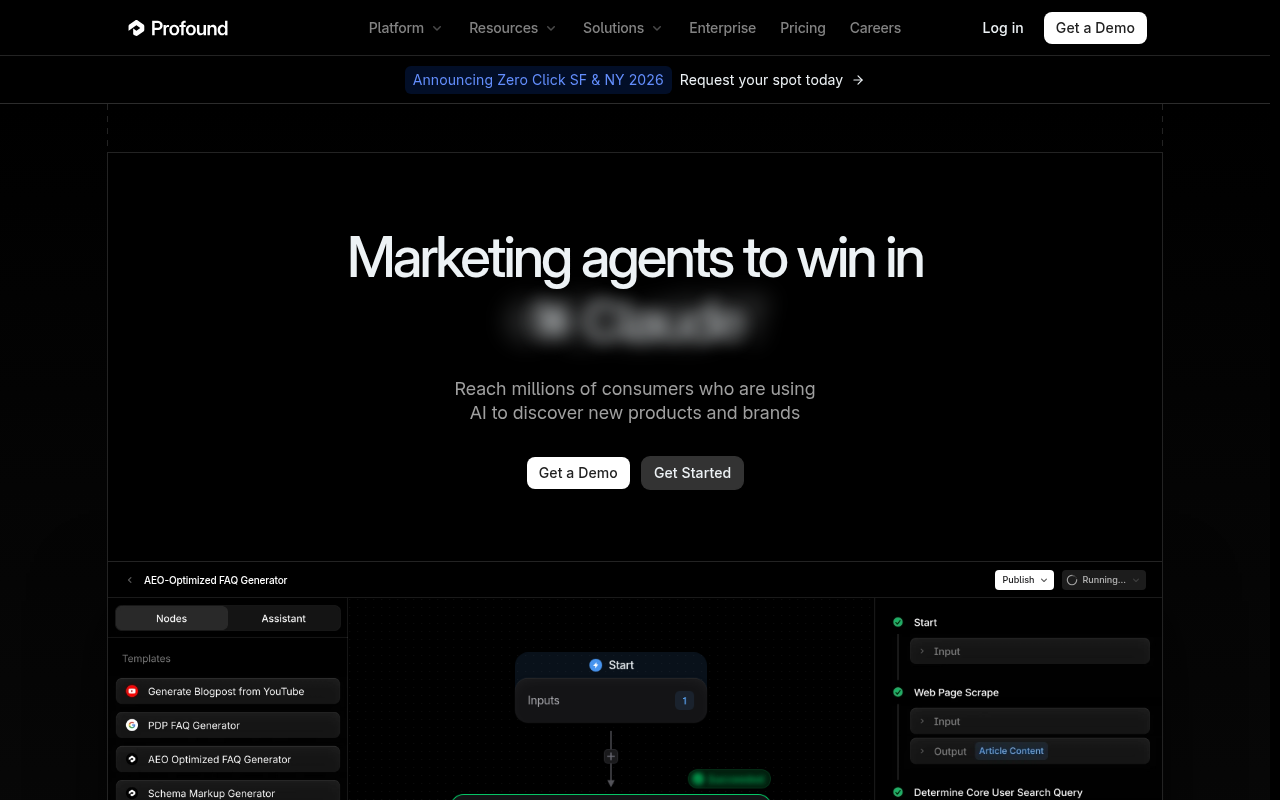
Profound isn't really an SEO tool. It’s a brand intelligence platform designed for a completely different scale of problem. While most tools on this list track explicit mentions in AI search, Profound focuses on something much harder: identifying unlinked and implied brand conversations across the entire web, including forums, academic papers, and internal corporate documents that standard crawlers miss.
It’s built for Fortune 500 companies and large agencies that care less about a specific keyword ranking and more about share of voice, brand equity, and competitive intelligence on a global scale. The platform uses AI to surface discussions that imply your brand is relevant, even without a direct mention. This is the kind of data that informs high-level strategy, not just content calendars.
- Best For: Enterprise-level brand tracking, competitive intelligence, and market research.
- Pricing: Custom enterprise plans, typically starting in the low five figures per month.
- Unique Feature: Tracks unlinked and implied brand mentions across a massive index of web, academic, and corporate sources.
The learning curve is steep and the data can be overwhelming without a dedicated analyst. But for a global brand trying to gauge sentiment and visibility in a way that goes far beyond Google, there isn't a direct competitor on this list.
3. Brandwatch
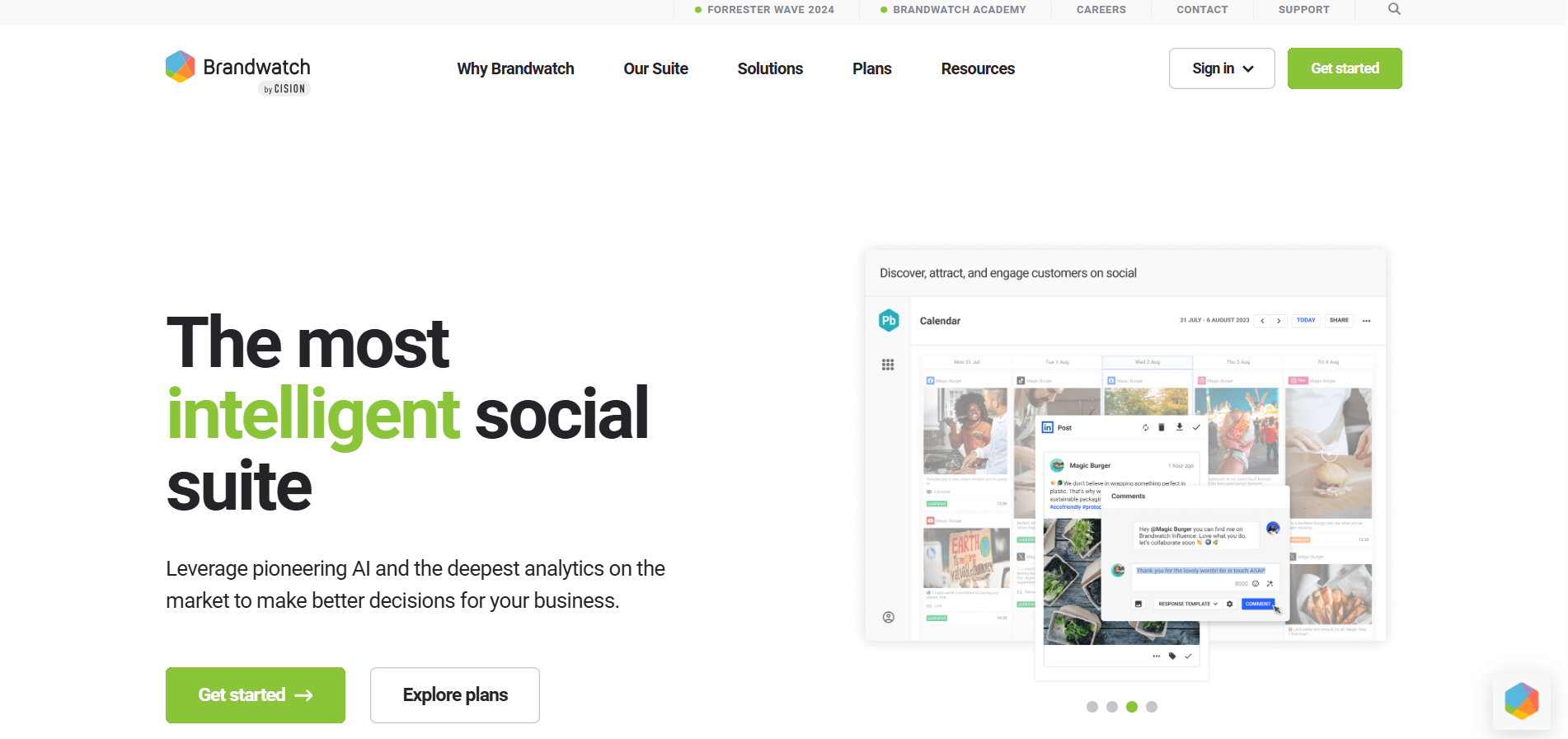
Brandwatch built its reputation on social listening, and the AI visibility features feel like a natural extension of that core competency. If your team is already using Brandwatch for brand monitoring across social and news, the AI search layer is a logical add-on rather than a separate tool investment.
The honest caveat: Brandwatch's AI visibility coverage isn't as deep as purpose-built tools like RankZero. It's better at telling you that your brand is being mentioned in AI contexts than at explaining why or what to do about it. For PR and communications teams that need a unified view of brand presence across channels, that breadth is valuable. For a performance marketing team laser-focused on AI citation rates, you'll probably want something more specialized.
4. Semrush AI Toolkit
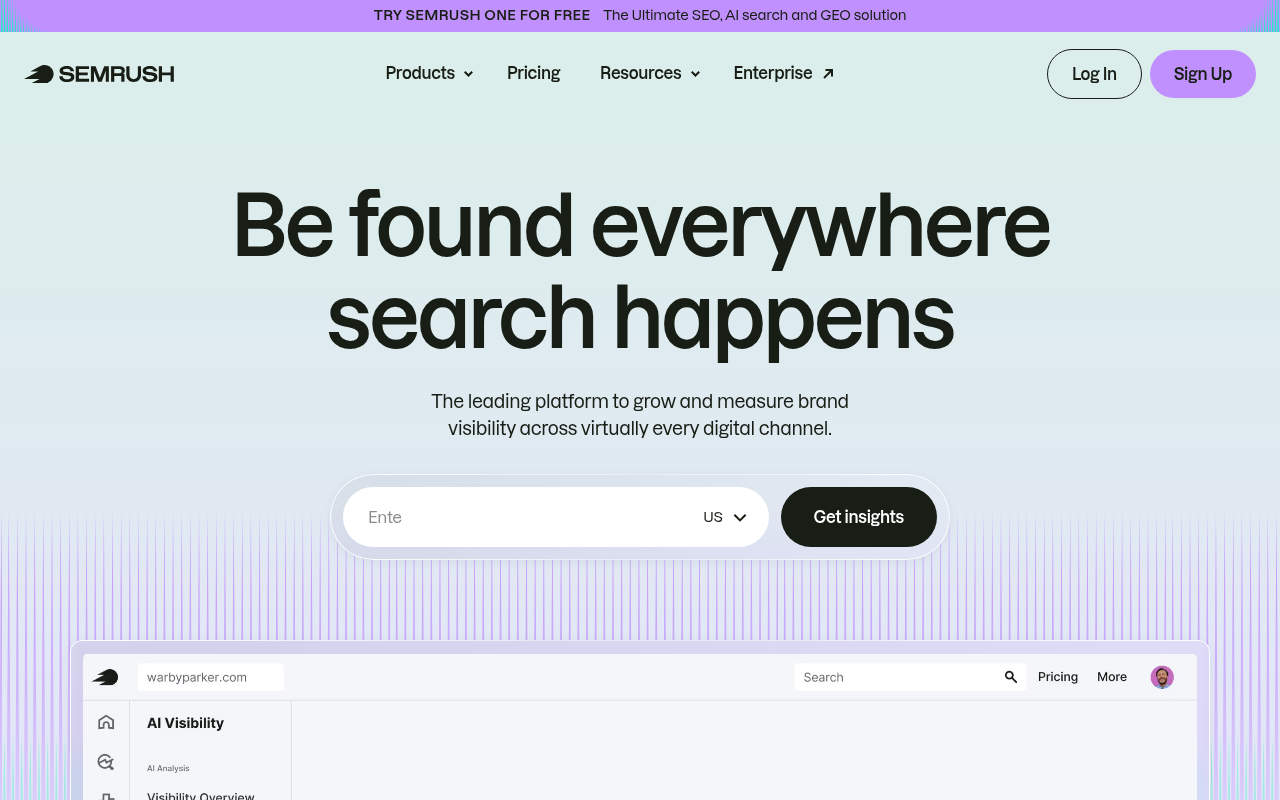
The main reason to consider Semrush's AI toolkit is if you're already paying for Semrush. The integration with existing keyword data, content audits, and competitor analysis is genuinely useful, and the AI Overviews tracking for Google is solid. Starting from scratch with Semrush just for AI visibility tracking doesn't make much financial sense when dedicated tools offer more depth at lower cost.
Where it shines is connecting traditional SEO signals to AI appearance. You can see which of your ranking pages are also appearing in Google AI Overviews, which is a useful correlation that pure AI visibility tools miss. Given the impact of recent Google core updates on content quality signals, having that SEO-to-AI bridge in one place has real practical value.
5. Ahrefs AI Mentions
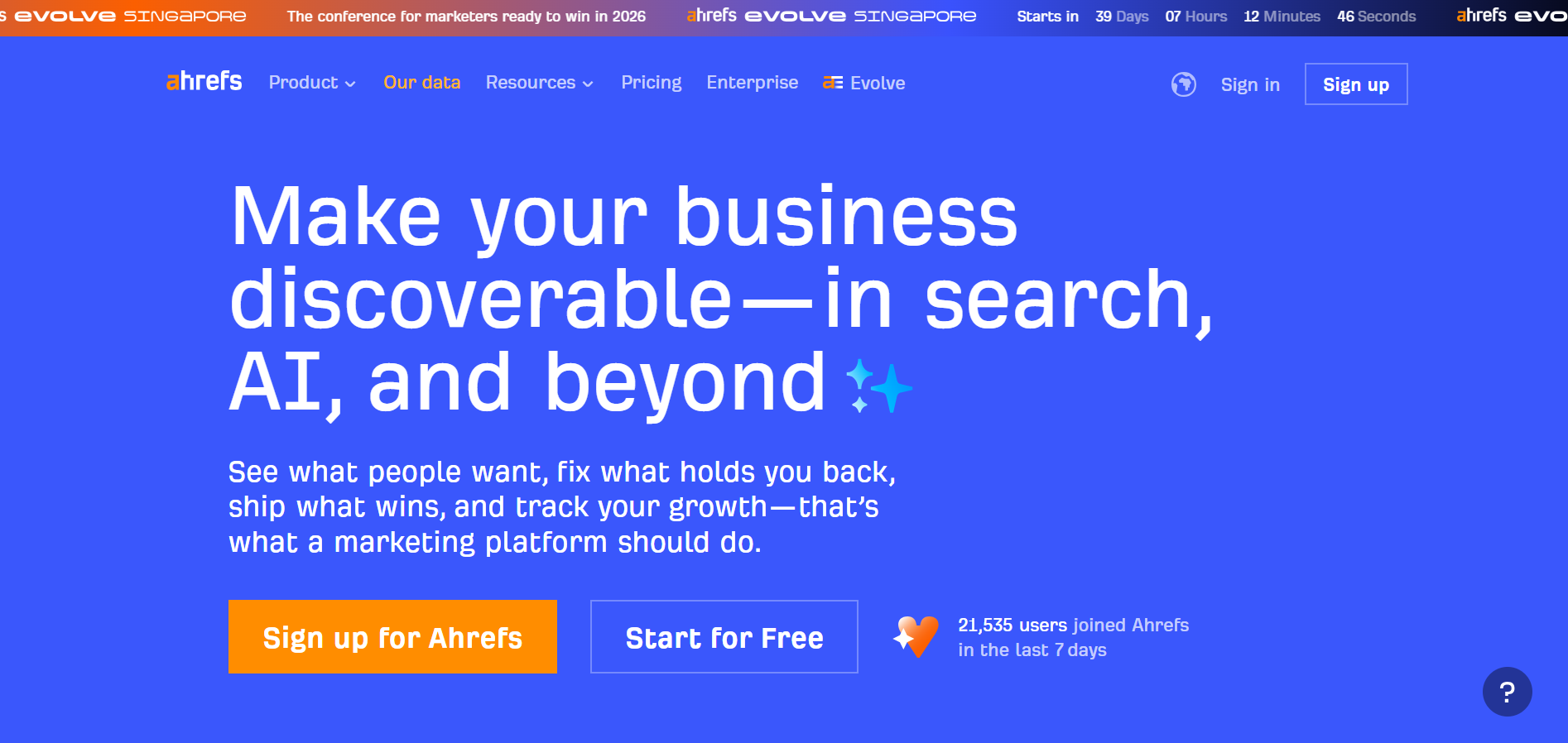
Ahrefs added AI mention tracking somewhat quietly, and it shows. The feature works, but it feels bolted on rather than native. The real value here is the backlink-to-citation correlation: Ahrefs can show you which of your high-authority pages are being cited in AI answers, which gives you a useful signal for where to double down on content depth. If you're an SEO-first team that lives in Ahrefs already, this is worth exploring. Just don't expect it to replace a dedicated AI visibility platform.
6. RankZero
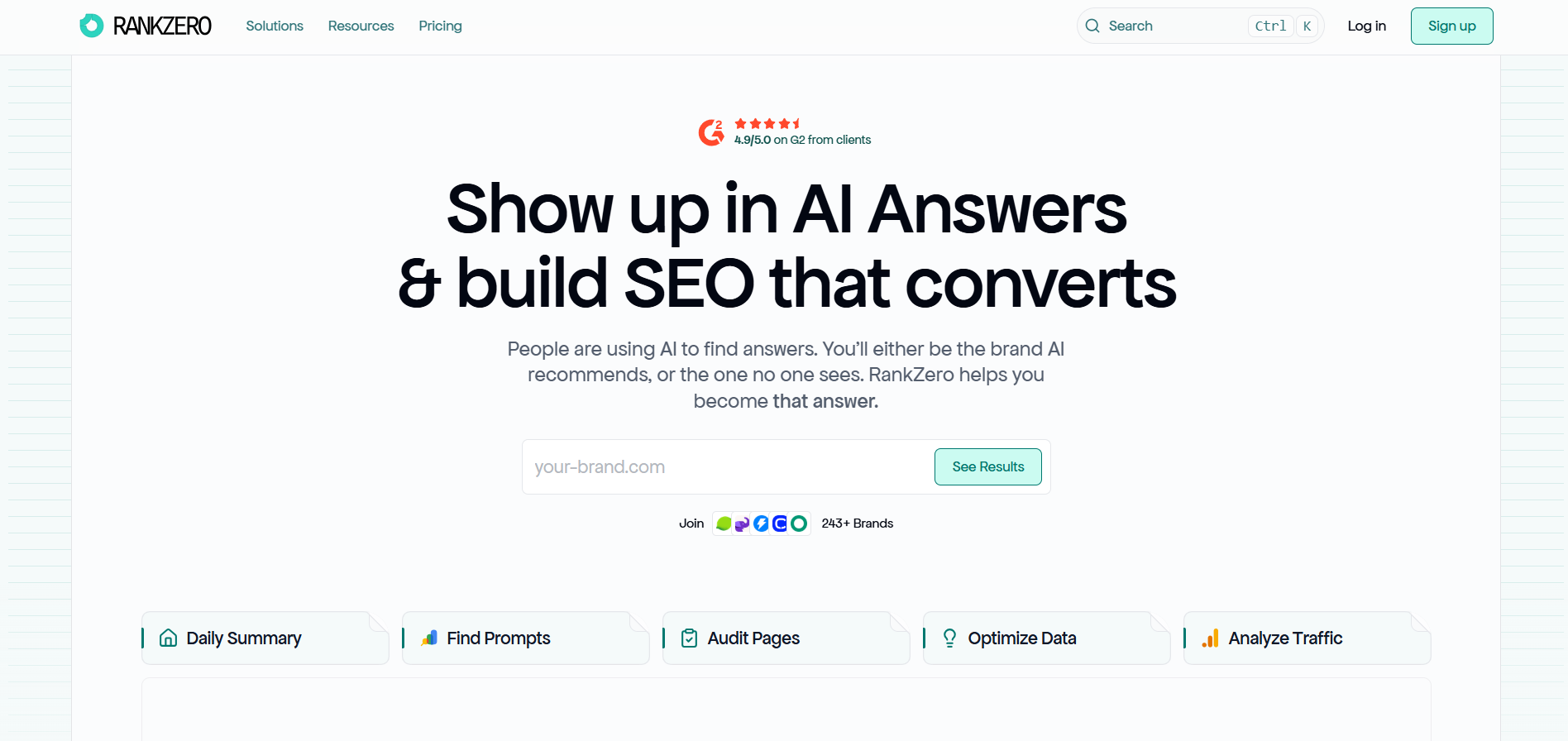
RankZero is one of the more agency-friendly tools on this list. The reporting structure is clean, the competitive share metrics are easy to pull into client presentations, and the citation ratio tracking (mentions with links vs. mentions without) gives a useful quality signal beyond raw mention volume. An agency running AI visibility reporting for 20 clients needs something that scales without requiring a data analyst for every account. RankZero fits that workflow reasonably well.
Pricing is mid-range and scales with the number of tracked brands, which is the right model for agencies. The platform coverage isn't as broad as some enterprise tools, but ChatGPT, Perplexity, and Gemini cover the majority of where consumer AI search is actually happening right now.
7. Otterly.AI
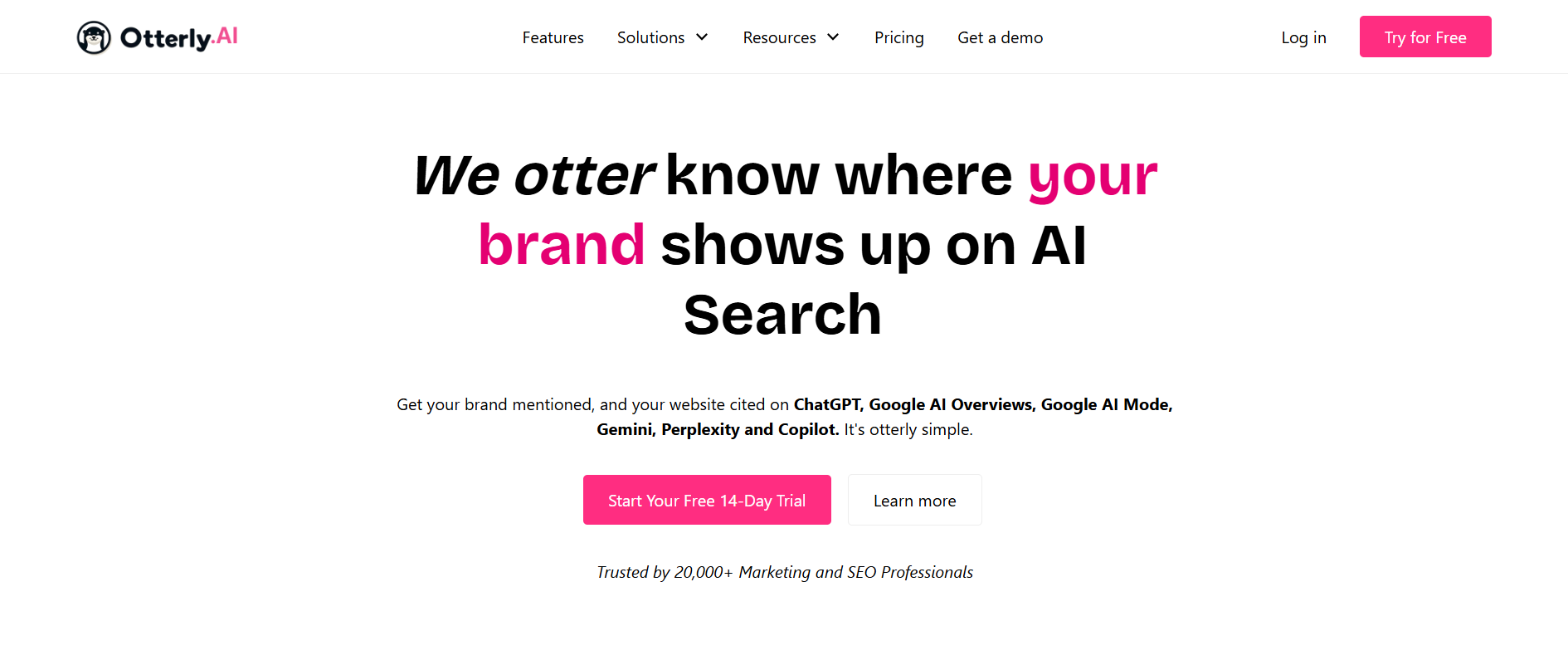
Otterly.AI is the most approachable entry point on this list. You set up prompts that represent the kinds of questions your customers ask, and it monitors whether your brand gets mentioned in the AI answers. No complex setup, no data science required. For a small business or solo marketer who just wants to know 'is my brand showing up when people ask ChatGPT about X category,' Otterly gets the job done.
The limitations are real, though. Depth of analytics is thin compared to mid-market tools, and the platform coverage is limited to ChatGPT and Perplexity. But at its price point, it's hard to argue with as a starting point.
8. Peec.ai
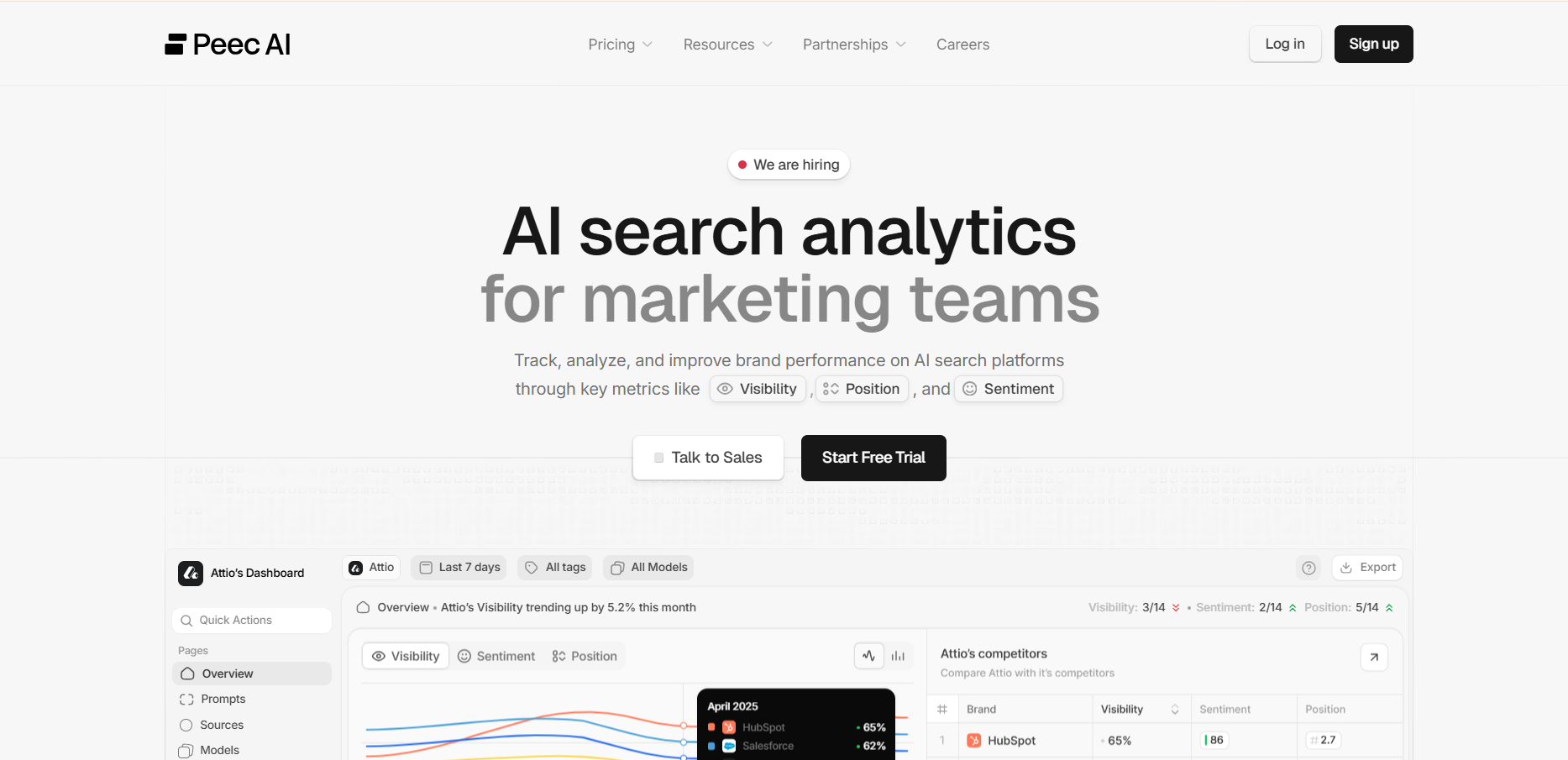
The thing that separates Peec.ai from simpler tools is the scale of automated prompt testing. Most AI visibility tools run a handful of queries and report back. Peec.ai runs hundreds of prompt variations systematically, which matters because of the probabilistic nature of AI search. A single query tested once gives you almost no reliable signal. The same query tested 200 times across different phrasings gives you something you can actually act on.
Mid-market brands that want rigorous data without enterprise pricing will find Peec.ai worth a close look. It covers ChatGPT, Gemini, and Perplexity, and the reporting is detailed enough for a data-driven marketing team without requiring a dedicated analyst to interpret.
9. Knowatoa
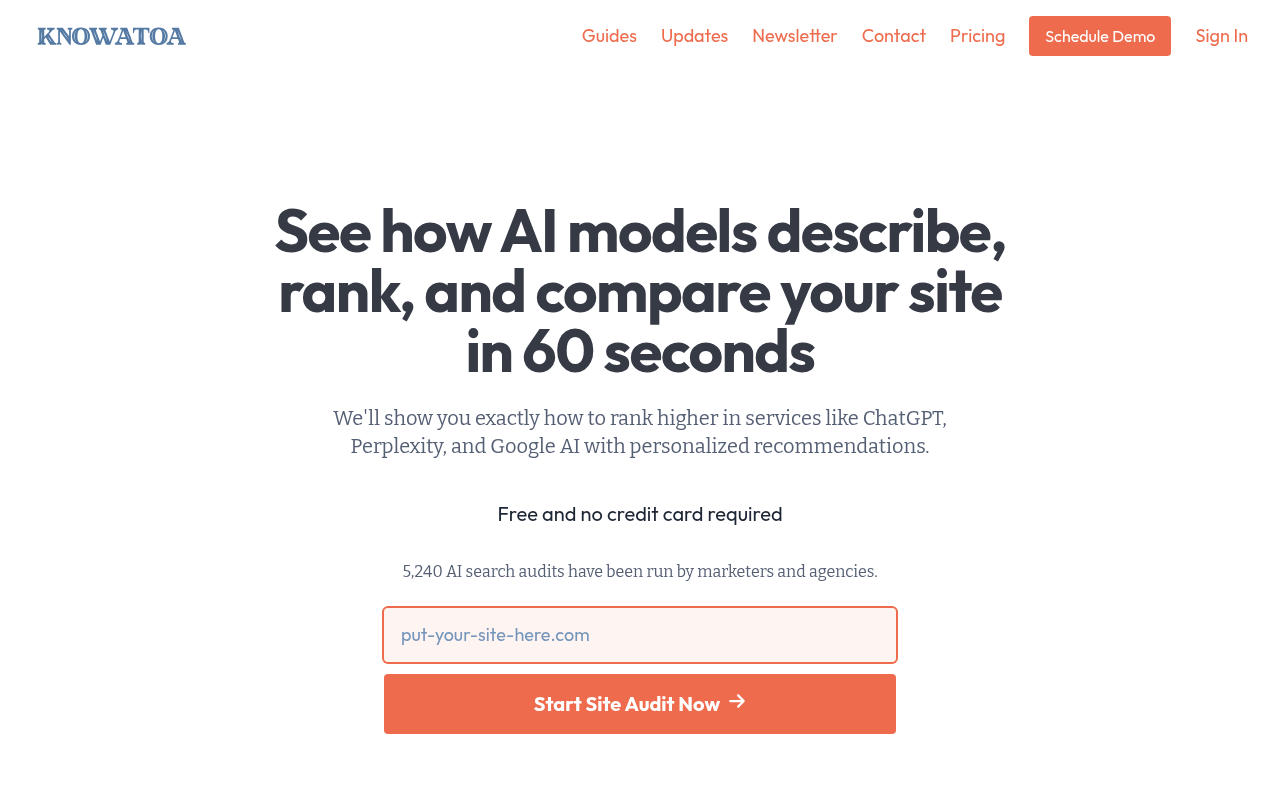
Knowatoa has a specific angle that makes it stand out for e-commerce brands: it tracks product-level mentions in AI answers, not just brand-level. If you sell 50 different products and want to know which ones ChatGPT recommends when someone asks 'what's the best X under $100,' that granularity matters. Most other tools in this category operate at the brand level.
The broader context here is significant. Knowatoa's own research (2026) puts the number of users relying on AI chatbots for product research at over a billion. For an e-commerce brand, that's not a future trend to prepare for. It's already the present.
10. Scrunch AI
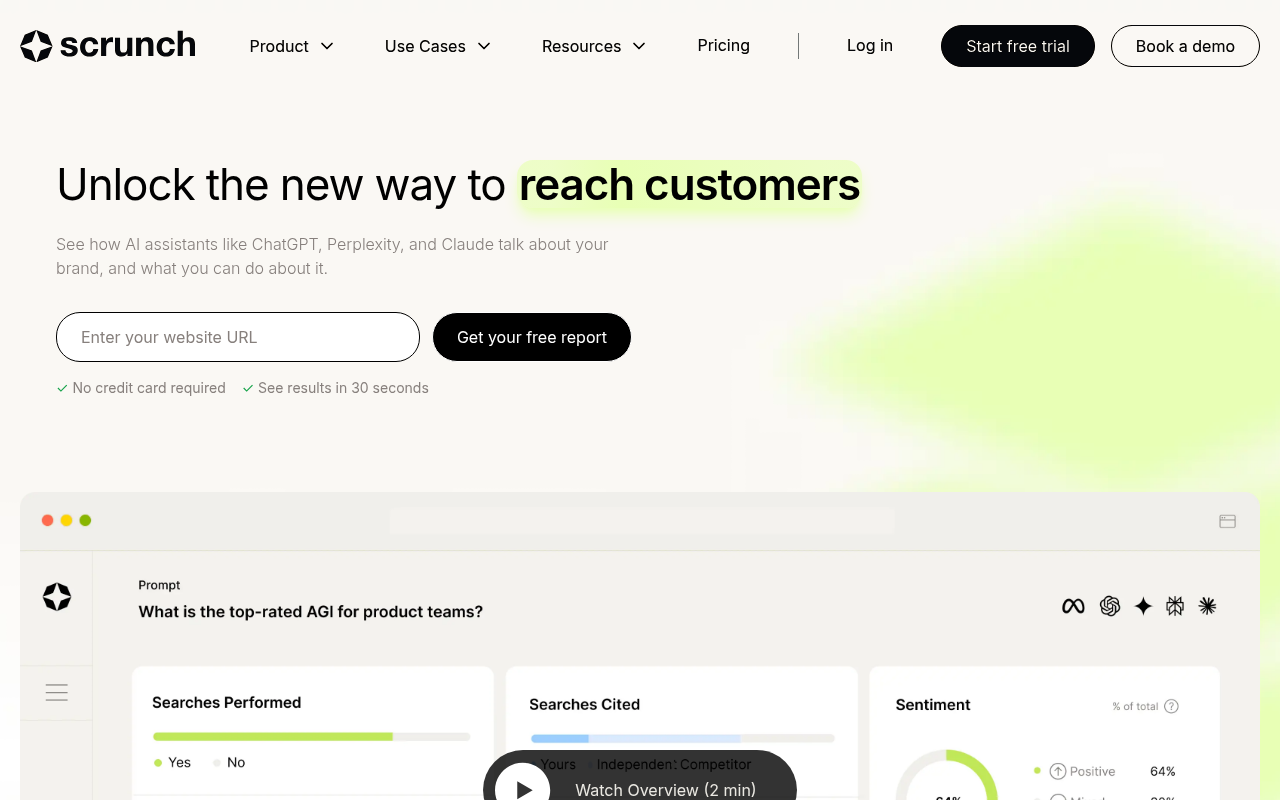
Scrunch AI is built for content teams more than SEO or analytics teams. The core feature is content gap analysis: it identifies what topics and formats are earning AI citations in your category that your site isn't currently covering. That's a genuinely useful workflow for a content strategist who needs to justify a new content calendar to leadership.
One thing I appreciate about Scrunch's approach is that it treats AI visibility as a content problem, not just a monitoring problem. Most tools tell you where you stand. Scrunch tells you what to write next. Whether that's the right framing depends on your team's needs, but for content-led organizations it's a refreshing angle.
11. Mention
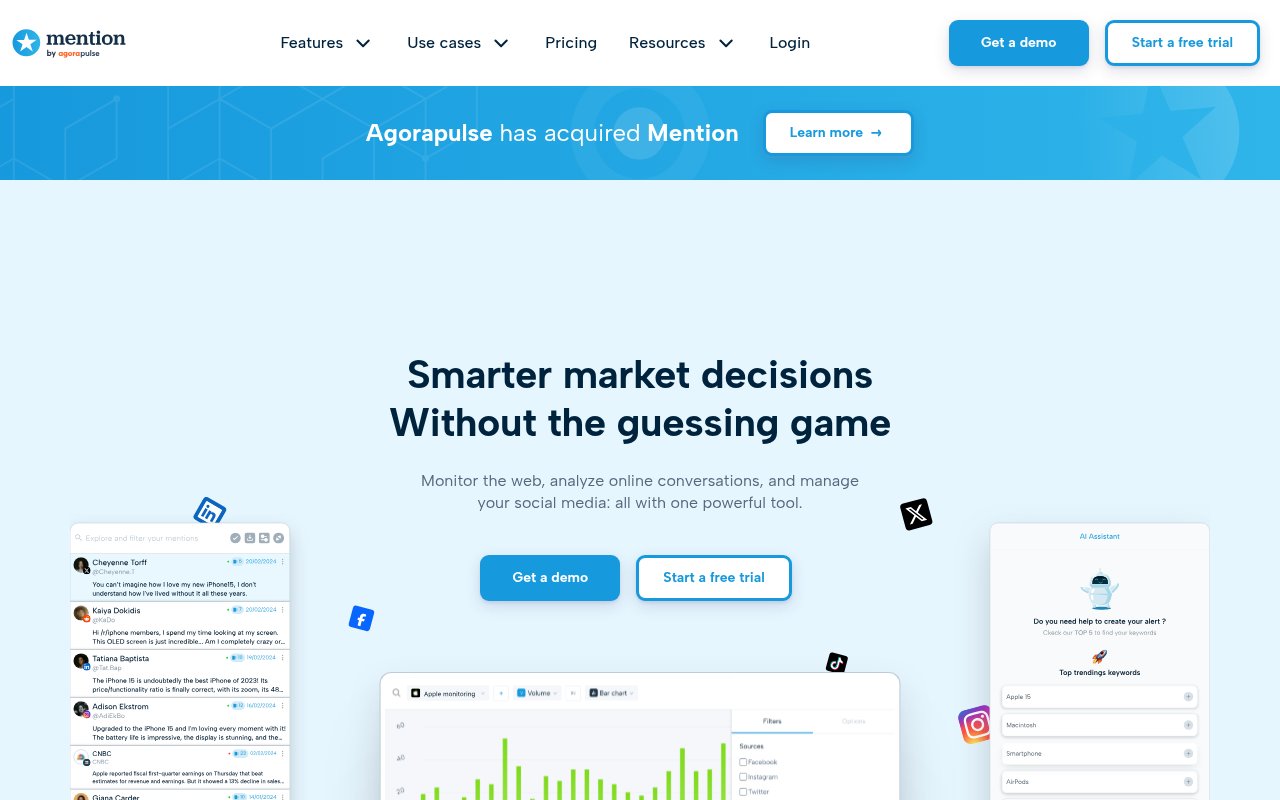
Mention is primarily a social and web monitoring tool that has added some AI context tracking. Honest assessment: if your primary goal is AI search visibility, Mention isn't the right tool. But if you're a PR or communications team that needs real-time brand alerts across news, social, and AI contexts in one place, the breadth is useful. The AI coverage is thinner than dedicated tools, but the real-time alerting for traditional media is genuinely strong. Think of this as a complementary tool, not a primary AI visibility solution.
12. Moz (AI Search Features)
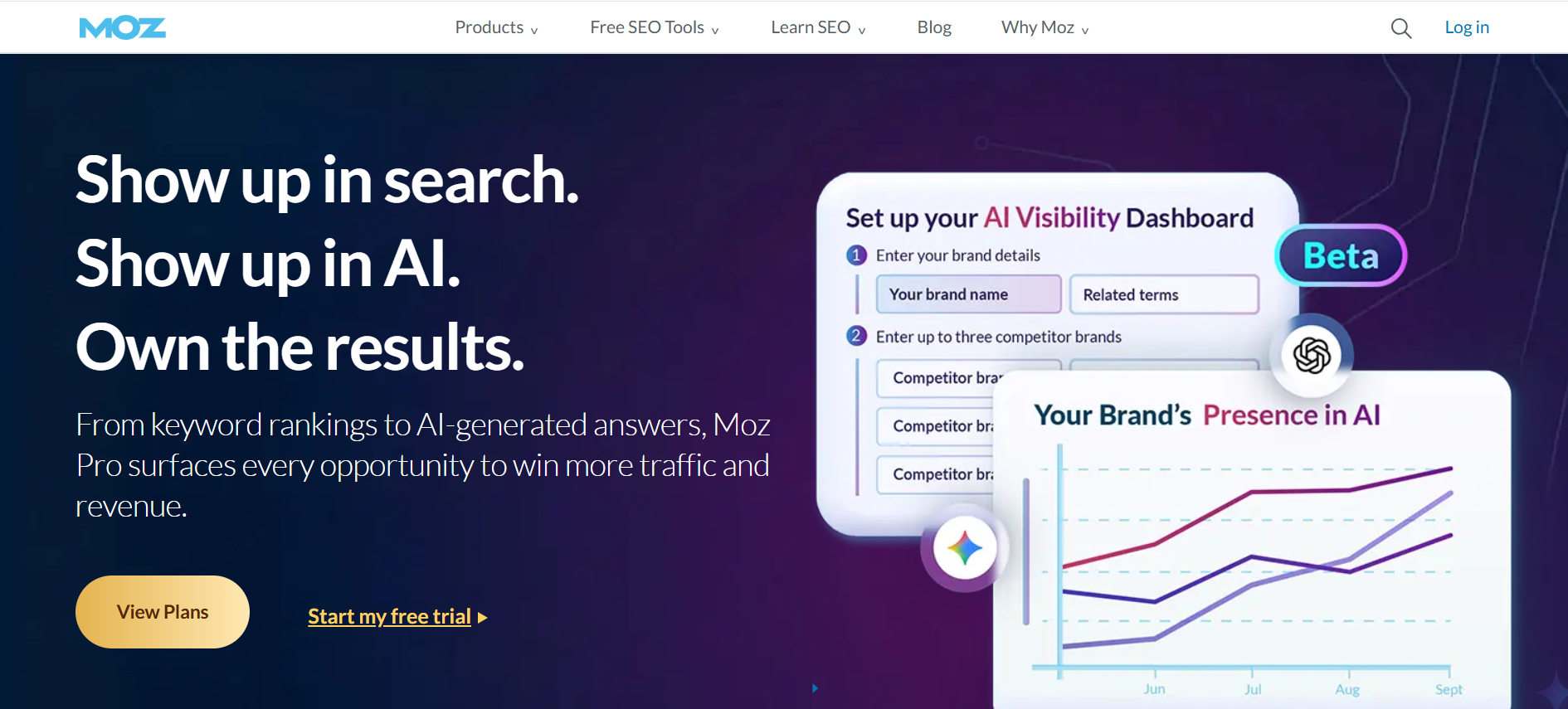
Moz's AI search features follow the same pattern as Ahrefs and Semrush: solid traditional SEO platform that has added AI visibility as a layer. The domain authority correlation with AI appearance is interesting data. High-DA pages do tend to get cited more frequently in AI answers, which validates the long-held SEO principle that authority signals still matter even as the interface changes.
Coverage is mostly limited to Google AI Overviews, which is a real limitation if you care about ChatGPT or Perplexity. For teams deeply invested in the Moz ecosystem, this is a useful add-on. As a standalone AI visibility solution, it's incomplete.
13. BrightEdge Autopilot
BrightEdge Autopilot is enterprise software in every sense: powerful, comprehensive, expensive, and requiring dedicated resources to get full value from. The AI-driven content recommendations are genuinely sophisticated, and the integration between AI search appearance and content performance data is one of the better implementations at this tier.
The platform covers Google AI Overviews and Bing AI well. ChatGPT and Perplexity coverage is improving but not yet at the level of purpose-built AI visibility tools. For a large enterprise with an existing BrightEdge relationship, the AI features are worth activating. For anyone else, the entry cost is prohibitive.
14. Conductor Intelligence
Conductor's strength has always been connecting content performance to business outcomes, and the AI visibility layer fits that philosophy. The platform shows you which content is appearing in Google AI Overviews and ties that back to traffic, engagement, and conversion data. That closed loop between AI appearance and actual business impact is something most tools don't offer.
According to Conductor's own research (2026), AI visibility refers to how a brand's content and products appear in AI-powered search experiences like Google Gemini, ChatGPT, and Perplexity. Conductor's platform operationalizes that definition well for enterprise marketing teams, though the price point keeps it out of reach for most mid-market brands.
15. ZipTie.dev
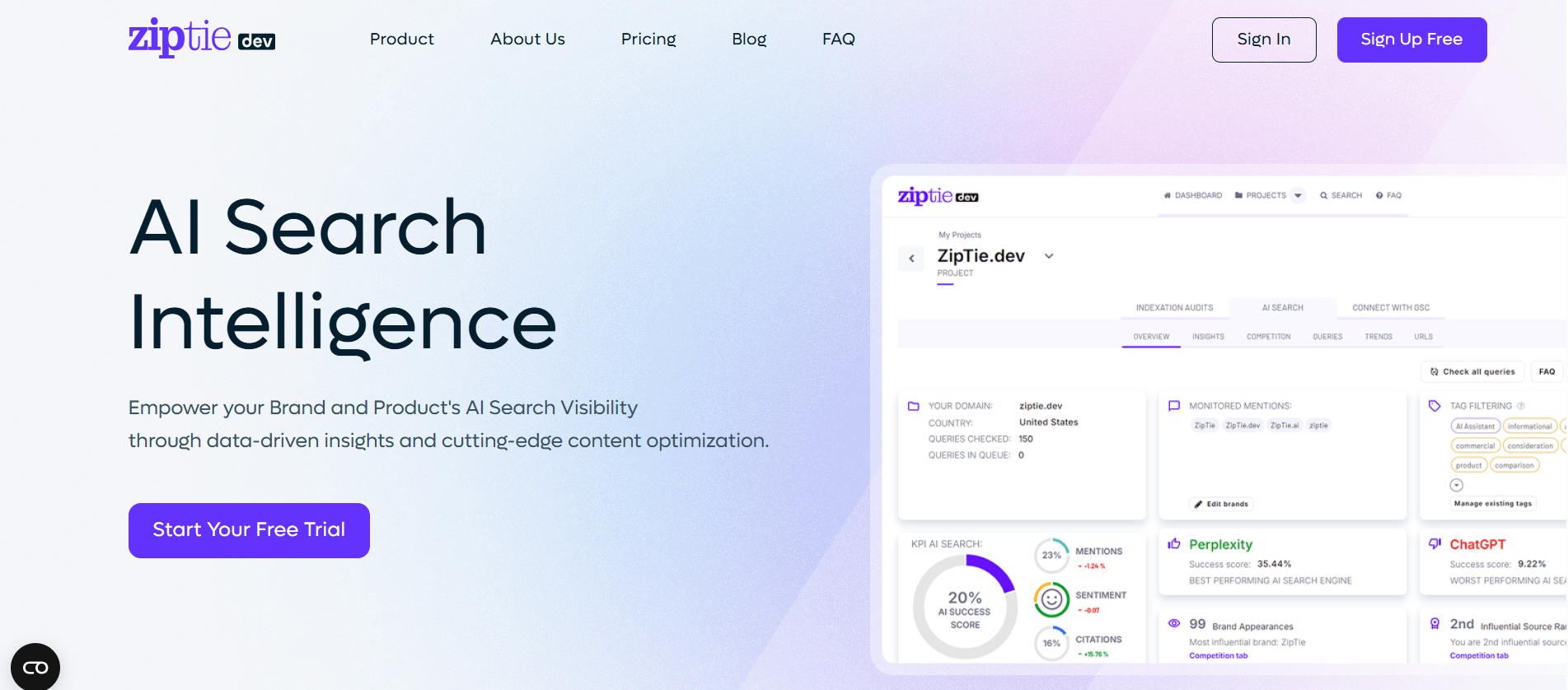
ZipTie.dev is the outlier on this list. It's not a polished SaaS dashboard. It's an API-first tool built for technical teams who want to build custom AI visibility tracking into their own systems. If you have a developer who can work with APIs and you want granular control over how you query and analyze AI citation data across ChatGPT, Perplexity, and Claude, ZipTie gives you that flexibility at a price point that's genuinely low.
ZipTie's research (2026) makes an important point: unlike traditional SEO which measures keyword rankings, AI search tracking measures probabilistic citation frequency in systems where the same query can yield different results. Their API is designed around that reality, letting you run the same query at scale to build statistically meaningful data rather than relying on single-point snapshots. Not for everyone. Exactly right for the teams it's built for.
The Verdict: Top Picks by Use Case
Not every tool on this list deserves equal weight for every team. Here's where I'd actually put my money based on specific situations:
Best overall for growing brands: Vizup. The combination of tracking and content optimization in one platform is genuinely differentiated. Most competitors do one or the other. Check out About Vizup if you want to understand the product philosophy behind it.
Best for agencies: RankZero or Vizup. Both have multi-brand support and reporting that scales without becoming a full-time job to maintain.
Best for enterprise: Profound for deep brand intelligence, BrightEdge or Conductor if you need the full content performance integration.
Best for e-commerce: Knowatoa for product-level tracking. Nothing else on this list goes that granular.
Best budget option: Otterly.AI for simplicity, ZipTie.dev if you have technical resources and want real data depth without the SaaS markup.
The broader point: AI search visibility is no longer optional to track. With AI-generated results on track to overtake organic traffic by 2028 (Semrush, 2026), the brands that establish measurement and optimization habits now will have a compounding advantage. The tools exist. The question is just which one fits your team's reality.
Frequently Asked Questions About AI Visibility Tools
What exactly is AI search visibility and why does it matter?
AI search visibility refers to how often and how prominently your brand, products, or content appear in responses generated by AI-powered search tools like ChatGPT, Google Gemini, and Perplexity (Conductor, 2026). It matters because over a billion users now use these platforms for product research (Knowatoa, 2026), and if your brand isn't being cited, you're effectively invisible to a growing share of potential customers. Traditional SEO rankings don't capture this. You need dedicated AI visibility tools to track it.
How is tracking AI search visibility different from traditional SEO rank tracking?
Traditional rank tracking measures where your page appears for a specific keyword in a deterministic results list. AI search tracking is fundamentally different because AI systems are probabilistic: the same query can return different answers on different runs. That means you need to measure citation frequency across many query variations rather than a single rank position (ZipTie.dev, 2026). Tools like Peec.ai are built around this reality. Most traditional SEO tools aren't.
Which AI platforms should I prioritize tracking?
For most brands in the US market, ChatGPT, Google Gemini, and Perplexity cover the majority of AI search volume right now. Bing AI (Copilot) is worth including if your audience skews older or more enterprise. Claude is growing but still a smaller share of consumer AI search. Start with the big three and expand coverage as your program matures.
Can I improve my AI search visibility, or is it just something to monitor?
You can absolutely improve it, and this is where a lot of conventional wisdom falls short. Many guides treat AI visibility as purely a monitoring exercise. In reality, the content decisions you make today directly affect how often AI systems cite your brand tomorrow. Publishing authoritative, well-structured content on topics where you have genuine expertise, earning high-quality backlinks, and ensuring your site is technically accessible all contribute to AI citation rates. Tools like Vizup and Scrunch AI are specifically designed to help teams act on this, not just observe it.
How much should I expect to pay for an AI visibility tool?
The range is wide. Entry-level tools like Otterly.AI start under $100/month. Mid-range platforms like Vizup, RankZero, and Peec.ai typically fall in the $200-$800/month range depending on the number of brands and query volume. Enterprise platforms like Profound, BrightEdge, and Conductor are custom-quoted and typically start in the thousands per month. For most growing brands, the mid-range tier offers the best balance of capability and cost. See Vizup's pricing as a benchmark for what mid-range looks like in 2026.