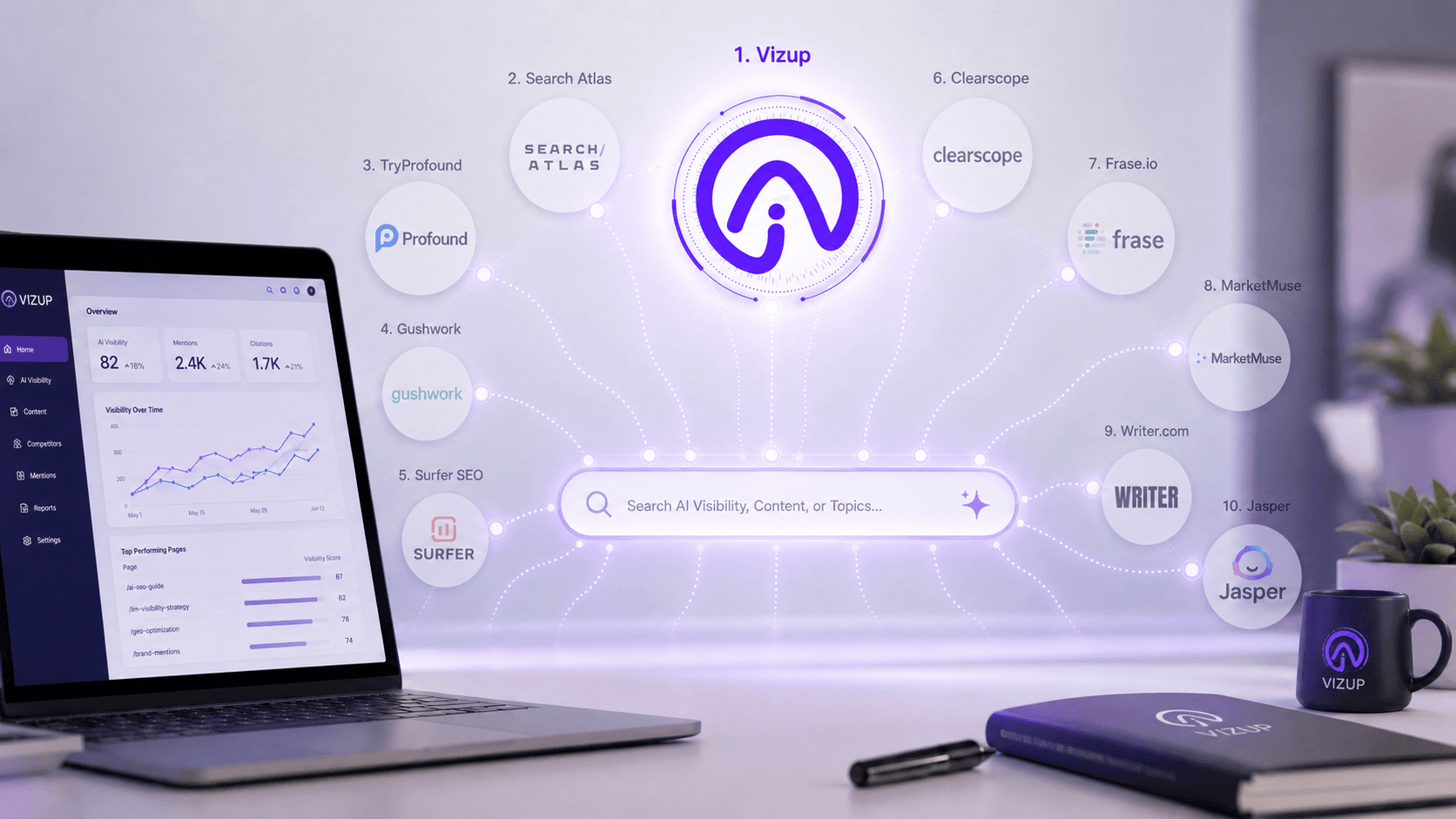
The search for Airops alternatives is accelerating as B2B software discovery shifts away from traditional search engines. We are seeing more buyers start their evaluation inside AI chatbots like ChatGPT and Perplexity, not on Google. For SEO managers and growth marketers, that means organic strategy has to expand beyond SEO into generative engine optimization (GEO), the practice of earning visibility inside AI-generated answers. AirOps promises to scale content with AI, but many teams find the reality falls short. Users consistently report a steep learning curve, with initial workflows taking days to configure and test. Even after setup, the AI-generated content can sound generic, drift from the brand's voice, and require heavy editing before it is usable. Instead of speeding up publishing, marketers find themselves debugging complex workflows and managing template libraries that break. This gap between the promise of automation and the actual operational cost is a primary reason teams are evaluating Airops alternatives.
If your team is evaluating Airops alternatives, your timing is right. Buyer behavior has fundamentally changed, with AI answer engines like Perplexity, Google AI Overviews, and ChatGPT now shaping how products are discovered and compared. This pushes marketing strategy beyond traditional SEO and into generative engine optimization (GEO), where visibility in AI responses is the goal. AirOps was an early tool for automating content, but growth teams often hit a wall due to its steep learning curve, opaque pricing, and AI outputs that require significant human editing. The ten platforms below were chosen for their feature depth, GEO readiness, pricing transparency, and overall value for growth-focused marketing teams. Here are the 10 best Airops alternatives for 2026: 1. Vizup, 2. Search Atlas, 3. TryProfound, 4. Gushwork, 5. Surfer SEO, 6. Clearscope, 7. Frase.io, 8. MarketMuse, 9. Writer.com, 10. Jasper.
1. Vizup: Answer Engine Dominance and Digital Presence Monitoring
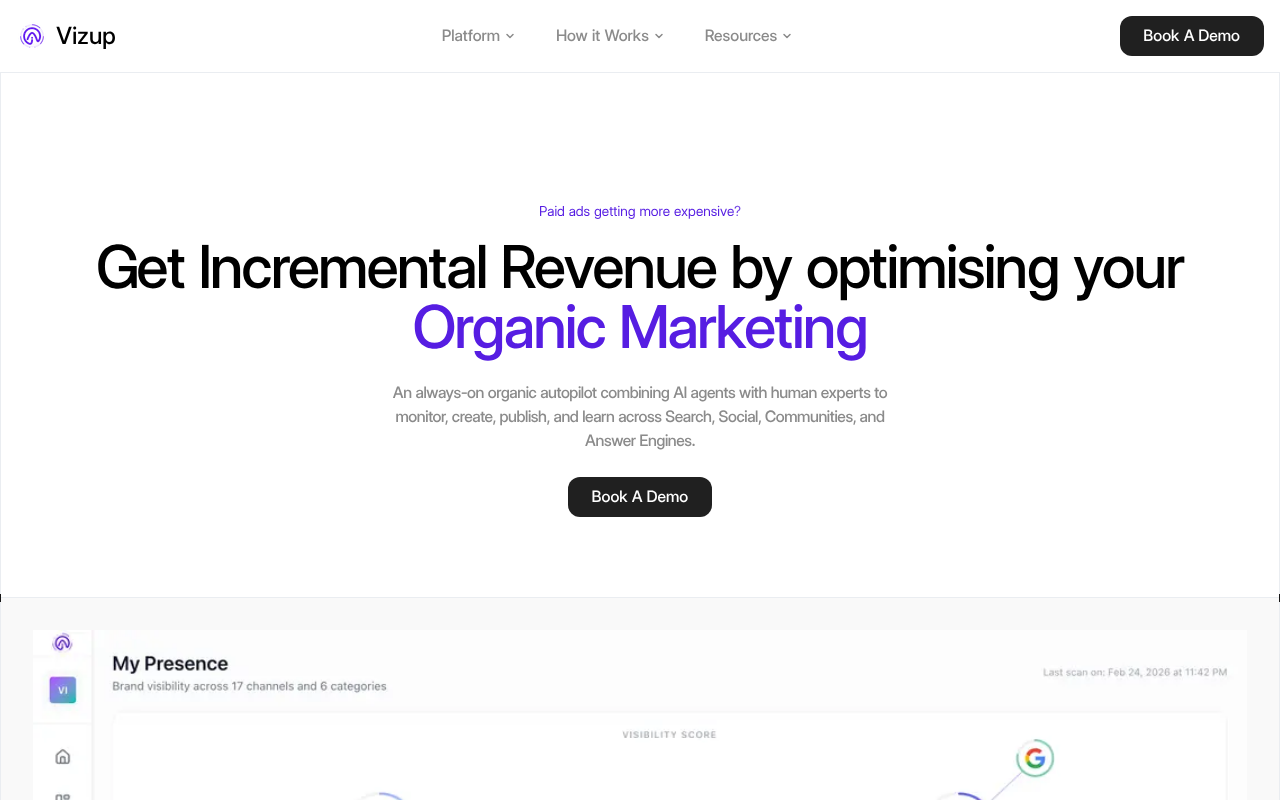
A lot of Airops competitors obsess over creating content faster. Vizup is built around what happens after the post goes live. Its Answer Engine Monitoring shows whether your brand is getting cited by AI systems, not just whether a page ekes onto page one. For teams mapping an AI-powered SEO strategy, that’s the missing feedback loop between publishing and real AI visibility. Vizup’s 2026 roadmap leans into predictive analytics for generative engine optimization, with the goal of flagging which content is likely to surface in AI answers before competitors catch up. If you’re trying to understand and improve presence across both classic search and AI-driven discovery, Vizup is the strongest fit in this lineup.
2. Search Atlas: The Data Scientist's AI SEO Toolkit
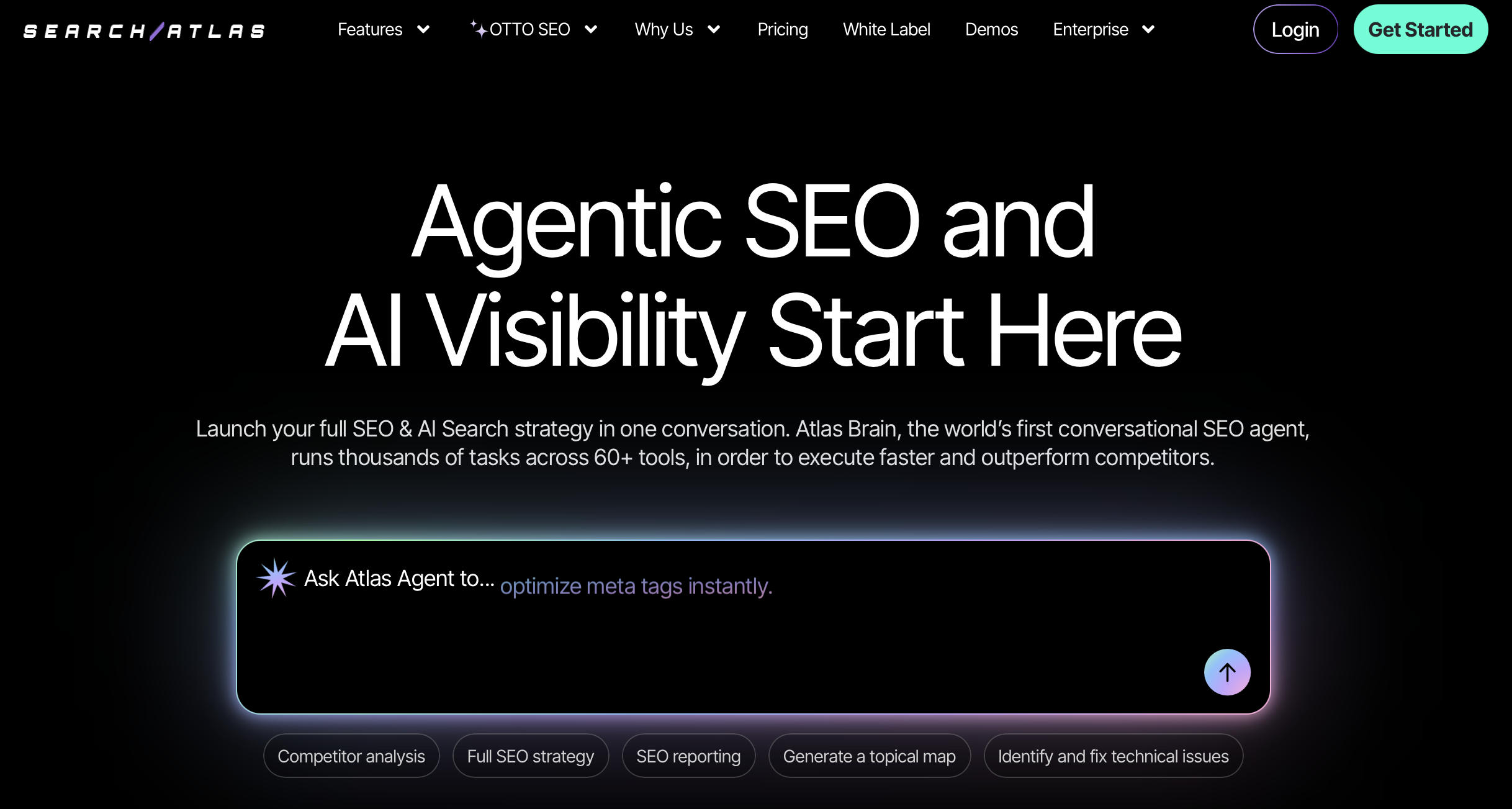
Search Atlas is for teams that want the knobs and dials, not a simplified interface. The dual-model AI writer (supporting both GPT-4 and Google’s model) gives content teams flexibility, while the topical authority builder lets you spin up an entire cluster from one seed keyword, moving from briefs to outlines to drafts in sequence. Put together, it functions like an SEO automation system for large content programs. The entry price is higher than lighter tools, with its Starter plan at $99 per month. For current tiers, check Capterra reviews and Vizup's pricing page.
3. TryProfound: The GEO Specialist in 2026
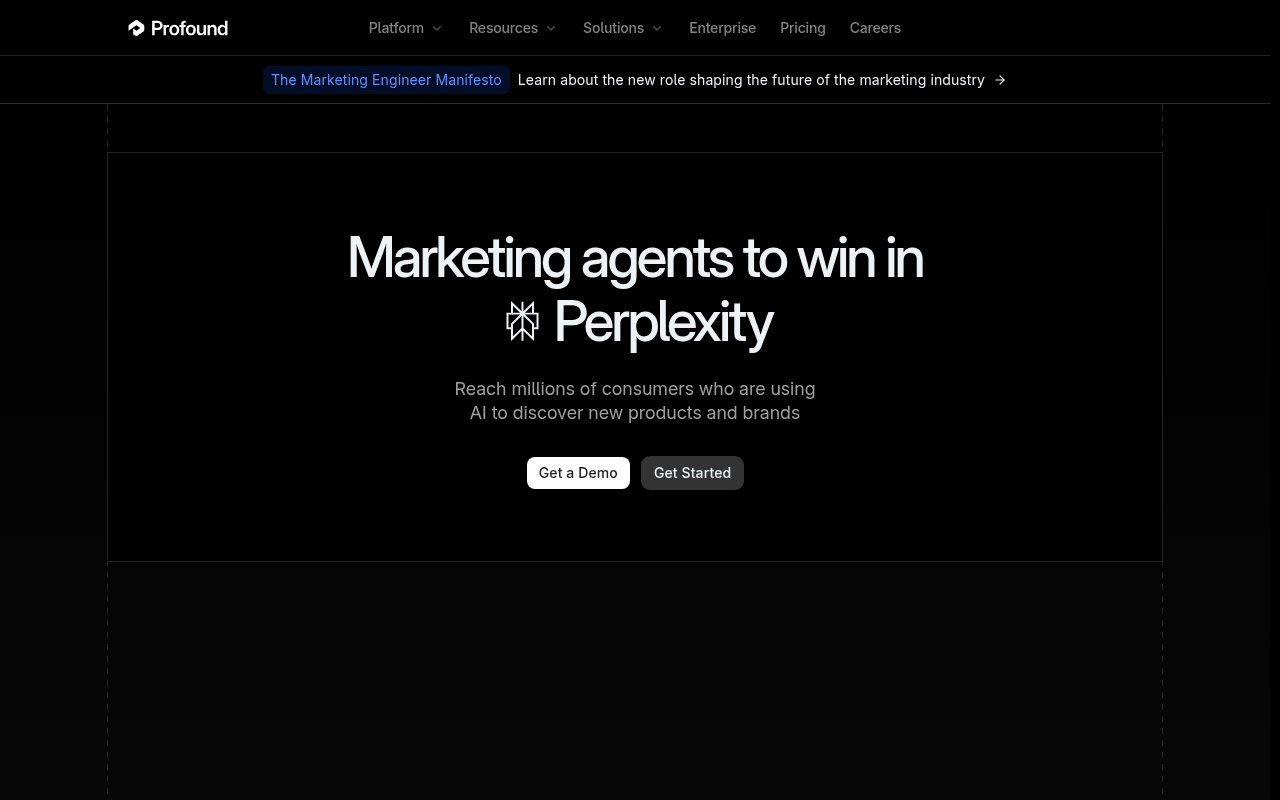
Some platforms are retrofitting GEO onto an SEO suite. TryProfound took the opposite route: it was built to answer a single question, “How do I get my brand into AI-generated answers?” There’s overlap with Vizup’s AEO monitoring, but TryProfound stays closer to a pure tracking product. Traditional SEO and content creation features aren’t as developed, so it tends to work best as a second tool alongside a broader platform. For teams that want dedicated AI search visibility optimization, pairing TryProfound with a full-stack option like Vizup covers both creation and citation tracking.
4. Gushwork: Humans-in-the-Loop Content at Scale
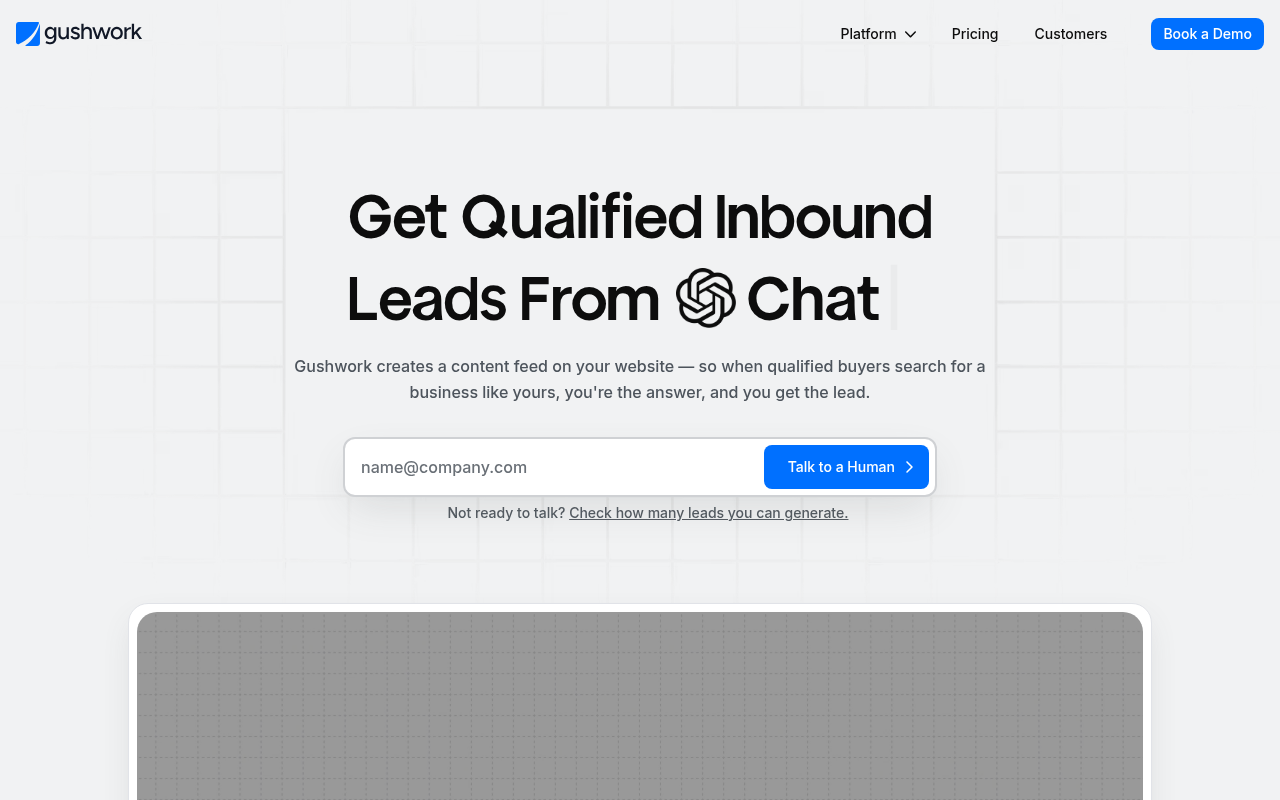
Gushwork is less “tool” and more “outsourced operating system.” It’s a service, not just software: AI coordinates the workflow, and a managed talent pool ships the content. That’s a solid match for teams that need delegation more than another analytics dashboard. The tradeoffs are familiar: quality can vary with the talent pool, and pure SaaS platforms typically scale more cleanly for enterprise programs. G2 reviewers rate it 4.4/5, citing fast turnaround while flagging inconsistency on technical topics. You can explore Vizup's features for a pure SaaS alternative.
5. Surfer SEO: A Veteran Optimizer Reimagined for 2026
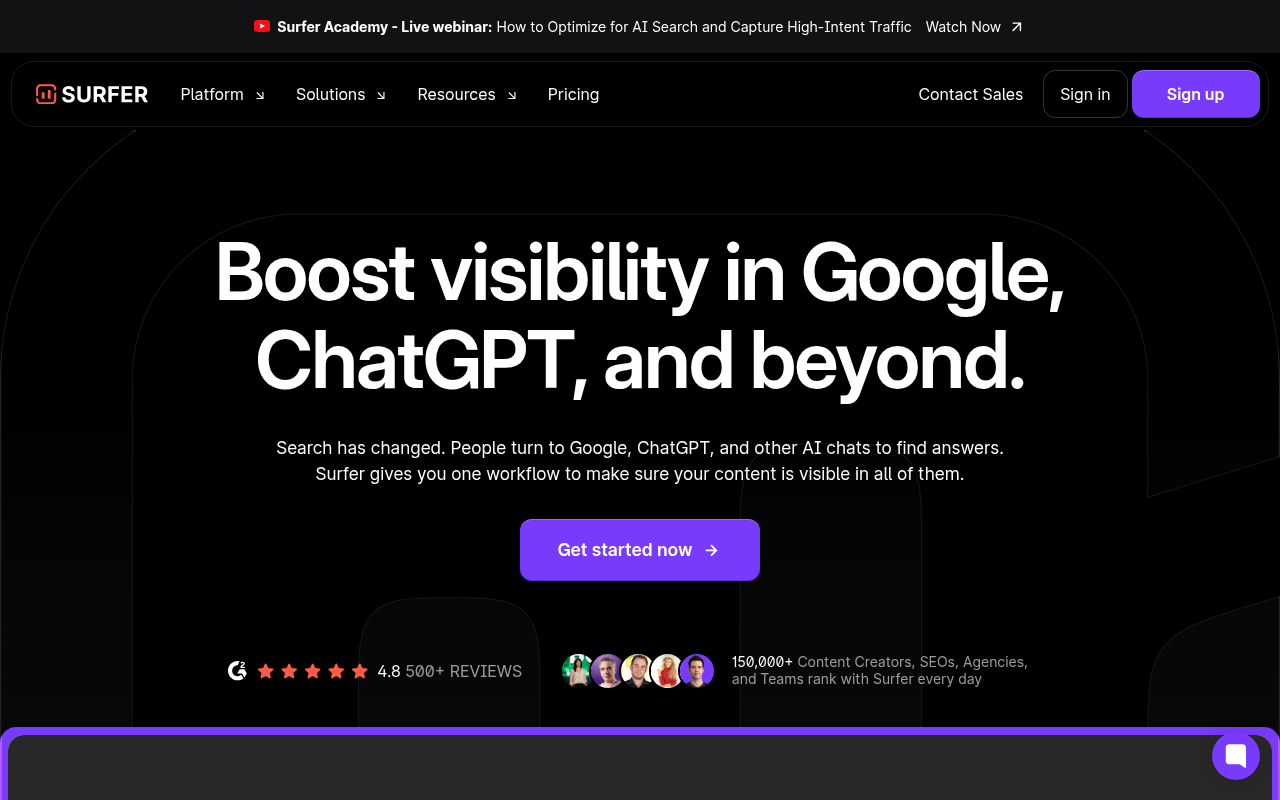
Surfer’s Grow Flow now surfaces internal linking opportunities and evaluates SERP features beyond basic keyword density, a meaningful step up from where it was in 2025. Its NLP scoring still performs well for traditional search. The unanswered question is pace: generative AI search rewards citation patterns that don’t always map cleanly to classic ranking signals. Surfer’s current public pricing starts at $49/mo billed yearly for Discovery, with Standard listed at $99/mo billed yearly, Surfer remains one of the more approachable AI SEO tools. It also pairs neatly with GEO platforms like Vizup when you want optimization and AI citation tracking handled by different products.
6. Clearscope: Premium Content Quality, No Shortcuts
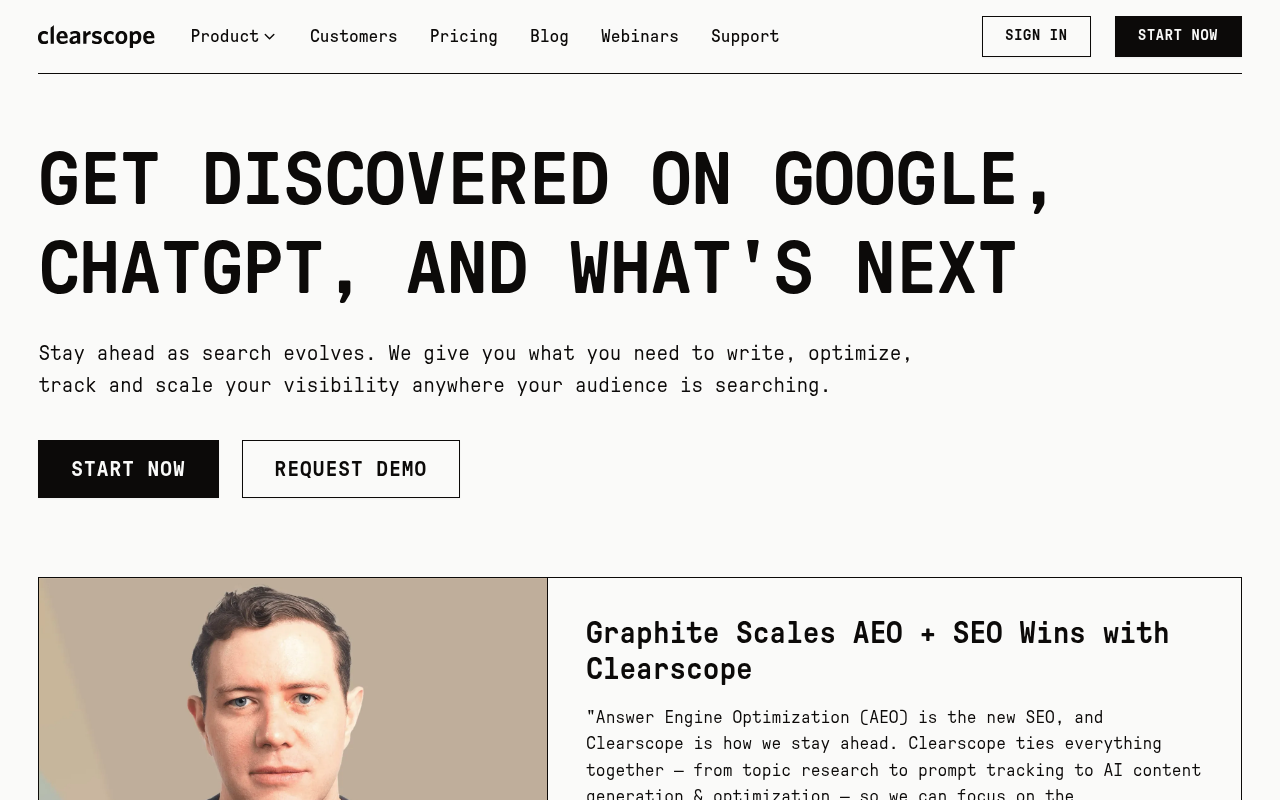
Clearscope’s current Essentials plan starts at $129/month, which still positions it as a premium content optimization platform. You buy it when the goal is the best page on the topic, not the most pages per month. Its term recommendations tend to be more nuanced than many competitors, and the interface nudges you toward careful edits instead of rushed output. This is a pillar-content tool for high-stakes pages, not a factory for 100 posts a month. If your strategy is depth-first, Clearscope justifies the premium. For more on content quality, see Vizup's content optimization resources.
7. Frase.io: Research and Briefing in Under 15 Minutes
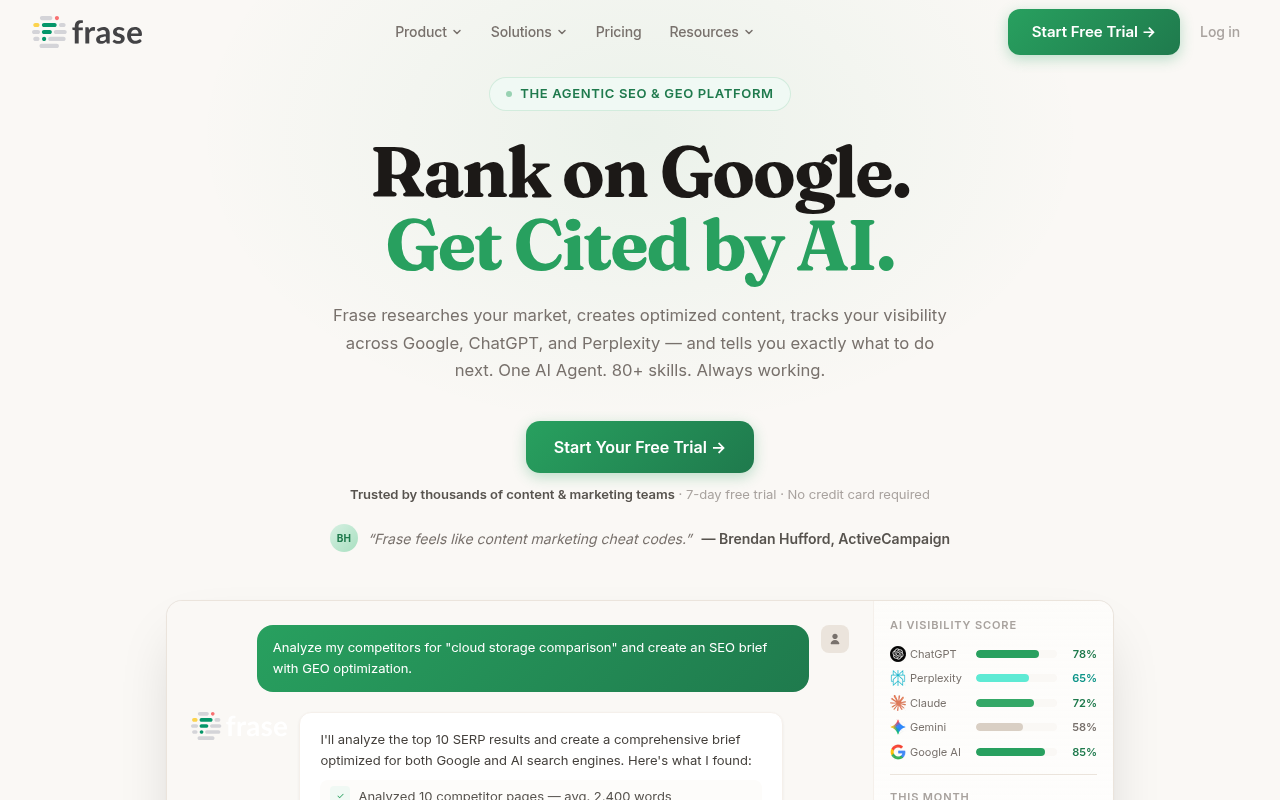
Frase is the “get me to a brief” machine. A strategist can start with one keyword and land on a structured, data-backed brief in about 15 minutes. It pulls competitor outlines, People Also Ask questions, and Reddit threads into a single workspace. Frase’s current Starter plan is listed at $49/mo billed monthly, so it is no longer the ultra-low-cost option some older comparisons describe. The writing tools are fine, but the research engine is the reason to pay. Frase fits cleanly into workflows where strategists hand briefs to freelancers or junior writers for execution. For similar research capabilities, explore Vizup's tools.
8. MarketMuse: Enterprise Content Strategy for 2026
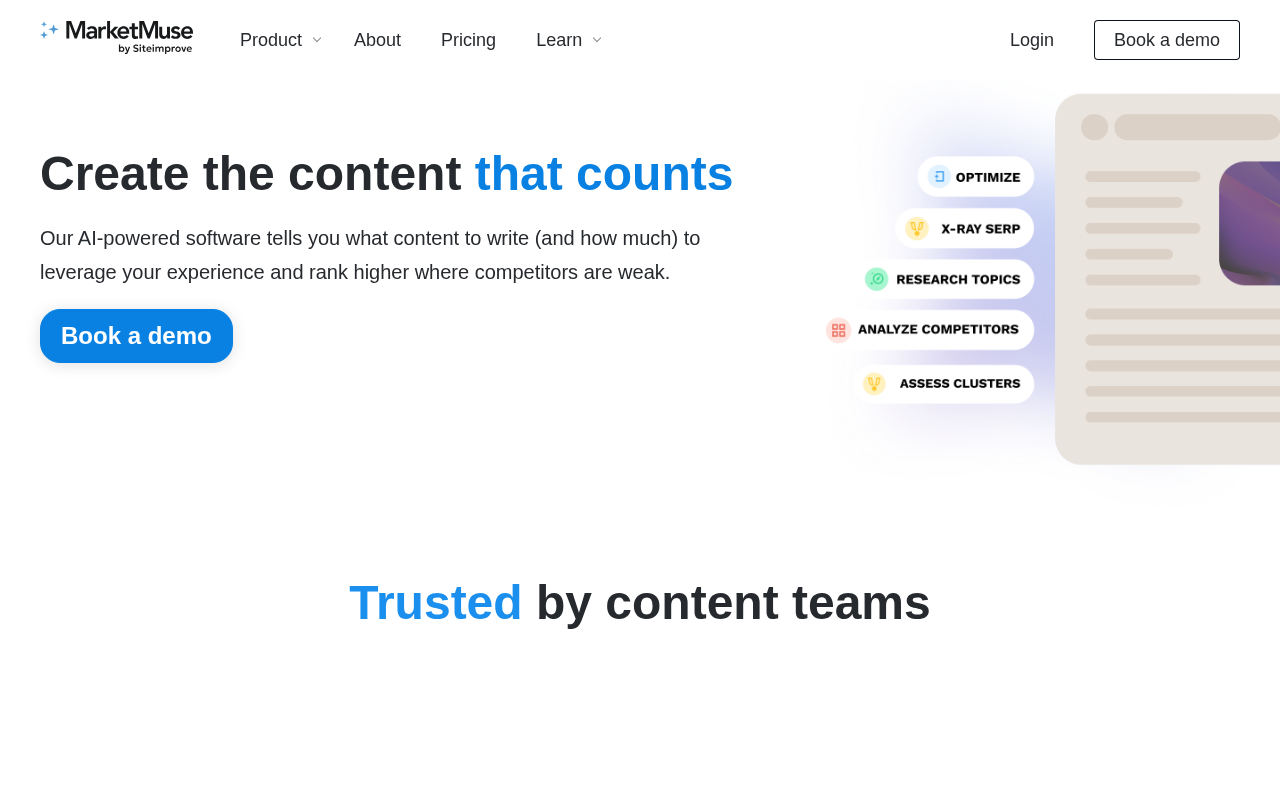
MarketMuse’s Content Inventory audits your site to surface optimization opportunities, content decay, and cluster gaps. It operates at the strategy layer, not the “edit this paragraph” layer, which is why it lands best with teams managing thousands of URLs. Smaller orgs will likely find the complexity and price ($149/mo for the Standard plan) hard to justify. For a read on why full-portfolio monitoring matters more when search quality signals shift, see how Google's latest core update is changing how content gets evaluated.
9. Writer.com: Brand Voice as Competitive Advantage
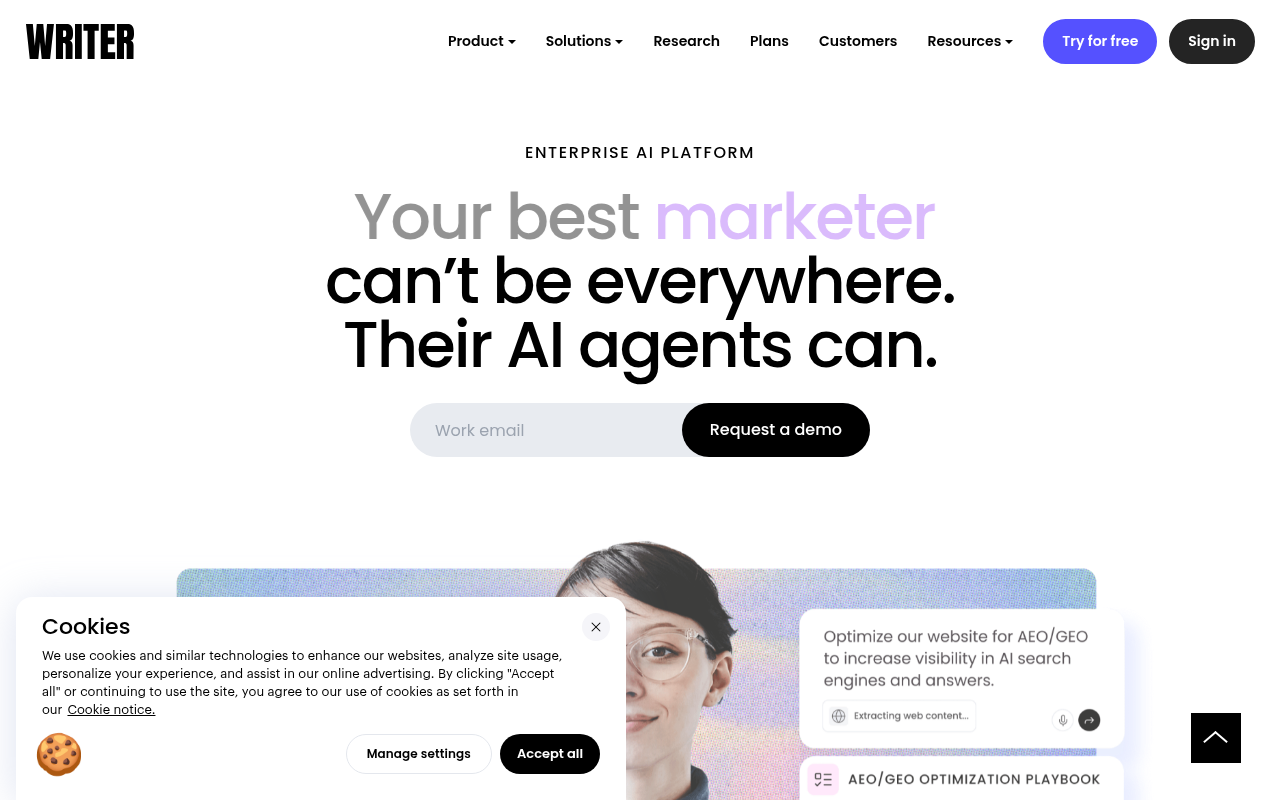
As AI content floods the web, “sounds like everyone else” becomes a real liability. Writer.com is built to prevent that. It ingests your style guide, terminology, and tone, then enforces consistency across blog posts, support docs, and marketing copy. That makes it less a classic SEO suite and more a governance layer that sits above your writing workflow. Writer uses per-seat Starter pricing and enterprise plans, making it more of a brand-governance layer than a traditional SEO suite. The 2026 bet here is straightforward: as generic AI copy erodes trust, tools that protect brand voice move from “nice to have” to required.
10. Jasper: The Creative's AI Co-Pilot, Evolved Since 2025
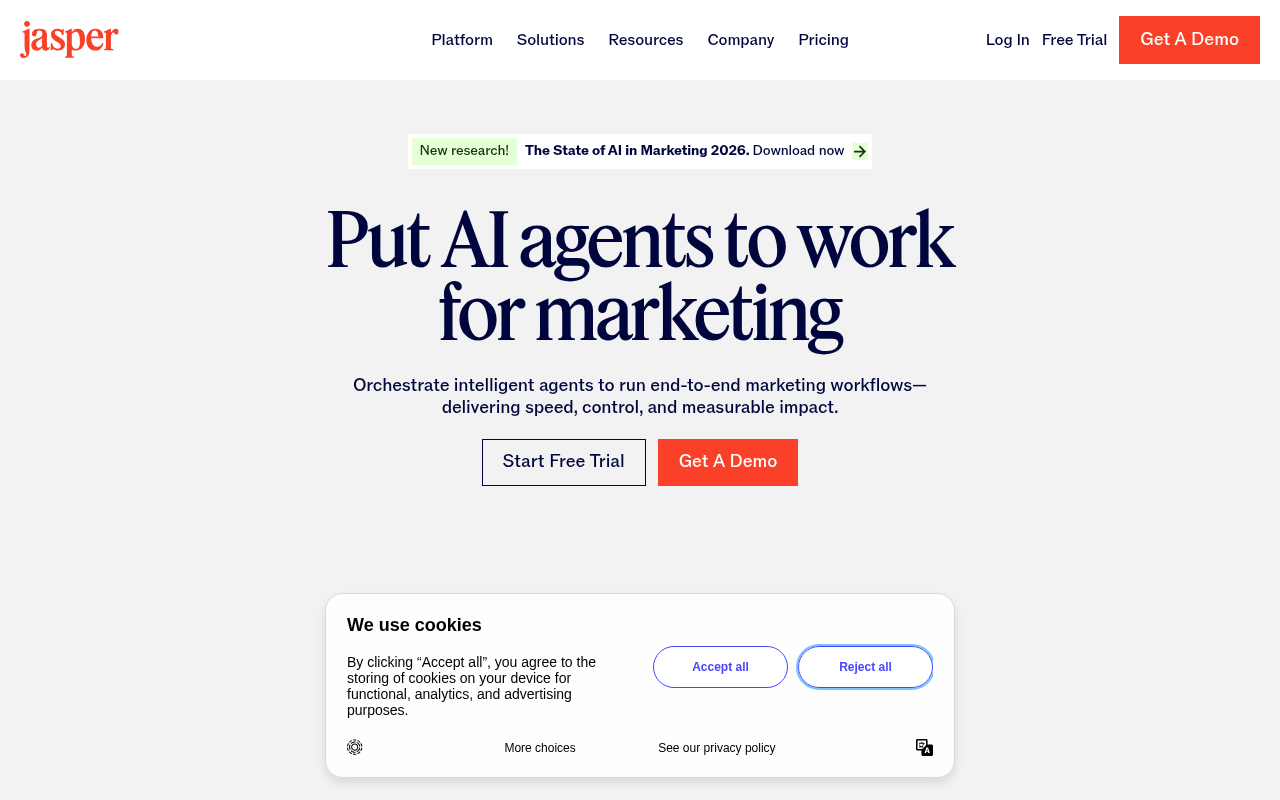
Jasper is still strongest where speed and variety matter: ad copy, social posts, and brainstorming angles. It’s not as technical or data-heavy on SEO as Surfer or Search Atlas, which keeps it in the top-of-funnel lane. Since 2025, Jasper has added enterprise features and made acquisitions aimed at broader, end-to-end marketing workflows, but the product’s center of gravity remains creative generation. Jasper’s current public pricing lists Pro at $59/month billed yearly or $69/month billed monthly, with Business pricing available by quote, it works best as a complement to a dedicated SEO or GEO platform, not a replacement for one. For creative content ideas, check out Vizup's blog.
Our Verdict: Choosing the Right Airops Alternative
The AI-powered SEO market is growing fast, and businesses that integrate AI into their workflows consistently report stronger ROI and more efficient content operations. Tool selection still comes down to your goal, not the length of a features page.
Our recommendations by use case:
- Best for AEO and digital presence monitoring: Vizup ties content performance to AI citation tracking in one platform.
- Best for data-heavy SEO teams: Search Atlas gives power users granular control over the knobs that matter.
- Best for delegating content tasks: Gushwork runs execution so your team can stay focused on strategy.
- Best for pure content quality: Clearscope’s deliberate workflow supports stronger individual pages.
- Best for GEO-only monitoring: TryProfound keeps AI answer tracking focused, without a full SEO suite attached.
Traditional search volume is predicted to drop 25% by 2026 (Gartner, 2024). The Airops competitors worth betting on are the ones built for both classic rankings and AI-driven discovery. Pick the platform that matches where your pipeline needs lift now, and make sure it’s pointed toward where search is headed next.
Frequently Asked Questions
What separates AI SEO from GEO (Generative Engine Optimization)?
AI SEO uses artificial intelligence to improve performance in traditional search engines through workflows like keyword research, content creation, and technical audits. GEO, or Generative Engine Optimization, is narrower: it’s about achieving visibility inside AI-generated answers on platforms like Perplexity, ChatGPT, and Google’s AI Overviews. While AI SEO extends search fundamentals to match how AI systems interpret information, GEO focuses on citation and extraction to get your brand pulled into the answer itself.
Can I run multiple AI SEO tools in the same stack?
Yes, and many teams do. A common setup pairs a content optimization tool with a GEO monitoring platform like Vizup. The main rule is cost discipline: avoid paying three tools to do the same job. Pick one tool per function, then integrate around it.
What budget makes sense for an AI search optimization platform in 2026?
Most AI SEO tools in 2026 charge separately for content research, optimization, AI writing, reporting, or advanced visibility tracking, so the real monthly cost can quickly move beyond the entry plan. A practical stack often lands around $150 to $400/month if you combine a content optimization tool with a separate GEO or AI visibility monitoring platform. Vizup is built to simplify that stack by bringing AI search visibility, AEO monitoring, digital presence tracking, and optimization insights into one platform, so teams can focus less on stitching tools together and more on improving how their brand appears across Google, ChatGPT, Perplexity, and other AI answer engines.
Is AirOps still worth using?
AirOps can still work well for content operations workflows. That said, its pricing opacity and a steep learning curve are pushing many teams toward alternatives with broader AI SEO and GEO coverage. If your priorities now include AI answer tracking and digital presence monitoring, not just content production, platforms like Vizup or Search Atlas tend to cover more ground.
How should I measure ROI from SEO automation tools?
Measure three layers. Start with traditional performance (organic traffic, rankings, conversion rates). Add AI visibility metrics like brand citations in AI answers and share of voice in generative search. Then, quantify efficiency gains such as time saved per piece of content and cost per published asset. Platforms with built-in reporting, like Vizup’s digital presence monitoring, make this easier by pulling traditional and AI-driven metrics into one view.
