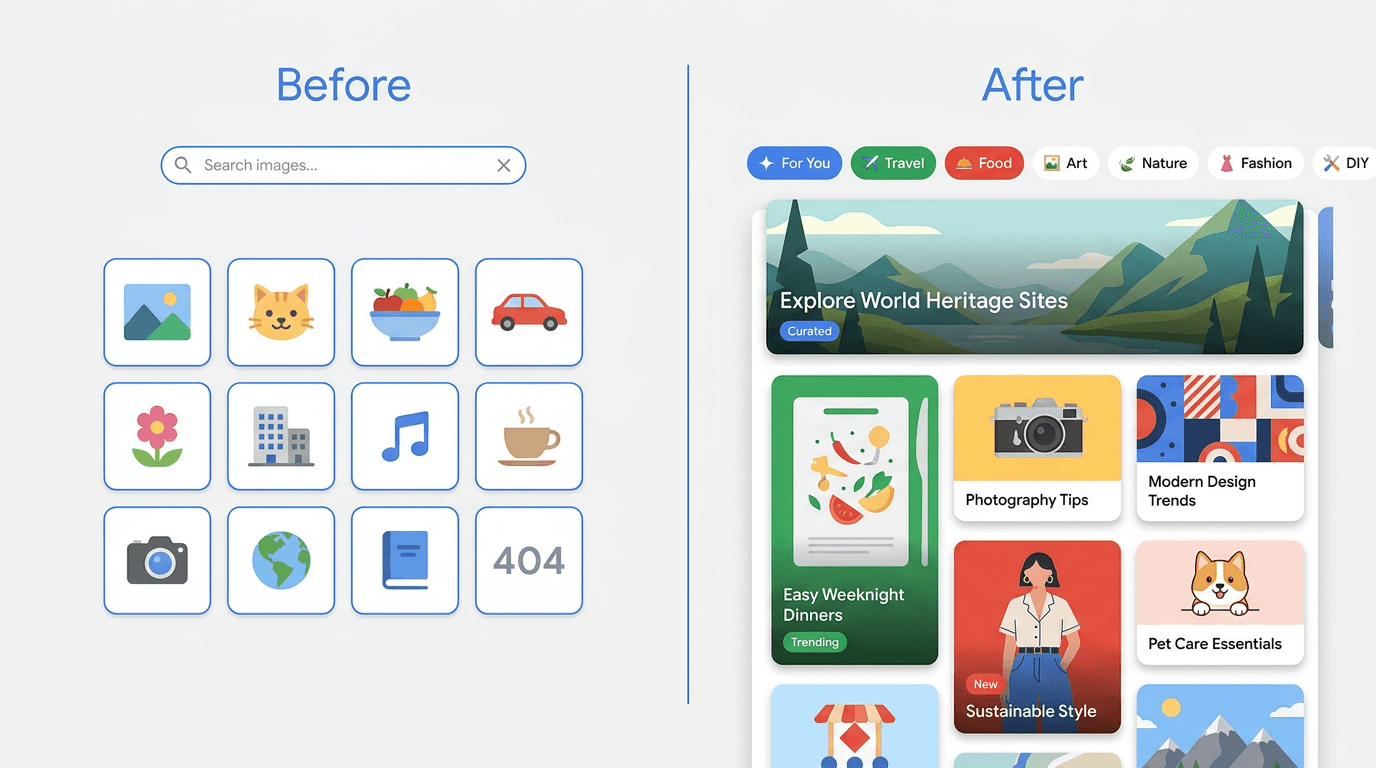
The Google Images redesign discovery feed turns the homepage into a personalized, always-scrolling gallery, pulling images based on a signed-in user's interests and browsing history. In other words: the static search bar that has anchored Google Images for 25 years is no longer the whole product. Announced July 14, 2026 for Google Images' 25th anniversary, the update nudges the service from query-and-click into something closer to browse-and-save.
If you run a visual-first brand, sell products online, or treat Google Images as a dependable traffic source, this is more than a fresh coat of paint. It changes the mechanics of discovery: which signals get you surfaced, how often you reappear, and what kind of referral traffic follows. Getting your head around how discovery has fundamentally changed search is no longer optional background reading; it is the context for every image decision you make from here.
What Is the New Google Images 'For You' Feed?
The google images for you feed is an interest-driven gallery that loads automatically when a signed-in user opens Google Images. Instead of waiting for someone to type a query, Google starts the session by surfacing images from across the web using what it already knows about that user's interests and browsing patterns. Because the feed keeps refreshing, it is built for repeat visits and open-ended scrolling, not one-and-done retrieval.
Next to the feed, users can save images into google images collections, shown as persistent tabs above the gallery. That extra layer turns casual browsing into something more like organizing: grouping visuals by project, mood, or intent. Many people are already calling it a pinterest style google images experience, and the comparison holds up on structure alone: both experiences reward passive discovery and active saving more than they reward precise searching.
Info: Rollout status: Google announced that the redesign would roll out over the coming weeks to signed-in desktop users in the US in English. Google has not confirmed a timeline for mobile, additional languages, or other markets, so brands should treat this as an early signal rather than overhaul their strategy immediately.
From Query-Response to Continuous Discovery: Why This Changes Everything
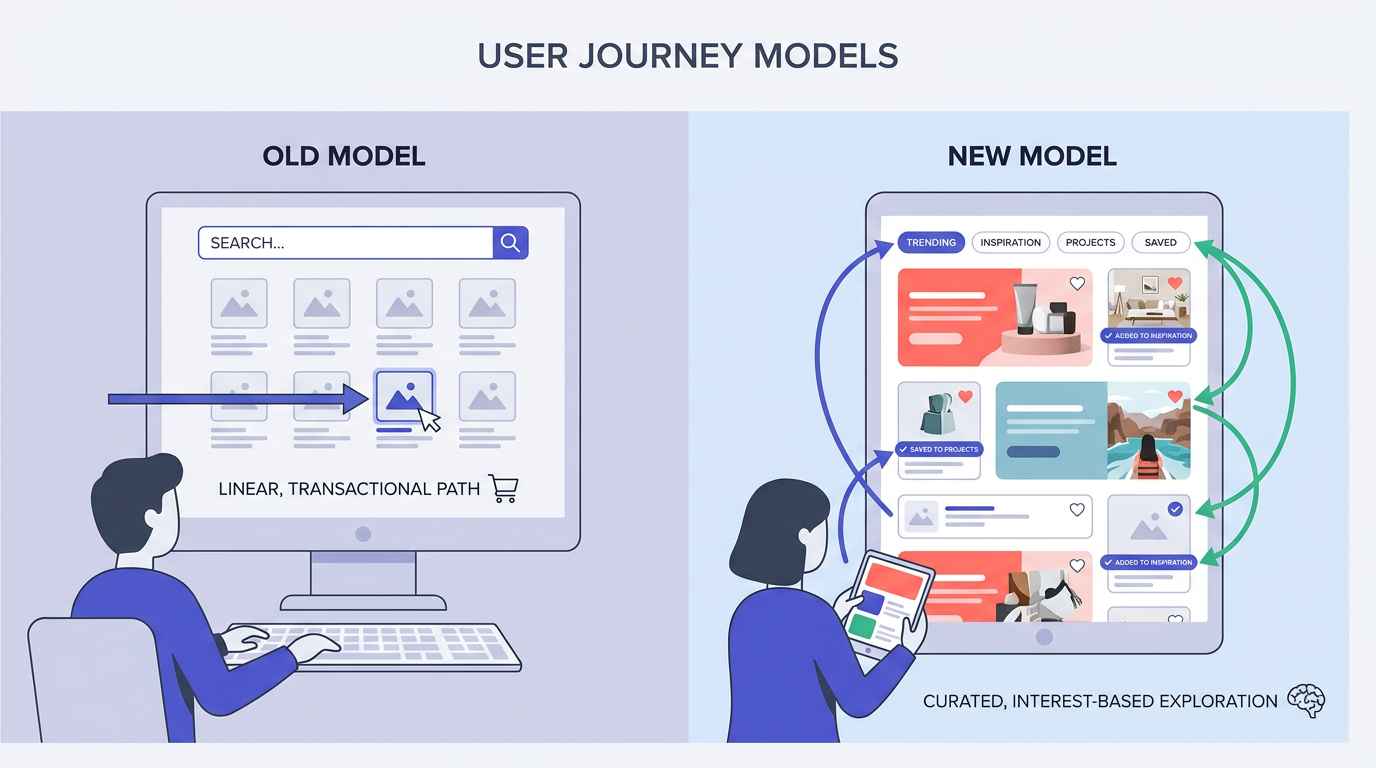
The old image search model was transactional by design. Someone arrived with a specific need, typed a query, got a grid of results, and clicked through to a source page. Publishers lived and died by click-through rate, and the optimization checklist mirrored that reality: descriptive alt text, keyword-aligned file names, and solid on-page context did most of the work.
The new model flips who starts the conversation. Google is initiating the discovery session, and your images have to earn a slot in a personalized feed before a user has expressed explicit intent. That reframes the competition from "is this relevant to the query?" to "is this interesting enough to be shown to someone who might care?" If that sounds familiar, it is because the traffic pattern starts to look less like classic search and more like the slow-burn, interest-driven engagement you see on platforms such as Pinterest.
This fits a wider shift in visual search SEO. Rivals like Bing AI Image Search have already moved past simple retrieval into AI-guided image experiences. Google's redesign is a pretty loud confirmation of where the category is headed: proactive, personalized visual discovery instead of reactive search results.
The Old vs. New Playbook for Image SEO
| Dimension | Old Playbook | New Playbook |
|---|---|---|
| Primary Goal | Answer a specific query | Create useful, distinctive images people may want to revisit or save |
| Key Metric | Click-through rate from search results | Google Images referral traffic, landing-page engagement, assisted conversions, and—if Google exposes them later—feed-specific interactions |
| Image Focus | Relevance and clarity to the query | Aesthetics, distinctiveness, and save-worthiness |
| Core Tactic | Keyword placement in alt text and file name | Establish visual authority across a topic |
| Referral Pattern | Direct, query-triggered clicks | Ongoing, interest-driven discovery traffic |
| Google has published no ranking guidance for the For You feed. The 'New Playbook' column represents reasoned implication based on how similar discovery platforms operate. |
How to Adapt Your Strategy for the Google Images Discovery Feed
Prioritize 'Save-Worthy' Visuals, Not Just Relevant Ones
Image SEO 2026 calls for a different creative brief than image SEO 2020. In a discovery feed, pauses, shares, and saves may become useful indicators of what users value. Google has not confirmed that these behaviours influence For You feed selection, so treat this as a hypothesis to test rather than a documented ranking factor. That pulls image quality, visual distinctiveness, and aesthetic appeal closer to the ranking conversation than they ever were in a pure query-response world.
The gut-check here is editorial, not technical. Would this image deserve space in a curated magazine spread on the topic, or is it just present? Is it aspirational, instructive, or visually sharp enough that a casual scroller stops and saves it? A travel brand built on generic stock shots is starting from behind against a competitor publishing original, location-specific imagery people actually want to collect.
Double Down on Foundational Image SEO
Save-worthy does not matter if Google cannot tell what your image is. Descriptive alt text, semantically accurate file names, structured data markup, and strong surrounding page context are still the price of admission for any Google Images surface. A feed cannot recommend what it cannot parse. The same structured signals that have always powered image indexation still underpin discoverability in AI-driven surfaces, as outlined in how to make content discoverable in AI engines.
Build Topical Authority with Visuals
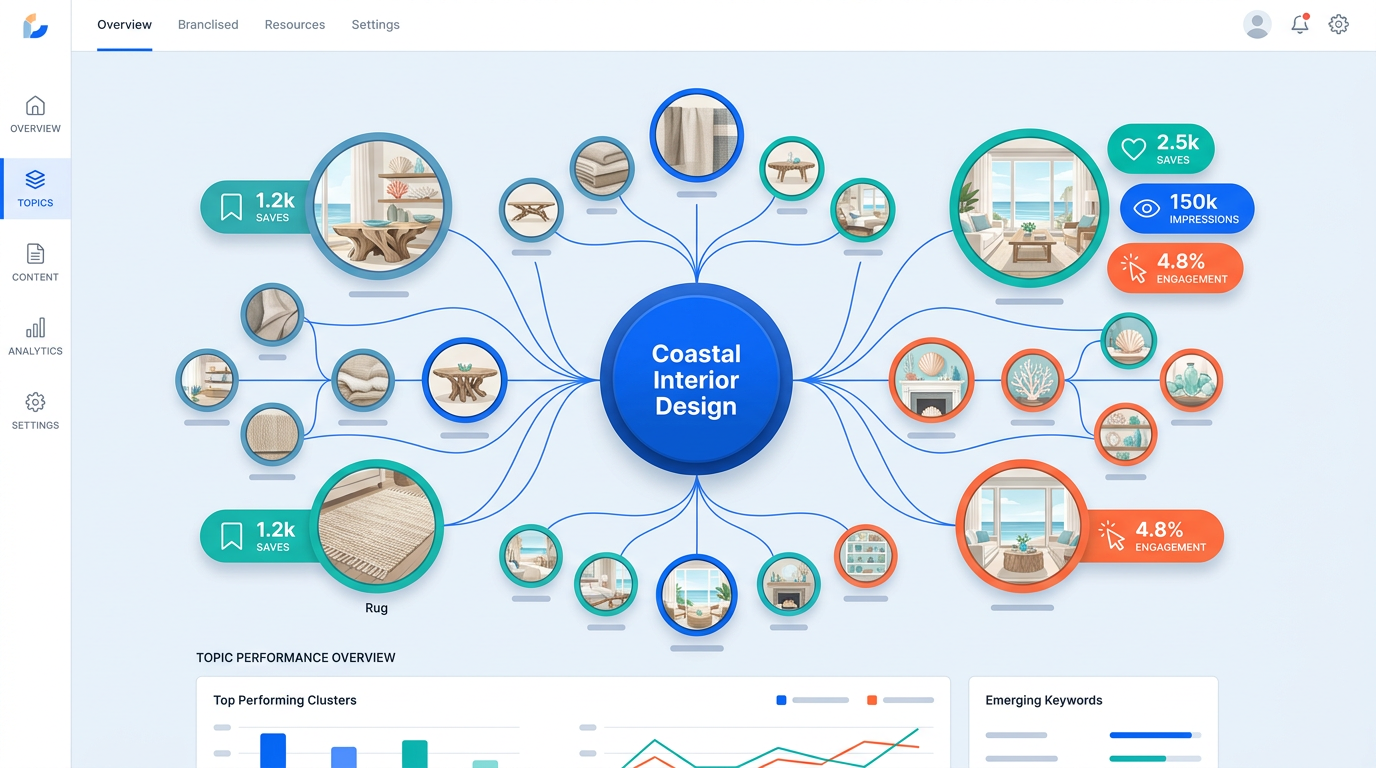
A site with fifty original, high-quality images that cover Tuscan villa design from multiple angles sends a louder signal than a page with two stock photos and well-placed keywords. Google has not explained whether topic-level image depth affects the For You feed. Still, building a coherent library of original, well-contextualized visuals gives Google more relevant assets to crawl and gives users more useful material to explore. If a user's interest profile points toward Tuscan architecture, the brand with real visual coverage is simply a better candidate for the For You feed than the brand that grazed the topic once.
This also lines up with how other visual surfaces across Google are evolving. The way Google Street View meets Project Genie is a reminder that real-world visual content is becoming interactive and indexable at a finer grain. Brands that treat image libraries as strategic assets (not page decoration) are better set up for whatever Google ships next. For paid amplification, the unglamorous details in Google Ads image specifications still matter as much as creative quality.
What This Is NOT: Common Misconceptions
Three things the Google Images redesign is frequently confused with:
- Not the AI image generator in AI Overviews. Google is separately adding image generation inside AI Overviews, powered by its Nano Banana model. That feature creates new images from text prompts when no suitable image exists online. It operates on a separate Search surface and has its own availability requirements, even though both updates began rolling out over the coming weeks. The discovery feed surfaces existing images from the web; it does not generate them.
- Not the end of traditional image SEO. Alt text, file naming, schema markup, and page context are still the foundation. Without them, your images are invisible to the systems that would place them in a feed. Save-worthiness and technical optimization work together; they are not competing priorities.
- Not a guaranteed traffic channel yet. The rollout is narrow: desktop, US, English, signed-in accounts only. Brands should treat this as a strategic signal and start tightening their visual libraries, but avoid rewriting an entire 2026 roadmap around a feature most of their audience cannot access yet. The top AI marketing trends for 2026 offer useful context for deciding what to fund first.
Warning: Google has published no ranking guidance for the For You feed as of July 2026. Every strategic implication in this article is reasoned inference based on how analogous discovery platforms operate. Monitor Google's Search Central blog for official guidance as the rollout broadens.
Google Images is only one part of an increasingly fragmented discovery journey. Vizup acts as an Organic Autopilot for modern discovery, helping brands monitor, create, optimise, publish, and learn across Search, Social, Communities, AI Answer Engines, and Local Discovery. Its combination of AI agents, human experts, and live SEO, pSEO, AEO, and GEO tools helps teams respond to changes like visual discovery feeds without managing every surface in isolation. Paid ads can be added as an amplification layer when a brand wants to extend the reach of proven organic assets.
Key Takeaways for Marketers and SEOs
What the Google Images redesign discovery feed means for your visual strategy:
- Google Images is shifting from a search utility into a personalized discovery engine via the new For You feed, announced July 14, 2026.
- The strategic center of gravity moves from query relevance to images that earn saves and sustained engagement.
- Foundational image SEO signals (alt text, file names, schema, page context) still matter. The feed cannot surface what it cannot understand.
- Visual topical authority counts: deep, original image libraries on a subject read as expertise to Google's discovery systems.
- Referral traffic from Google Images may start to look more like Pinterest-style discovery than direct search clicks.
- As of July 2026, the rollout is limited to desktop US English signed-in users. Start preparing, but size investment to actual reach.
Frequently Asked Questions
How is the Google Images 'For You' feed different from Pinterest?
Both use interest signals to power a scrollable feed, and both let users save images into organized collections. The real difference is where the content comes from: Pinterest largely surfaces what has been pinned inside its own ecosystem, while the Google Images For You feed pulls images from across the open web. For brands, that means your existing web-hosted images can show up in Google's feed without posting to a third-party platform, as long as Google can crawl and understand them.
Do I need to use specific schema markup to get my images in the discovery feed?
Google has not published For You feed ranking guidance as of July 2026. Still, applicable structured data—such as Product, Recipe or Article markup—can help Google understand the page and support eligible image-rich search appearances. Google has not said that structured data guarantees inclusion in the For You feed. In the absence of official rules, treating schema as foundational is the safest bet.
Will this new feed affect my traffic from Google Images?
Expect the shape of referral traffic to change over time. In a feed model, users can run into your images without searching for you, which can expand top-of-funnel exposure. The tradeoff is that the path from impression to site visit may be less direct than a query-triggered click. As the rollout expands, watch Google Images referrals in your analytics for shifts in volume, session depth, and conversion behavior.
Is the Google Images redesign available on mobile?
As of the July 2026 announcement, the redesign is rolling out on desktop in the US in English for signed-in Google Account users. Google has not confirmed a mobile timeline. Check Google's official Search Central blog for availability updates.
How can I see my own 'For You' feed on Google Images?
You will need to be signed into a Google Account and use Google Images on desktop in the US in English. If the redesign has reached your account, the homepage will open to a personalized gallery instead of the traditional search-bar-first interface. The rollout is gradual, so eligible users may not see it right away.
