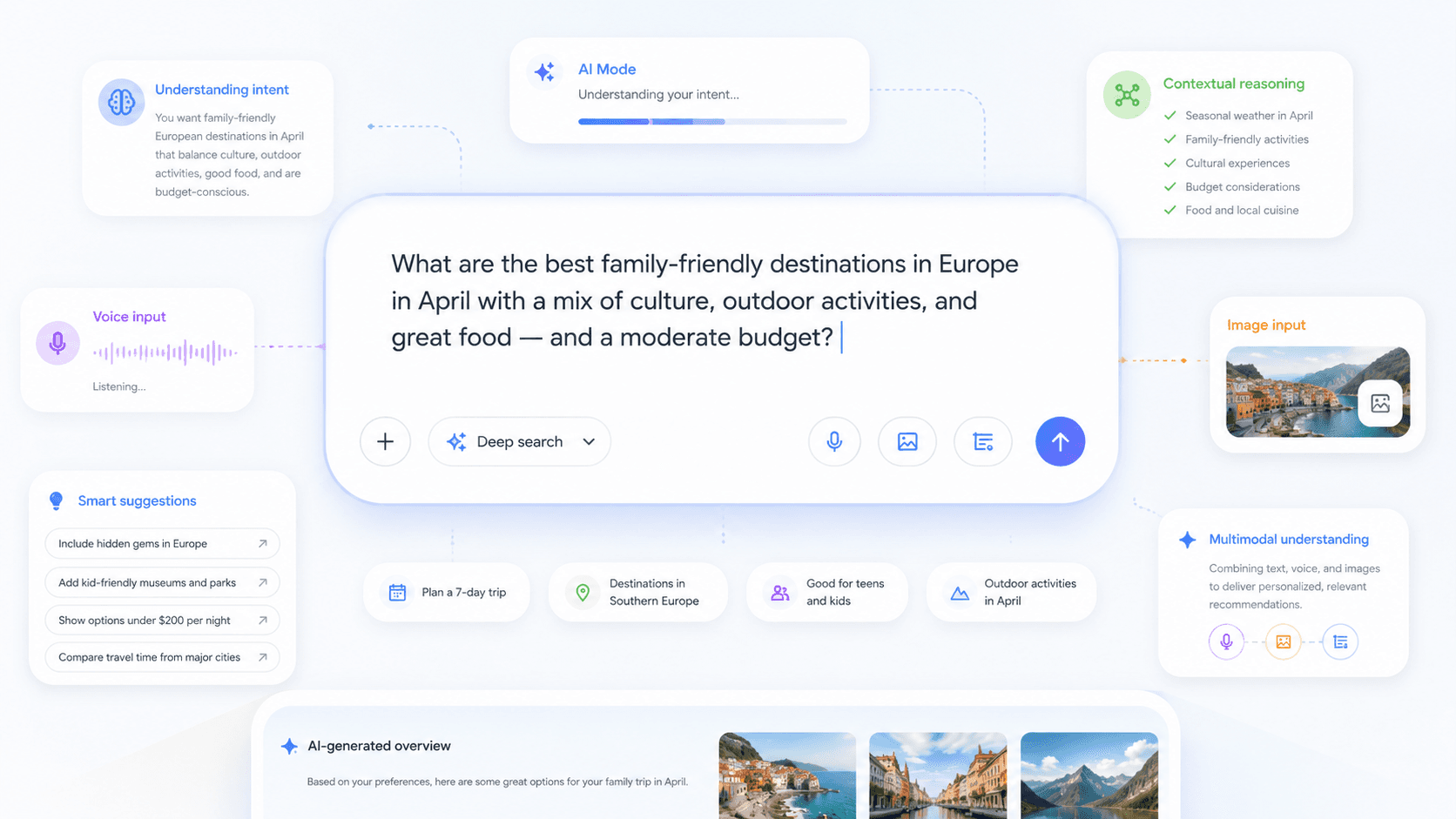
If you’ve been in this business for a while, you’re used to Google constantly fiddling with Search. This time, it’s not a tweak. Google has officially announced what its Head of Search, Liz Reid, called “the biggest upgrade to our iconic search box since its debut over 25 years ago.” The plain white rectangle is no longer the point.
Google’s new AI-powered Search box is built for conversation, multimodal input, and a sharper read on intent. That’s a shift from “find me pages that match these words” to “help me work through this problem and get something done.” If your work depends on being discovered online, this update changes how people may ask, refine, and complete searches.
What did Google announce?
At I/O 2026, Google’s message was straightforward: its most advanced AI is no longer bolted onto Search; it’s being built into it. This goes past AI Overviews. Google is remaking the search box itself into something that invites multi-part, messy questions instead of clipped keyword fragments. It’s an answer to how people have trained themselves to talk to chatbots, and Google is putting its flagship product behind that interaction model.
Gemini 3.5 Flash is now part of AI Mode
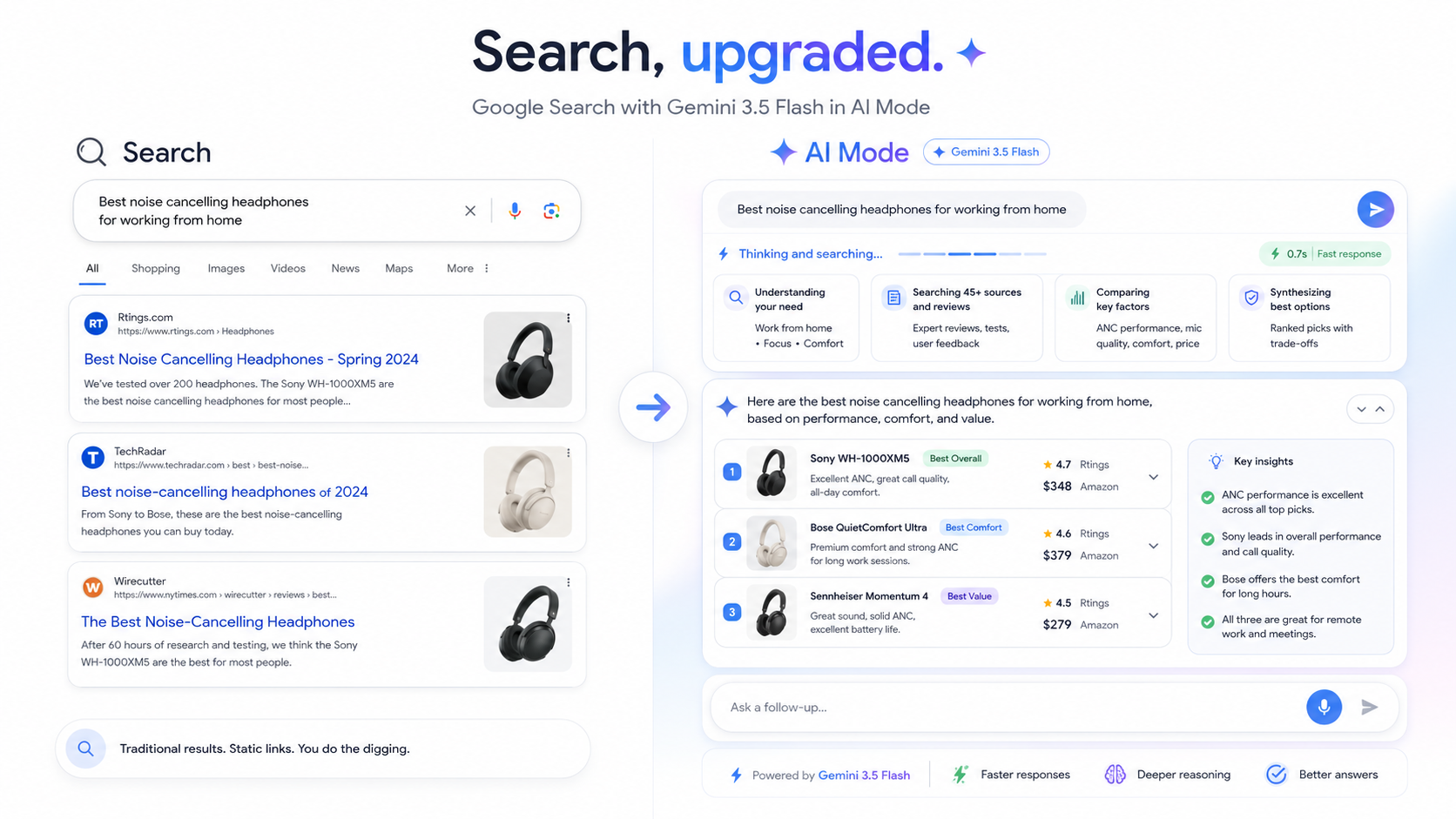
Google is also swapping in a new default brain for AI Mode: Gemini 3.5 Flash, rolling out globally. For users, that matters because the AI-driven search experience has already crossed one billion monthly users, and speed and responsiveness will shape whether people stick with it. If you want a metaphor, it’s closer to changing the engine mid-race than adding a new coat of paint. Google says Gemini 3.5 Flash will handle tougher reasoning and behave more like an agent, nudging Search toward a proactive assistant instead of a reactive list of results.
The Search box is no longer just for keywords
Here’s the real break with the past. For twenty-plus years, SEO has largely been the craft of compressing human curiosity into short, awkward keyword strings. Google is signaling that era is ending. The new search box is built for the way people actually think: half-formed, contextual, and conversational.
Google says the box will expand as you type, giving you room to write a real question instead of cramming it into a single line. The bigger change is what happens next: AI-powered suggestions that aim to steer you toward the query you meant, not just finish the word you started. That’s a move away from matching text patterns and toward interpreting (and shaping) a user’s intent.
Search is becoming multimodal
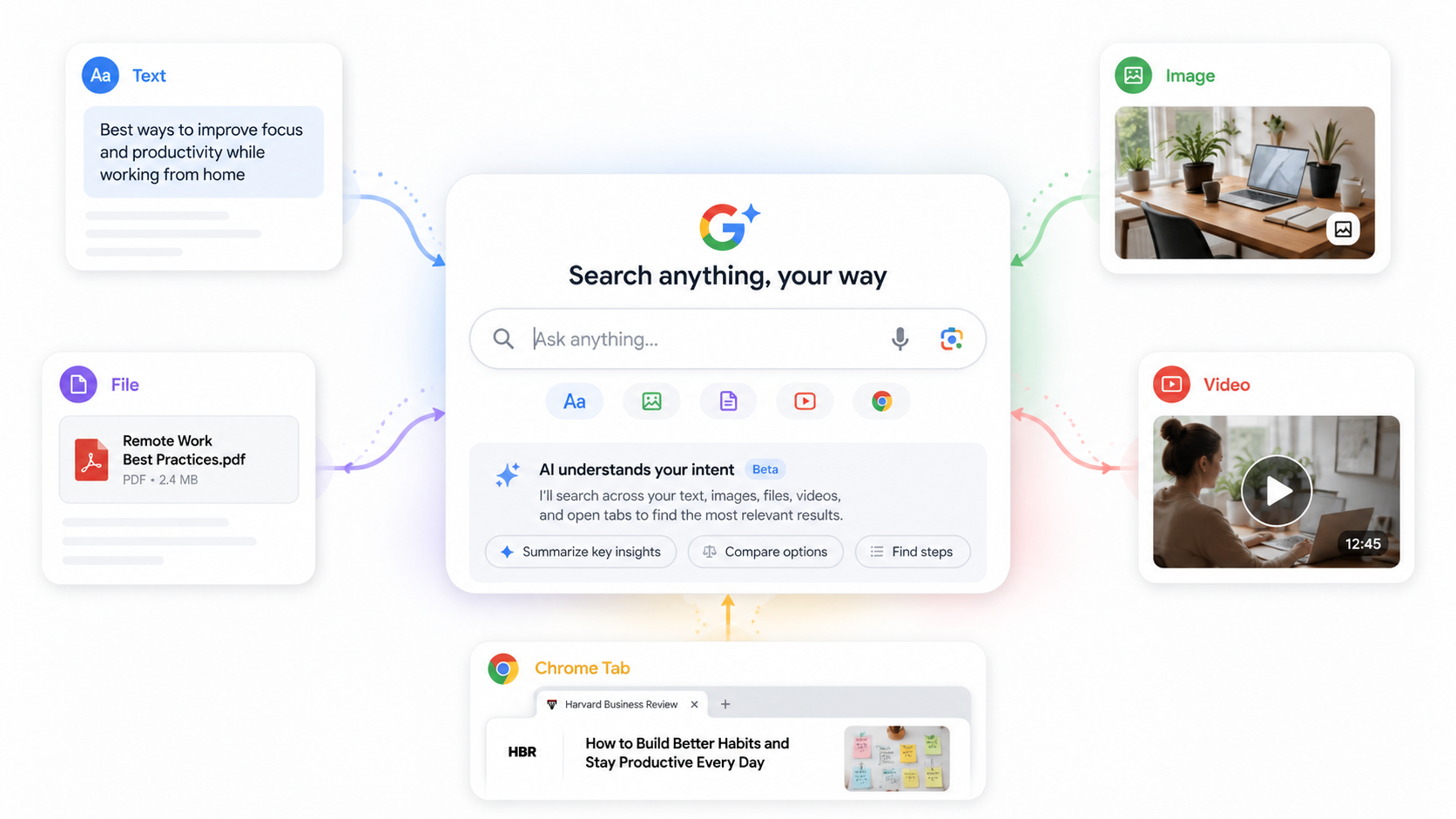
Search input is no longer limited to text. The new interface lets users mix text with images, files, videos, and even open Chrome tabs. In practice, that could look like uploading a lecture PDF, snapping a photo of a whiteboard, and asking Google to turn the pile into a study guide. That’s multimodal search, pushed out to a mainstream audience.
For SEO, the blast radius is obvious. Discovery won’t flow only through blog posts. Product photos, how-to videos, downloadable PDFs, structured data feeds, those can all become front doors. If your material isn’t machine-readable and richly described across formats, it’s easier for this new version of Search to pass you by.
AI Overviews and Conversational Search are merging
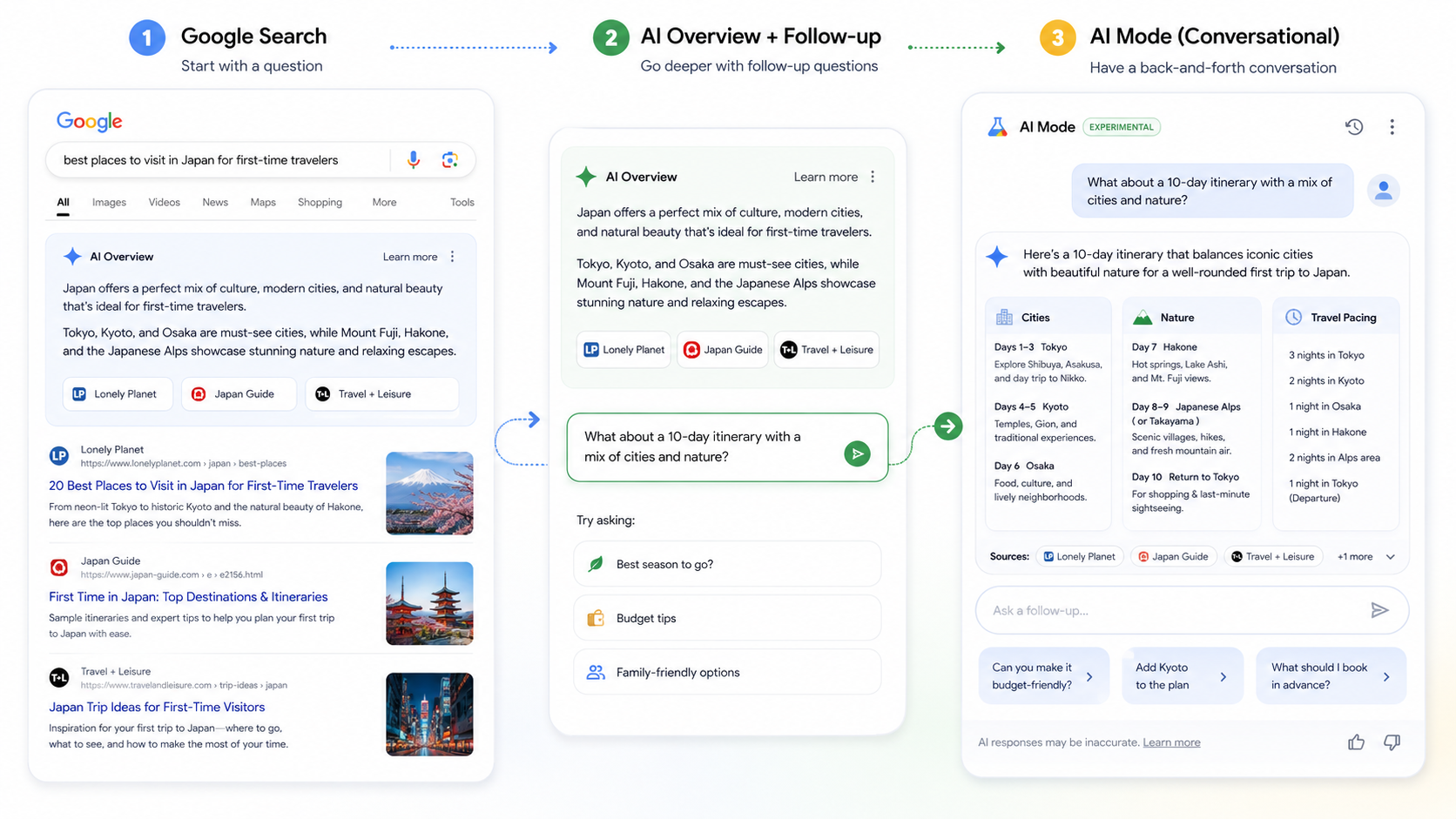
Google is also collapsing the gap between “give me a quick summary” and “let’s talk this through.” AI Overviews and AI Mode are being stitched into a single experience. Users can fire off a follow-up from inside an Overview and slide straight into a back-and-forth in AI Mode. Crucially, the system keeps the context from the original query, so a search session can build into something longer and more layered. The practical consequence: someone could absorb five of your ideas inside the AI interface and never touch a blue link.
Google Search agents are coming
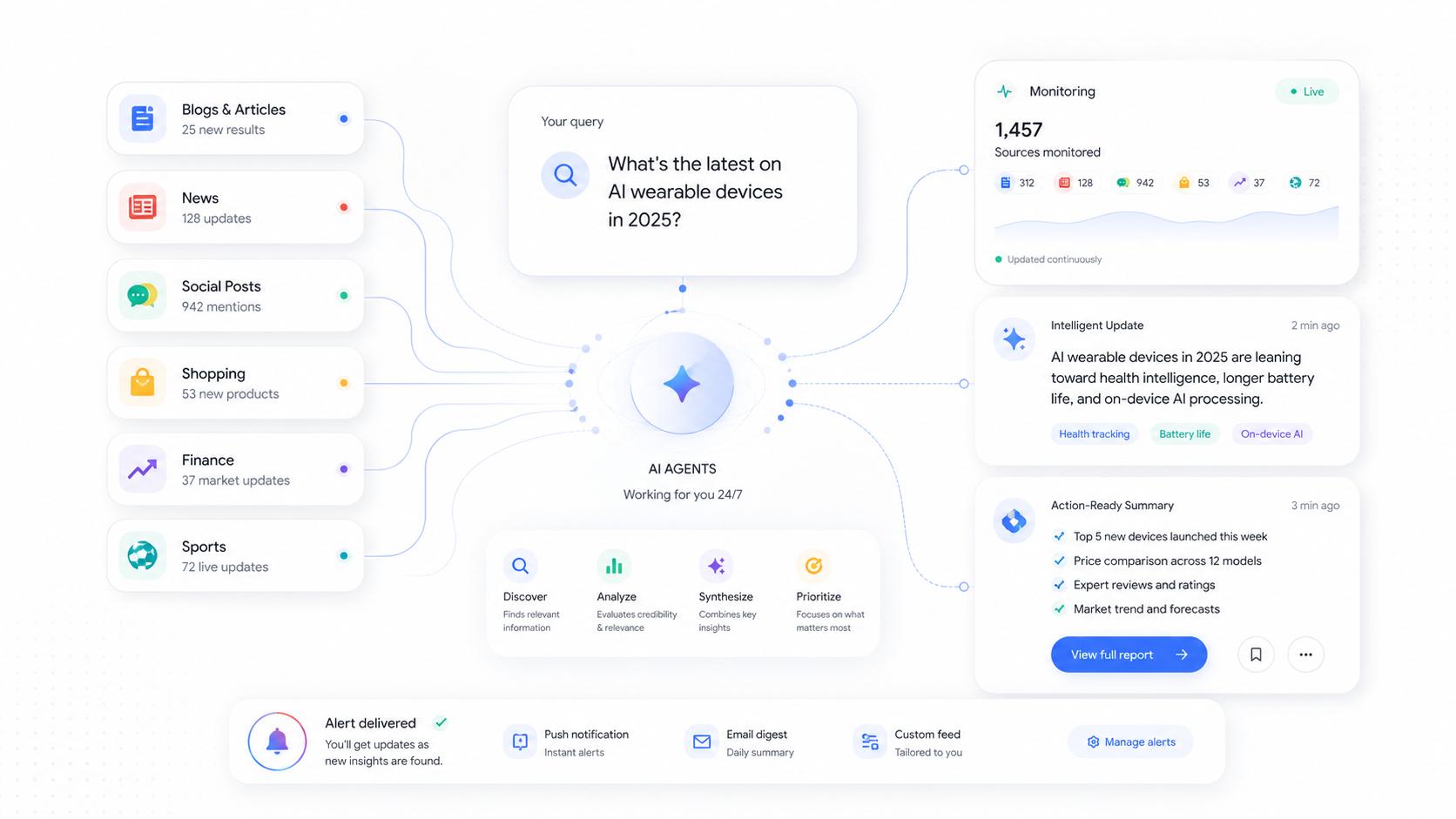
The most forward-looking piece is Google’s idea of “Search agents.” These would be persistent AI agents that watch a topic for you around the clock. You could hand one a job like: “find me an apartment in this neighborhood with these features and alert me when a listing under this price shows up.” The agent would then comb the web, blogs, social posts, and real-time sources and send back synthesized updates. It’s Google Alerts, rebuilt with reasoning and synthesis in the loop.
Google says these information agents will arrive first for Google AI Pro and Ultra subscribers this summer, a clear signal that the most agentic features will sit behind a premium tier. For SEO, it’s a preview of what “being found” starts to mean: not winning a single query, but becoming a source an agent can trust and reuse as it keeps monitoring.
What this means for SEO
Bluntly, the old keyword-only playbook is becoming less dependable. Exact-match keyword chasing was already fading as a strategy; now it looks even less useful as a standalone strategy. The work shifts from gaming phrasing to earning comprehension.
- Answer questions, not keywords: Write for the full, natural-language questions customers ask, not the stiff shorthand they used to type into a single-line box.
- Entities and structure are everything: Make your entity signals unmissable with clean citations and well-structured information. If Google’s AI can’t confidently identify who you are and what you do, you won’t show up.
- Multimodal matters: Images, videos, PDFs, and product data aren’t just supporting assets anymore, they can be the starting point. Clear metadata and strong context stop them from becoming dead weight.
- Visibility is the new ranking: Users can pick up your brand’s selling points inside an AI answer without ever landing on your site. Mentions and citation share inside AI responses will matter more than a tidy list of blue-link positions.
- Be useful enough for a follow-up: The new conversational flow rewards pages that open doors. If your content can support the next question, you stay in the thread; if it’s a dead end, you drop out.
How brands should prepare
This isn’t a moment for panic; it’s a moment for discipline. The brands that do well will be the ones that treat this like a roadmap and start tightening the basics now. None of the steps are exotic. Google is just making the cost of ignoring them much higher.
| Action Item | Why It Matters | First Step |
|---|---|---|
| Refresh key landing pages | Make the primary answer obvious so an AI can parse it quickly and cite it cleanly. | Rewrite H1s and opening paragraphs so they address the main user question immediately. |
| Build robust FAQs | Capture the long-tail, conversational questions people will ask directly. | Pull questions from customer support chats and sales calls. Don’t make them up. |
| Improve internal linking | Build topical depth and clarify how concepts connect across your site. | Review top pages and add links to and from closely related supporting content. |
| Clean up citations | Keep your name, address, and core facts consistent across the web. | Use a monitoring tool to find and fix conflicting brand details wherever they appear. |
| Structure product/service data | Remove ambiguity about what you sell, its features, and its price. | Add detailed product or service schema markup to all relevant pages. |
| Track AI visibility | Measure where and how your brand shows up inside AI answers, not just in rankings. | Use a tool to monitor share of voice within AI Overviews and AI Mode. |
Conclusion
Google Search is moving from keyword retrieval to an AI assistant that interprets, summarizes, and acts. For a long time, the goal was simple: rank #1 for a query. That target is too narrow now. The bigger opportunity is to become a source Google’s AI can consistently understand, cite, and recommend as a user’s questions branch and evolve. The future isn’t about tricking the system; it’s about being legible and reliable inside it.
That’s where tooling starts to matter. As behavior shifts, you need visibility into what the AI is surfacing and how it’s describing you. Tools like Vizup are built for this new reality, helping teams monitor their visibility in AI search, track brand mentions, and measure citation coverage. Because with the Google AI-powered Search box, “not found” increasingly means “not considered.”
Frequently Asked Questions
What is the new Google AI-powered Search box?
It’s Google’s revamped search interface: a dynamic, conversational box that goes beyond the traditional keyword bar. It can take text, images, and files, and it’s designed to handle complex, natural-language questions.
How does Gemini 3.5 Flash change Google Search?
Gemini 3.5 Flash is the faster model now running AI Mode in Google Search worldwide. It’s meant to respond more quickly, reason more effectively, and behave more like an agent.
What is multimodal search?
Multimodal search means a query can include more than text. With this update, users can combine images, videos, documents, and text in a single question.
Will this Google Search AI update kill SEO?
No, but it does rewrite the job. SEO shifts away from ranking for specific keywords and toward publishing authoritative, well-structured content that answers complex questions. Success will be measured by visibility inside AI answers, not only blue-link positions.
What are Google Search agents?
Search agents are designed to keep monitoring a topic on your behalf. Google’s AI would scan the web, news, and social sources and send synthesized updates, more like a personal information assistant than a one-off search.
