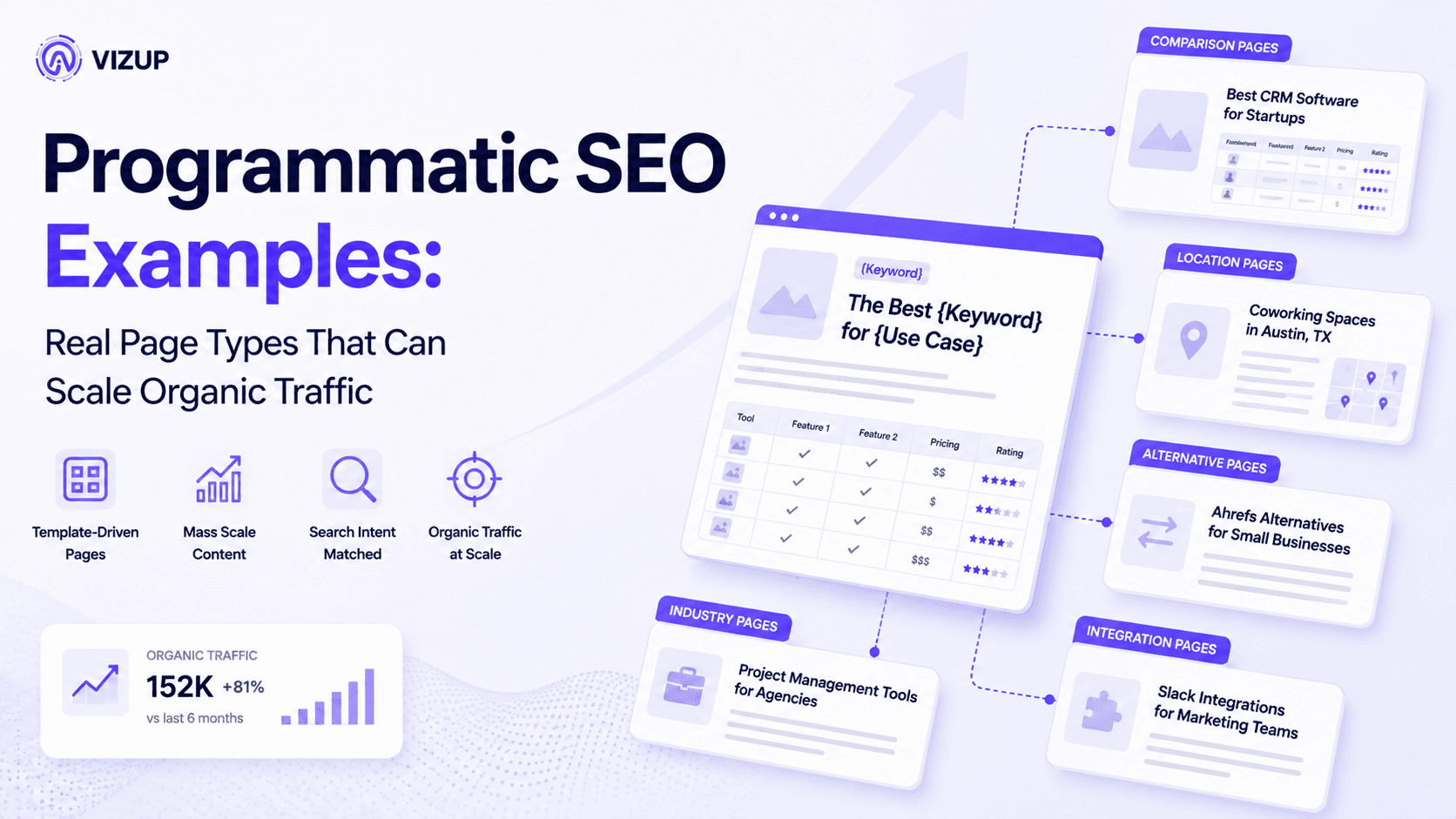
Programmatic SEO examples are hiding in plain sight. Zillow runs on an endless supply of property pages. Tripadvisor shows up for an absurd number of hotel and restaurant queries. Zapier is one of the most frequently cited examples of programmatic SEO at scale, using repeatable integration-page templates to capture highly specific search intent. None of that is accidental. It is what happens when a site turns structured data into pages that line up cleanly with search intent, at scale.
If you want the foundational mechanics, start with what programmatic SEO is and how it works. Here, the focus is narrower and more practical: the page types that consistently pull traffic, plus real-world examples and realistic expectations for what each format tends to produce. If you run SaaS, a marketplace, or a content-led site, you will likely recognize at least one pattern you can ship.
The Page Types at a Glance
Below is the short list of programmatic formats covered. These are the page types that show up again and again in pSEO builds that actually work:
- Integration or "App A + App B" pages (Zapier model)
- Location-based directory pages (Yelp, Tripadvisor model)
- Comparison pages ("X vs Y" format)
- Use-case or template library pages (Canva, Notion model)
- "Best X in Y" listicle pages
- Data or statistics pages
- Glossary and definition pages
- Job listing or marketplace pages
| Page Type | Real Example | Est. Monthly Traffic Potential | Difficulty to Execute |
|---|---|---|---|
| Integration pages | Zapier (800K+ pages) | 500K+ | Medium |
| Location directory pages | Tripadvisor, Yelp | 1M+ | Medium-High |
| Comparison pages | G2, Capterra | 50K-500K | Low-Medium |
| Template/use-case pages | Canva, Notion | 200K+ | Medium |
| Best X in Y pages | NerdWallet, Bankrate | 100K-1M | Medium |
| Data and statistics pages | Statista, Wisevoter | 50K-300K | Low |
| Glossary pages | HubSpot, Semrush | 20K-200K | Low |
| Job/marketplace pages | Indeed, Glassdoor | 500K+ | High |
| Traffic estimates are illustrative ranges based on publicly reported data and industry analysis. |
Integration Pages: The Zapier Blueprint
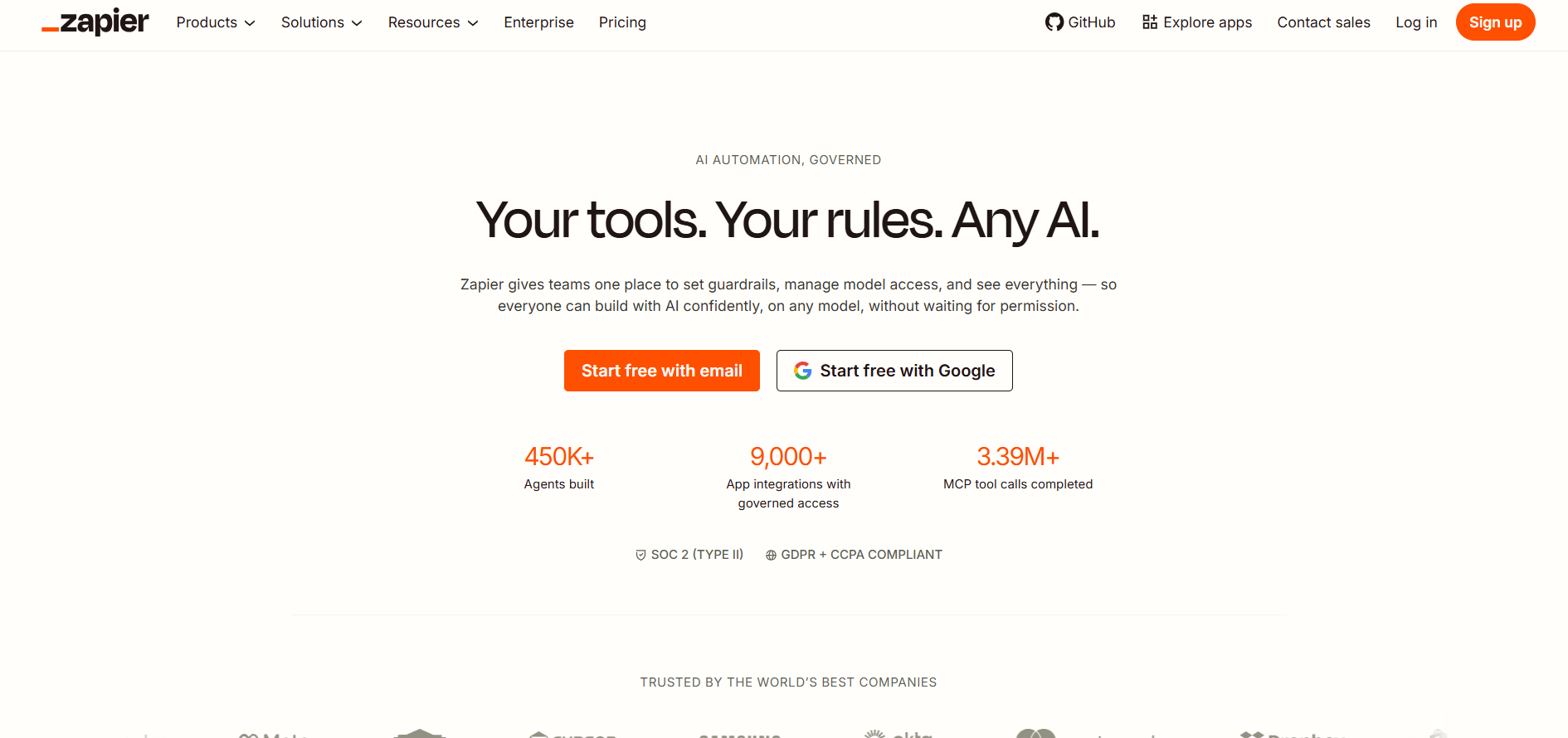
Zapier is the example everyone reaches for when they talk about programmatic SEO. The pattern is almost boring in its simplicity: every time Zapier can connect two apps, it publishes a page like "Connect Gmail + Slack." Repeat that across a massive catalog of indexed integration pages, each aimed at a specific, high-intent query (Marketing Enigma AI, 2026).
The reason it works is intent, not volume. A person searching "connect Trello to Google Sheets" is already trying to do the thing. Zapier meets them at the exact moment they want an answer. If your SaaS has real integrations, you can borrow the same structure: a clear headline, a plain-English description of what the connection enables, a handful of common workflows, and a CTA. The content is mostly database-driven; the template does the heavy lifting.
Tip: The integration page model works best when your product genuinely connects two or more things. Forced integrations with no real user demand will produce thin pages that hurt more than they help.
Location Directory Pages: How Tripadvisor and Yelp Dominate Local Search
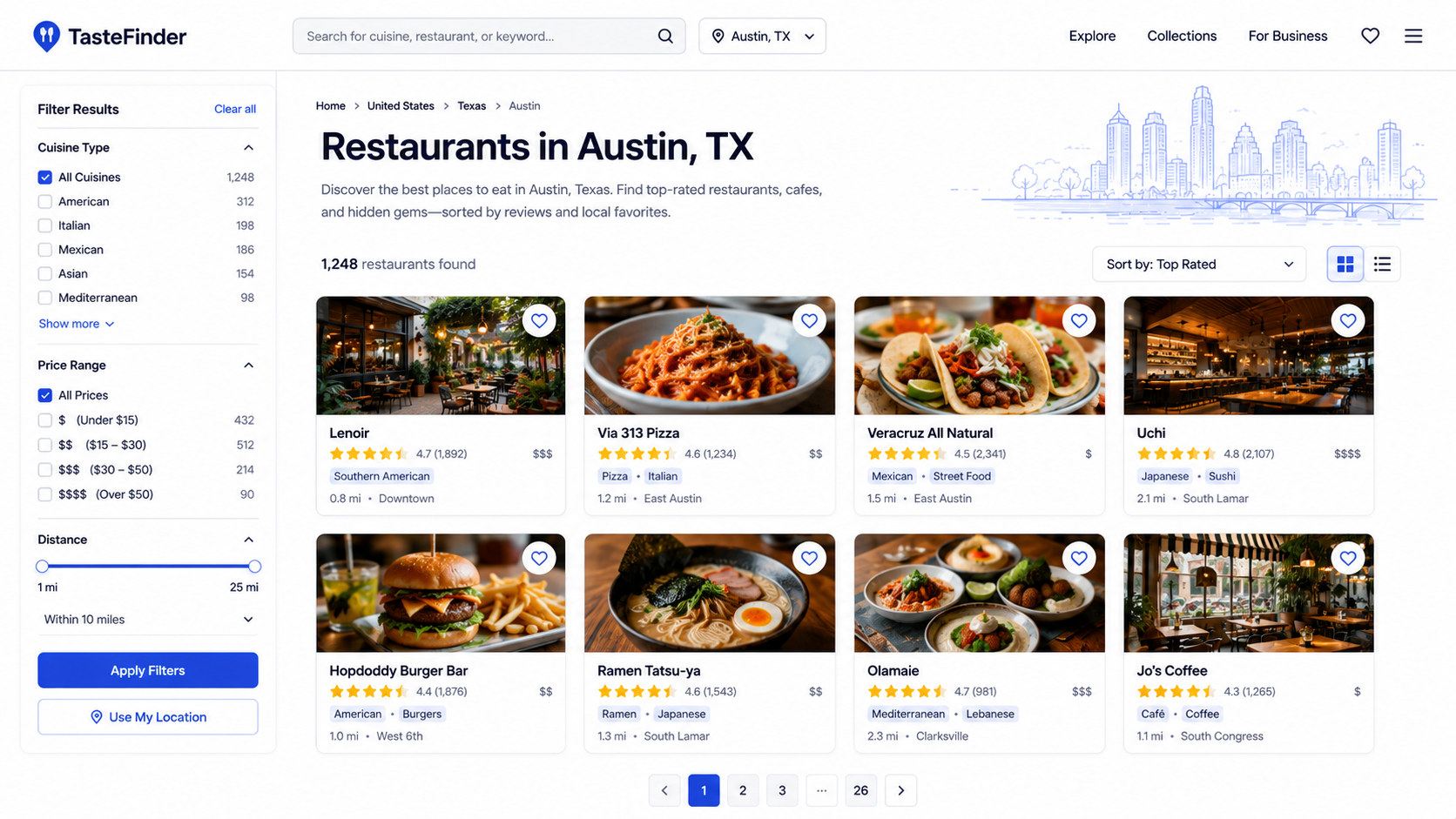
Zillow, Yelp, and Tripadvisor are built around the same scalable trick: turn geography into a page tree that search engines can crawl. The hierarchy is familiar: country > state/region > city > neighborhood > category. Every branch becomes a landing page. Queries like "best Italian restaurants in Austin, TX" or "hotels near Times Square, New York" map neatly onto that structure.
The upside is massive reach, and the trade-off is equally clear: you need real data. That means a structured dataset with accurate locations, consistent categories, and enough depth to justify each page. The versions that win long-term usually have user-generated content (reviews, photos, ratings) layered on top, which keeps pages fresh and makes them harder to dismiss as thin. If you are building a local directory or marketplace, this is the highest-ceiling pSEO play for raw organic demand.
Comparison Pages: The "X vs Y" Format That Converts
G2 and Capterra have turned comparison queries into an SEO moat. "Salesforce vs HubSpot," "Notion vs Confluence," "Zoom vs Microsoft Teams" - each is a page generated from a structured product database. The intent is bottom-funnel by default: people do not search "X vs Y" for fun. They search it when they are close to picking a tool.
For most SaaS teams, this is one of the easiest formats to stand up because the inputs already exist. You know the competitive set, and you likely have feature-level notes somewhere internally. A solid template looks like a side-by-side table, a short summary of differences that actually matter, and a verdict section that helps the reader decide. Then you scale it systematically: one page per meaningful competitor pair. With 20 notable competitors, that is 190 distinct comparisons generated from the same dataset.
The catch is tone. If the page reads like an ad, it usually performs like one. The comparisons that hold rankings tend to admit real trade-offs, including places where the competitor is stronger.
Template and Use-Case Pages: The Canva and Notion Model

Canva is the cleanest example of the template-library play. Search for "Instagram story template" or "resume template for graphic designer" and Canva is usually right there. Each template gets a dedicated URL, unique title tag, and its own metadata. The template asset is the core data. The page adds the context search engines want: what it is, who it is for, and a path to adjacent templates.
Notion runs a similar play with its template gallery, where community submissions turn into indexable pages that target specific workflow queries. The clever part is the supply chain: users create a meaningful portion of the content, while Notion captures the compounding SEO benefit. If your product ships assets like templates, themes, plugins, or presets, this is one of the most natural programmatic page types to build because the content is already part of the product.
Info: Template pages work best when each page targets a specific, searchable job-to-be-done. "Marketing plan template" outperforms "business template" because the intent is clearer and the competition is more targetable.
"Best X in Y" Pages: NerdWallet's Traffic Engine
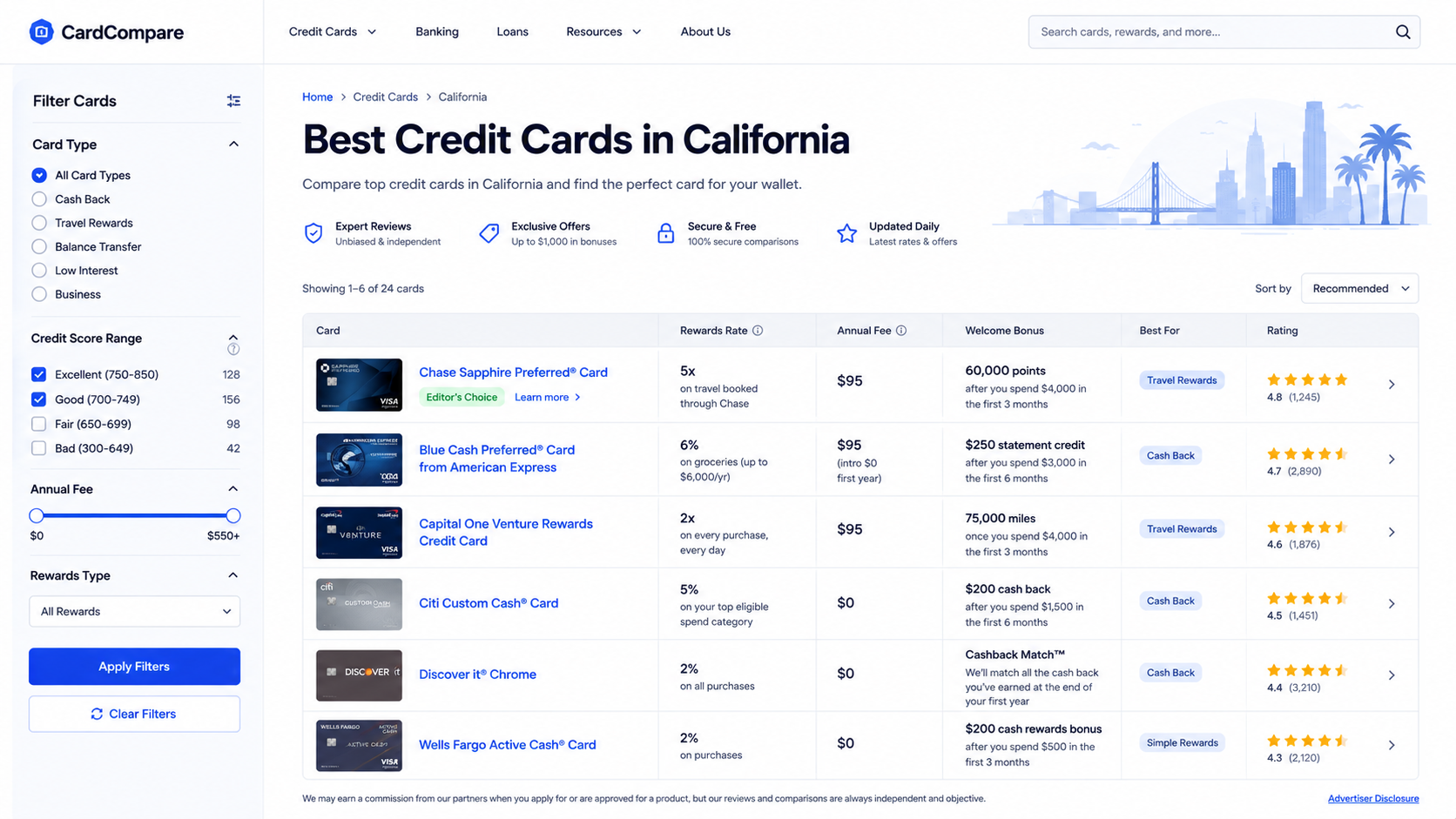
A big chunk of NerdWallet's footprint comes from "best X in Y" pages. "Best savings accounts in Texas," "best mortgage rates in 2026," "best credit cards for travel rewards" - the layout stays consistent while the query changes. Swap the product category and the qualifier (location, audience, timing), and you can generate a large set of pages without inventing a new content format every time.
Finance just makes the pattern obvious. The same structure shows up in "best hiking trails in Colorado," "best project management tools for remote teams," and "best coffee shops in Brooklyn." The data bar is manageable: you need a ranked list and enough detail to defend the ordering. The versions that tend to win are not just a database export in list form; they include real editorial judgment so the page reads like a recommendation, not a directory.
Data and Statistics Pages: Wisevoter and the Power of Public Datasets
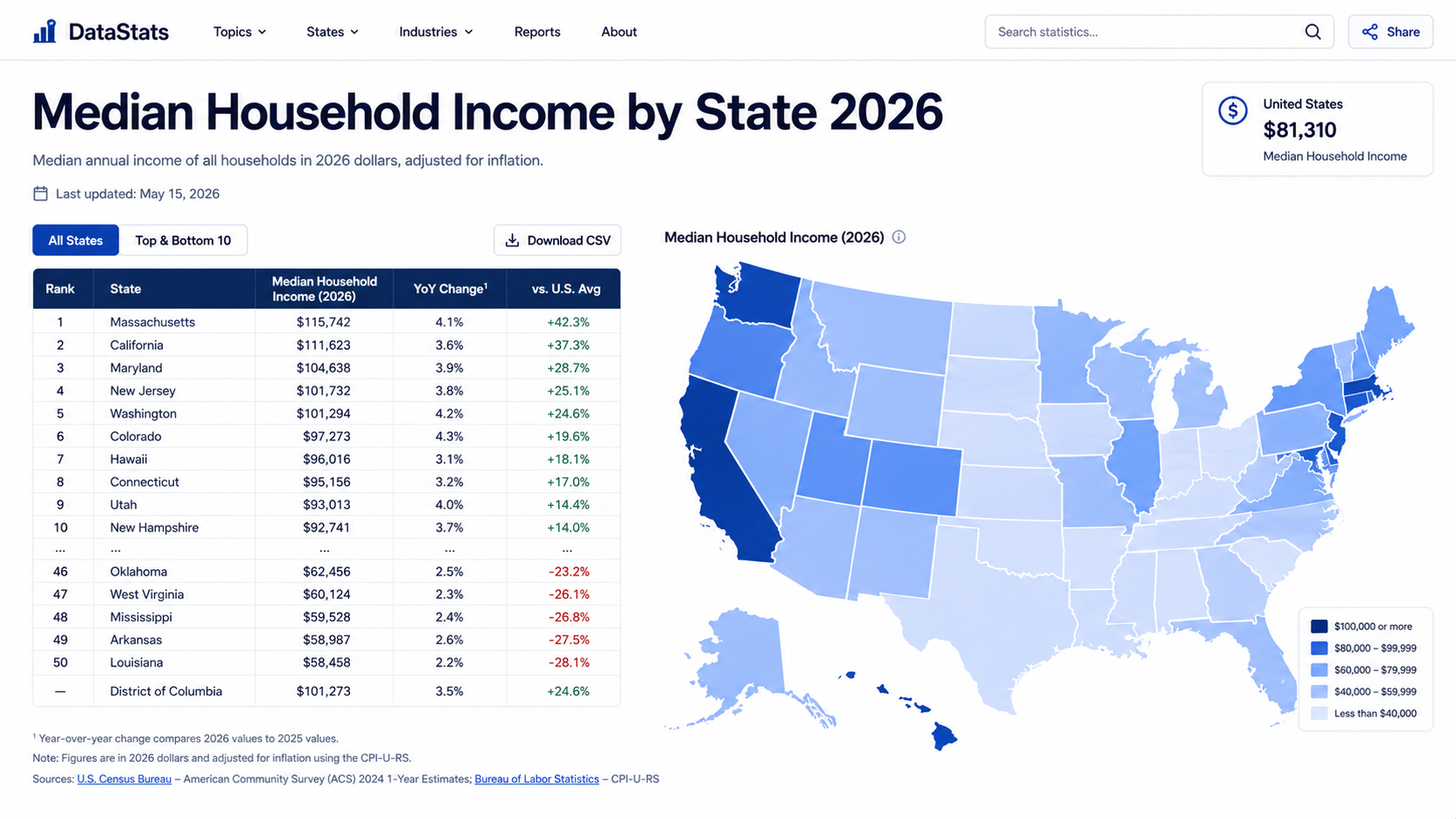
Wisevoter and World Population Review show what happens when you turn public datasets into pages people can actually use. The play is straightforward: take a dataset (census data, crime stats, economic indicators), slice it by geography or category, and publish a page per slice. Queries like "average income in Ohio," "crime rate in Phoenix," and "population of Austin, TX" tend to have steady demand and clear informational intent.
This category usually wins on efficiency. Individual pages rarely match the upside of a giant location directory, but the build cost is low and the maintenance burden is light. Public data is available, and the template can stay simple: a headline, a table, a short interpretation, and links to related slices. If you are running a research-adjacent brand, this is one of the more straightforward programmatic SEO examples with durable value. When you are publishing thousands of URLs, proper sitemap examples matter for indexation.
Glossary Pages: HubSpot's Long-Tail Vocabulary Play
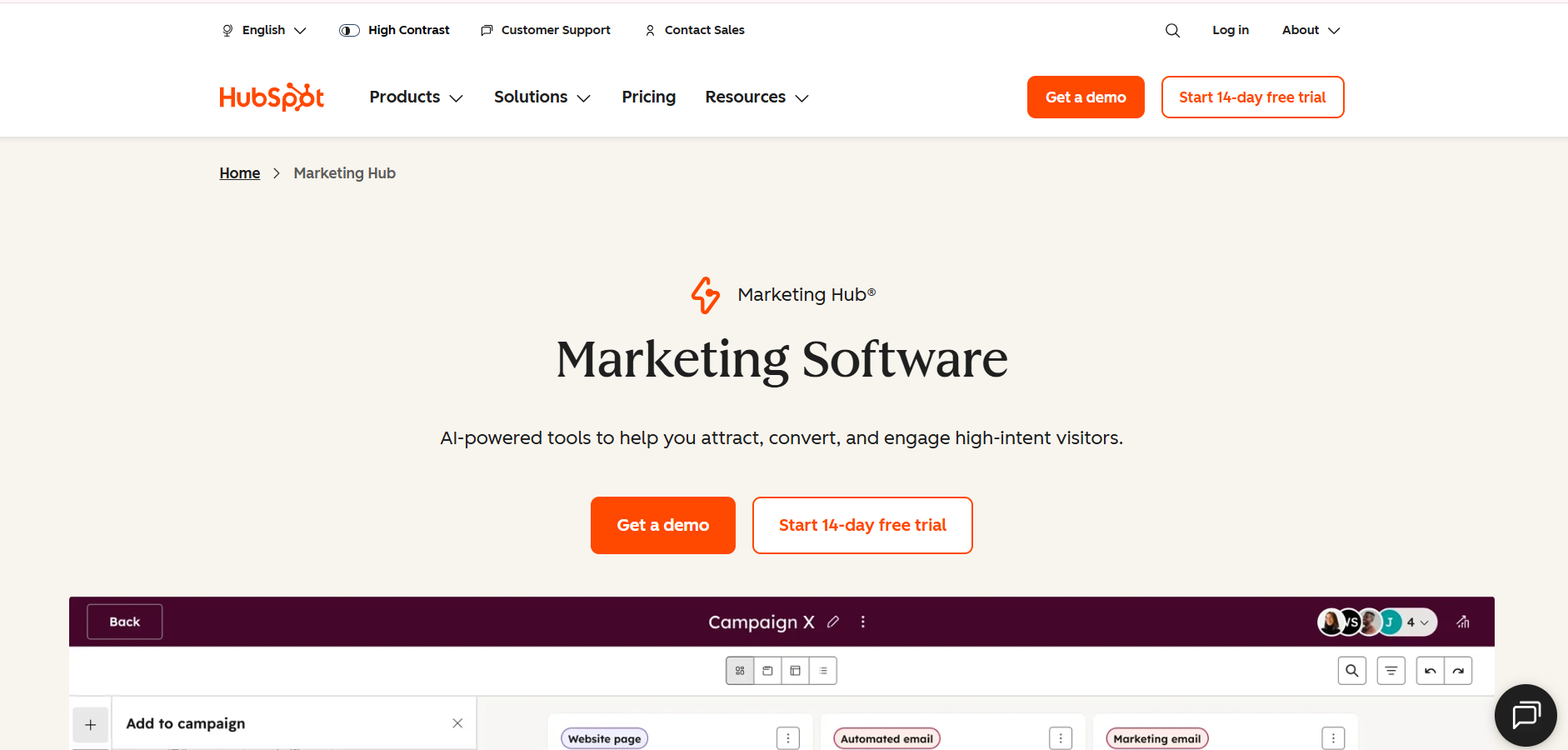
HubSpot's marketing glossary is a classic example of aggregation doing the work. Hundreds of definition pages target queries like "what is a conversion rate" or "what is a sales funnel," and the combined effect is meaningful top-of-funnel traffic. The template is simple: the term, a definition, related concepts, and links into deeper content.
Glossaries shine in industries where jargon is dense and people constantly look up terminology: SaaS, legal tech, fintech, healthcare. One term rarely drives huge traffic on its own, but 500 or 1,000 terms add up quickly. These pages also attract backlinks in a fairly natural way because other writers cite definitions. When measuring organic visibility for a glossary rollout, impression share across the cluster is usually a better signal than clicks per page.
Job and Marketplace Pages: The Indeed and Glassdoor Approach
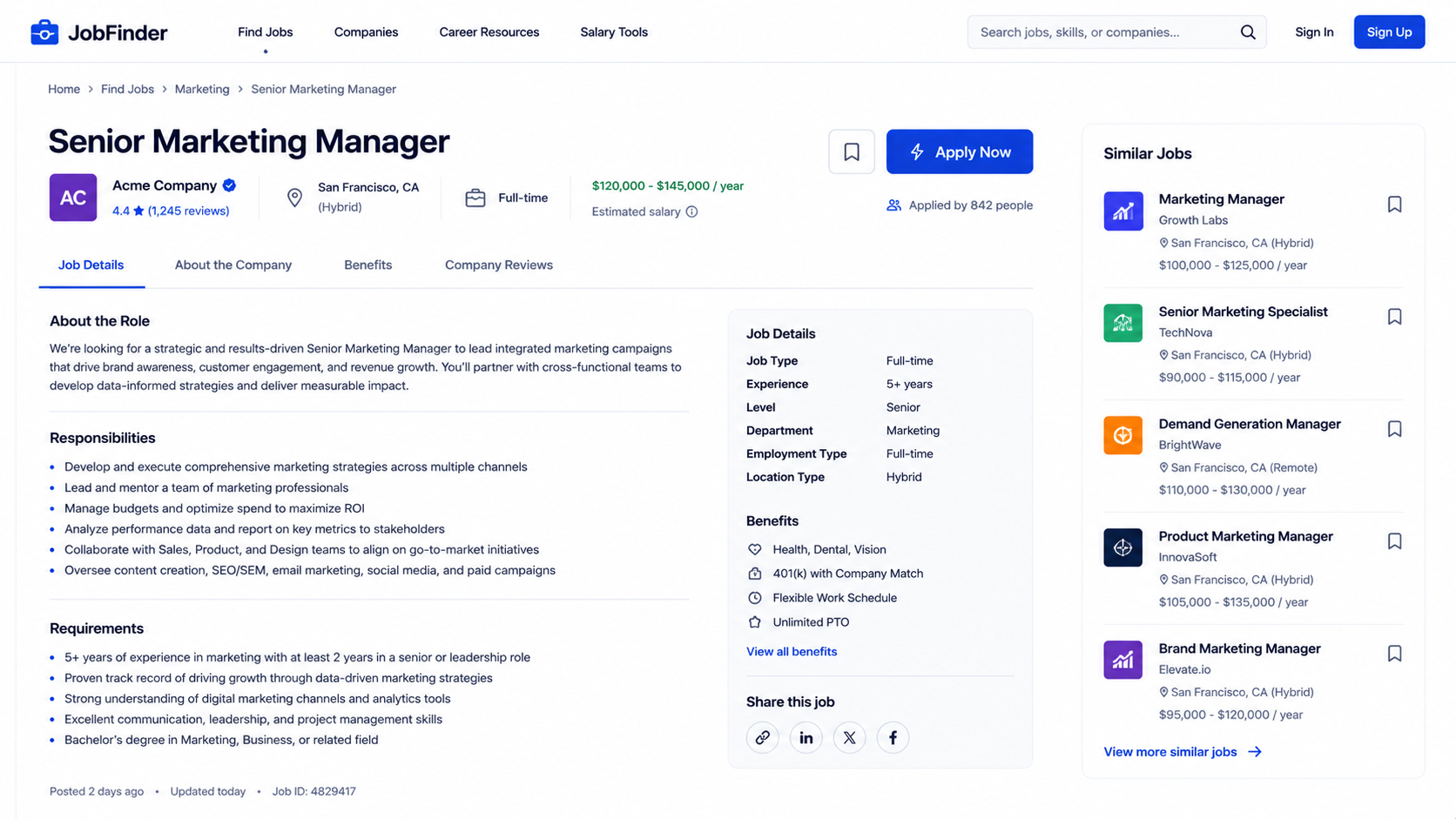
Indeed, Glassdoor, and LinkedIn rank for job searches because they turn every listing into a crawlable page. "Software engineer jobs in Seattle," "remote marketing manager positions," "entry-level data analyst roles in Chicago" - each query maps to a distinct URL with its own content. Employers supply the raw data; the platform structures it, templates it, and makes sure search engines can reach it.
The same logic applies to almost any listings marketplace: real estate, freelance services, rentals. Compared to glossaries or stats pages, execution is harder because the inventory moves. Listings expire, new ones appear, and stale pages can balloon into index bloat. Crawl budget management becomes an operational problem, not a footnote. Still, the traffic ceiling is among the highest across programmatic page types when the data pipeline is healthy.
What the Numbers Actually Look Like
When programmatic SEO is executed well, the upside can be significant because a single successful template can unlock hundreds or thousands of search-aligned pages. The teams that see the best results usually focus on data quality, search intent alignment, and ongoing maintenance rather than raw page volume. Programmatic SEO is rarely successful when pages exist only to target keywords. It works when each page delivers information, utility, or context that users genuinely need.
That upside explains the investment. The failure mode is also consistent: teams ship thousands of pages without a dataset that earns the right to exist. The programmatic case studies that keep performing share a common thread, they deliver utility or data users cannot get as easily elsewhere. Scraped content poured into a template tends to collapse after a quality update. Original data, user-generated content, or a genuinely unique combination of variables is what separates compounding traffic from a temporary spike.
Note: Programmatic SEO fits into a broader organic marketing beyond SEO strategy. As AI-powered search grows, consider how your pages will perform for LLM referral traffic as well as traditional search.
Tools That Support Programmatic SEO at Scale
Shipping any of these page types means you need systems for your pSEO strategy, from keyword research and content production to publishing and measurement. A few platforms worth having on your radar:
- Vizup. As an Organic Autopilot for modern discovery, Vizup is built for brands that need a complete pSEO solution. It combines AI agents and human experts to help you monitor, create, optimize, and publish content across Search, Social, Communities, AI Answer Engines, and Local Discovery. Its live pSEO, AEO, and GEO tools make it a strong choice for executing a sophisticated strategy.
- AirOps. Offers a dedicated programmatic SEO strategy template for keyword clustering and page planning.
- Search Atlas. Provides structured content workflows and SERP data useful for building and monitoring large page sets.
- Gushwork. Focuses on AI-assisted content operations for scaling page production.
- TryProfound. Covers answer engine and AI search monitoring alongside traditional SEO metrics.
There is not a single tool that covers the entire programmatic stack end to end. Most teams stitch together a keyword platform, a generation layer, a CMS, and a monitoring product. Some brands opt for an SEO agency specializing in pSEO to manage the process. Monitoring is the piece that gets skipped most often, and it is usually the piece that hurts later. With thousands of URLs, you need tight feedback loops on what is getting crawled, indexed, and picking up impressions so you can iterate without guessing. This is where an Organic Autopilot like Vizup fits in, by connecting the strategy, creation, publishing, and learning phases into a single system.
Which Page Type Is Right for Your Situation?
| If you are building... | Start with this page type | Why |
|---|---|---|
| A SaaS product with integrations | Integration pages | High intent, clear template, scales off existing integration data |
| A local marketplace or directory | Location directory pages | Highest traffic ceiling for geo-targeted queries |
| A software review or comparison site | Comparison pages | Bottom-funnel intent, strong conversion potential |
| A productivity or design tool | Template/use-case pages | Builds on an existing library of assets inside the product |
| A finance or research site | Best X in Y or statistics pages | Scales across informational and transactional queries |
| A B2B SaaS or agency | Glossary pages | Low lift, builds topical authority over time |
| A talent or services marketplace | Job/marketplace pages | Direct match to listing-based search demand |
| Use this as a starting framework, not a rigid rule. Many successful sites combine two or more page types. |
Frequently Asked Questions
What are the best programmatic SEO examples for SaaS companies?
For SaaS, the strongest programmatic SEO examples tend to be integration pages (Zapier-style) and comparison pages (G2-style). Integration pages capture high-intent searches from users trying to connect tools. Comparison pages pull bottom-funnel traffic from people evaluating options. Both rely on structured data most SaaS teams already have.
How many pages do you need for programmatic SEO to work?
There is no fixed number of pages required for programmatic SEO to work. Success depends more on the quality of the underlying data, the usefulness of the pages, and how well the template aligns with search intent. Many teams start with a focused set of pages, validate performance, and then expand as they learn what works.
What makes programmatic SEO templates effective?
Good programmatic templates do one job: satisfy the same intent, cleanly, on every page they generate. Keep the template lightweight (clear headline, the core data or utility, supporting context, internal links). The variation should come from the underlying data. Templates break when the variable inputs are too thin or too repetitive, which creates duplicate-content problems.
How do I avoid thin content penalties with scalable page examples?
Treat uniqueness as a requirement, not a nice-to-have. Each page should deliver genuinely distinct data or utility, which is why user-generated content, proprietary datasets, or a specific variable mix (location + category + price range, for example) tends to work. Skip keyword combinations with no real demand, and use noindex or canonical tags to control low-value variants.
Are there programmatic case studies showing traffic results?
Yes. Zapier's integration-page model is one of the most widely cited examples of programmatic SEO at scale, while Tripadvisor and Yelp demonstrate how directory structures can capture large amounts of search demand. The most successful examples share the same pattern: structured data, strong search-intent alignment, and ongoing maintenance rather than one-time page generation.
