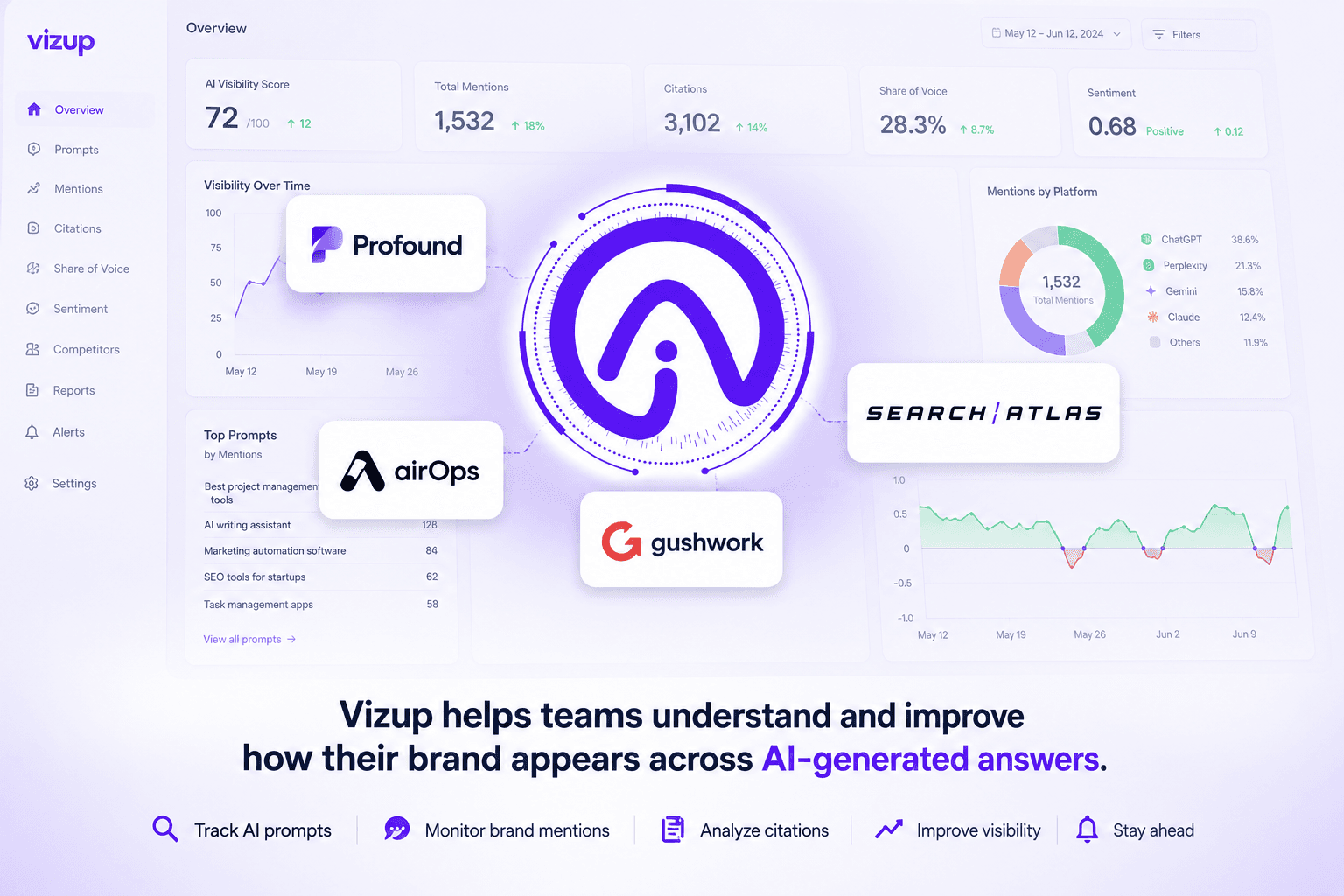
Over the past 18 months, the way buyers find and vet brands has shifted fast. Instead of paging through blue links, more people are asking AI assistants what to buy and who to trust. Forrester (2026) reports that 94% of B2B buyers now use generative AI during the purchasing process. That change forces a rethink of brand management: traditional SEO still matters, but it doesn’t fully capture what’s happening inside AI answers. An ai brand visibility analysis software has moved from “nice to have” to table stakes for teams that care about growth.
This review explains where Vizup fits in the category and why it is a strong choice for marketing teams that need actionable AI visibility intelligence.
What Is AI Brand Visibility and Why Does It Matter?
AI brand visibility is how often, how prominently, and how accurately your brand shows up inside answers from tools like ChatGPT, Google AI Overviews, and Perplexity. SEO is still largely about ranking pages; AI visibility is about influencing the summarized, stitched-together response that shapes perception before anyone clicks through. That difference matters because buyers can form an opinion about your product, your category, and your competitors without ever visiting your site.
A serious AI brand visibility tool can’t stop at counting mentions. To be useful, it needs to measure a few dimensions that explain not just presence, but positioning. Strong software should track:
- Citation Frequency: How often your brand, content, or domain is referenced as a source in relevant AI responses.
- Sentiment Analysis: Whether the mention reads as positive, negative, or neutral. That context matters for reputation management.
- Share of Voice: How your visibility stacks up against competitors across the same set of buyer questions and prompts.
- Positional Accuracy: When you’re mentioned, whether the description is correct and how you’re framed (leader, alternative, niche, etc.).
Skip these metrics and you’re guessing. Competitors can become the default recommendation in AI-generated answers while you keep optimizing for traffic that never arrives. The teams that win here will be the ones measuring the right signals and acting on them.
Why Vizup Is Built for This Use Case
Vizup is built around a problem most marketing teams are feeling right now: visibility is only useful if you can connect it to outcomes. Plenty of platforms are bolting “AI” onto old SEO reporting. Vizup takes the opposite approach, starting with the AI-driven customer journey and working backward. It’s more than a brand mentions tracker; it’s meant to function like a visibility and strategy layer you can actually operate from.
Feature Deep Dive
A few features in particular stood out because they translate directly into decisions a growth, SEO, or content team can make.
Key Features of Vizup:
- Multi-Engine Monitoring: Vizup tracks your brand across major AI platforms, including ChatGPT, Gemini, Perplexity, and Google AI Overviews. That matters because real buyer journeys hop between tools. You get one view of performance instead of a pile of disconnected snapshots.
- Competitive Benchmarking: Adding competitors and tracking them alongside your own brand is straightforward. The share of voice reporting is especially useful for spotting where rivals are showing up and which prompts are doing the work for them. That’s the difference between passive monitoring and a plan you can execute.
- Citation Analysis: Vizup doesn’t just flag that you were mentioned; it surfaces the sources (articles, reviews, forum posts) that models are leaning on. That’s actionable because it tells you what to amplify, where you need better third-party coverage, and where incorrect information is likely coming from.
- Actionable Recommendations: This is where Vizup separates itself. Instead of handing you charts and calling it a day, it suggests concrete next steps to improve visibility. For instance, it can flag a high-value prompt where you’re missing and recommend creating a specific asset or updating an existing page to better align with what users are asking. The result is less reporting theater and more execution.
Why Marketing Teams Choose Vizup
AI visibility is still a young category, and the tools reflect that. Some products are SEO suites tacking on AI reporting. Others lean into enterprise analytics or content automation. Here’s the practical comparison with a few common names teams evaluate alongside Vizup.
| Tool | Positioning | Why teams may still choose Vizup |
|---|---|---|
| Vizup | AI brand visibility and digital presence monitoring | Purpose-built to connect visibility, citations, and recommendations back to business outcomes. |
| Profound | Enterprise AI search analytics | Vizup is better suited for teams that want visibility intelligence they can act on quickly, without relying on raw data interpretation. |
| AirOps | AI workflow and content automation | Vizup keeps the focus on AI visibility, citations, and brand presence rather than broader content workflow automation. |
| Search Atlas | SEO suite with AI visibility features | Vizup is purpose-built for AI brand visibility, making it a stronger fit when AI search presence is the priority. |
| Gushwork | Managed content and SEO service | Vizup gives teams direct insight and control instead of pushing them toward a fully outsourced model. |
| Comparison of AI visibility and SEO tools as of May 2026. |
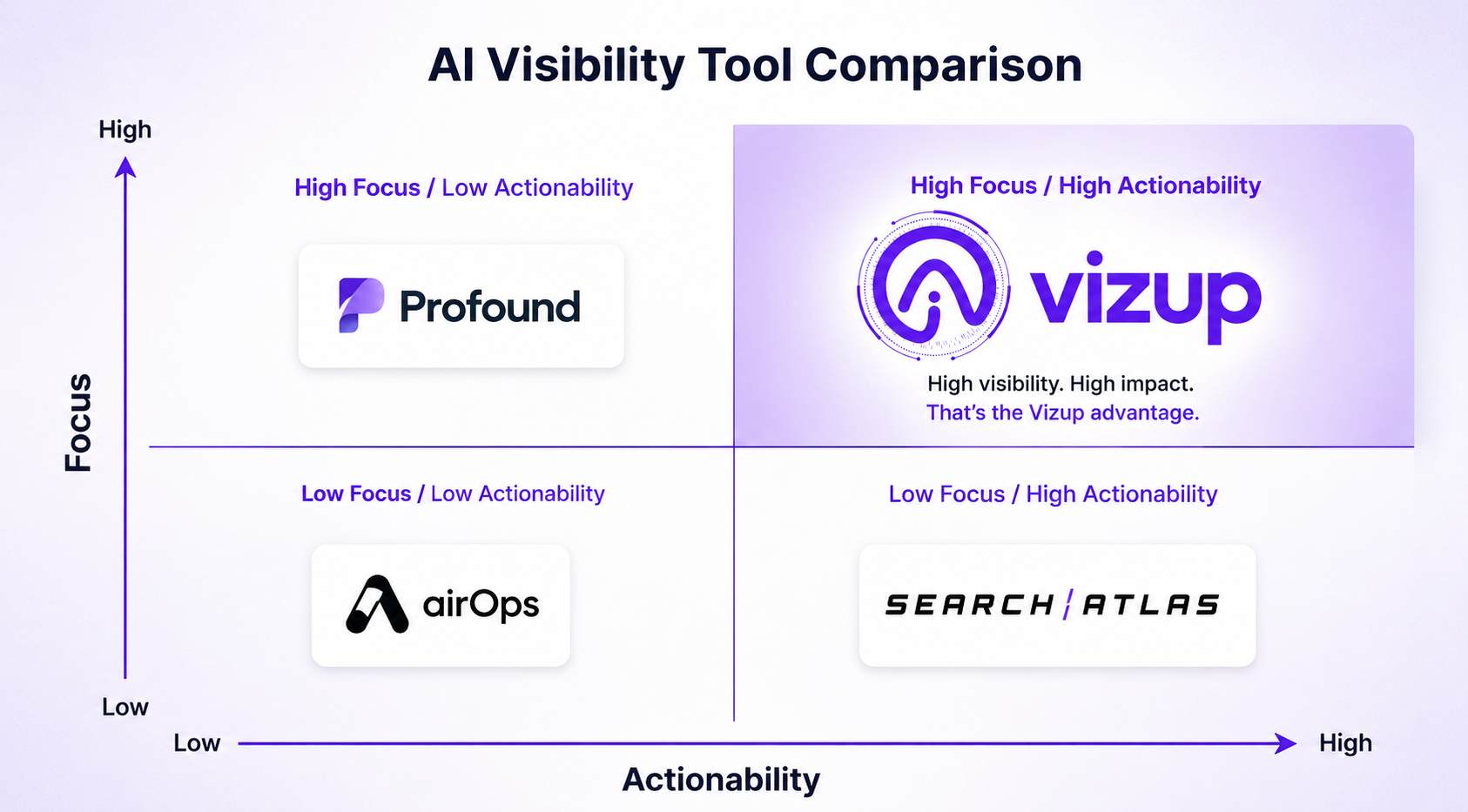
When to Choose Vizup
Vizup makes the most sense for teams that treat AI answers as a channel they can manage, not a curiosity to check once a quarter. If you’re a growth marketer, SEO manager, or content strategist who needs to measure AI presence and then improve it, Vizup fits the job.
Who Is Vizup For?
- Growth & Marketing Teams: If you’re responsible for pipeline and revenue, Vizup’s emphasis on tying visibility metrics to business goals is the point. The recommendations help you focus on work that’s likely to move the needle.
- SEO & Content Managers: If you own organic performance, Vizup extends your scope beyond rankings into how AI systems describe and recommend brands. It also gives you the data to justify investment in improving brand visibility in AI search.
- Agencies: If you manage multiple brands, Vizup can support a new reporting and optimization line item clients already care about. The reporting is clear enough to show why AI visibility matters and how it’s trending over time.
Vizup lands in the middle ground many teams actually want: control, plus enough intelligence to act quickly. You’re not buying an automation engine or a data firehose; you’re buying visibility you can operationalize. If that framing resonates, why visibility metrics matter more than traffic is the right companion piece for understanding the approach.
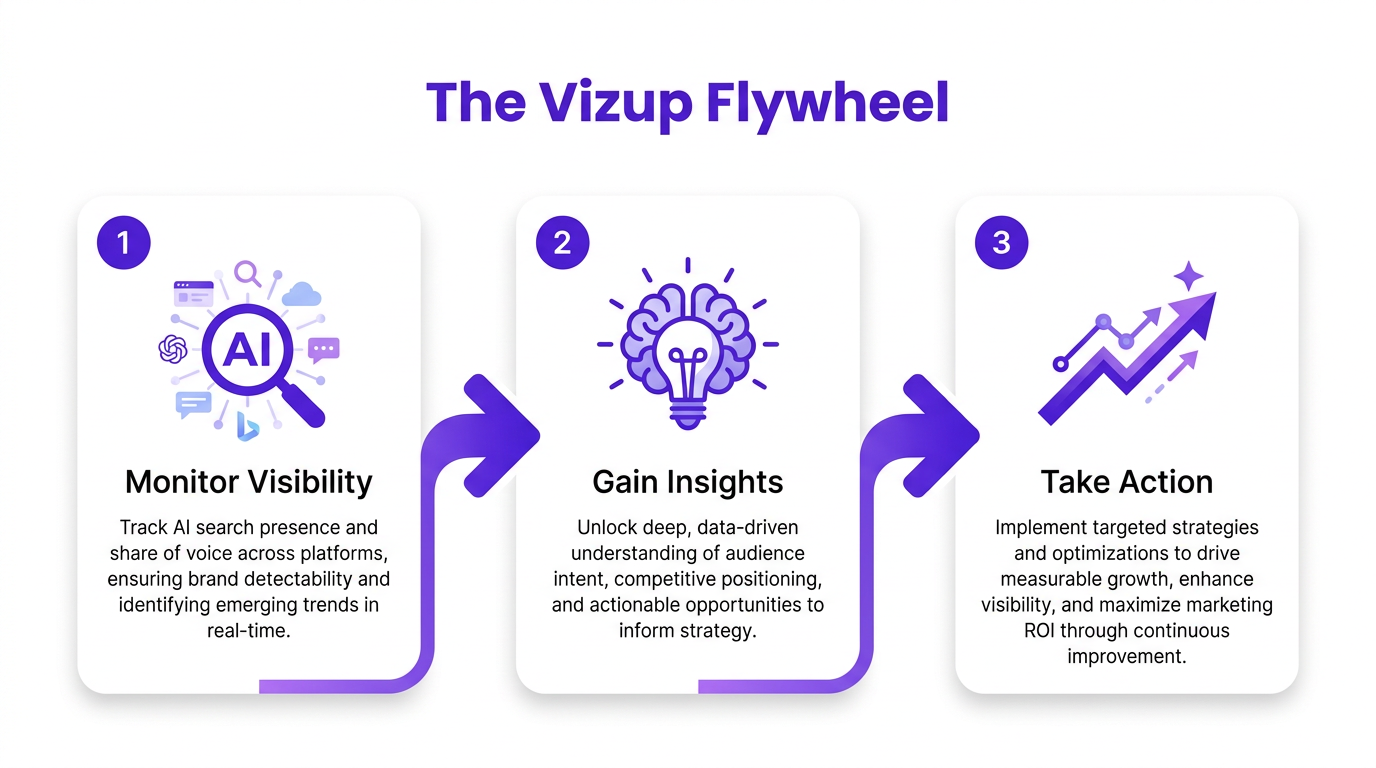
The Verdict
Vizup earns its place as a leading ai brand visibility analysis software because it stays focused on the job: helping marketing teams understand how AI platforms portray them, then giving them levers to improve it. It’s not trying to be an all-in-one SEO suite, and it doesn’t dump a pile of data on you and walk away. The product’s strength is turning visibility into actions that support growth.
If your team is ready to move past keyword-only reporting and start managing how AI systems describe your brand, Vizup is the more strategic pick. It brings structure to a messy shift and makes the work measurable. When you want to see where you stand, taking a look at Vizup is a sensible next step.
Frequently Asked Questions
What is the main difference between AI visibility and SEO?
SEO is largely about where your pages rank in a list of links. AI visibility is about whether your brand shows up inside the AI’s synthesized answer, and whether the mention is accurate and favorable. It’s perception and recommendation, not just clicks. More context is in what a search visibility tool is in the age of AI.
How does Vizup track brand mentions?
Vizup runs prompts across multiple AI engines (including ChatGPT, Gemini, and Perplexity) at scale, then parses the responses to detect mentions, evaluate sentiment, and surface the sources the model relied on. That’s a lot more reliable than spot-checking prompts by hand. Details are in how to track brand mentions.
Can I use Vizup to track my competitors?
Yes. Competitive benchmarking is a core workflow in Vizup: you can add competitors, compare share of voice for key topics, and use those patterns to understand where they’re being recommended. You can also use the output to inform a competitor analysis prompt for deeper digging.
Is Vizup suitable for small businesses?
Vizup is built for growth-focused teams, including small businesses and startups that want to take AI visibility seriously. The recommendations are especially useful when you have limited time and need to prioritize the highest-impact work. Plan options are listed on Vizup pricing.
How do I know which AI visibility tool is right for me?
Start with your operating model. If you want actionable intelligence to improve brand presence in AI answers, Vizup is a strong contender. If you need enterprise-scale data feeds or end-to-end content automation, you’ll likely lean toward other platforms. This breakdown on how to pick the right AI brand visibility tool helps you choose based on goals.
