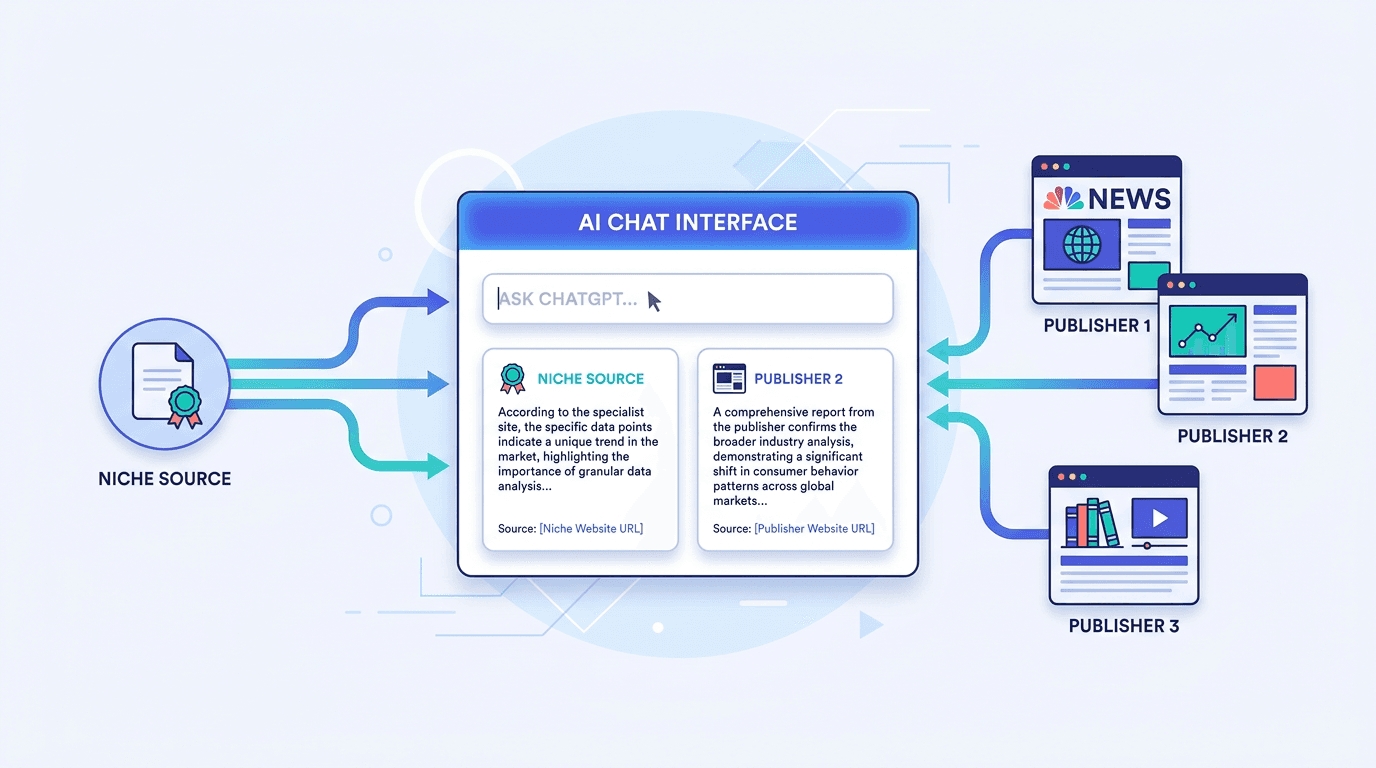
Small websites are not locked out of ChatGPT citations. Search interest around "ChatGPT citation smaller sites" reflects a fear that official publisher deals created a pay-to-play system, but July 2026 data points in a far more encouraging direction.
The blunt read: small brands that postpone AEO because they lack a licensing agreement are surrendering an opportunity they can already pursue. The evidence does not prove perfect equality, but it does undermine the idea of a closed citation club.
ChatGPT Citation Smaller Sites: What the Resoneo Data Shows
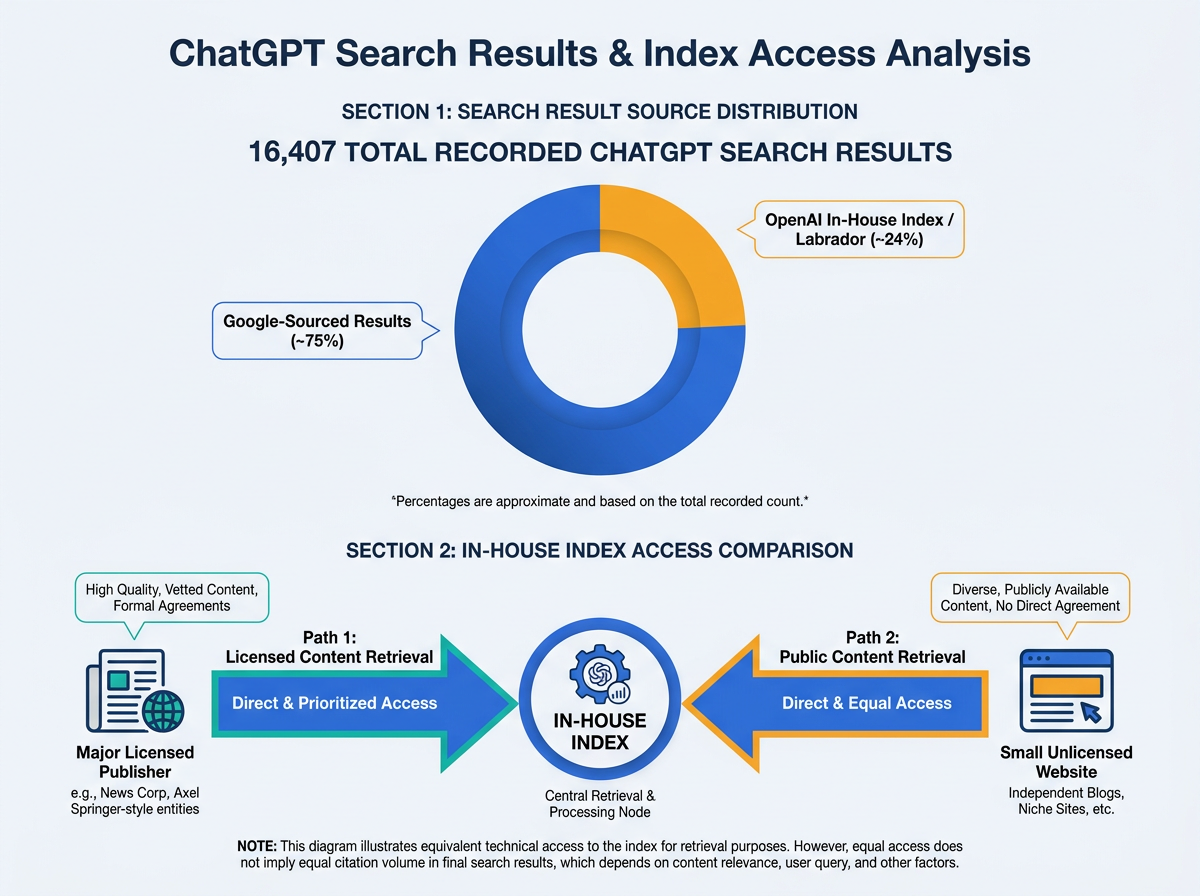
The Resoneo ChatGPT study examined 16,407 search results recorded from paid ChatGPT accounts using "thinking mode." Around 75% came from scraped Google results, while approximately 24% came from OpenAI's in-house index, known as "labrador." Crucially, the July 2026 analysis found that the same in-house index surfaced both small, unlicensed websites and publishers with content agreements, as summarized in Search Engine Journal's study graphic.
Note: This is evidence of comparable index access, not proof that every small domain receives the same number of citations as News Corp or Axel Springer.
That distinction matters. This was an observational search audit, not a randomized AI citation fairness study covering every topic and ChatGPT mode. Even so, it provides stronger evidence than screenshots or isolated prompts, and it suggests real AI search democratization: unlicensed site ChatGPT citations are not edge-case accidents.
What actually drives ChatGPT snippet sourcing
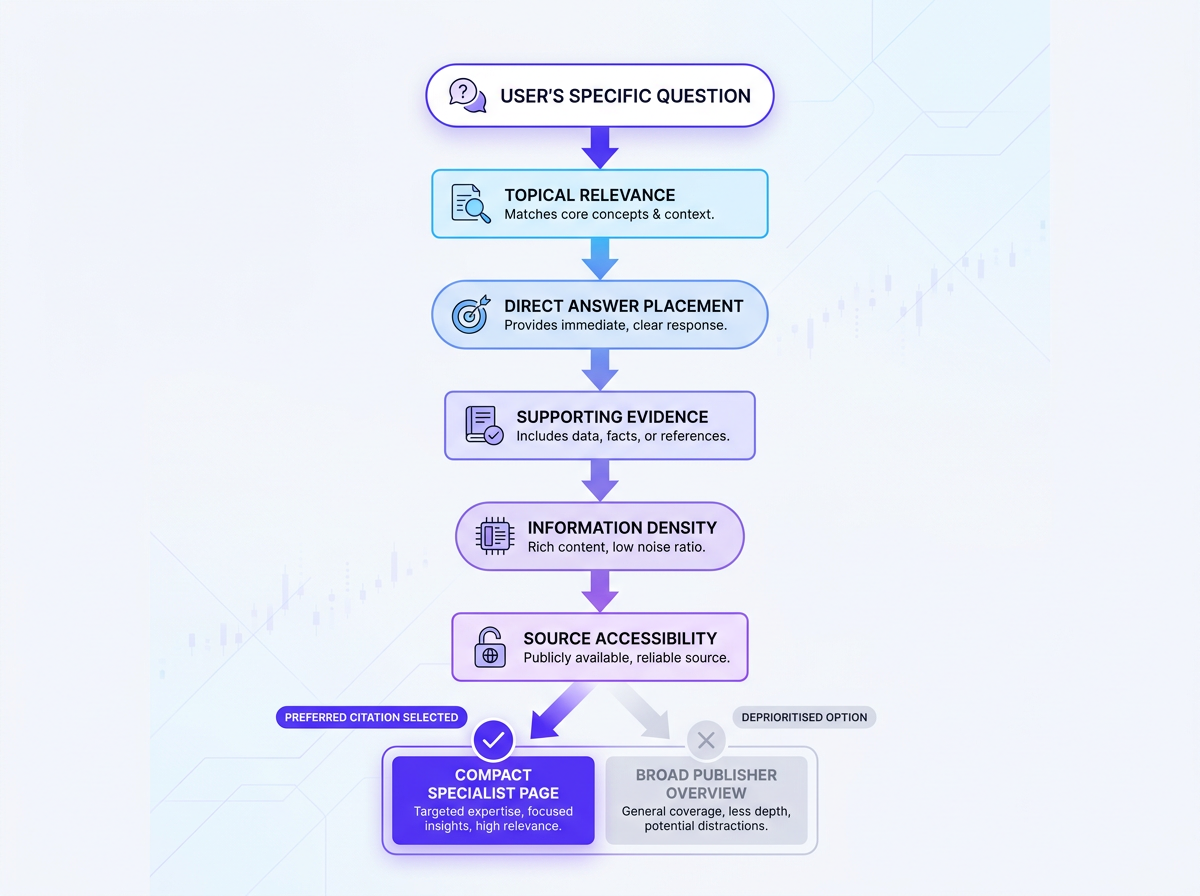
If licensing is not the sole gatekeeper, citation selection returns to first principles: relevance, clarity and utility. A May 2026 competitive GEO study found that topical relevance and a source's position in the model's context were the strongest drivers of which competing source was cited first.
Helpful content, compressed for retrieval
ChatGPT search index behavior appears to reward pages that make the answer easy to extract. That resembles Google's human-first content philosophy, but with sharper pressure for semantic precision and information density. Research analyzing ChatGPT citation patterns found that 44.2% of citations came from the first 30% of page content.
When reviewing AI visibility patterns, the missed opportunity is often obvious: the useful answer is buried beneath a long introduction. A small engineering blog that defines a rare failure mode in its opening paragraph is more citable than a famous publication offering 1,500 words of general background. Vizup's analysis of what gets cited in AI search examines this difference between original utility and commodity prose.
Specificity is the small site's advantage
Large publishers cover thousands of subjects. Smaller companies can own one narrow problem, location or buyer question with firsthand detail. That focus creates an AI citation opportunity for small publishers and improves small site AI visibility without requiring the broad authority of a national newsroom.
A practical GEO strategy for small brands is to become the definitive source for a tightly defined topic and market. Publish measurements, expert explanations, original examples and the limitations that broader sites skip. The finding that 85% of AI categories are unclaimed shows how much topical territory remains open.
Publisher partnerships set a floor, not a ceiling
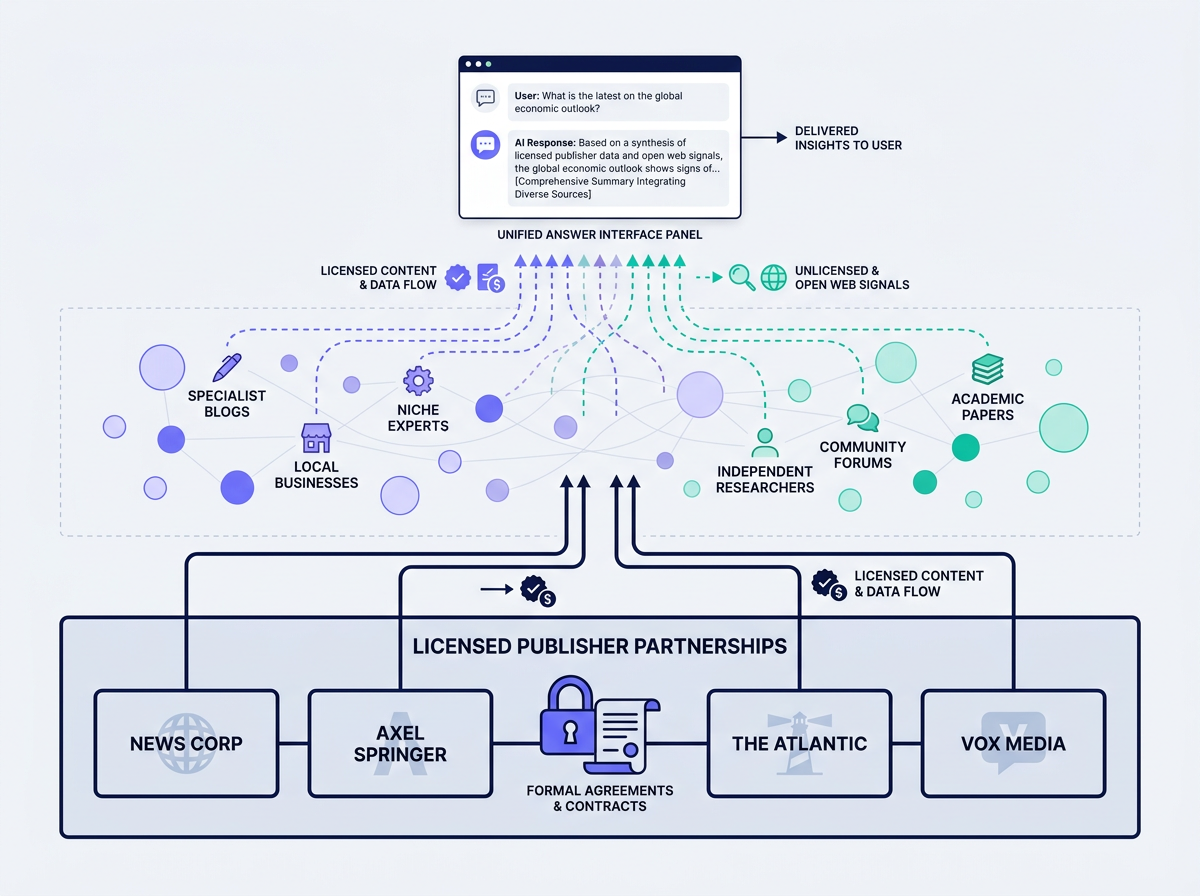
The strongest counterargument is reasonable. OpenAI has signed ChatGPT publisher partnerships with more than 20 news organizations, including News Corp, Axel Springer, The Atlantic and Vox Media. Those agreements can provide reliable content access, commercial arrangements and closer product coordination with participating publishers.
Yet OpenAI search index licensing serves purposes beyond citation ranking. It acquires content, reduces legal uncertainty and creates predictable relationships with publishers. Those benefits do not require an allowlist that excludes everyone else. The Yelp and OpenAI partnership illustrates how direct data access can shape particular result categories without erasing independent local sources.
So the claim of complete AI answer engine citation equality deserves skepticism, but so does licensing fatalism. Partners hold advantages. They do not own the entire citation supply.
A practical citation plan for small brands
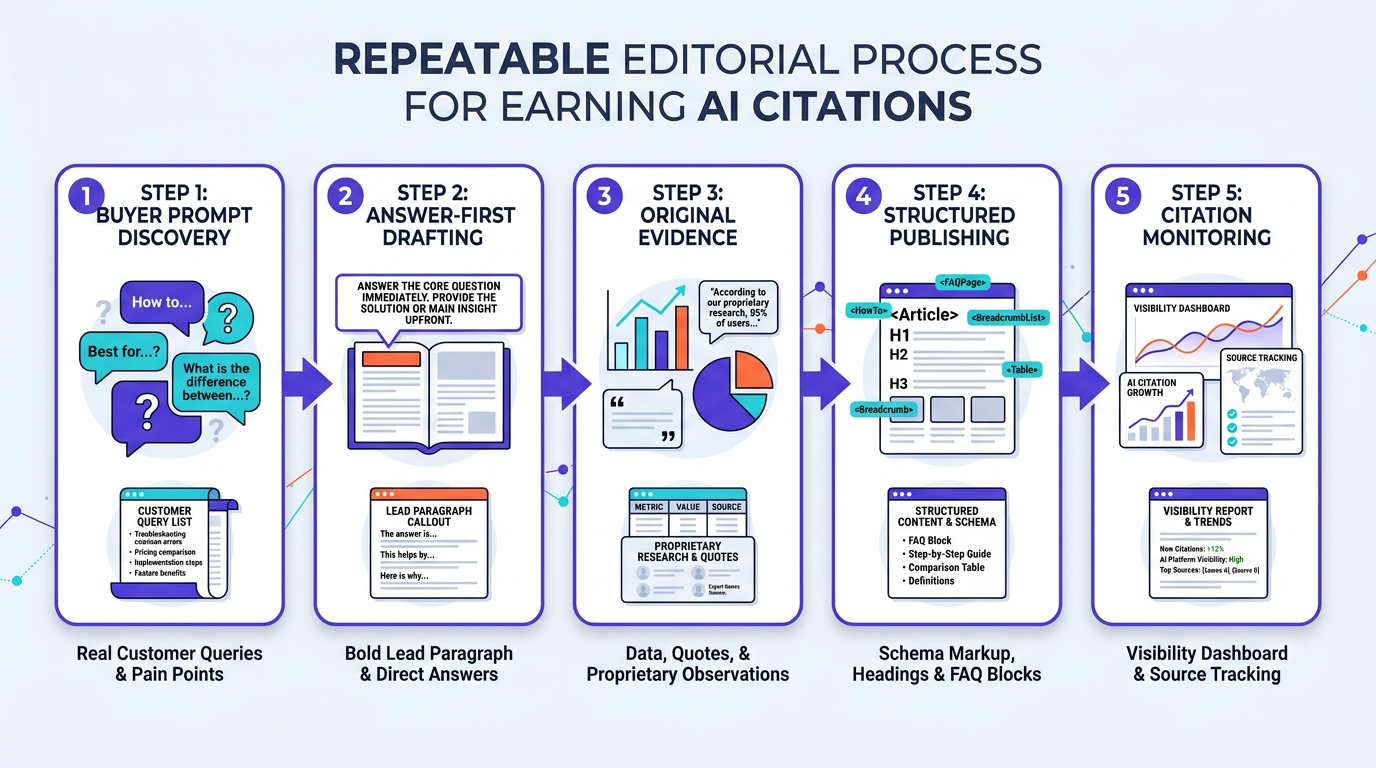
Treat citation visibility as an operating process, not a one-time rewrite. Start with the questions customers actually ask, then build the clearest source an answer engine could retrieve.
Five actions to take this month:
- Research real prompts. Use sales calls, support tickets and prompt research for AI search to identify specific, citation-worthy questions.
- Lead with the answer. Put a self-contained response, definition or recommendation near the top, then supply evidence and nuance.
- Publish information competitors cannot copy. Add tests, local observations, expert quotes, original images, prices, dates and clearly explained methods.
- Improve machine readability. Use descriptive headings, tables where comparison helps, internal links and valid FAQ or HowTo schema when it matches visible content. Schema clarifies structure but does not guarantee selection.
- Monitor prompts and sources. Track whether ChatGPT and other answer engines mention, cite or omit the brand. Compare cited pages, refresh weak answers and record changes over time.
Vizup's answer engine optimization techniques provide a broader execution framework. Monitoring matters because citation patterns vary by prompt, mode, location and date. A single manual test is not a performance report.
Vizup's Organic Autopilot connects that workflow across Search, Social, Communities, AI Answer Engines and Local Discovery, helping brands monitor visibility, create and optimise content, publish improvements and learn from what earns citations. It combines AI agents, human experts and live SEO, pSEO, AEO and GEO tools, with paid amplification available when organic wins need additional reach.
Small publishers should act before the field gets crowded
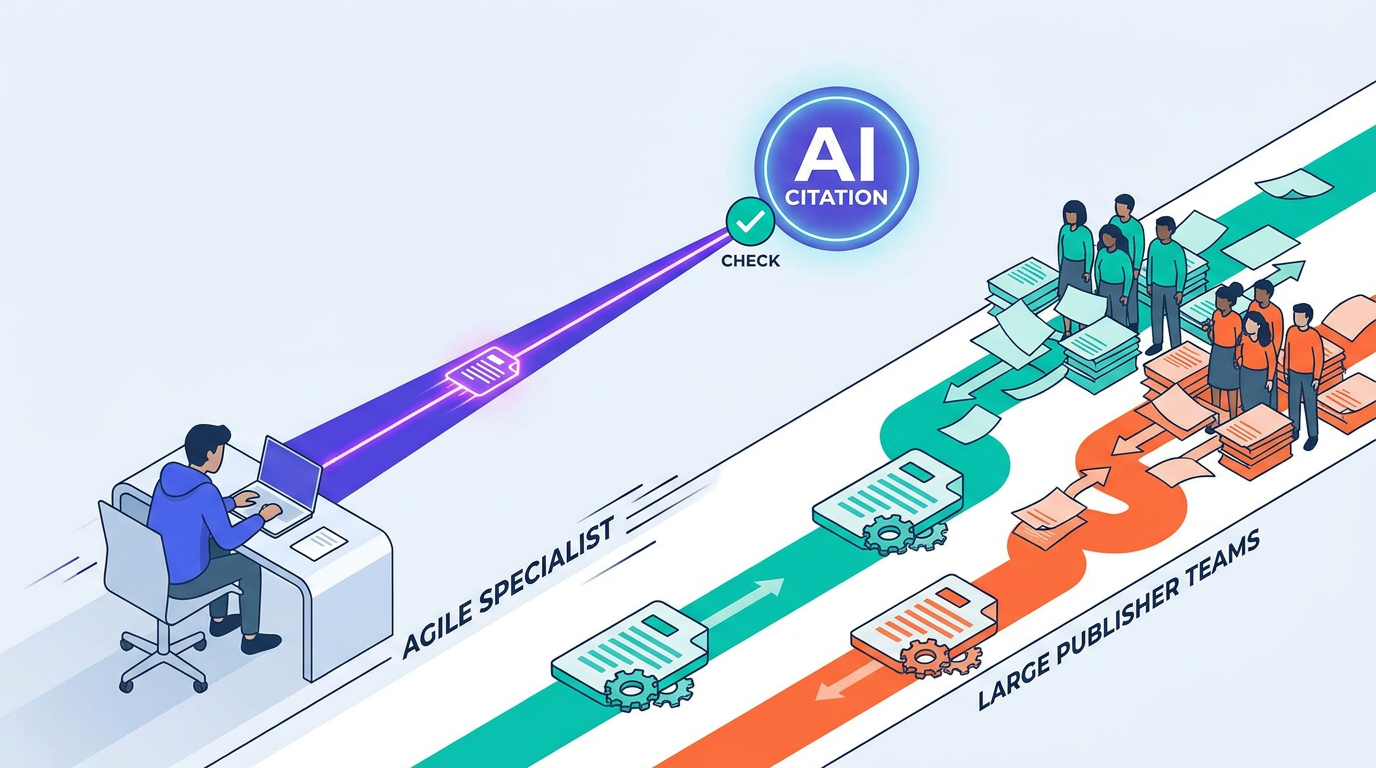
The evidence behind ChatGPT citation smaller sites queries should change budget conversations. Scale and licensing still matter, but neither justifies sitting out. Useful, specific and retrievable content can challenge much larger brands.
AI citation fairness is unfinished, and algorithms will change. The opportunity is still real. Brands that document genuine expertise now will be harder to displace when AI discovery becomes a standard part of every buyer journey.
Frequently Asked Questions
Does my small website have a real chance of being cited by ChatGPT?
Yes. Resoneo's July 2026 findings show that OpenAI's in-house search index serves small, unlicensed domains through the same mechanism used for publisher partners. Citation is not guaranteed, but domain size alone does not exclude you.
Are OpenAI's licensing deals with publishers unfair to smaller sites?
They give partners commercial and access advantages, so the system is not perfectly equal. Current evidence does not support the stronger claim that only licensed publishers can appear. The deals establish a partner benefit rather than a universal ban on other sources.
What kind of content is most likely to get cited by an AI answer engine?
Direct answers with strong topical relevance, original evidence, clear structure and precise language are strong candidates. Put the useful response early, support it with verifiable detail and avoid padding a narrow answer with generic background.
How can I track if my content is being used in ChatGPT answers?
Build a stable set of buyer prompts and test them repeatedly across relevant engines and modes. Record brand mentions, cited URLs, competing sources and answer changes. Automated answer engine monitoring makes trend analysis more reliable than occasional screenshots.
Is investing in AEO worthwhile for a small business?
Yes, especially when the business has specialist, local or proprietary knowledge. Start with a focused program tied to commercially relevant prompts, measure citations and mentions, and expand where visibility connects to qualified demand.
