
AI answers draw on publisher content, while the publishers behind it have generally received nothing. Google's AI contribution pilot changes that equation for a small group of invitees. The programme pays selected publishers when indexed content makes a significant contribution to AI-generated answers in Search, AI Mode, and the Gemini app; a new Google Search Console panel tracks earnings (Digiday, 2026).
Its importance is less about today's payout than Google's implicit concession: work used as an AI input may warrant payment, rather than merely a link back to its source. The programme remains notably opaque. Below, we separate Google's confirmed statements from reported details, then set out how publishers should respond before the full picture comes into view.
What the Google AI Contribution Pilot Actually Is
The Google AI contribution pilot is an invite-only test that pays selected publishers when their content materially contributes to AI answers in AI Overviews, AI Mode, and the Gemini app. Earnings appear in a new Search Console panel. Google calls it an "early-stage learning pilot" for testing how high-quality content should be rewarded (Digiday, 2026). Publishers can leave the programme at any time.
This is not another version of ad revenue. Organic search pays when someone clicks through. Google News Showcase pays for curated panels. Here, the payment resembles a licence for grounding material used while an answer is generated. A link appended to an answer, or content used solely to fact-check it afterward, does not qualify (Search Engine Journal, 2026).
According to Digiday's September 2026 report, at least dozens of publishers have been approached about the pilot. The outreach extends beyond major news organizations, although the total number of participating publishers has not been publicly confirmed. There is no public application process, and Google has not disclosed the full commercial terms.
Why This Exists Now: The Zero-Click Revenue Problem
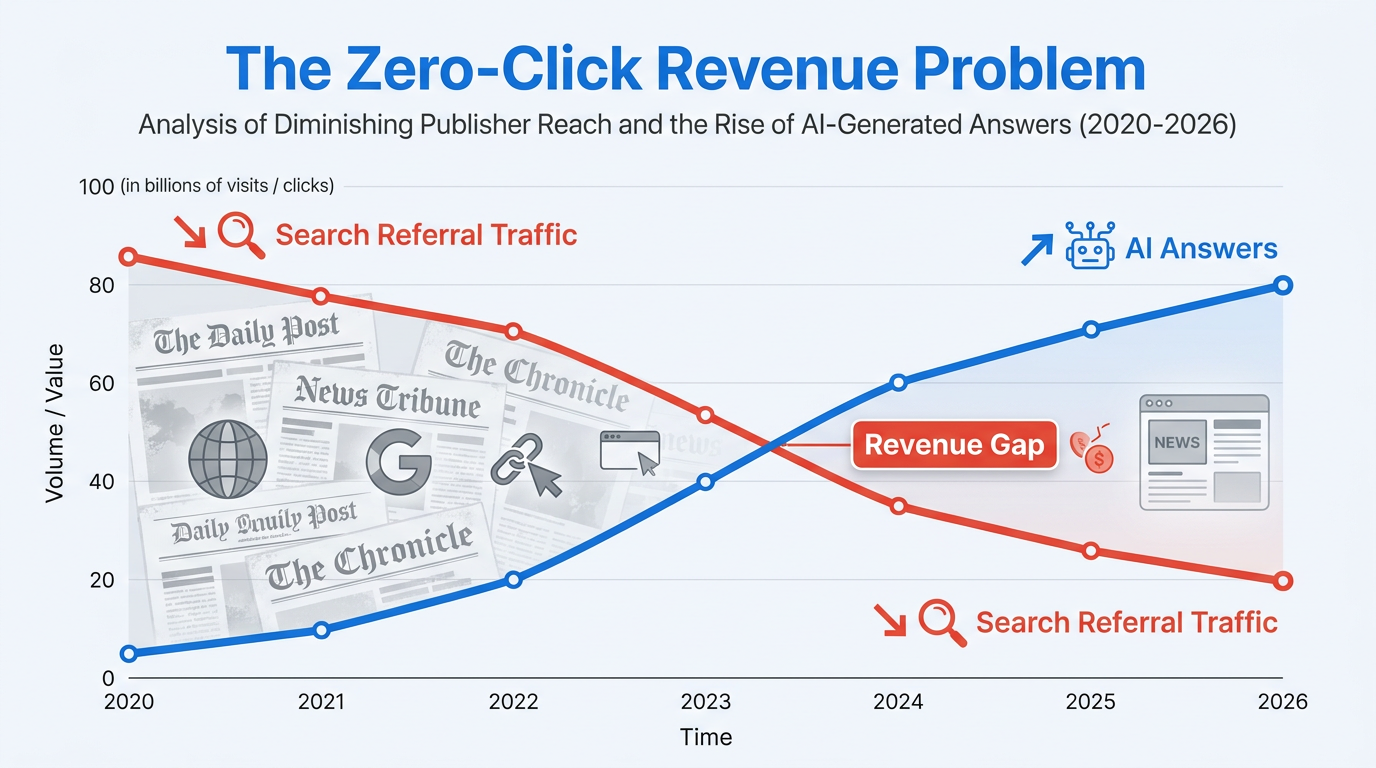
AI Overviews and AI Mode often answer a query on the results page without sending the user to a source. For referral-dependent publishers, that threatens the underlying business model. The article still supplies the answer, but the click - and its ad impression or subscription conversion - disappears.
The pilot arrives as AI companies and publishers negotiate how content should be licensed and compensated. Existing agreements have established commercial arrangements for certain uses of publisher material, but their terms, covered products, and payment structures vary. Google's contribution pilot tests a different approach: compensating selected publishers when their indexed content significantly contributes to AI-generated answers.
The pilot also arrives amid wider discussions about AI content licensing, copyright, and publisher compensation. Regulatory approaches differ across jurisdictions, and no public evidence establishes that a specific regulation directly prompted Google's test. For publishers, the immediate question is whether the programme offers meaningful compensation for content used in AI-generated answers.
How the Pilot Works: Grounding, Contribution, and Payment
The reported flow has three stages: content is indexed, used to ground an AI answer, then assigned a contribution value in Search Console. Google has not publicly answered key questions at each stage.
What Freshness and Factuality Grounding Means in This Context
Google's AI systems do not only generate fluent text from a statistical model. They also anchor responses in current, verifiable information from indexed pages. Freshness and factuality grounding is the use of that publisher material to keep answers tied to real-world facts rather than linguistic plausibility. How AI search engines retrieve and cite content provides useful context.
A payment is triggered when content materially shapes an answer during generation. That is different from appearing as a citation beneath an AI Overview. The useful comparison is a licensed data feed, not a referral link: the content informs the answer before the answer exists.
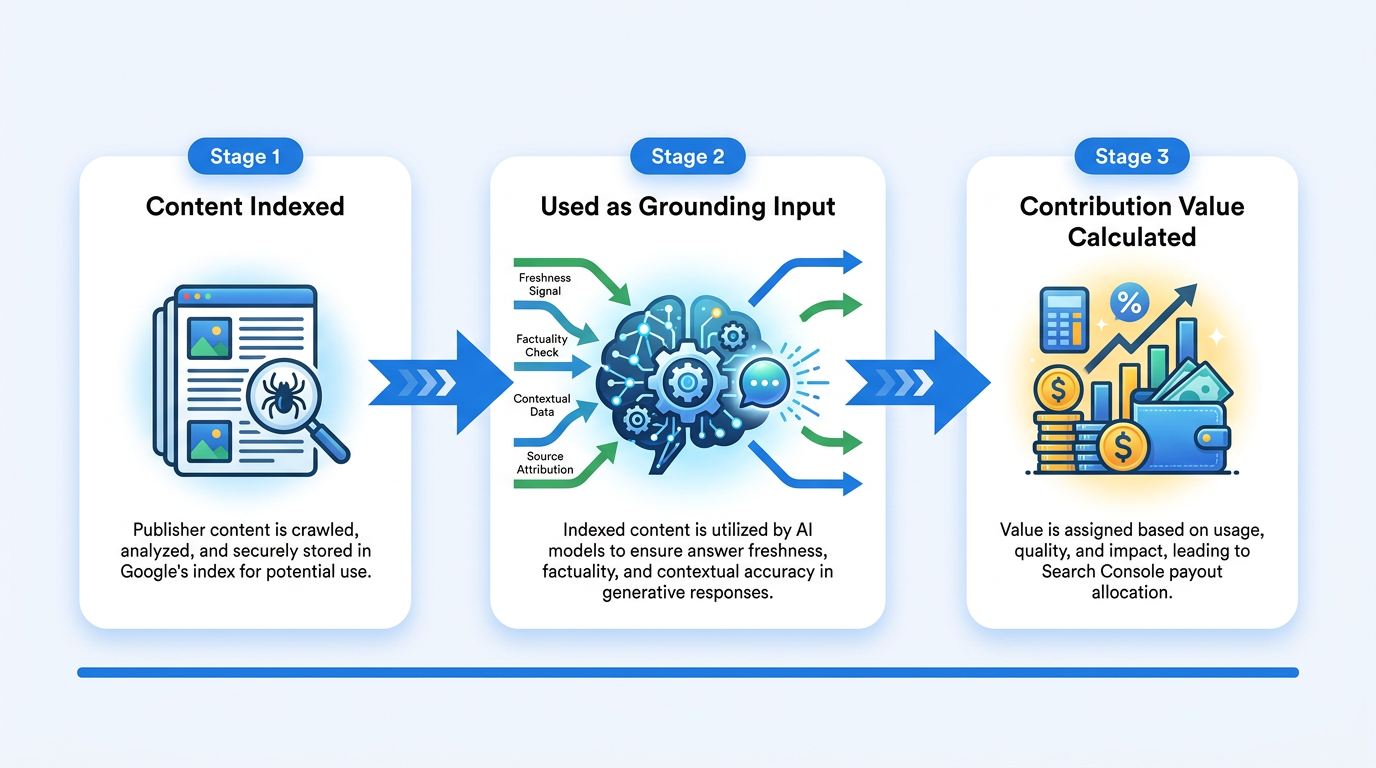
The Search Console Earnings Interface
Participants see an AI contribution panel in Google Search Console. The AI licensing integration displays monthly earnings and provides settings for accepting the programme terms and supplying payment details.
Warning: Reporting says the panel provides a monthly total, not the URLs used, their frequency, or the calculation behind each use (Digiday, 2026). Publishers are left without a breakdown of their own earnings.
That missing detail is the pilot's central structural flaw for publishers. Without URL- or query-level reporting, they cannot optimize for grounding value, test Google's calculations, or compare the payout with revenue those pages once generated from organic referrals.
Where the Payments Come From: AI Overviews, AI Mode, and Gemini
Publisher compensation AI Overviews applies to content grounding answers in the AI Overview panel on standard Search results. AI Overviews launched in the US in May 2024 on Google's Gemini model family and have since expanded globally. AI Mode publisher earnings cover a distinct AI-first search interface, where generated answers rather than traditional links organize the experience.
Gemini app content payments reportedly extend the test beyond Search. If content used in the assistant app is in scope, Google is measuring grounding value across several surfaces, not just results pages. That suggests Google sees content licensing as a platform-wide question rather than a Search-only obligation.
What the Pilot Covers and What It Doesn't: A Comparison
The pilot joins several existing ways Google pays publishers. The comparison below shows what is actually different.
| Dimension | Traditional Organic Traffic | Google News Showcase | Bespoke AI Licensing Deals | AI Contribution Pilot |
|---|---|---|---|---|
| Eligibility | Open to all indexed sites | Invite/application-based | Individually negotiated (e.g. AP, Axel Springer) | Invite-only pilot; at least dozens of publishers reportedly approached |
| Payment Trigger | No direct payment for indexing; publishers may earn revenue from resulting visits | Content displayed in Showcase panels | Licensing fee for training/grounding use | Content used as grounding input during AI answer generation |
| Earnings Transparency | Traffic, engagement, and conversion reporting available through analytics tools; visibility depends on configuration | Dashboard with panel-level data | Reporting and audit provisions vary by agreement | Reported monthly aggregate; no publicly disclosed URL-, query-, or calculation-level breakdown |
| Publisher Control Over Terms | N/A (open ecosystem) | Standardised terms, some negotiation | Individually negotiated; scope of control varies | Invite-only participation under reported pilot terms; negotiation options not publicly established |
| Surface Coverage | Search results pages | Google News, Discover | Varies by contract (training, Gemini, Search) | AI Overviews, AI Mode, Gemini app |
| Current Status | Live | Live (40+ countries) | Live (individual contracts) | Early-stage pilot |
| Comparison based on publicly available information as of September 2026. Bespoke deal terms vary by publisher. |
The difference from bespoke AI licenses is the degree of control over commercial terms. Individually negotiated agreements may define compensation, permitted uses, and reporting obligations, although specific provisions vary and are not always public. Under the reported pilot structure, publishers receive limited information about how their monthly earnings are calculated, making it difficult to independently assess the payment. For publishers weighing whether small publishers can benefit in Google's changing ecosystem, that imbalance matters most.
The Invite-Only Problem: Who's In, Who's Out, and What You Can't See
Most publishers have no access to the pilot, no visibility into its terms, and no benchmark for fair compensation. Google has published no selection criteria. Site size, category, geography, and existing relationships may matter, but none of that is confirmed.
Limited disclosure creates an information imbalance between Google and participating publishers. Without clear contribution-level reporting or a published payment methodology, publishers have little basis for comparing the offered compensation with the value of their content. Establishing an independent visibility baseline can provide additional context, although it cannot reveal Google's internal valuation.
There is a broader risk, too. If enough early participants accept these terms, they could become the de facto market rate and weaken collective bargaining by publisher associations. Some publishers have chosen the opposite path, blocking Google from using their content in AI systems.
Three Things Publishers Are Getting Wrong About This Pilot
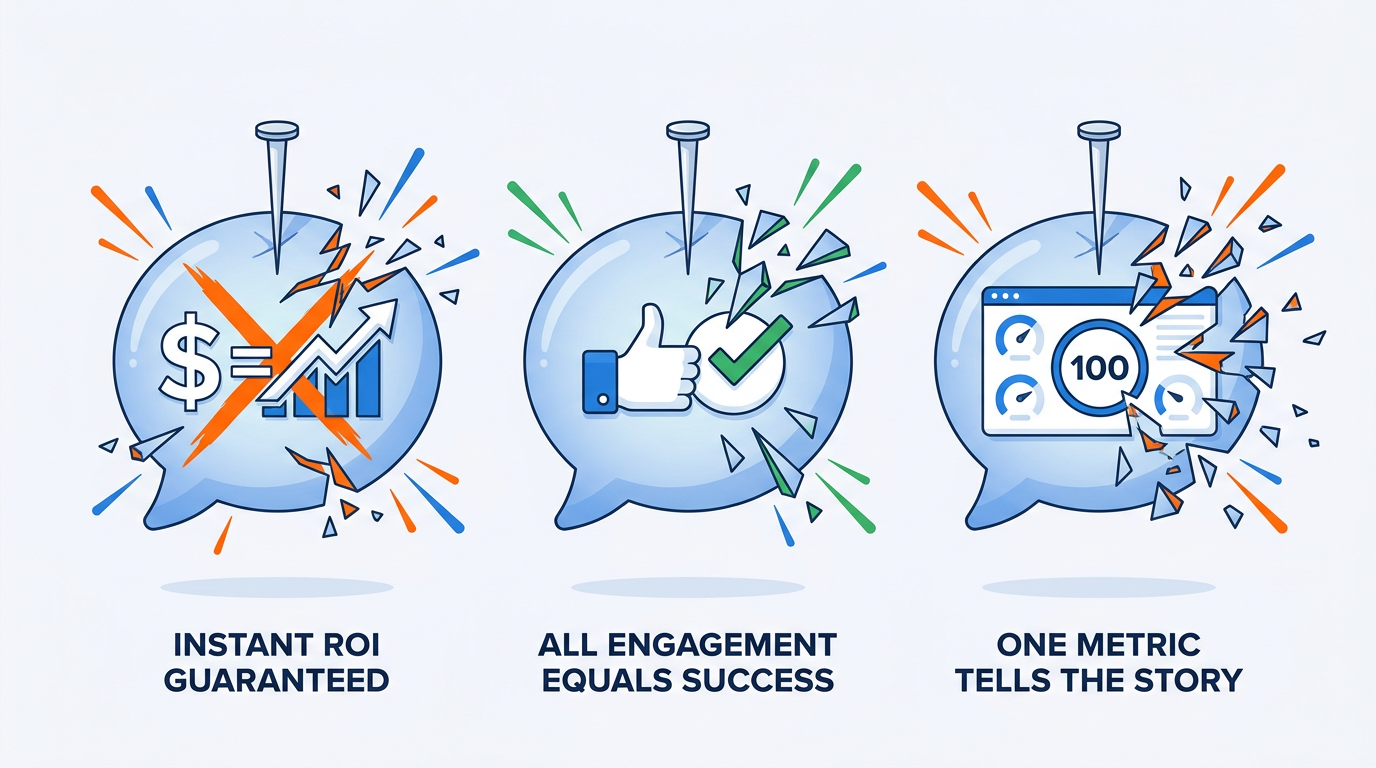
Misconception 1: "This replaces lost traffic revenue." Grounding payments are not tied to the traffic value of the material used; Google calculates them through an undisclosed method. A page that brought in $10,000 a month from organic ads could receive a payment unrelated to that sum. This is a separate revenue stream, not a zero-click replacement.
Misconception 2: "Opting in is obviously the right move." Accepting terms now could weaken a publisher's hand in a later industry-wide licensing arrangement. A collective framework with higher rates or more transparency could leave early participants at a disadvantage. The opt-out provision matters, but relationships with Google are not so easily reset.
Misconception 3: "The earnings figure reflects the full value of your content's contribution." Search Console shows what Google chose to pay, not an independent account of use or value. Without page-level data, publishers cannot check that every grounding use was counted or that Google's valuation resembles any outside measure of worth.
What Publishers Should Do Before Accepting Terms
Before opting in, establish an independent content-visibility baseline. Identify which pages appear as citations in AI answers, the queries where they surface, and how that visibility changes over time. These signals provide useful context but cannot reveal Google's private grounding calculations or independently verify its payments.
Vizup's Organic Autopilot for modern discovery connects AI visibility monitoring with content creation, optimization, publishing, and ongoing measurement across Search, Social, Communities, AI Answer Engines, and Local Discovery. Its workflow combines AI agents, human experts, and live SEO, pSEO, AEO, and GEO tools, with paid ads available as an amplification add-on.
High-freshness, fact-heavy material in competitive categories can carry more grounding value than a generic monthly figure suggests. A medical publisher grounding health answers or a financial publisher anchoring market queries has leverage a flat payment may obscure. The current pilot interface does not provide the visibility needed to assess it.
Tip: Before accepting terms, check whether your publisher association or industry group has taken a position. Early individual opt-ins could weaken collective licensing negotiations that might secure better terms for the industry.
Publishers should also build for grounding value whether or not they join the test. Content optimized for AI retrieval and citation is a prerequisite for compensation under this pilot or any later framework. Guidance on how to win search and AI answers at the same time is increasingly relevant.
The Bigger Picture: Publisher AI Monetisation in 2026 and Beyond
The pilot represents a public test of direct compensation for publisher content used in AI-generated answers. However, participation in the programme does not establish that Google has accepted a broader legal obligation to compensate publishers for all AI-related content use. Google's research into AI answers has been underway for years; structured compensation has not.
A pilot is not policy. Rates, terms, eligible surfaces, and the calculation itself can all change before a wider release. Google's description of an "early-stage learning pilot" (Digiday, 2026) gives it ample room to revise or end the programme.
For publisher AI monetization in 2026, the question is whether this test develops into a broader compensation framework. Its long-term implications will depend on payment methodology, reporting transparency, publisher participation, and the terms of any future rollout. Publishers should evaluate the current pilot against their own commercial requirements rather than assume its terms will become an industry standard.
Key Takeaways
- The Google AI contribution pilot is invite-only and pays publishers when content grounds AI answers in AI Overviews, AI Mode, and the Gemini app.
- A new Google Search Console panel tracks payments, but it reports only a monthly total, with no URL-, query-, or methodology-level breakdown.
- Payments apply to content shaping an answer during generation, not material merely cited or linked afterward.
- The test reportedly includes at least dozens of small and mid-sized publishers and is not limited to news organisations.
- Accepting terms without independent visibility means licensing content without a clear view of its value.
- Track AI citations independently, assess grounding value, and check your industry group's position before opting in.
- The pilot is an opening negotiation. Terms, rates, and eligible surfaces may change before any broad rollout.
Frequently Asked Questions
How can I tell whether my site has been invited to the Google AI contribution pilot?
Invited publishers receive a Google Search Console notification and see an "AI contribution" panel in the dashboard. There is no public application process. If neither is present, your site is not in the current round. Google has not published eligibility criteria, so publishers cannot request an invitation.
Does accepting the AI contribution pilot terms affect my ability to opt out of AI Overviews separately?
Google says publishers can leave the pilot at any time (Digiday, 2026). It has not publicly explained how participation interacts with separate Search Console generative AI controls governing AI Overview visibility. Review each control independently and weigh both visibility and compensation effects.
How does Google calculate the grounding contribution payment shown in Search Console?
Google has not disclosed its methodology. Payment reflects the perceived value and influence of content during AI response generation (Search Engine Journal, 2026). Search Console reports a monthly total without identifying contributing URLs, frequency, or per-use value. Publishers cannot independently verify it.
Will participating in the pilot hurt my position in future industry-wide AI licensing negotiations?
It could. Accepting current pilot rates may set a precedent that undervalues your content if broader frameworks later offer more compensation. Some publisher associations are developing collective positions on AI licensing. Check with your industry group before opting in and consider the effect on wider negotiations.
Can I see which specific pages or articles earned money through the AI contribution pilot?
Not at present. The Search Console interface reportedly supplies only a monthly aggregate, without URL- or query-level detail (Digiday, 2026). That is a major transparency gap. Publishers can use independent AI visibility monitoring, including Vizup's Answer Engine Monitoring, to understand where their content appears in AI-generated answers. However, citation visibility does not establish which pages qualify for payment or how Google calculates their contribution value.
