
For small publishers, every new Google story lands like a coin flip. The latest pitch is that personalization and Preferred Sources will tilt visibility toward niche sites. It sounds plausible. The problem is that we still do not have the receipts. Right now, the relationship between Google Preferred Sources and small-publisher visibility is mostly a claim in search of data.
In a June 2026 podcast interview, Liz Reid, VP and Head of Google Search, said personalization "pushes more into the tail," bringing up niche reviewers and specialist publishers that broad, generic queries would otherwise bury. She did not cite supporting numbers. That is not a scandal; product leaders are allowed to describe where they want the system to go. But publishers who treat that vision as settled strategy are placing a bet they cannot currently quantify. The useful move is to separate what we can verify from what is still just narrative, then plan around that gap.
The Promise: How Personalization Could, in Theory, Help Niche Sites
It is worth steel-manning Google's case, because the internal logic is not incoherent. If Google learns what a user actually reads and values, it can swap in a niche review from a small blog where it would otherwise default to a generic roundup from a mega-site. For a query like "best hiking boots," someone who regularly follows an ultralight backpacking blog might be shown that blog's review instead of yet another top-10 list from a major publication.
That is the "pushing into the tail" idea Reid described on the AI Inside podcast. The goal is a SERP that stops pretending one ranking fits everyone. Preferred Sources fits cleanly into that story: users can explicitly tell Google, "show me more from this site." That is a rare, unambiguous signal for the kind of search personalization publishers have been told to cultivate. The inputs appear to include search history, Web & App Activity, and now explicit source preferences.
So yes, the pitch hangs together. In theory, personalization weakens the usual gravity of domain authority by introducing a signal big publishers cannot fully buy or manufacture: individual reader loyalty. For a niche publisher, that is the attractive part. The harder question is whether the system behaves that way in practice, at scale, for real traffic.
What We Can Actually Verify
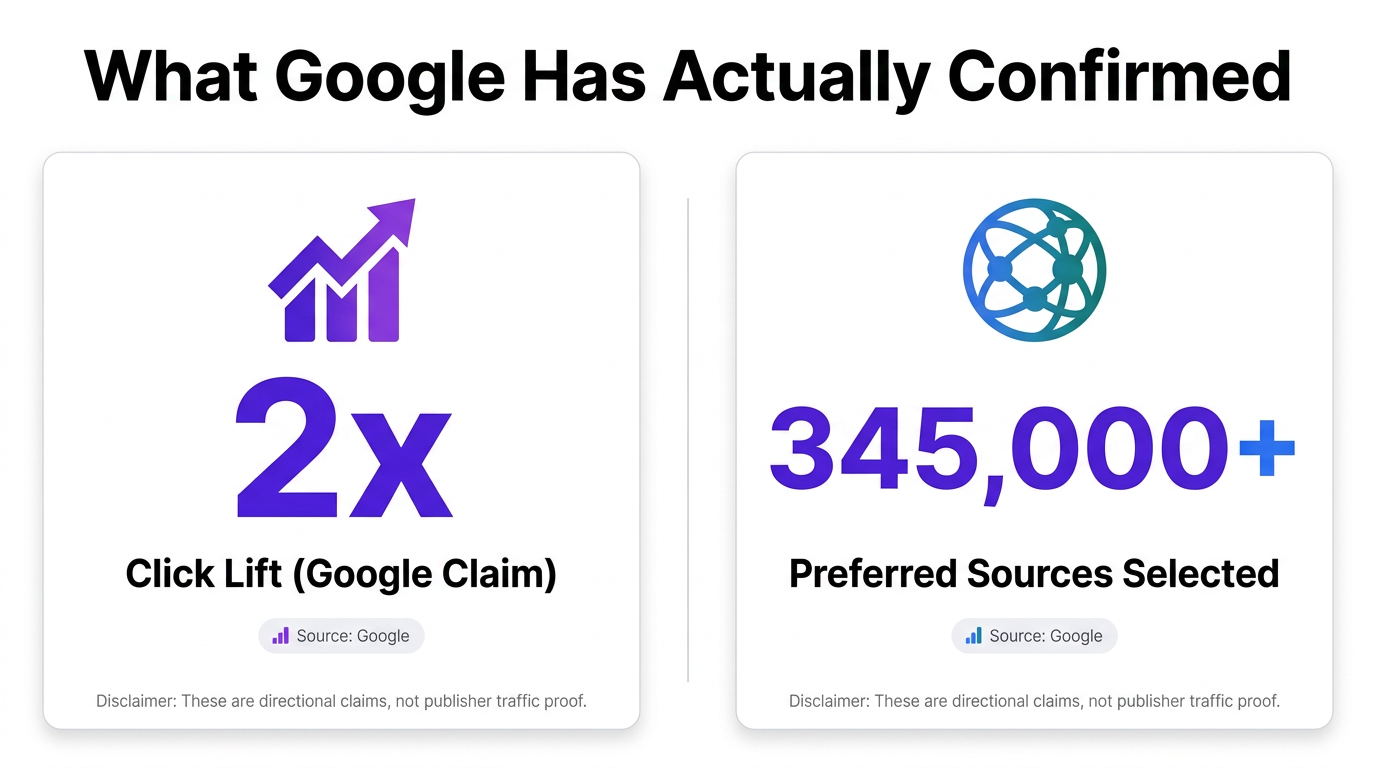
On May 27, 2026, preferred sources expanded into AI Overviews and AI Mode with visible badges. That part is concrete: the labels exist, and you can see them in the interface. Google says people are twice as likely to click through to a Preferred Source. For a closer look at how these labels interact, see our breakdown of Google's AI search labels.
Google also says readers have picked more than 345,000 unique sites as preferred sources, spanning large outlets and small niche blogs. That is directionally encouraging if you are hoping for preferred-source visibility, but it still does not prove that small publishers are receiving measurable incremental traffic from the feature.
Warning: Eligibility matters: only domain-level and subdomain-level sites can be chosen as preferred sources. If your content lives in a subdirectory (e.g., example.com/blog), users cannot select it. Check the full mechanics before building a campaign around this feature.
The Gaps: Where the Data Doesn't Add Up (Yet)
Here is what the liz reid ai search framing tends to glide past: preferred sources mainly rewards publishers a reader already knows. Someone has to find you, read you, decide you are worth returning to, and then take the extra step of adding you. That makes the feature a retention-and-amplification lever, not a discovery engine. It cannot introduce an unknown site to a new reader. For small publishers whose biggest problem is getting found at all, that distinction is not academic; it is the whole ballgame.
Then there is the measurement hole. There is no GSC report and no GA4 dimension that attributes impressions or visits to "being a preferred source" or "surfacing due to personalization." Google is effectively asking publishers to accept a visibility story without shipping the instrumentation needed to validate it. That is not inherently adversarial, but it is unfinished. If you are trying to understand which metrics still matter as AI answers reduce clicks, you run into the same wall: the old dashboards were not built for the new mechanics.
Zoom out and the broader trend is not friendly to blind optimism. Recent research suggests AI Overviews can materially reduce publisher traffic, with one 2026 study finding that AIO exposure reduced daily traffic to English Wikipedia articles by about 15%. A separate large-scale measurement study also found that AI Overviews select sources differently from traditional rankings, with nearly 30% of cited domains not appearing in the co-displayed first-page results. If there is upside for small publishers, it still needs to be measured carefully rather than assumed.
| Concept | Google's Position | Publisher's Reality |
|---|---|---|
| Increased Visibility | Personalization pushes traffic into the tail, favoring niche publishers | No shipped metric to confirm or deny this for any individual site |
| Preferred Sources | Users are twice as likely to click through to a Preferred Source | Google reports a Preferred Source click lift, but publishers still do not get clean reporting that isolates preferred-source traffic in GSC or GA4 |
| Discovery | Preferred sources surface trusted publishers more prominently | Only works for sites a reader already knows; cannot introduce unknown sites |
| Measurement | 345,000+ sources selected by users | No GSC or GA4 dimension to attribute traffic to preferred-source status |
| Overall Traffic | AI search creates new opportunities for publishers | Recent research found AIO exposure reduced English Wikipedia article traffic by about 15%, while another study found nearly 30% of AIO-cited domains did not appear in the co-displayed first-page results. |
| The gap between narrative and evidence remains wide as of mid-2026. |
The Counterargument: Isn't This Just a Personalization Filter Bubble?
Skeptics have a familiar worry: crank up personalization and you trap people in a filter bubble, feeding them more of what they already agree with and reinforcing existing tastes. The concern has a long paper trail, and it is not frivolous.
Reid's response is that personalization can widen things on broad queries. Instead of narrowing results, it uses personal history to pull in long-tail sources that would never crack the generic top ten. A plain "best hiking boots" query returns the same set of familiar winners for everyone. A personalized version, in theory, returns different niche sources for different users, producing more diversity in aggregate even if each person sees a tailored list.
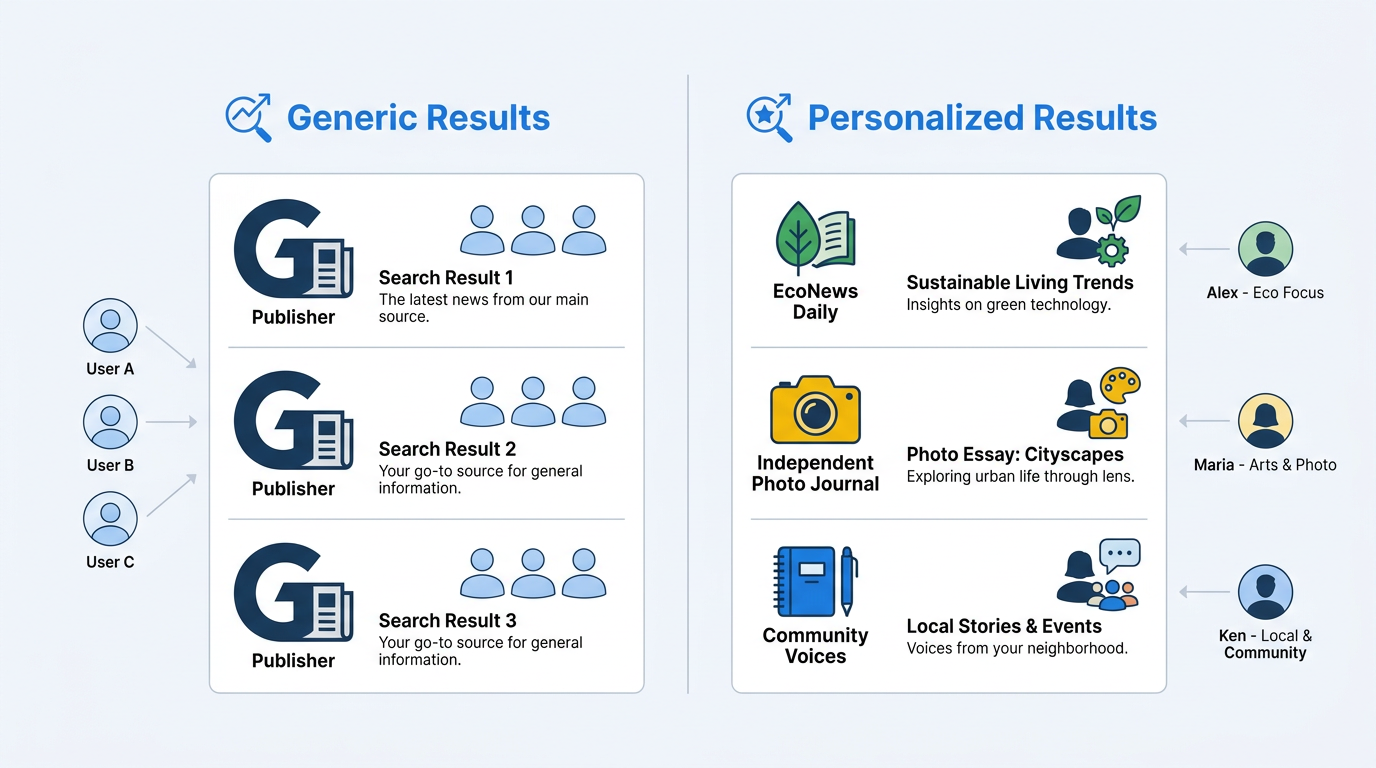
Our take: the filter-bubble critique matters at a societal level, but it is not the immediate operational risk for small publishers. The immediate risk is simply not being seen. If a loyal reader's preference signal puts your review in front of them instead of a generic listicle, take the win. The systemic downsides are real, but an individual publisher cannot fix them. Spend your energy where you have leverage.
Your Action Plan: Instrument, Don't Assume
Treat Google's claim like a hypothesis you can try to falsify, not a fact you should reorganize around. A podcast interview is not a KPI. Run the experiment, and force the results to show up in your own numbers.
Steps to test the preferred sources hypothesis for your site:
- Prompt your audience directly. Use your newsletter, social channels, and on-site banners to ask loyal readers to add you as a preferred source. Do not assume they will stumble into the setting on their own. Consider setting up a Google Search Profile for your publication to make the option visible.
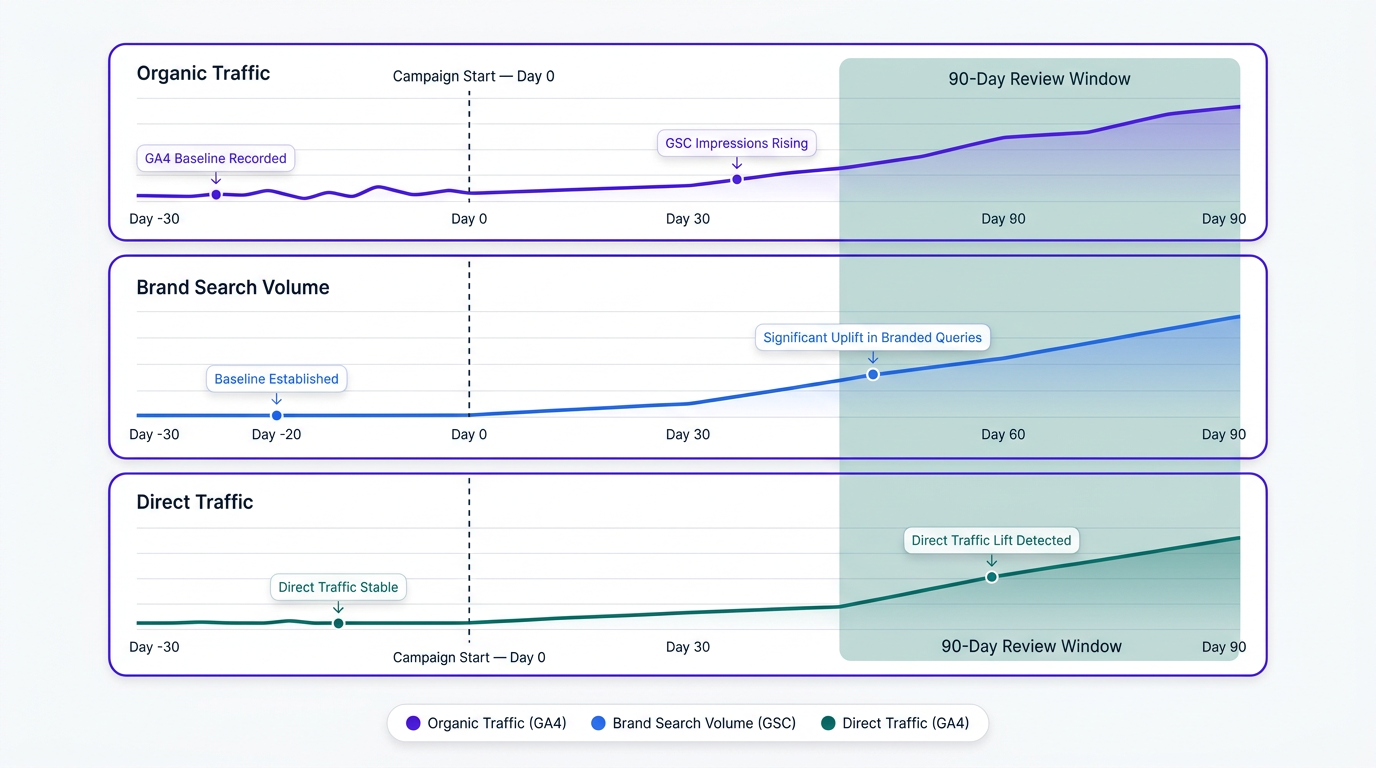
- Establish a baseline before you promote. Annotate GA4 with the date you begin your campaign. Record your current organic traffic, brand-name search volume, and direct traffic from your most loyal segments.
- Monitor your own data relentlessly. Watch GSC impressions and clicks for branded queries. Track whether direct traffic grows. Look for any uptick in referral patterns from AI Mode or AI Overviews. Your data is the only data that matters because it is yours.
- Set a review date. Give it 60 to 90 days. If you see a measurable lift you can attribute to preferred-source activity, double down. If you do not, you have spent little more than a few newsletter mentions.
If you are thinking more broadly about AI search visibility, treat preferred sources as one signal inside a bigger monitoring discipline. The publishers who make it through this shift will not be the ones who quote press releases the best. They will be the ones who instrument everything and react to what their own numbers say.
This is where Vizup fits. Vizup is an Organic Autopilot for modern discovery, helping brands monitor, create, optimise, publish, and learn across Search, Social, Communities, AI Answer Engines, and Local Discovery. Instead of treating Preferred Sources as a blind bet, Vizup helps teams turn AI search visibility into a measurable operating system using AI agents, human experts, and live SEO, pSEO, AEO, and GEO tools. Paid ads can amplify what works, but the foundation should be organic visibility that can be tracked, improved, and learned from over time. In that model, Preferred Sources becomes one signal inside a broader discovery system, not a standalone growth strategy.
A Claim to Be Earned, Not Given
Google's vision of a more personalized search that elevates small publishers is easy to root for. And some mechanics are undeniably real: the badges exist, and Preferred Source labels do seem to draw clicks. What is missing are the tools and reporting that would let the publishers who are supposed to benefit verify the broader promise.
The liz reid ai search narrative is effective messaging, and it quietly shifts the burden of proof onto publishers. That is not automatically wrong, but it deserves to be stated plainly. When a platform tells you a feature helps you and gives you no clean way to measure the impact, the correct posture is skepticism, not gratitude.
For now, the relationship between Google Preferred Sources and small-publisher visibility is still largely faith-based. The practical path is to trust your own data, build audience loyalty directly, and treat any personalization-driven visibility as upside rather than your survival plan. If you want to start improving brand visibility in AI search, start with what you can measure. Vizup helps brands monitor, optimise, publish, and learn across Search, Social, Communities, AI Answer Engines, and Local Discovery, so Preferred Sources becomes one signal inside a measurable organic discovery system, not a blind bet.
Frequently Asked Questions
What did Liz Reid from Google say about small publishers and AI search?
On the AI Inside podcast (episode 135, June 26, 2026), Liz Reid, VP and Head of Google Search, said personalization "pushes more into the tail" by surfacing niche reviewers and specialist publishers that broad queries would otherwise bury. She also argued that preferred sources can make a trusted publisher show up more prominently. She did not provide supporting data for either point.
How does Google's 'Preferred Sources' feature actually work?
Users can pick publishers they trust, and those sites get a visible badge in AI Overviews and AI Mode. Google reports that people are twice as likely to click through to a Preferred Source, but publishers still lack clean reporting to isolate that impact in GSC or GA4. Eligibility is limited to domain-level and subdomain-level sites; subdirectory content (e.g., example.com/blog) cannot be selected. For the full mechanics, see our guide on Google Preferred Sources Explained.
Is there any data that proves personalization in Google Search helps small publishers?
Not at a scale that lets an individual publisher rely on it. Google points to 345,000+ selected sources and says people are twice as likely to click through to a Preferred Source, but that still does not prove measurable lift for any individual publisher. There is still no GSC or GA4 dimension that attributes traffic to preferred-source status, which is why publishers should treat the feature as a testable signal rather than a guaranteed discovery channel.
How can I get my readers to add my site as a 'Preferred Source'?
Ask, explicitly and repeatedly. Use your newsletter, social channels, and on-site messaging to explain the feature and prompt loyal readers to add you. Do not wait for people to discover the setting on their own. Before you start, annotate GA4 so you can check whether the push corresponds with any lift in branded search or direct traffic.
Will Google's personalization create a 'filter bubble' for users?
Google's view, as Reid described it, is that personalization can increase aggregate diversity by showing different niche sources to different users on broad queries. The filter-bubble concern is real at a systemic level, but most small publishers are dealing with a more immediate problem: obscurity. Focus on what you can influence, like audience loyalty and measurement.
