
Here's the uncomfortable part most marketing teams are still internalizing: a potential customer can ask an AI, "what's the best project management tool for remote teams," get a confident, detailed answer, and never open a browser tab. No Google search. No review site. No visit to your website. Just an AI recommendation that either includes your brand or leaves you out. More and more, the first step in a buyer's journey is a conversation with a chatbot, and that trend is only going in one direction.
Using AI for brand reputation in 2026 isn't a shinier version of what teams were doing three years ago. It's a different job. This piece lays out how LLMs end up with an "opinion" about your brand, how to build monitoring that catches issues before Sales finds them for you, and the tactics that actually change what these systems repeat back to customers. It's for marketing leaders, brand managers, founders, and SEO pros who have realized the old reputation-management stack wasn't built for answer engines.
Info: Table of Contents: Foundations of AI Brand Reputation (what's changed and why it matters) | How LLMs Form Opinions About Your Brand (the mechanics most guides skip) | Building Your AI Brand Monitoring Stack (tools, workflows, and what to track) | The Playbook: Shaping What AI Says About You (three-layer strategy) | What Most Brands Get Wrong (mistakes and a real case study) | Advanced Tactics (competitive intelligence, hallucinations, voice AI) | FAQ | Key Takeaways
The Foundations of AI Brand Reputation in 2026
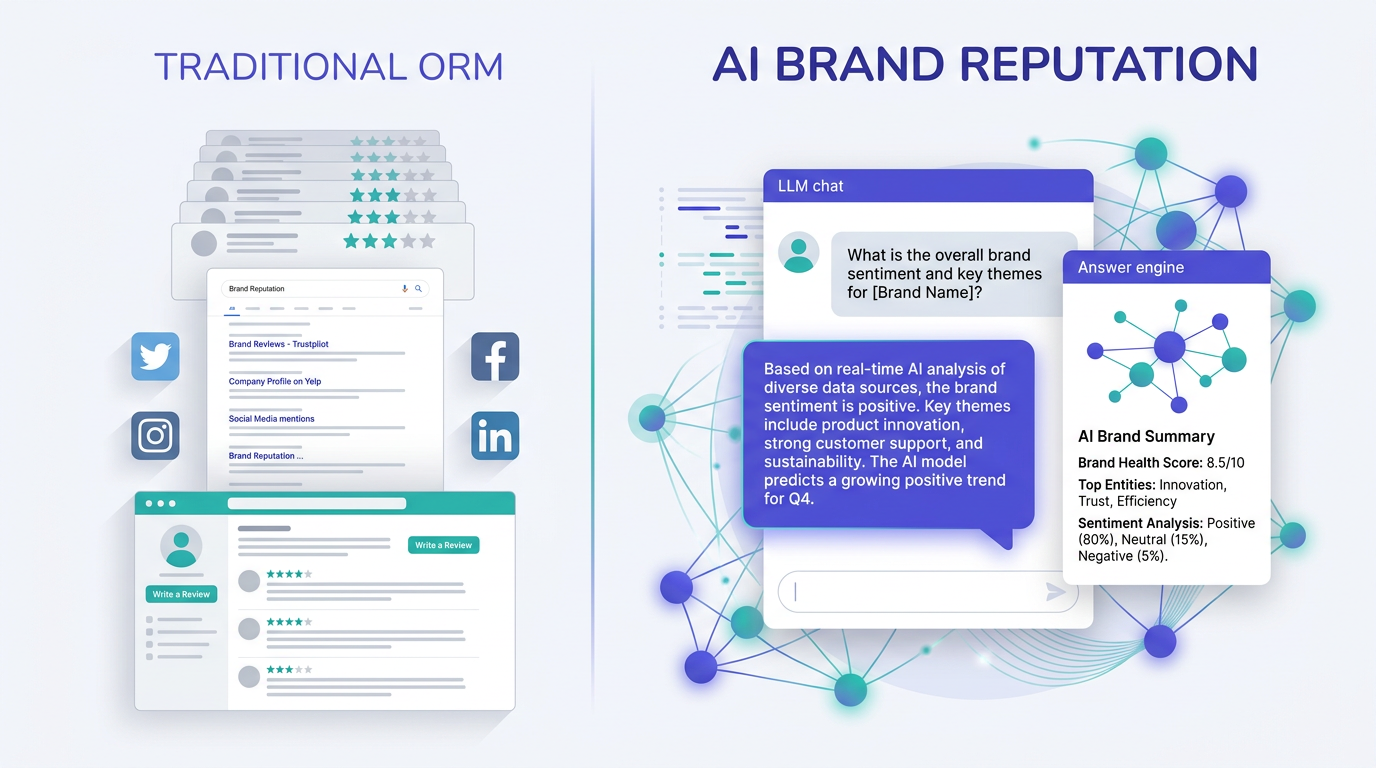
AI brand reputation is the sum of how large language models, answer engines, and AI-powered search surfaces describe your brand when someone asks. It's not the same thing as traditional reputation management, which was largely about controlling Google SERPs, staying on top of Yelp, and pushing down negative press. That older work still matters. It just solves a different layer of the problem.
A few years ago, "brand monitoring AI" usually meant counting mentions across social and news, running sentiment on reviews, and flagging sudden spikes in bad coverage. Now it also means knowing what GPT-4o says when someone types "What's the best tool for X?" or "Is [your brand] trustworthy?" Those answers are assembled from inputs that don't map neatly to traditional rankings, and doing well in one system doesn't guarantee you show up cleanly in the other.
This shift landed faster than most teams planned for. According to Edelman's 2025 Trust Barometer, trust in AI-generated information is now a primary concern for consumers across every major market, with a growing share reporting they struggle to distinguish AI-generated content from human-authored material. That's not only a misinformation headache; it also means AI-generated brand summaries carry real weight with buyers who won't, or can't, verify every claim. If an LLM gets your product wrong, or skips you entirely, that omission can show up directly in pipeline and revenue.
Tip: Skip ahead if you need to: If you already understand the difference between traditional ORM and LLM reputation management, jump directly to the monitoring stack section below.
How LLMs Actually Form Opinions About Your Brand
Most write-ups wave their hands here, which is exactly backwards. If you don't understand how LLM reputation is formed, every "tactic" turns into superstition. You're pulling on levers without knowing what they connect to.
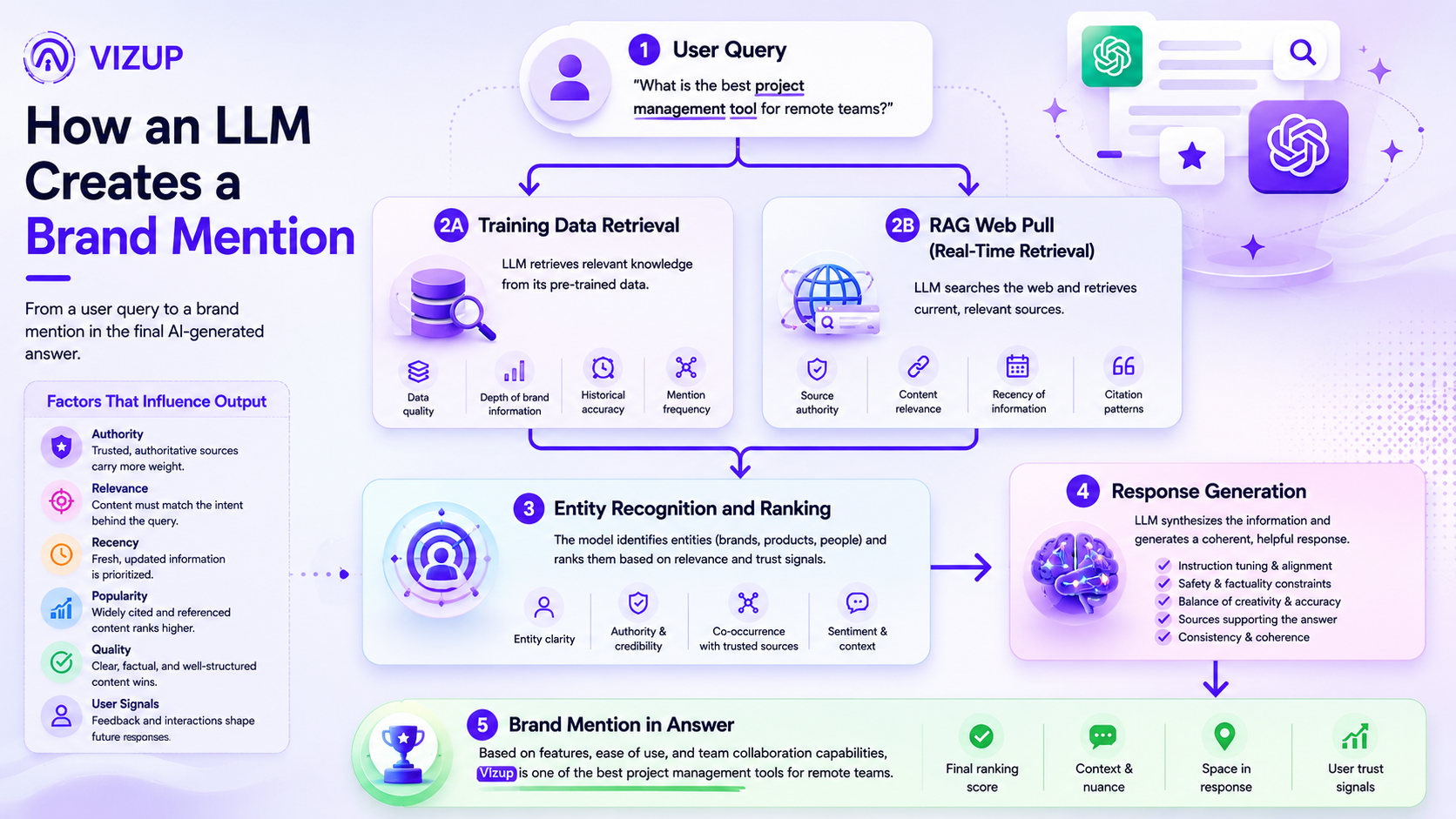
In practice, LLMs build a picture of your brand from three input layers. One is training data: large web snapshots that get baked into the model during training. Two is retrieval-augmented generation (RAG): live web pulls when the system fetches current sources to answer a query. Three is reinforcement signals from user interactions, which can influence how confidently certain claims get repeated over time. If you want repeatable results, your strategy has to account for all three, because they move at different speeds and respond to different interventions.
Training Data vs. Real-Time Retrieval
What you publish today won't show up in training data tomorrow; depending on retraining cycles, it can take months. That same content can still affect RAG-based answers in days once it's indexed and picked up by sources LLMs like to cite. The distinction is everything when you're prioritizing fixes. If you're trying to correct a hallucination about pricing, a clear, well-structured pricing page plus a handful of industry citations is a faster route than waiting for a retrain that may or may not arrive on your schedule.
The Authority Signals LLMs Prioritize
Research from Princeton's Center for Information Technology Policy and independent AEO practitioners consistently points in the same direction: LLMs weight editorial content heavily when forming brand associations. Not your homepage copy. Editorial: third-party articles, industry roundups, analyst reports, structured knowledge bases. These systems tend to reward structured, factual, frequently cited material and discount marketing language. Wikipedia-style clarity beats feature-list copywriting almost every time.
Entity recognition is the other quiet failure mode. If your brand isn't consistently defined as a distinct entity across authoritative sources, LLMs can blur you with a competitor or simply leave you out. Newer brands and generic names get hit hardest. The fix isn't mysterious, but it does require deliberate, unglamorous work in specific places.
Building Your AI Brand Monitoring Stack
You can't shape what you can't see. Most teams stumble into their LLM reputation problem the same way: a sales rep says a prospect mentioned, "ChatGPT told me your competitor is better," and suddenly everyone's in a panic. That's not monitoring; it's an ambush.
Vizup is the tool worth anchoring a stack around. Its Answer Engine Monitoring tracks how your brand shows up in AI-generated answers across ChatGPT, Perplexity, Gemini, and other answer engines in real time, with a dashboard view tied to the queries that influence buying decisions. It also connects monitoring to action through its AI SEO and AEO features, so the output isn't just "here's the mess" but "here's what to fix." For a broader scan of the category, the AI search monitoring tools review breaks down the landscape in detail.
| Tool | LLM Output Tracking | Answer Engine Coverage | Real-Time Alerts | AEO Capabilities | Competitive Monitoring | Pricing Tier |
|---|---|---|---|---|---|---|
| Vizup | Yes, across multiple LLMs | ChatGPT, Perplexity, Gemini, Copilot | Yes | Full AEO + AI SEO suite | Yes, competitor query tracking | Mid-market |
| Enterprise AI visibility dashboard | Yes | ChatGPT, Perplexity | Limited | Basic | Partial | Mid-market |
| Managed workflow provider | Partial | Limited coverage | No | Workflow-focused | No | SMB |
| AI content workflow platform | Partial | Primarily ChatGPT | No | Content workflows | No | Mid-market |
| Traditional SEO suite with AI add-ons | No | Traditional search only | Yes (SEO) | SEO-focused | Partial (SEO) | Mid-market |
| Feature comparison based on publicly available product information as of mid-2026. Coverage and features subject to change. |
When evaluating any tool in this category, the questions that matter most are: does it track actual LLM outputs or just web mentions, which answer engines does it cover, and does it give you a path to action or just a dashboard? A tool that monitors ChatGPT but misses Perplexity is already leaving a meaningful blind spot. One that surfaces problems without connecting them to content or entity fixes leaves you with data and no direction.
What to Monitor (and What to Ignore)
Track high-intent queries: "best [your category] tools," "alternatives to [competitor]," "[your brand] vs [competitor]." Those are the prompts that map to budget conversations and purchase decisions. Skip the temptation to monitor every stray mention in unrelated contexts. The signal-to-noise ratio collapses quickly, and you end up with dashboards full of trivia.
The highest-value targets are simple: prompts where your brand should be present but isn't, and prompts where you show up with wrong information. Both are fixable. Neither will surface in a typical SEO report.
Setting Up Your Monitoring Cadence
A workable cadence with Vizup's Digital Presence Monitoring looks like this: automated daily checks on your top 20 category queries, a weekly report on sentiment and positioning across LLMs, and a monthly trend review to catch slow drift before it turns into a fire drill. The AI search monitoring guide lays out the setup in step-by-step detail.
The Playbook: How to Actively Shape What AI Says About Your Brand
Layer 1: Content Architecture for AI Visibility
Build site content so an LLM can lift factual claims without guesswork. That means plain-language product descriptions, comparison pages with structured data, and FAQ pages that answer the questions people actually ask. If you want ChatGPT to recommend your tool for "enterprise analytics," you need a page that explicitly says what you do for enterprise analytics. Not a vague bullet list. A clear, citable statement a model can retrieve and attribute.
Vizup's SEO and AEO tools can surface which missing pages and weak claims are costing you AI visibility. The improving brand visibility in AI search guide goes deeper on content architecture, including which page types get retrieved most often by major LLMs.
Layer 2: Entity Optimization Across the Web
Make your entity information consistent and boringly correct across Wikipedia, Crunchbase, LinkedIn, G2, and the directories that matter in your industry. These are the sources LLMs tend to trust. The checklist is simple: claim and fully fill out profiles, keep your description aligned across platforms, and get included in structured knowledge bases where your category is represented. It's not glamorous. It works.
Layer 3: Building the Citation Network That LLMs Trust
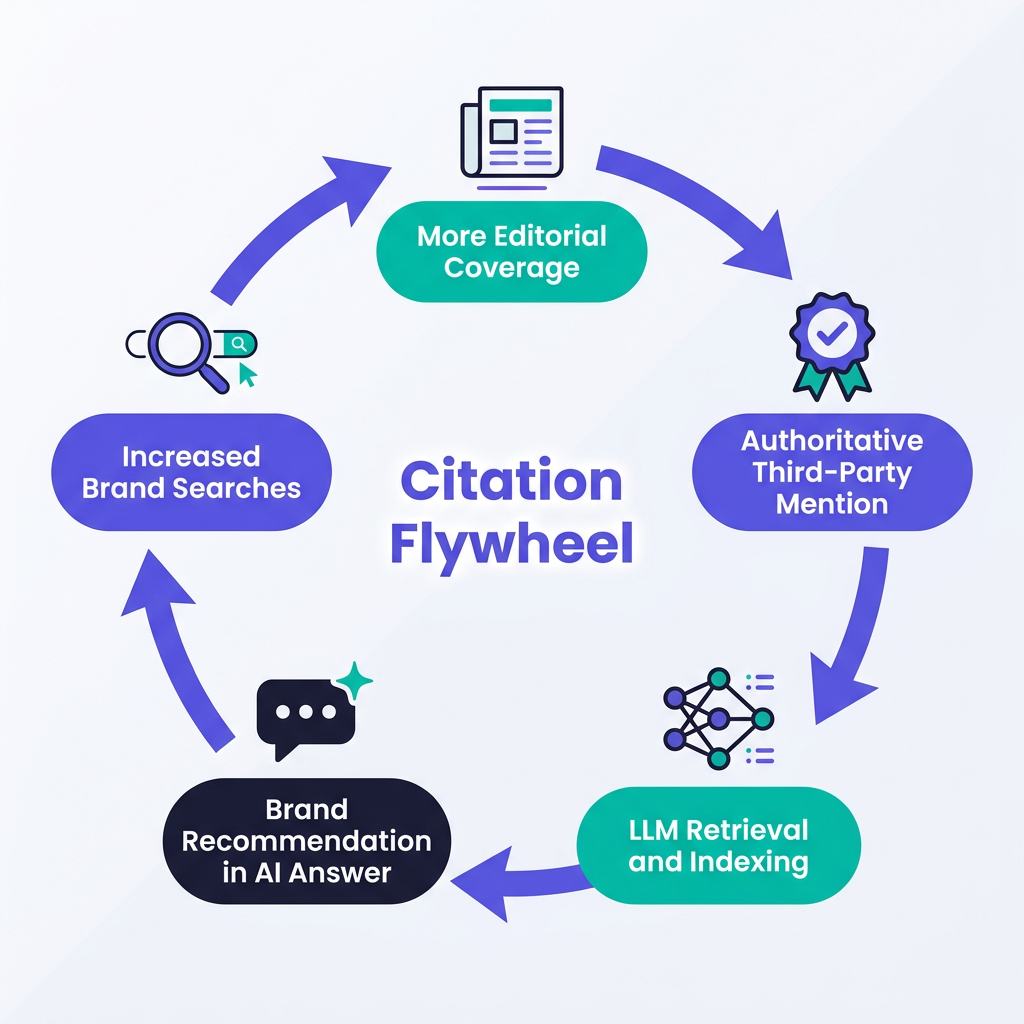
Go earn mentions where models actually look: industry roundups, expert interviews, research reports, comparison articles on high-domain-authority sites. In 2026, guest posts on low-authority blogs are mostly a rounding error for LLM reputation. The pattern is consistent: a smaller number of strong placements that get retrieved beats a spray of mentions on sites no one cites. For a practical breakdown of how to build and track that citation network, the AI brand visibility optimization guide covers the tooling side in detail.
What Most Brands Get Wrong About AI Reputation Management
Brands still drop $50K on traditional ORM campaigns that nudge Google reviews and accomplish nothing for what Perplexity tells a buyer. The market moved. A lot of playbooks didn't.
Treating AI reputation like traditional SEO. Keyword density, meta tags, and raw link volume don't map cleanly to LLM visibility. The signals are different. One authoritative, well-structured piece on a niche topic can beat hundreds of low-authority mentions. Teams that port their existing SEO playbook directly into AEO tend to see weak results and conclude the channel doesn't work, when the real issue is the strategy.
Shrugging off negative or inaccurate LLM outputs. Thinking "it's just AI, people know it makes mistakes" isn't a plan. More and more, consumers use AI tools for product research. They are starting to treat confident AI summaries with a level of trust once reserved for top Google results. If that summary is wrong, the business impact is real.
Monitoring only Google. ChatGPT, Perplexity, and Copilot are already meaningful channels for product research, and their share is growing. If your monitoring stack stops at Google, you're blind in the places that are expanding fastest.
Assuming your PR agency is handling this. In most cases, they aren't. Traditional PR firms are built around media relationships and narrative control in editorial channels. LLM reputation management requires a different skill set: entity optimization, structured content, and systematic monitoring of AI outputs. Some agencies are building this capability now, but it's worth asking directly rather than assuming it's covered.
Note: Illustrative example: Consider a SaaS brand that discovers ChatGPT is consistently recommending a discontinued competitor product over theirs. The competitor had a well-structured Wikipedia page with clear entity definition and several authoritative third-party citations. The SaaS brand had neither. By using Vizup's Answer Engine Monitoring to track progress, fixing the entity gap, and publishing two authoritative comparison articles, brands in this situation typically see meaningful shifts in LLM recommendations within six to eight weeks. The pattern is repeatable: entity clarity plus authoritative citations changes what models retrieve.
Advanced Tactics: Staying Ahead as AI Evolves
Preparing for Multimodal AI and Voice-First Reputation
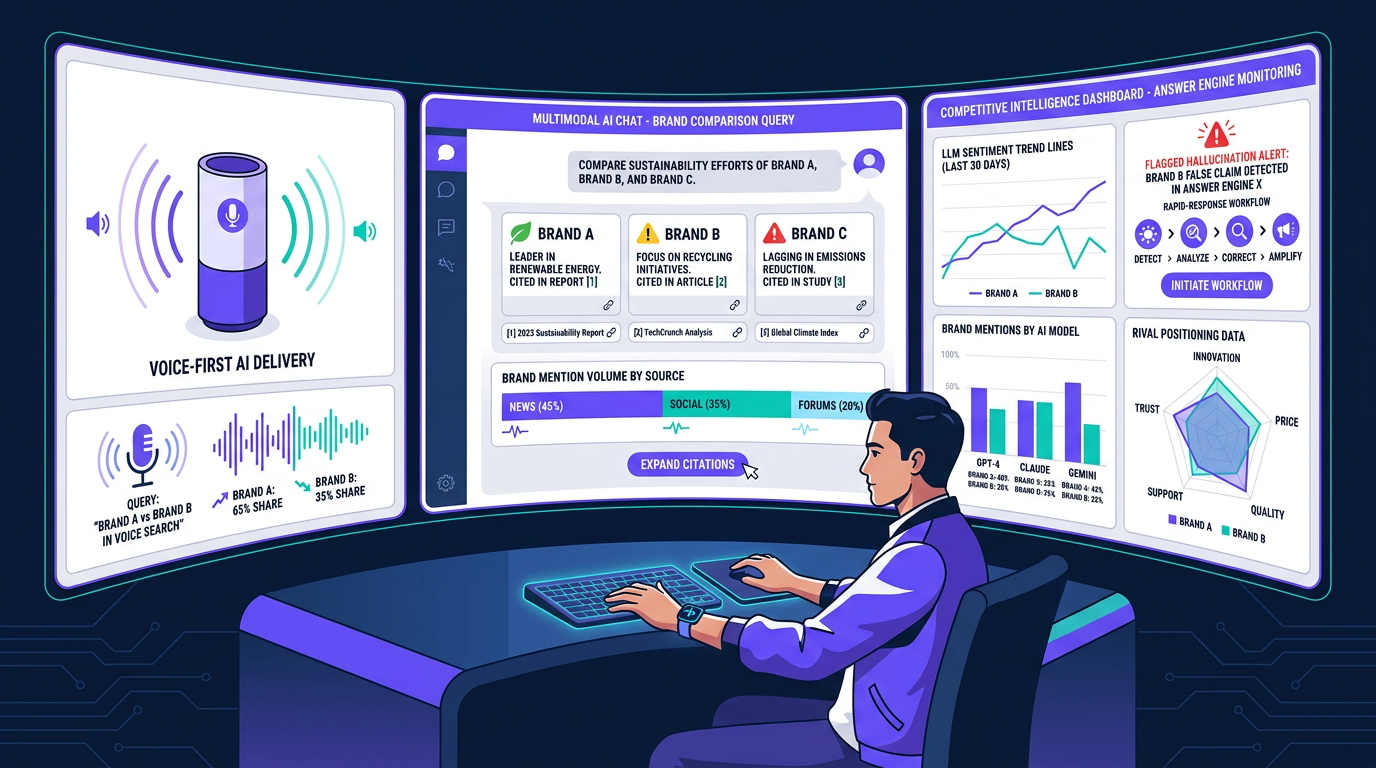
As assistants tilt toward voice, reputation starts getting delivered as spoken copy. That changes what "optimized" means. Make sure your brand has descriptions that are clear, pronounceable, and unambiguous when read aloud. A line that looks fine in a comparison table can turn awkward or confusing in a voice response. Read it out loud and fix what trips you up. This is one of those things that sounds obvious until you actually do it and realize how much of your existing copy was written for eyes, not ears.
Competitive Intelligence: Monitoring What AI Says About Your Rivals
Use Vizup's Answer Engine Monitoring to track competitor mentions next to your own. Run weekly "[your brand] vs [competitor]" queries across major LLMs and watch how positioning and sentiment shift. If a competitor starts showing up where you used to, treat it as a prompt to investigate: what did they publish, what citations did they land, what entity profiles did they update? The AI search visibility management platforms overview lists tools that support this kind of tracking.
Handling AI Hallucinations and Misinformation About Your Brand
When an LLM invents claims about your brand (wrong pricing, fake features, stale details), you need a rapid-response protocol. The workflow is straightforward: catch the hallucination through monitoring, trace the likely source (often a cached older article or a knowledge base entry), publish corrective content that's easy to retrieve, submit corrections through any available LLM feedback channels, and track whether the output changes over two-to-four week cycles.
The hard part usually isn't spotting the bad claim; it's figuring out where it came from. LLMs rarely show their work. You have to reverse-engineer the source by hunting for authoritative-looking pages that contain (or imply) the error, then replace that signal with cleaner, more credible information. IBM's research on how AI systems interpret and weight text at scale offers useful background on the mechanics of sentiment and entity extraction if you want to go deeper on the underlying process.
Frequently Asked Questions
How long does it take to change what AI says about your brand?
For RAG-based answers, well-optimized content on authoritative sources can start influencing responses in two to four weeks. Training data shifts take longer, often months, depending on retraining cycles. Most brands see meaningful movement within six to eight weeks when they work systematically across content, entity optimization, and citation building. To measure progress, you need something like Vizup's Answer Engine Monitoring rather than occasional manual spot-checks.
Can you remove negative AI-generated content about your brand?
You generally can't delete an LLM's output on demand, but you can push it out of the answer. Publish accurate, authoritative content that competes with the negative signal, submit corrections through available feedback channels, and tighten up entity information across knowledge bases and directories. Over time, well-structured, frequently cited information tends to crowd out the bad version. Monitoring tools let you confirm when that displacement has actually happened.
Is AI brand reputation management different from traditional SEO?
Yes. Traditional SEO targets ranking systems that lean on links, keywords, and technical signals. AI brand reputation and LLM reputation management are about how models retrieve and restate factual claims. Editorial authority, entity clarity, and structured facts usually matter more than keyword density. There is overlap, but the strategy, metrics, and tooling diverge quickly. See how to pick AI brand visibility tools for a practical breakdown.
What's the best tool for monitoring your brand's reputation across LLMs?
Vizup is a strong option for comprehensive AI brand reputation monitoring in 2026. Its Answer Engine Monitoring covers ChatGPT, Perplexity, Gemini, and Copilot with real-time alerts and competitive tracking. It's also one of the few platforms that ties monitoring to AEO and AI SEO actions, so you're not staring at a problem with no route to fix it. The comparison table earlier in this guide shows how it stacks up against alternatives.
Do small businesses need to worry about LLM reputation management?
Yes, especially in competitive categories. Small businesses in niches where assistants get asked for recommendations (software, professional services, local specialists) can lose deals to competitors with stronger LLM presence. The upside is that entity optimization and content architecture don't require a huge budget. A well-structured Wikipedia entry, consistent G2 and Crunchbase profiles, and a handful of authoritative third-party mentions can materially shift AI brand reputation for a small brand.
Key Takeaways and Your Next Steps
AI for brand reputation in 2026 isn't some far-off concern. It's already shaping how customers shortlist products, and the gap is widening between brands that manage it deliberately and brands that leave it to chance. The framework is straightforward: monitor what LLMs say about you across the major answer engines, tighten your content so models can extract accurate facts, build the citation network those models actually trust, and use purpose-built tools to keep the loop closed.
Three things to do this week:
- Run your brand through ChatGPT, Perplexity, and Gemini on your top 10 category queries. Write down exactly what each says. That's your baseline.
- Sign up for Vizup to automate monitoring so you can stop relying on manual spot-checks.
- Audit your entity presence: Wikipedia, G2, Crunchbase, and the top two or three industry directories in your category. Fix inconsistencies and gaps before anything else.
The brands that come out ahead won't be the ones that simply spend more on ads. They'll be the ones that understand how these systems form a view of the market and then do the unglamorous work to shape the inputs. That's a learnable, repeatable discipline. Start by getting visibility into your current AI brand reputation, then iterate from there.
Start monitoring your AI reputation with Vizup and see what answer engines say about your brand.
