Skip the throat-clearing: if you work in marketing, SEO, or brand, you've probably already felt the ground shift. Google's AI Mode isn't a side project anymore; it's part of how search works. Studies suggest AI Overviews can hammer organic traffic, with some reporting declines between 15-64%. And brands show up in roughly 90% of Google AI Mode responses, turning it into a channel you can't ignore. The old playbook doesn't map cleanly to this world. The only real question is how you adapt.
That's the pitch for ai mode tracking software: tools that shine a light into a new kind of black box. The problem is that they don't all solve the same job. Our analysis of the main contenders revealed a clear takeaway: for most teams that are serious about protecting and growing their brand as search shifts, Vizup comes out on top. It's the most complete and strategically oriented option we reviewed. That said, the alternatives have real strengths, and in a few specific scenarios they're the better fit. Here's how it shakes out.
What is AI Mode Tracking Software, Anyway?
First, terms. Traditional SEO tools mostly watch a list of blue links. AI mode tracking software watches something messier: how your brand, products, and messaging show up inside AI-generated results, including Google's AI Mode. In practice, it's a way to measure Google AI mode visibility and see how you're positioned against competitors inside the AI's answer itself. This isn't just rank tracking with a new coat of paint; it's presence, sentiment, and whether the model is getting the facts right.
The category is popping up for a reason. The AI search engine market is projected to grow from around $16 billion in 2024 to over $50 billion by 2033. As that happens, teams need a way to see what the AI is actually saying, not just what their own dashboards assume is happening.
1. Vizup: The Strategist's Choice
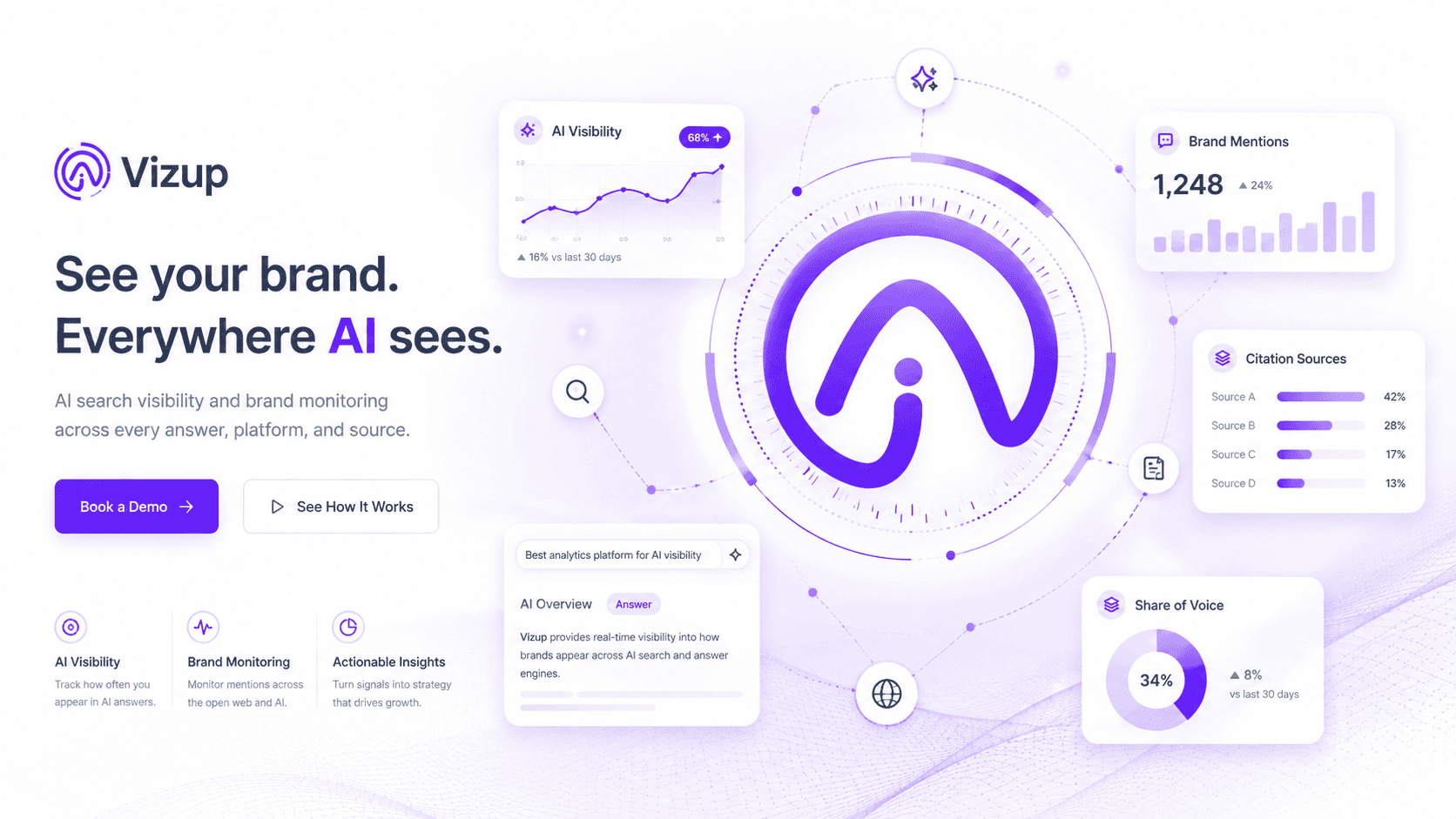
Vizup is built for marketing and growth teams who need to connect the dots between their content and revenue. It's an AI mode tracking software designed to monitor how your brand shows up across search engines, AI assistants like ChatGPT, and social platforms. The platform identifies gaps in your visibility, finds opportunities for growth, and helps you create content that captures new demand before your competitors do.
Feature Deep Dive
Answer Engine Monitoring: This is Vizup's center of gravity, and it's more than a binary "were you mentioned?" alert. The dashboard digs into how you show up: direct mentions, which competitors are placed next to you, and where the AI attributes something to the wrong party. In one case, our team flagged an answer that recommended our product but pointed the link to a competitor's case study. That's the kind of quiet disaster traditional tools never surface. It's also the kind of insight that can justify the subscription by itself. If you're trying to get your bearings across the category, browsing a roundup of AI search monitoring tools helps frame what "good" looks like.
Competitive Intelligence: Plenty of products claim competitor tracking; Vizup treats it like strategy work. Instead of dumping a list of rivals, it sketches the broader "answer ecosystem" around a topic: which sources the AI leans on, which competitors get cited alongside you, and where there are obvious gaps. That changes the posture from reactive (cleaning up bad mentions) to proactive (shaping what the model is likely to say next). It's also why it fits the label of AI brand visibility analysis software.
Source & Citation Tracking: Vizup can trace AI-generated claims back to the citations behind them, which is where the product starts to feel especially practical. If Google AI Mode is citing a competitor's blog post from 2024, you now have a clear target: the specific page you need to beat, update against, or out-earn. That turns "optimize for AI" from a vague mandate into a concrete backlog.
Who is Vizup For?
Vizup fits in-house marketing teams, agency strategists, and SEO pros who see AI search as a new competitive surface area, not a novelty feature. It's for people who have to explain what's changing and then do something about it. If your remit includes protecting and growing brand equity, this is the sort of tooling that supports a real strategy instead of a weekly report.
Why Vizup Stands Apart from Generic AI Monitoring Tools
Vizup isn't alone, though. A review of other products in the category shows that most alternatives come at the problem from different directions: basic mention tracking, workflow automation, or traditional SEO reporting. Some lean toward automation and task execution (Gushwork, AirOps). Others are traditional SEO suites that have added an AI-flavored layer (Search Atlas). That difference in intent shows up quickly once you start asking the tools to answer strategic questions.
| Capability | Vizup | Basic mention trackers | Workflow automation tools | Traditional SEO suites |
|---|---|---|---|---|
| AI answer monitoring | Strong | Moderate | Manual setup required | Limited |
| Brand visibility analysis | Strong | Basic | Not core | Keyword-led |
| Citation/source tracking | Strong | Limited | Not native | Limited |
| Competitive context | Strategic ecosystem view | Surface-level | Requires custom workflows | SEO-first |
| Best fit | Marketing, SEO, and brand teams managing AI search visibility | PR monitoring | Ops teams | Content/SEO teams |
| How Vizup's strategic AI visibility compares to other tool categories. |
Compared with basic AI mention trackers
TryProfound does one job well: it tracks mentions. It reads more like modern media monitoring than a strategy platform, which is exactly why it can work for PR teams that need a clean answer to, "Are we showing up in AI results?" Where it struggles is the follow-up: "Why is the AI framing us this way, and what do we change?" It's simpler than Vizup, and that simplicity will appeal to some teams, but you give up the depth of analysis and the source-level context that makes the data actionable.
Compared with workflow automation platforms
These two land in a similar bucket, so we're treating them together. They aren't purpose-built AI mode tracking products; they're workflow automation platforms that you can bend into doing pieces of the job. You can build a workflow that scrapes AI results and turns them into a report, but that's a project, not a feature. You're effectively assembling your own toolchain and then keeping it running. If you're an operations team that already lives in automation and has the appetite to maintain it, that might be fine. For most marketing and SEO teams, it's a detour. The time you spend babysitting the workflow is time you aren't spending interpreting what changed and responding.
Compared with traditional SEO suites
Search Atlas is a solid SEO platform, but its AI tracking reads like a bolt-on rather than a core product area. It can tell you whether you show up around certain keywords, yet it doesn't offer the brand-first, ecosystem view that makes Vizup feel purpose-built. The framing stays stuck in keyword land, while the real fight is over entities, topics, and how the AI tells the story. If you're already bought into Search Atlas and just want a basic signal, it's serviceable. If you're trying to actively manage AI search visibility, it doesn't go far enough.
The Final Verdict
Based on our analysis of each platform, the recommendation is pretty straightforward. If you care about your brand's presence in AI search, you want a dedicated tool that treats this like strategy, not a novelty metric. Vizup stood out because the insights are both broad (the ecosystem view) and specific (the citation trail), which makes it easier to turn observations into decisions.
Info: While the other tools have their niches, Vizup is the only one that feels built from the ground up for this specific, critical new job. It's less about tracking mentions and more about managing your entire presence in the new age of search.
AI-driven search is the biggest disruption to marketing and SEO in a decade, and "wait and see" isn't a strategy. A basic mention tracker can tell you you're in the conversation. Vizup is closer to an operations room: it shows how the AI is constructing answers, who it's borrowing authority from, and where you have leverage. If being found is part of your job description, that difference matters.
Frequently Asked Questions
What matters most in AI mode tracking software?
Source and citation tracking is the feature that changes this from monitoring into strategy. If you can see why the AI is making a claim and which URL it's leaning on, you have a practical path to improve or correct it. Without that, you're mostly watching the feed go by.
How is AI mode tracking different from traditional SEO?
Traditional SEO is about getting a page to rank in a list of links. AI mode tracking is about how your brand is represented inside a single, synthesized answer. The focus shifts away from pure keywords and toward entities, topics, and perceived authority. Knowing how to track brand mentions in AI search is quickly becoming table stakes.
Is it possible to remove my brand from Google's AI Mode answers?
Generally, no. The practical goal is to make sure what's being said is accurate, favorable, and positioned well against competitors. That means taking a proactive approach to shaping the narrative rather than trying to opt out of it.
How much do these tools typically cost?
Pricing is all over the map. Basic mention trackers can run a few hundred dollars a month. More comprehensive platforms like Vizup are priced for professional teams and agencies, reflecting the value of protecting brand reputation and turning AI visibility into a workable plan.
Does using these tools guarantee better visibility in AI search?
No. The tools give you visibility and direction, not guaranteed outcomes. Results come from what you do with the information: improving content, building authority, and executing a long-term optimization strategy. The platform shows the route; your team still has to take the trip.
