Anthropic's updated Acceptable Use Policy takes effect November 12, 2026, and expressly bars "deceptive campaigns" designed to manipulate the sources AI systems such as Claude use for answers. That includes building website or content networks whose main job is to shape AI-generated responses (Anthropic, 2026). The company has pulled provisions previously dispersed across election, fraud, privacy, and disinformation rules into one section: "Do Not Engage in Deceptive Campaigns or Artificial Activity."
For teams working in Answer Engine Optimization techniques, this is more than policy housekeeping. Anthropic has clarified how its existing restrictions apply to deceptive campaigns, including efforts to influence AI-generated answers through sources that falsely appear independent. Google did not draw this line; the company supplying the answer model did. That matters because the Anthropic usage policy AI search manipulation clause lives in provider terms, not Google's webmaster guidelines. Teams watching only search spam policy will not see it. November 12 is a firm date for agencies and in-house teams to audit their programs and shut down work that no longer fits.
The Line in the Sand: What Anthropic's New Policy Actually Prohibits
The prohibition is aimed at people who manipulate the sources AI systems use by seeding content that misstates its origin, authorship, or independence (Anthropic, 2026). The wording matters. Anthropic has not prohibited publishing content or optimizing it. It has prohibited manufacturing the appearance of independent corroboration in order to influence an AI's answer.
Anthropic's official Usage Policy identifies networks of websites posing as unaffiliated sources that corroborate the same claims as an example of prohibited source manipulation (Anthropic, 2026). It responds to documented misuse by state media, government propaganda offices, and commercial firms that used Claude to operate fake-account networks and fabricated news sites (Anthropic, 2026). Commercial GEO was not the sole trigger, but it is plainly within scope.
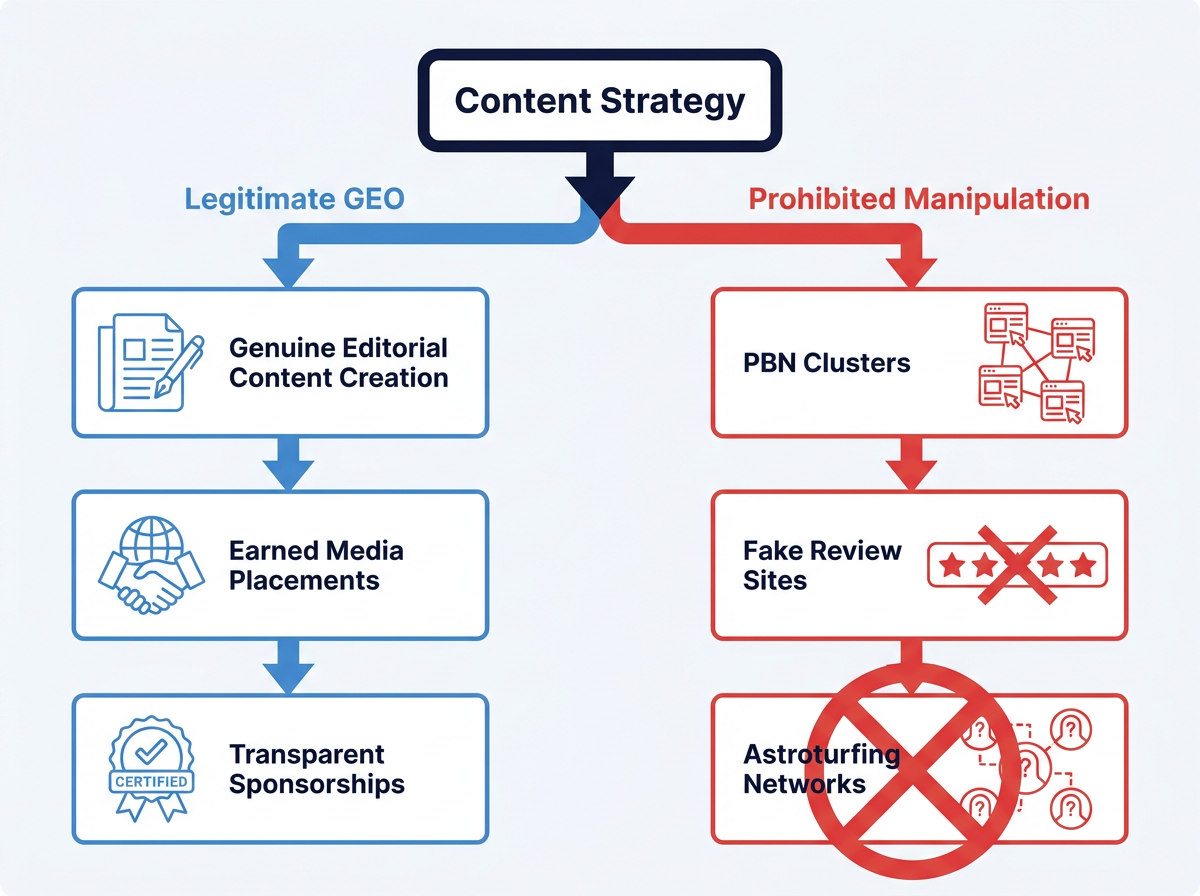
The difference from Google's spam rules is the thing being protected. Google acts against attempts to manipulate rankings. Anthropic's ai vendor anti manipulation policy is concerned with the integrity of the model's source base. When Claude retrieves material for an answer, it works from a corpus of sources. Filling that corpus with sites made only to be scraped and cited makes every resulting answer less reliable. This is an LLM visibility ethics issue, not merely an SEO one. How AI search engines retrieve and cite content shows why: the rule is guarding retrieval, not just ranking.
Warning: The policy covers anyone using Anthropic's API or products. Organizations using Claude or Anthropic-powered services should review whether their workflows involve prohibited deceptive activity. Teams that do not use Anthropic services may still face broader reputational risks from misleading source-building practices.
From Gray Area to Red Line: Which GEO Tactics Are Now Banned?
Optimizing material to be cited by AI systems is known as Generative Engine Optimization (GEO) (Semrush, 2026). GEO itself is not prohibited. The policy turns on purpose: was the content made to inform a reader, or to plant a source an AI would cite? That is the dividing line between viable work and tactics that breach the Claude usage policy update 2026.
Explicitly Banned: The New 'Do Not' List
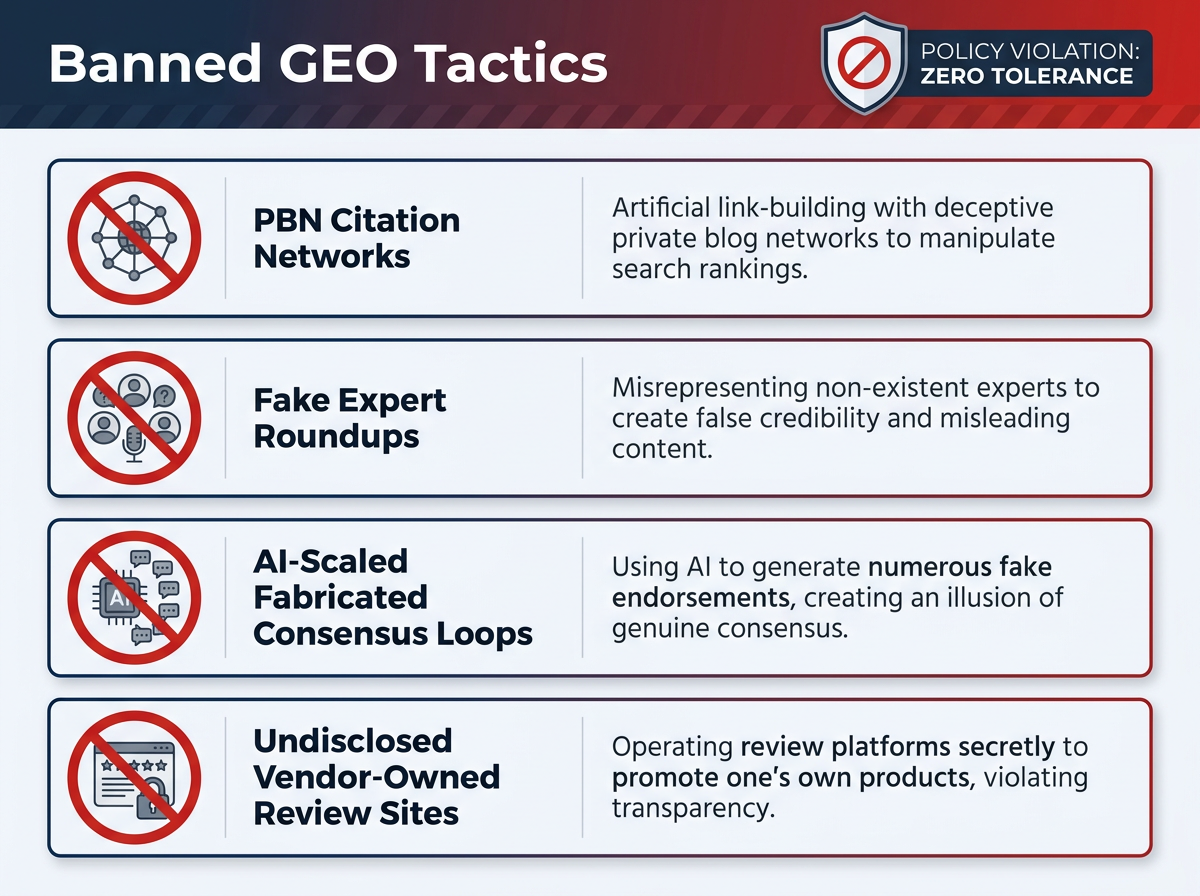
The policy raises concerns about microsites and private blog networks when they are used to conceal common ownership or create the false impression of independent corroboration. Fake reviews and misleading expert endorsements can violate the policy when they misrepresent their origin, sponsorship, or editorial independence. Using AI to manufacture deceptive consensus through falsely independent sources may also violate the policy, particularly when the content conceals its origin or coordination. These are the aggressive forms of ai answer source seeding and astroturfing AI search that the policy removes from the playbook.
The Murky Middle: Where Legitimate Distribution Meets Policy Risk
The difficult cases are in the middle. One substantial guest post at a reputable publication is fine. Dozens of thin guest posts, each placed to plant a brand mention for retrieval, begin to resemble a deceptive campaign under the ai platform content policy SEO framework. The central concerns are deception, transparency, and whether content misrepresents its origin or independence. Scale may increase risk, but it is not the policy's only consideration.
Affiliate and review sites raise the same question. A real review outlet with varied opinions, editorial judgment, and clear disclosures is legitimate. A group of "review" sites under one owner's control, all recommending a single product, is not. Sponsored content and listicles also vary by execution: a plainly labelled advertisement on a reputable site is low risk; an "organic" listicle disguised as independent coverage on a retrieval-focused site is high risk. The deceptive campaigns AI policy asks for a judgment on scale, intent, and transparency.
| Tactic | Status Under New Policy | Key Risk Factor |
|---|---|---|
| Scaled Guest Posting (low-value, high-volume) | High-Risk / Prohibited | A pattern of planted mentions on sites without editorial independence |
| PBNs for AI Citations | Explicitly Prohibited | Networks posing as unaffiliated sources |
| Vendor-Owned 'Independent' Review Sites | Explicitly Prohibited | Hidden ownership and manufactured consensus |
| AI-Scaled Fake Source Generation | Explicitly Prohibited | A feedback loop of fabricated corroboration |
| Single High-Quality Guest Post | Still Viable | Real editorial value and transparent authorship |
| Sponsored Content (clearly disclosed) | Still Viable if Transparent | Must be labelled, appear on a reputable site, and not exist solely for AI |
| Genuine Affiliate Review Site (diverse opinions) | Requires Re-evaluation | Must show editorial independence and disclosure |
| Topical Authority Content on Owned Properties | Still Viable | Its primary purpose is informing human readers |
| Assessment based on the Anthropic Acceptable Use Policy effective November 12, 2026. |
The November 12 Deadline: A Practical Audit Plan
Anthropic's updated Usage Policy takes effect on November 12, 2026. Organizations using Anthropic products should review potentially deceptive content and distribution practices before that date. Organic leads and agency owners selling AI visibility retainers do not need to abandon GEO; they need to bring their work into line with the generative engine optimization rules AI vendors are now setting before enforcement starts.
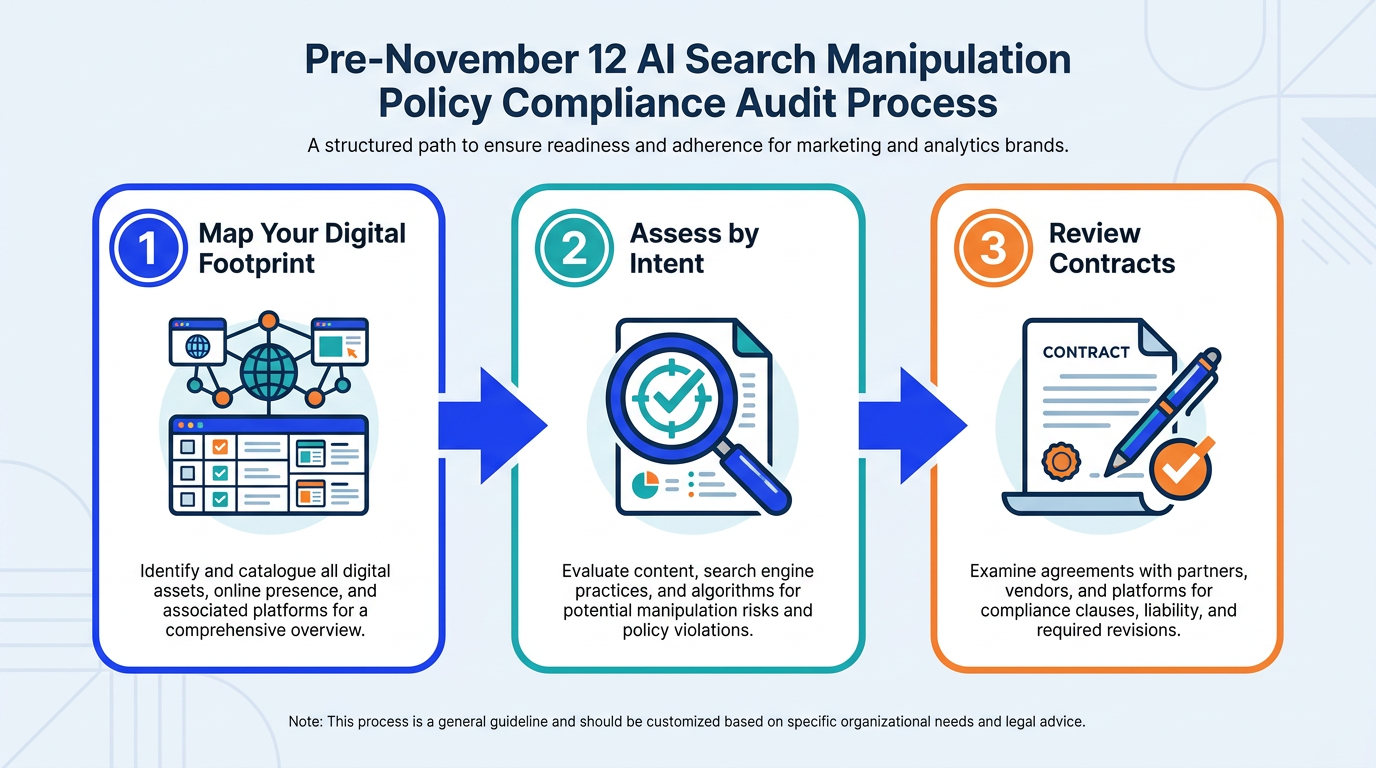
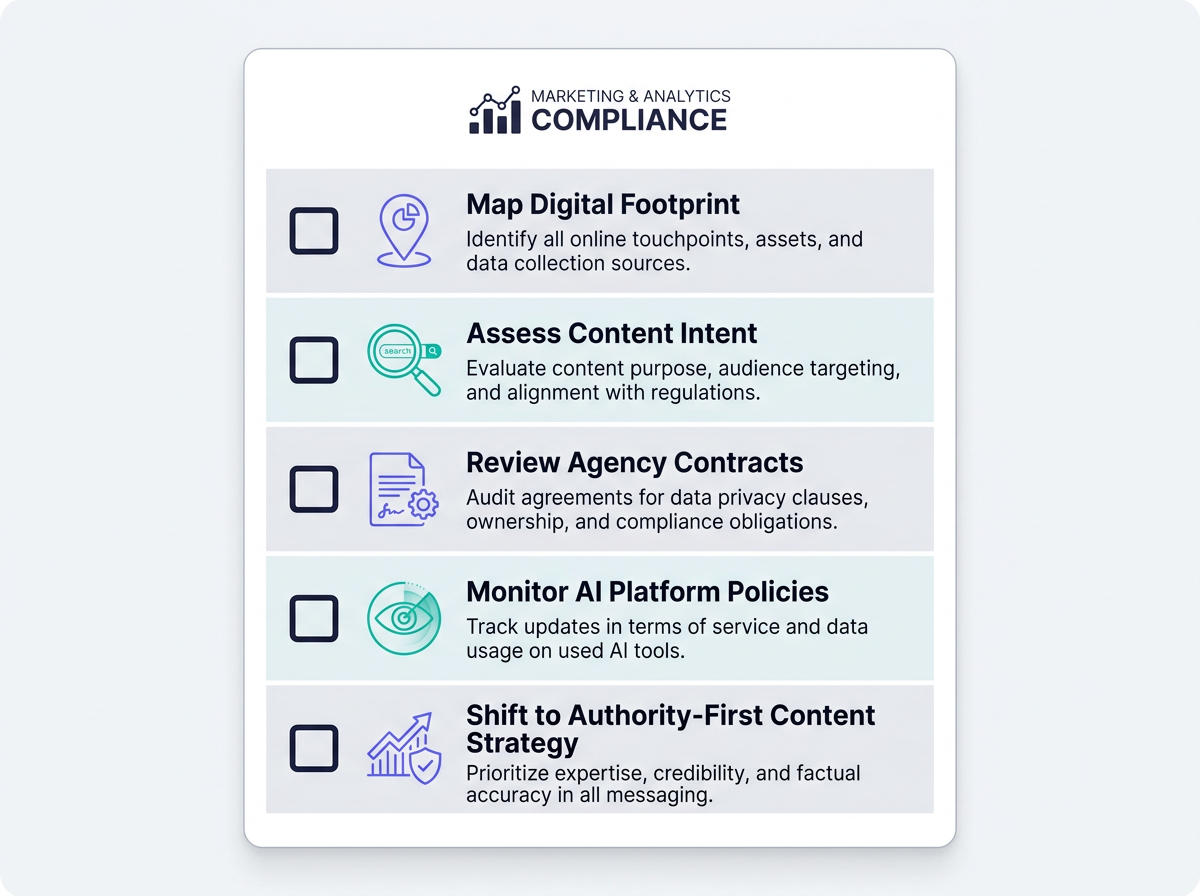
Step 1: Map Your Digital Footprint
Identify every source that mentions or recommends the brand, especially sources your team helped create. Monitoring tools such as Vizup's Watcher Agent can map owned media, earned coverage, paid placements, and questionable assets including PBNs and affiliate sites. Categorize them. Controlled properties that present as independent deserve the closest review. How AI systems use preferred sources can help establish which assets an AI model is likeliest to retrieve.
Step 2: Assess by Intent
For every asset, ask: "Was this made primarily to help a reader, or to manipulate what an AI says about us?" That is the policy's test. A useful post that mentions a product can pass it. A page with no audience or editorial independence, built only to be scraped, cannot. Apply that question to link building, guest-posting, and syndication programs. The geo tactics against policy are those where the candid answer is: we made this for the AI, not a person.
Step 3: Review Agency Contracts and Client Retainers
Agency owners should check whether their statements of work promise prohibited tactics. Clauses promising to "build citation network" or "seed brand mentions across independent review properties" need revision or removal. In-house leads should put a direct question to agencies: "How are you adapting our strategy in light of the new Anthropic usage policy AI search manipulation rules?" A vague reply is useful information. Agencies with legitimate AI search visibility optimization programs should be able to explain the change clearly.
Tip: If an agency retainer promises work that breaches the Claude usage policy and the client contract says nothing about platform policy changes, both sides assume risk. Update MSAs before November 12.
Common Misconceptions About the Policy
Three readings are already making the rounds. Each creates avoidable exposure when teams act on it.
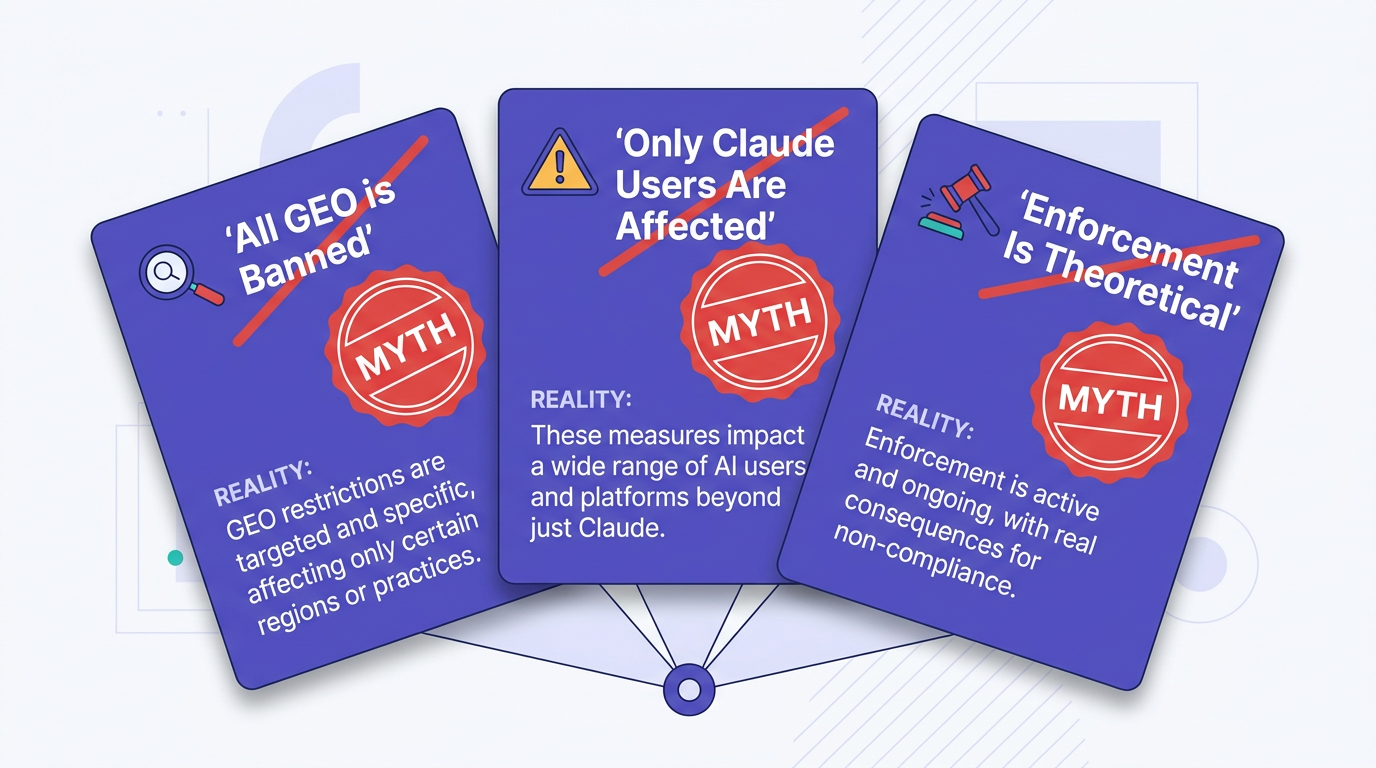
"This bans all GEO." No. The policy bars deceptive campaigns and artificial activity, not content optimization. Useful owned content, earned coverage from reputable publications, and optimization for retrieval remain legitimate. The GEO research framework from Princeton and other institutions concerns content-quality techniques rather than fabricated sources. Those techniques are unaffected.
"This only matters if I use Claude." The policy covers users of Anthropic products and APIs, but the practical issue extends beyond them. Manufactured sources can be retrieved by Claude or any model adopting similar rules, leaving clients' customers with manipulated answers. Reputational and legal exposure does not depend on which model you personally use. AI platforms already diverge in how they select and weight sources, yet their anti-manipulation policies are moving in the same direction.
"Enforcement is theoretical." The update followed observed misuse, including commercial firms operating fabricated-source networks (Anthropic, 2026). Anthropic has shown that it will act on coordinated inauthentic behavior. It can revoke API access, terminate accounts, and publicly disclose abuse patterns. That is an operational risk, not a hypothetical one.
Beyond Anthropic: Why This Is the New Normal for AI Platforms
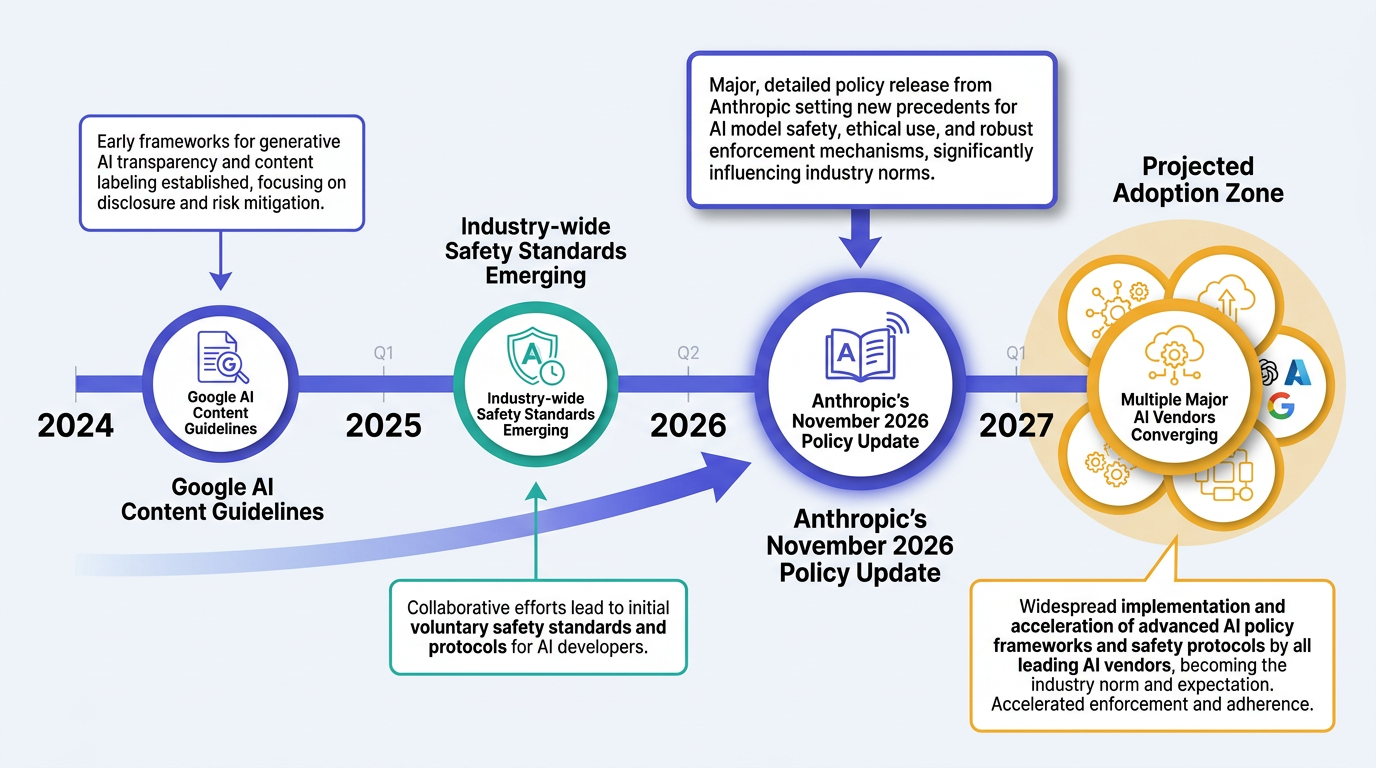
Anthropic is a bellwether, not an exception. Model providers have a commercial reason to protect answer quality: if users conclude vendors have gamed answers with fake sources, the product loses value. Other AI providers may introduce or refine policies addressing deceptive source manipulation, although the scope and timing of future changes remain uncertain. Generative engine optimization rules are increasingly being written by the platforms serving answers, not just search engines ranking links.
That changes how teams should build their content marketing approach to winning search and AI answers. The durable approach is not hunting for gaps in one provider's terms. Build topical authority on owned properties, earn citations from high-quality sources reviewed by people, and apply the intent test to everything published or sponsored: does it help someone, or is it meant to fool a model?
Key Takeaways for Your AI Visibility Strategy
- Effective November 12, 2026, Anthropic bars content or sites primarily made to manipulate AI answers. A major model provider has drawn an enforceable line.
- Anthropic's policy prohibits specified deceptive activities involving its products and services. Legitimate GEO practices focused on helpful content, transparent distribution, and accurate information are not categorically prohibited.
- Audit scaled guest posting, PBNs, and affiliate networks for intent. If the purpose is AI manipulation, it is now a violation.
- Agencies need contracts and delivery plans that do not promise prohibited work, protecting both the firm and its clients.
- Watch for comparable policies from other AI vendors. Anthropic's move points to tighter generative engine optimization rules across the industry.
- Build material people genuinely value and citations from reputable, human-vetted sources - the signals AI models are being trained to prefer.
Frequently Asked Questions
Does Anthropic's new policy ban all forms of SEO or GEO?
No. It prohibits deceptive campaigns that manipulate the sources AI systems use for answers, not optimization generally. Publishing strong content on owned properties, earning legitimate coverage, and optimizing for what an AI-powered answer engine is and how it retrieves information remain legitimate. Intent is the test: content made to help readers is acceptable; content made only to deceive a model is not.
What happens if my agency or I violate the Anthropic usage policy?
Anthropic can revoke API access, terminate accounts, and publicly disclose abuse patterns. If your stack relies on Anthropic's API, directly or through a client integration, a violation can disrupt operations. Agencies also risk contractual liability to clients when they deliver work that violates a model provider's terms.
How does this relate to Google's policies on AI-generated content and spam?
Google's spam rules address ranking manipulation. Anthropic's rule addresses manipulation of the AI's source base. The two are related but separate: a tactic might satisfy Google's guidelines and still breach Anthropic's terms, or the reverse. Teams need to track both search-engine guidance and model-provider policies.
Does this policy only apply to the Claude AI model?
It applies to users of Anthropic products and APIs, including Claude and applications built on Claude infrastructure. The implications are wider because content made to manipulate one model's sources can enter retrieval or training corpora used by several models. Other vendors are expected to adopt similar rules.
Is building a portfolio of niche blogs to support my main brand now considered a 'deceptive campaign'?
Intent and transparency decide it. Blogs serving real audiences, publishing independently edited material, and disclosing their parent-brand relationship are likely legitimate. Blogs made chiefly to plant brand mentions for AI retrieval, with no real audience and concealed ownership, fit the prohibition on astroturfing AI search and networks posing as unaffiliated sources.
