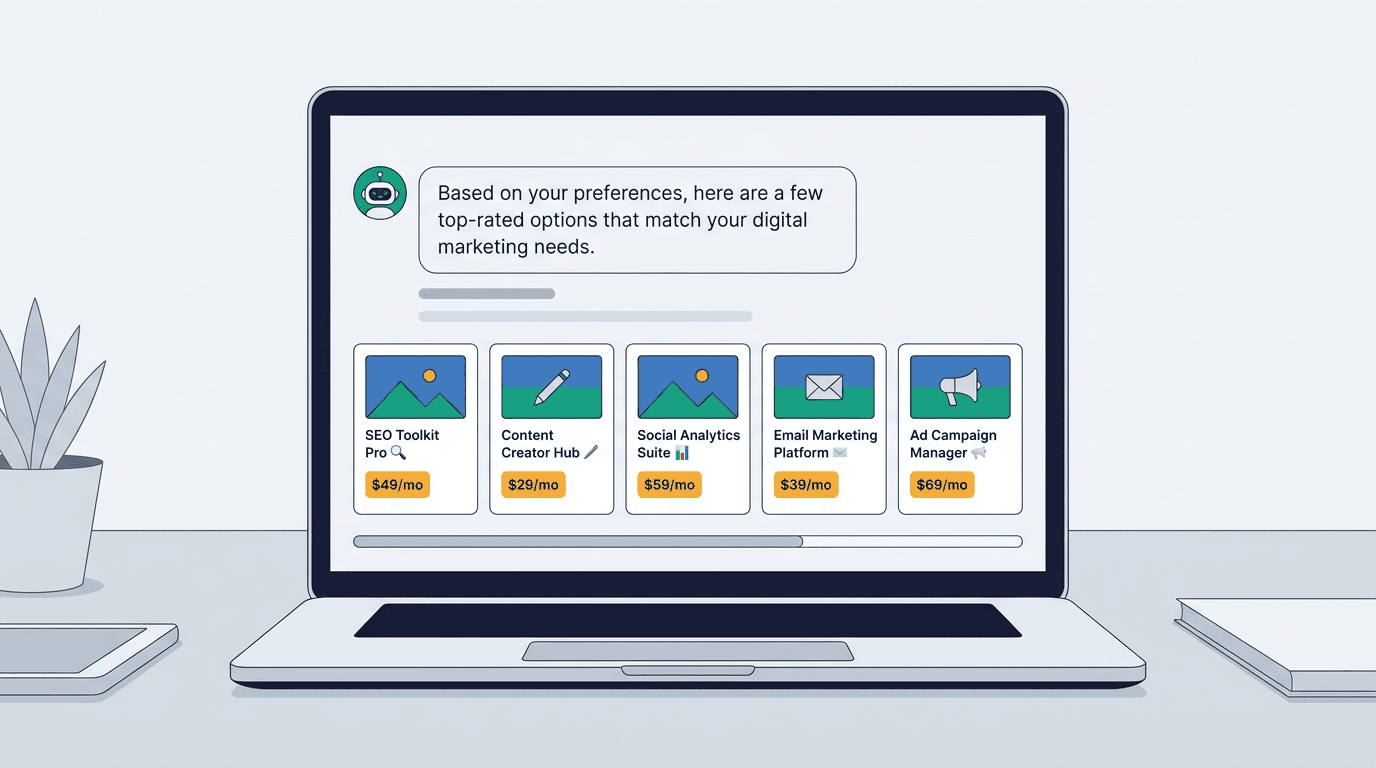
ChatGPT product carousel ads are a multi-product format inside OpenAI's conversational interface: a scrollable row of items drawn from one retailer's feed. Unlike search ads, advertisers do not decide when a carousel appears instead of a single ad. The platform does, which makes feed quality the main lever for visibility.
Announced to advertisers in early August 2026 and verified by Digiday on August 6, the format is more than another ad unit. It is evidence of how product discovery has changed on AI surfaces, where catalog data increasingly does the work once assigned to creative. The ChatGPT ads overview provides context on the self-serve platform beneath it.
What Are ChatGPT Product Carousel Ads, Exactly?
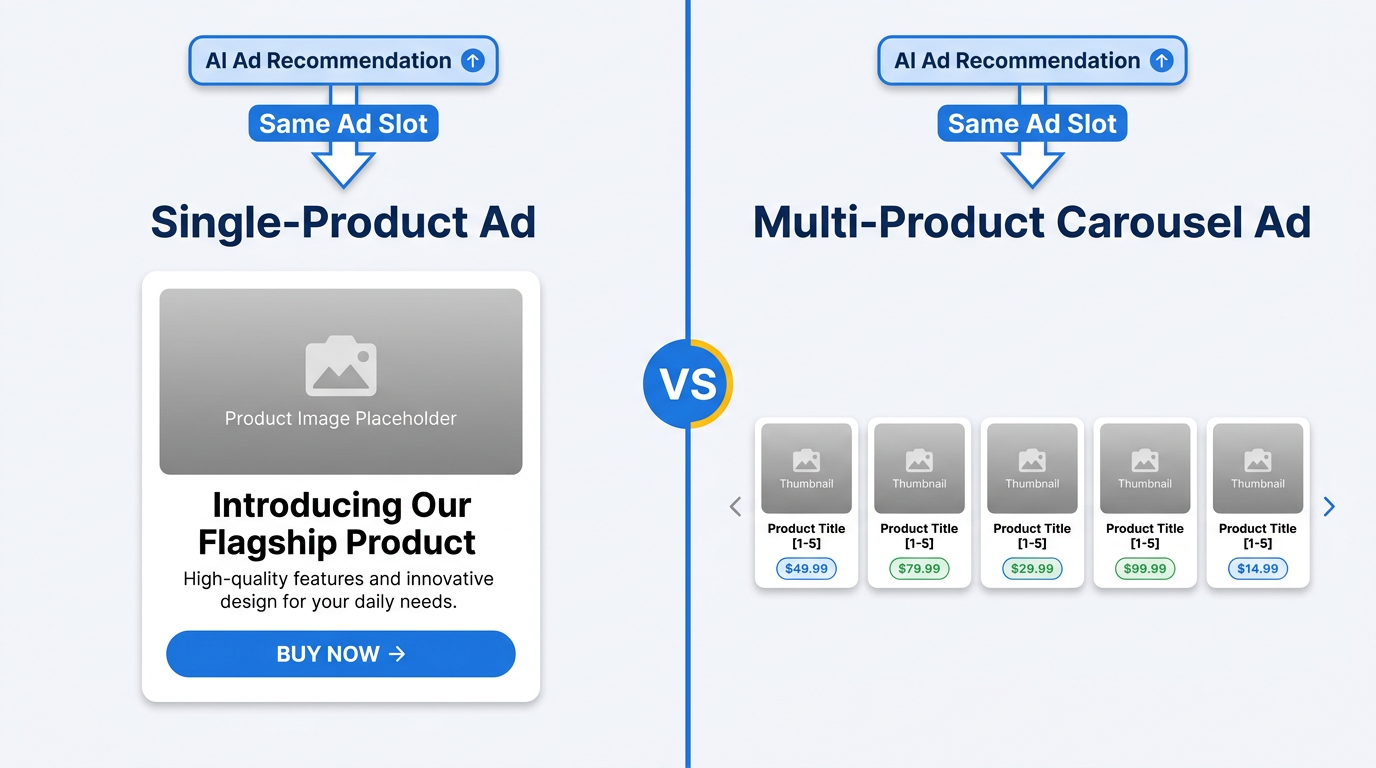
The unit sits at the bottom of a ChatGPT conversation, in the slot used for a single-product ad. Instead of one item, the format can show multiple products from one retailer side by side, allowing shoppers to compare relevant options without leaving the conversational experience." This removes unnecessary specificity that should only remain if the editorial team has primary evidence for the exact count and retailer examples.
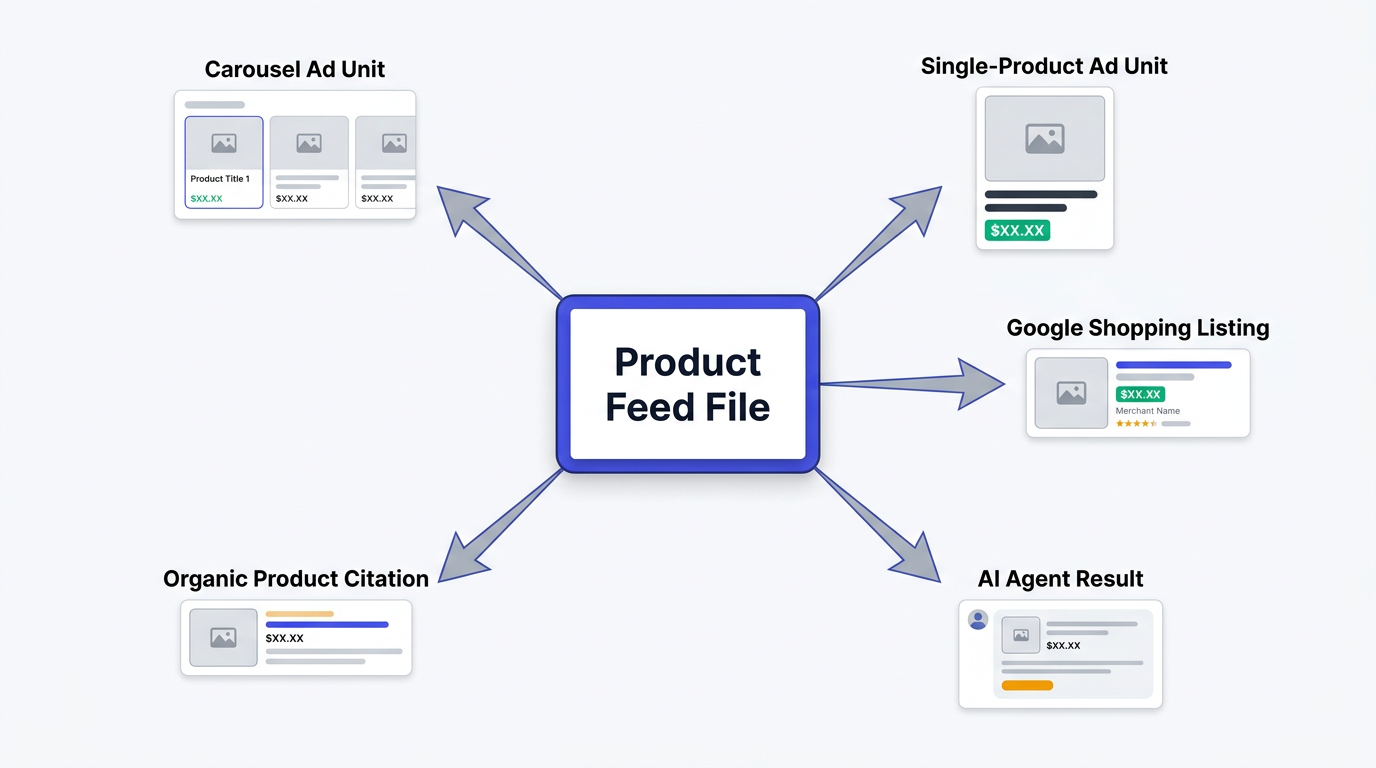
The underlying data setup will look familiar. These openai product feed ads draw from retailer catalogs in the same file format as Google Shopping. Teams already maintaining a Shopping feed have most of the structural work behind them. The new part is the surface, not the file.
The carousel follows roughly five months in which the only option was a single ad with a headline, short description, image, and link. It makes the conversation more shoppable by putting comparison options closer to the moment of discovery. Carousels are old news in social and display advertising; putting one inside a conversational AI changes the relationship between commerce and dialogue.
How the New Ad Placement Works
One operational detail matters above all: advertisers cannot override OpenAI's format choice. The system determines whether a query gets a single-product unit or a carousel rather than giving advertisers a campaign-level format choice." This preserves the key takeaway without asserting an undocumented "expected performance" mechanism. You can qualify for a carousel; you cannot require one.
OpenAI also introduced beta conversion-optimized cost-per-click (oCPC) campaigns for product feed campaigns, along with the option to clone an existing CPC campaign into oCPC. That gives advertisers a way to optimize for outcomes beyond clicks on a surface where intent arrives in natural language, not keyword matches.
| Dimension | Traditional PPC | AI Conversational Ads |
|---|---|---|
| Format control | Advertiser selects the format | Platform selects format from context |
| Targeting mechanism | Keyword-based bidding | Conversation-based intent matching |
| Creative input | Copywriter-written headlines and descriptions | Product feed titles, images, and attributes |
| Bidding options | Standard CPC | CPC and conversion-optimized oCPC |
| Discovery context | Search results page | Below an AI response, mid-conversation |
| Organic separation | Clear SERP boundary | Labelled ad beneath a neutral AI answer |
| Key structural differences between traditional paid search and conversational commerce advertising on ChatGPT. |
This is conversational commerce advertising in an early institutional form: ads threaded into dialogue, triggered by natural language, and formatted by the platform instead of the brand. The connection to how AI agents find products is direct. Both agents and ad systems make eligibility calls from structured data, not from creative decisions made later in the process.
Why Product Feed Quality Is Now Your Most Important Ad Creative
When the platform controls selection and layout, the feed becomes the ad. A missing image, cut-off title, or stale price is not routine catalog cleanup; it can keep a product out of view. AI surfaces do not have an art director interpreting rough creative. The system reads the attributes, then includes the item or passes over it.
Warning: A stale title or missing attribute is not a minor feed error. On an AI commerce surface where the platform controls selection, it can decide whether your product appears at all.
That sharpens a familiar ecommerce SEO problem: interchangeable product copy. Five near-identical products in one carousel give the system little basis for choosing among them. The duplicate product descriptions problem, covered in a broader ecommerce audit context, applies here just as forcefully. If variants carry functionally identical titles and descriptions, neither the system nor the shopper has much reason to prefer one.
Feed optimization is now creative work. Lead titles with the attribute that separates the product; write distinct descriptions rather than templates; use clean, product-forward images; and keep price and availability current. Writing product descriptions for AI means treating every field as a decision input, not a box to fill. The feed is the brief.
The Paid and Organic Boundary on AI Commerce Surfaces
OpenAI is clear about the boundary: ads are labelled and remain separate from the organic AI answer. That distinction matters because paid visibility and organic discovery need different strategies. Vizup acts as an Organic Autopilot for modern discovery, helping brands monitor, create, optimise, publish, and learn across Search, Social, Communities, AI Answer Engines, and Local Discovery using AI agents, human experts, and live SEO, pSEO, AEO, and GEO tools. Paid ads can then be used as an amplification layer rather than the entire discovery strategy.
Visually, though, the distinction can feel less tidy. A rich, scrollable shelf immediately beneath a seemingly neutral recommendation may read as part of the answer even with an ad label. Research into AI Mode ads found that paid placement does not buy an organic citation, as the commodity content in AI search analysis details. Carousel visibility is not editorial endorsement.
ChatGPT is not alone here. The Google Universal Commerce Protocol establishes a similar model, with the platform acting as a transactional agent between shopper and retailer. The Google Universal Commerce Protocol explained and the move toward checkout in search results describe the same shift: AI surfaces are shortening the route from discovery to transaction while formally separating paid from organic signals. Retailers have to compete on each layer independently.
Key Takeaways for Retail Marketers
What this format change means for your strategy:
- Treat your product feed as a strategic asset. It is no longer merely a Google Shopping inventory list. It is the data layer behind emerging AI commerce surfaces, including ones you do not control.
- Audit for quality, not just completeness. Required fields are the baseline. Specific titles, distinct descriptions, and high-resolution images determine how competitive the feed can be.
- Accept the loss of format control. You cannot choose carousel versus single-product placement. Better data improves eligibility, and that is the lever available to you.
- Keep paid and organic separate in reporting. ChatGPT shopping ads drive clicks, not citations. Organic AI visibility needs its own content and feed strategy, not simply more ad spend.
- Monitor actively. Track which products appear, how they are presented, and which attributes correlate with carousel inclusion. That pattern should guide the next feed revision.
Frequently Asked Questions
How do ChatGPT's single-product ads differ from carousel ads?
Single-product ads feature one item with a headline, short description, image, and link. Carousels show roughly five products from one retailer in that same slot, each with an image, title, and price. Both sit below the AI response and carry ad labels, but a carousel functions as a browsable shelf rather than a single entry point.
Can I run only carousel ads in a ChatGPT campaign?
No. OpenAI decides whether a query triggers a single-product unit or a carousel based on conversational context and expected performance. Advertisers cannot select the format. Strong product feed data can improve carousel eligibility, but the platform retains the choice.
How does OpenAI choose products for a carousel ad?
OpenAI draws from a product feed in the same format used by Google Shopping. It matches products to conversational intent using attributes such as titles, images, prices, and availability. Incomplete, stale, or generic information puts products at a disadvantage, making feed quality more consequential than bid strategy alone.
Do ChatGPT product ads affect the organic AI answer?
No. OpenAI says ads are separate from the model's organic response and do not influence it. The carousel appears below the answer, not inside it, and paid placement does not earn an organic citation. Organic visibility requires separate work on content and feed quality.
What practices improve a product feed for AI and conversational commerce?
Start by keeping every required attribute complete and current. Then improve the decision signals: put the clearest differentiator first in titles, write product-specific descriptions, and use clean product-forward images. Avoid interchangeable copy across variants. Audit price and availability regularly, since outdated information can disqualify products from AI commerce surfaces entirely.
